Why won't my TV connect to Wi-Fi? The most common reasons are an incorrect password, a weak signal, or a temporary glitch that a simple power cycle will fix. Before diving into complex settings, unplug both your TV and your router (and modem, if separate) from power for at least 60 seconds, then plug the modem/router back in first, wait for it to fully boot, and finally power on your TV. This clears temporary network conflicts and is the single most effective first step.
Why won't my TV connect to Wi-Fi? Try this first: Immediate power cycle and isolation test
To determine if the problem is isolated to your TV or affects your entire network, perform this power cycle and isolation test. Unplug your TV and your router from the wall outlet. Wait a full 60 seconds to ensure all internal memory is cleared. Plug the router back in and wait for its lights to stabilize (this can take 2-3 minutes). Then, plug your TV back in and try to connect. After the TV is on, check if other devices like your phone or laptop can connect to the same Wi-Fi network. If other devices work, the issue is specific to your TV. If nothing connects, the problem lies with your router or internet service.
Check your Wi-Fi password and network name
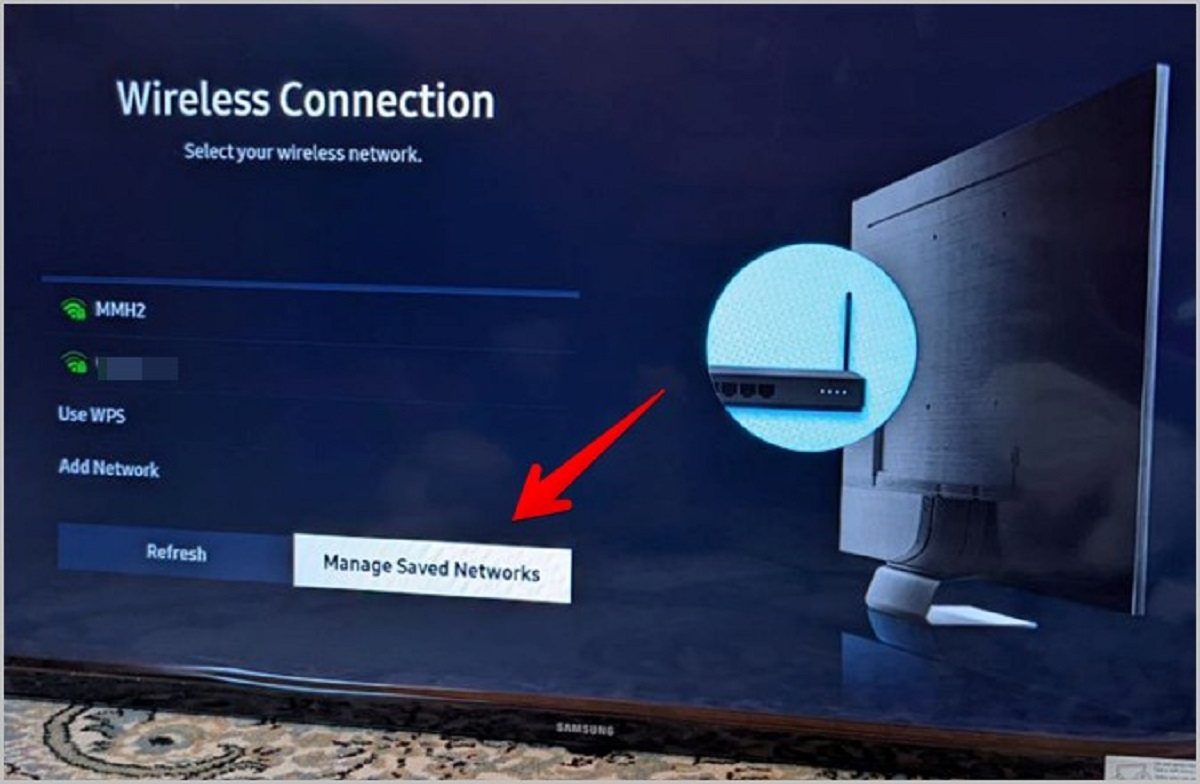
An incorrect password is the most frequent cause of connection failure. Wi-Fi passwords are case-sensitive, and typos are easy to make with an on-screen keyboard. First, verify you are selecting the correct network name (SSID), especially if you see multiple similar names from neighbors. Then, carefully re-enter your password, paying close attention to uppercase and lowercase letters and special characters. If you are unsure, log into your router's admin page to view the exact password. On your TV, go to the network settings, select "Forget Network" or "Remove Network," then rescan and reconnect by entering the password fresh. If your network is hidden (SSID broadcast disabled), you must temporarily unhide it in your router settings or manually enter the network name and password on the TV.
Fix a weak or incompatible Wi-Fi signal
Weak signal strength due to distance or physical obstructions like walls and furniture is another leading cause. If your TV is far from the router, the signal may be too weak to establish or maintain a connection. Move the TV and router closer together to test if this is the issue. If moving isn't possible, use a Wi-Fi range extender or access point to boost coverage. Importantly, older smart TVs (including some models before 2020) may only support 2.4 GHz Wi-Fi and cannot detect 5 GHz networks. If your router broadcasts both bands under a single name (band steering), you must separate the bands in your router settings. If connection problems persist, a full reset my Philips smart TV can clear stubborn network configuration errors. An unstable connection can also cause apps to buffer, which is why YouTube keep stopping on my smart TV often accompanies Wi-Fi drops.
Make sure your TV and router security match
Older smart TVs may have trouble connecting to networks using WPA3 security exclusively. If your router uses WPA3-only mode, your TV might fail to authenticate. Log into your router's settings and change the security mode to "WPA2/WPA3 Mixed" or "WPA2-PSK" if available. This backward-compatible setting allows older devices to connect while maintaining security for newer ones. If your TV is very old and only supports WEP or WPA (which are insecure and obsolete), you may need to upgrade the TV or use a wired Ethernet connection.
Update your TV's firmware and check DNS
Outdated software on your TV can cause connection failures and compatibility issues with your router. Navigate to your TV's support or settings menu and look for "Software Update" or "Firmware Update." Install any pending updates, as manufacturers often release patches to fix Wi-Fi bugs. Manually set the DNS to Google's public DNS: enter 8.8.8.8 for the primary DNS and 8.8.4.4 for the secondary. This can resolve issues where the TV cannot resolve domain names even though the network connection is active.
Quick router checks and IP conflicts
Verify that your router has Wi-Fi enabled and is broadcasting its SSID. Log into the router's admin interface and confirm that "Wireless" is turned on and "SSID Broadcast" is not disabled. Also, check for IP address conflicts. If your TV has a static IP that overlaps with another device, or if the router's DHCP range is exhausted, the TV will fail to get a valid address. Access your router's connected devices list and ensure no other device has the same IP as your TV. Restart the router to clear temporary DHCP issues. If you have devices with static IPs, make sure they are outside the router's DHCP assignment range.
Reduce interference and know your speed needs
Electronic devices like cordless phones, baby monitors, and microwave ovens can interfere with Wi-Fi signals, especially on the 2.4 GHz band. Relocate these devices away from your TV and router, or move the TV to a different spot. You can also change your Wi-Fi channel in the router settings to a less congested one, channels 1, 6, or 11 are usually best for 2.4 GHz. If your router supports 5 GHz and your TV does too, switch to that band for less interference and faster speeds. For smooth 4K streaming, ensure you have at least 25 Mbps download speed. If your internet plan is slower, or if many devices are using bandwidth simultaneously, your TV may buffer or disconnect. Consider limiting other devices during streaming or upgrading your internet plan.
"My smart TV keeps disconnecting from the internet" (Why Does My Smart TV Keep Disconnecting From The Internet)
If your TV connects but drops the connection intermittently, the issue is often signal instability or IP conflicts. Apply the same fixes above: move the router closer, reduce interference, and check for IP conflicts. You may also need to update the TV's firmware again, as manufacturers frequently release fixes for disconnection bugs.
"My smart TV buffers so much" (Why Does My Smart TV Buffer So Much)
Constant buffering is usually a bandwidth or signal strength problem, not a connection failure. First, run a speed test on another device to confirm your internet speed. If it's below 25 Mbps for 4K or 5 Mbps for HD, you need a faster plan. If the speed is fine, the issue is likely Wi-Fi interference or distance. Move your router closer to the TV, use a wired Ethernet connection, or invest in a mesh Wi-Fi system. Also, check if other devices are hogging bandwidth, pause large downloads or video calls on other devices while streaming. Changing the Wi-Fi channel or switching to 5 GHz can also reduce buffering caused by congestion.
"Connecting a smart TV to Wi-Fi" (How to Connect a Smart TV to Wi-Fi)
Enter your password using the on-screen keyboard and select "Connect." If you encounter issues, follow the troubleshooting steps above. For a more detailed walkthrough, refer to your TV's user manual or the manufacturer's support website, as menu names vary slightly by brand and model.
In most cases, a TV that won't connect to Wi-Fi is fixed by a power cycle, correcting the password, or moving the router closer. If the problem persists, check for outdated firmware, security mode mismatches, or IP conflicts. For older TVs, the 2.4 GHz band and WPA2 security are the most reliable settings. If all else fails, use a wired Ethernet connection, it eliminates all wireless variables and provides the most stable connection for streaming. By systematically working through these steps, you can usually get your TV back online quickly.
For the wider topic, see reset a smart TV.