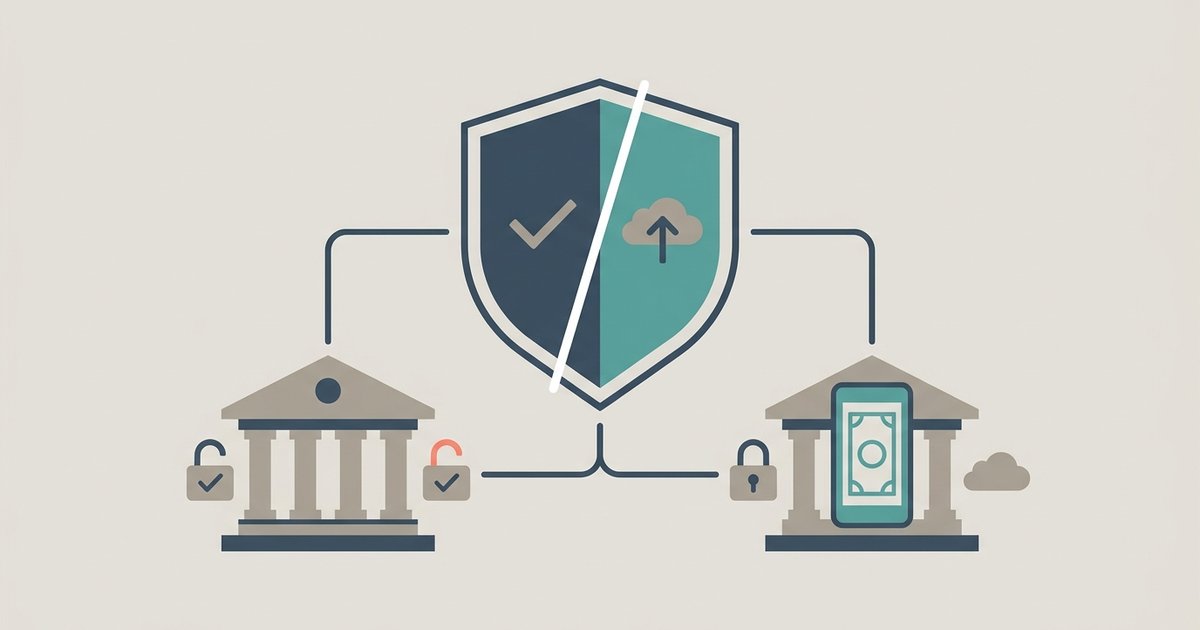
FDIC insurance covers up to $250,000 per depositor, per insured bank, for each account ownership category. Your checking account and mobile-linked savings account at the same bank typically fall under the same single-account ownership category, so they share one $250,000 limit together, not separately.
When accounts share the FDIC insurance limit
When you hold both a checking account and a mobile-linked savings account at the same FDIC-insured bank, the balances are added together under the single-account ownership category. The FDIC treats these as one depositor relationship, not two separate accounts. A mobile-linked sub-account, even if it appears distinct in your app, does not get its own separate coverage because it is still owned by you alone at the same institution. For example, if you use mobile banking to check your balances, you might see two numbers, but the FDIC sees one depositor with one combined total. If you lose access to your app, you may need to recover a mobile banking account after a SIM-swap attack before you can verify those balances. The only way to increase your coverage is to open accounts at different banks or use different ownership categories.
When coverage actually separates
Funds do get separate limits when they fall into different ownership categories, with the standard maximum insurance amount set by the FDIC and published in its Electronic Deposit Insurance Estimator. If you open a joint account with another person, that creates a distinct insurance bucket per co-owner, separate from your single accounts. Similarly, a trust account or a retirement account like an IRA qualifies for its own category. For instance, if you have a single checking account and a joint savings account with a spouse that holds an equal balance, both can be fully insured because they belong to different categories, but you must verify the current per-depositor, per-bank limit directly at FDIC.gov. Even if you hold a chase secure banking account as your primary checking and a separate joint savings at the same bank, the joint account gets its own limit. To maximize coverage, you must deliberately move money into these separate categories, the mobile app alone does not create them.
The mobile banking blind spot
Mobile banking apps often display checking and savings balances side by side, which creates a false sense of separate insurance. You might assume each balance is independently protected, but the FDIC aggregates them under your single depositor identity. The app interface hides this risk because it shows two distinct accounts without warning that they share one limit. To confirm your actual coverage, you must check the bank’s FDIC certificate number, found on the bank’s website or in the app’s “About” or “Legal” section, and verify that both accounts list the same certificate number. If they do, they are at the same bank and share the limit. When you transfer money between accounts, the transaction label might say online banking tfr mean transfer, but that movement does not change the ownership category. Understanding tokenization in digital banking helps explain why your account numbers are masked in transactions, but it does not affect FDIC rules. Always check the bank’s official deposit insurance disclosure, not the app’s visual layout, to know your true insured amount.
To fully protect your deposits, you should also use mobile banking to verify ownership structures and avoid common coverage gaps.