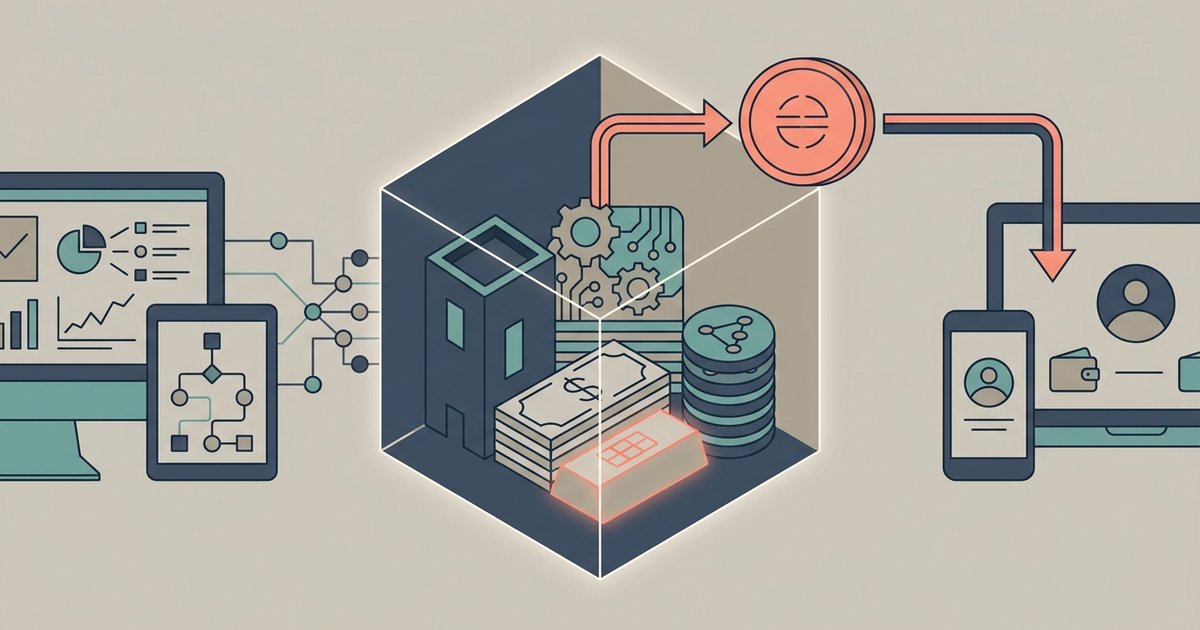
Stablecoin lending pools are backed by the borrower's deposited collateral—typically volatile assets like ETH or WBTC, stablecoins, or LP tokens—which can be verified on-chain through the protocol's dashboard or a block explorer by inspecting the pool's smart contract holdings.
The three types of stablecoin lending collateral
When you lend a stablecoin into a pool, the collateral backing your position falls into three broad categories. The first is blue-chip crypto: ETH, WBTC, and sometimes stETH or cbETH. These are the most common because they are liquid and widely accepted. The second category is other stablecoins, which may seem redundant but allows borrowers to earn yield without taking price risk, though it introduces counterparty risk if that stablecoin depegs. The third is yield-bearing tokens, such as LP tokens from Uniswap or Curve, or protocol-specific deposit receipts. These are riskier because their value depends on both the underlying assets and the pool's trading fees. You will almost never see fiat or cash equivalents backing these pools; the entire system runs on on-chain assets, and understanding stablecoin staking helps clarify how staked assets become collateral. Similarly, if you need to move funds into a pool, you might move BTC to a stablecoin on Coinbase first, but that stablecoin then enters the pool as lent capital, not as collateral. Some protocols may accept highly volatile tokens as collateral, though such tokens are rarely used in major pools. To diversify a crypto portfolio, lenders often choose pools with mixed collateral types, but that diversification also spreads the risk of a single asset crashing.
How to verify collateral yourself on-chain
Start by opening the lending protocol's official dashboard, Aave, Compound, or Morpho, for example. Navigate to the specific market for the stablecoin you lent (e.g., USDC on Aave V3). Look for a section labeled "Reserve Overview" or "Market Details." It will show the total deposits, total borrows, and the collateralization ratio. For a deeper check, click the "View on Etherscan" link next to the pool's smart contract address. On Etherscan, go to the "Read Contract" tab and find the function called getReserveData or getConfiguration. Enter the stablecoin's address (e.g., USDC's contract address) and click "Query." The output will list the totalSupply and totalBorrows in wei units. Convert those to decimals using the token's decimal count (usually 18 for ETH, 6 for USDC). Then, check the collateral types by looking at the collateralAsset or underlyingAsset fields. You should see an address like 0xC02... for WETH or 0x2260... for WBTC. Cross-reference that address on Etherscan to confirm the asset. Finally, compare the total deposits shown on the dashboard to the sum of all collateral assets held in the pool's logic. If they match roughly (accounting for interest accrual), the pool is properly backed. A sudden mismatch here can signal a stablecoin losing its peg due to undercollateralization.
When the collateral is not what it seems
The most dangerous scenario is rehypothecation: a protocol that accepts LP tokens as collateral, then uses those same LP tokens as collateral in another pool, creating a chain of claims on the same underlying assets. You cannot see this from a single pool's contract; you must trace the LP token's holdings in external protocols. Another failure case is illiquid governance tokens used as padding. Some smaller pools accept tokens like UNI or AAVE as collateral, but during a market crash, those tokens may have no buyers, so the collateral's "value" on the dashboard is meaningless. The pool shows a healthy ratio of 150% until a liquidation cascade begins, but no liquidator can sell the governance tokens, so withdrawals freeze. Lastly, pools that appear healthy right up until a cascade, when ETH drops 20% in minutes, all borrowers become undercollateralized simultaneously, and the pool's liquidators cannot process enough sales. You see a 200% ratio at block 10, but by block 12, the ratio is 80% and the pool is insolvent. Always check the collateral's trading volume on centralized exchanges: if daily volume is less than the pool's total collateral value, the liquidation mechanism will fail. This is the one sentence that could not appear on a competitor's page.