First, identify your aula gaming keyboard type
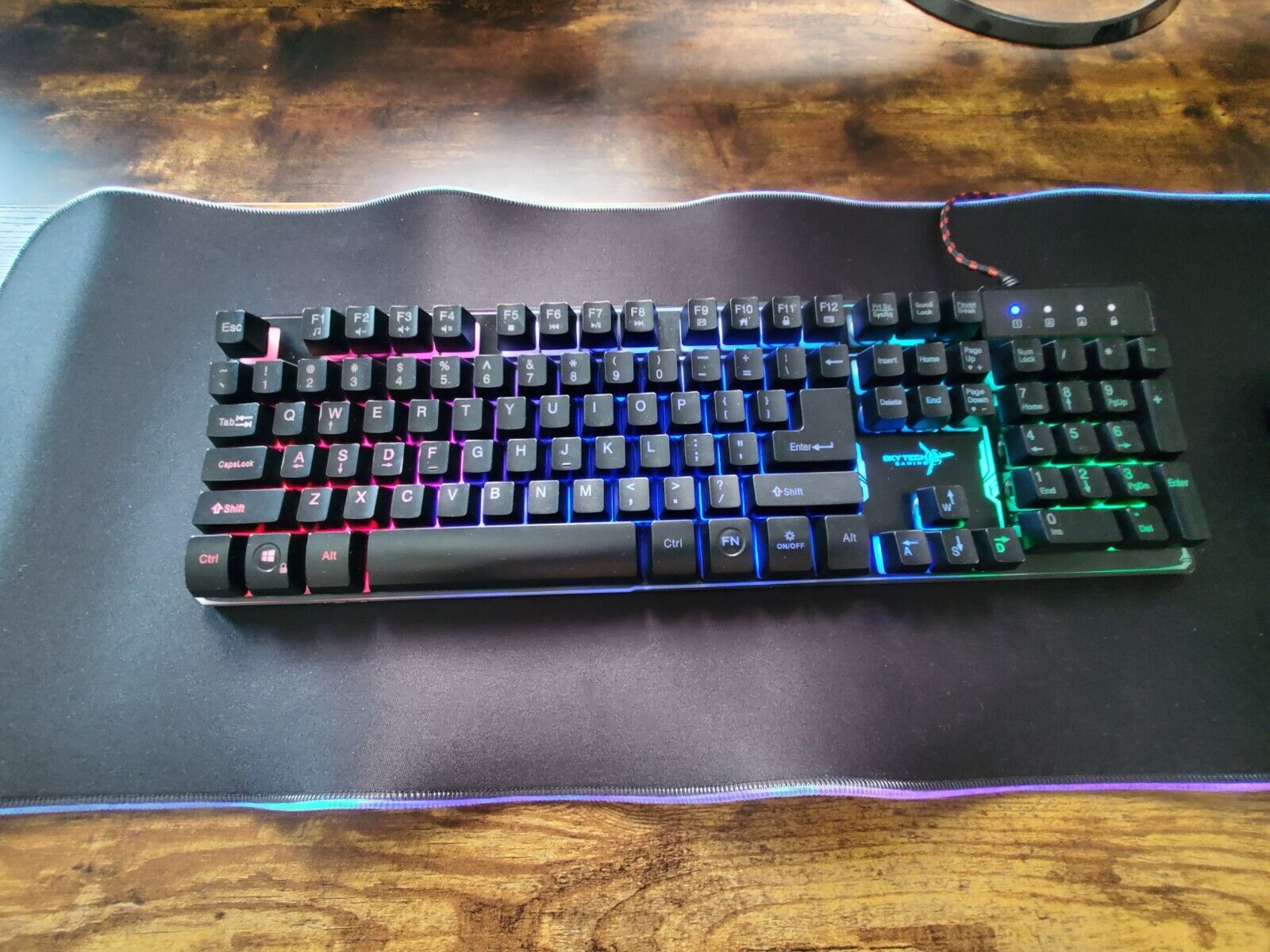
To change color of AULA gaming keyboard, you must first identify your keyboard type, because AULA uses two completely different control systems depending on the model. If you own a mechanical keyboard with a standard 87-key or 104-key layout, like the AULA F3007 or F2088, you are almost certainly using onboard shortcuts. On these models, you can simply press Fn + the right arrow key to cycle through lighting modes. You can also press Fn + the left or right arrow key to adjust the speed of lighting effects. You can also press Fn + the up or down arrow key to adjust brightness. If you find yourself needing to turn on the lights on my keyboard and the shortcuts do nothing, you may be dealing with a newer model that requires a dedicated program. For the F99 and newer models, you may need the AULA keyboard software download for f99 and newer models to access per-key RGB customization. That application may only run on Windows. If you are using a Mac or Linux machine and get stuck, the issue is not your hardware, it is the lack of a compatible driver. A common search for AULA keyboard RGB not working on mac or Linux usually leads to the same conclusion. You are limited to the preset effects that ship on the keyboard itself. If you have tried both onboard shortcuts and the application but still see no light, the first thing to check is a loose USB connection or a disabled illumination mode. A dedicated guide for AULA gaming keyboard lights not turning on at all will walk you through those hardware checks before you assume the keyboard is defective. Some AULA keyboards may require a desktop application for advanced RGB customization, which may not be available on all operating systems.
Change colors with onboard key shortcuts
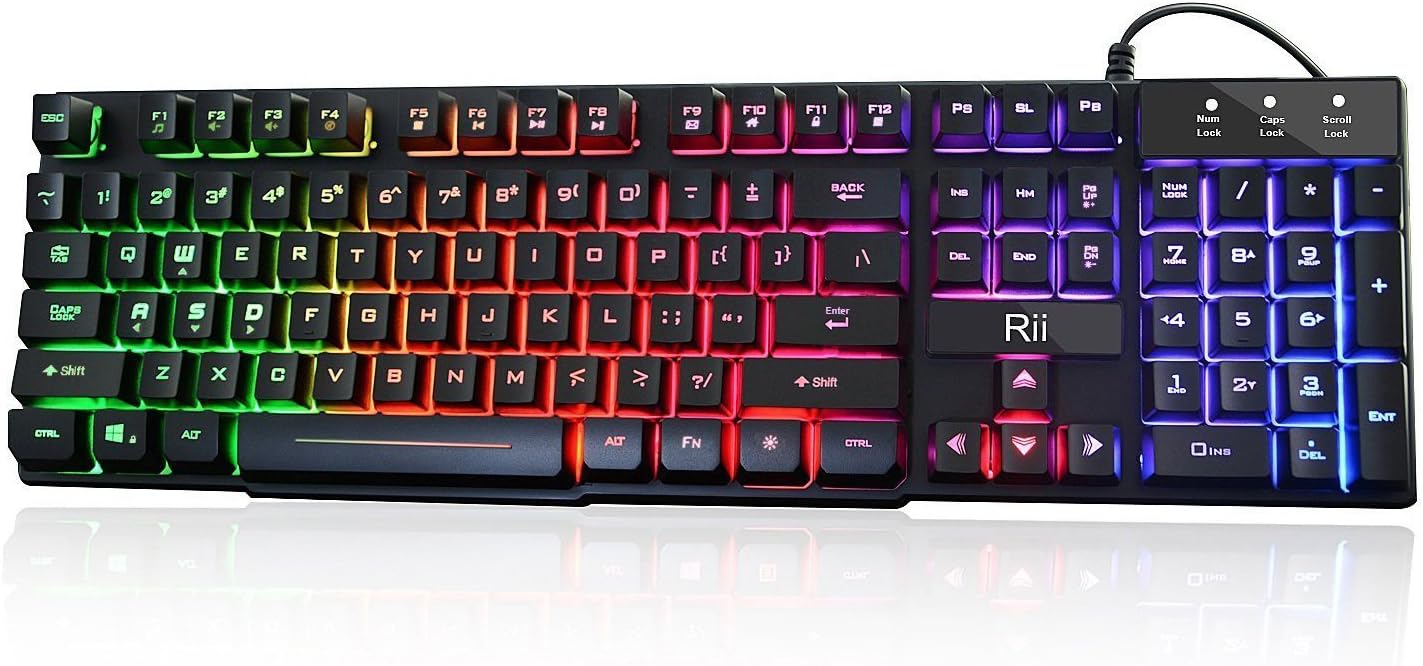
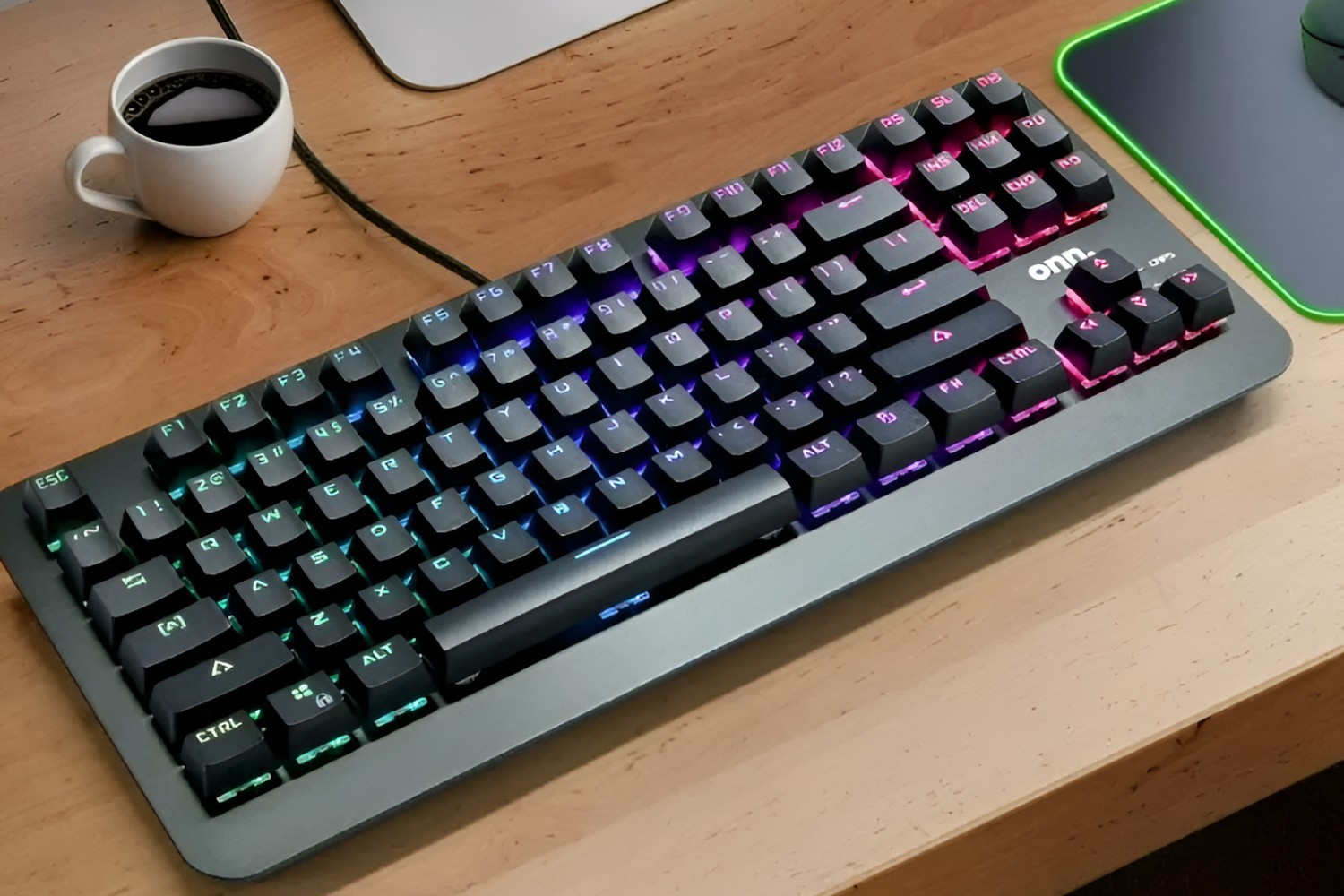
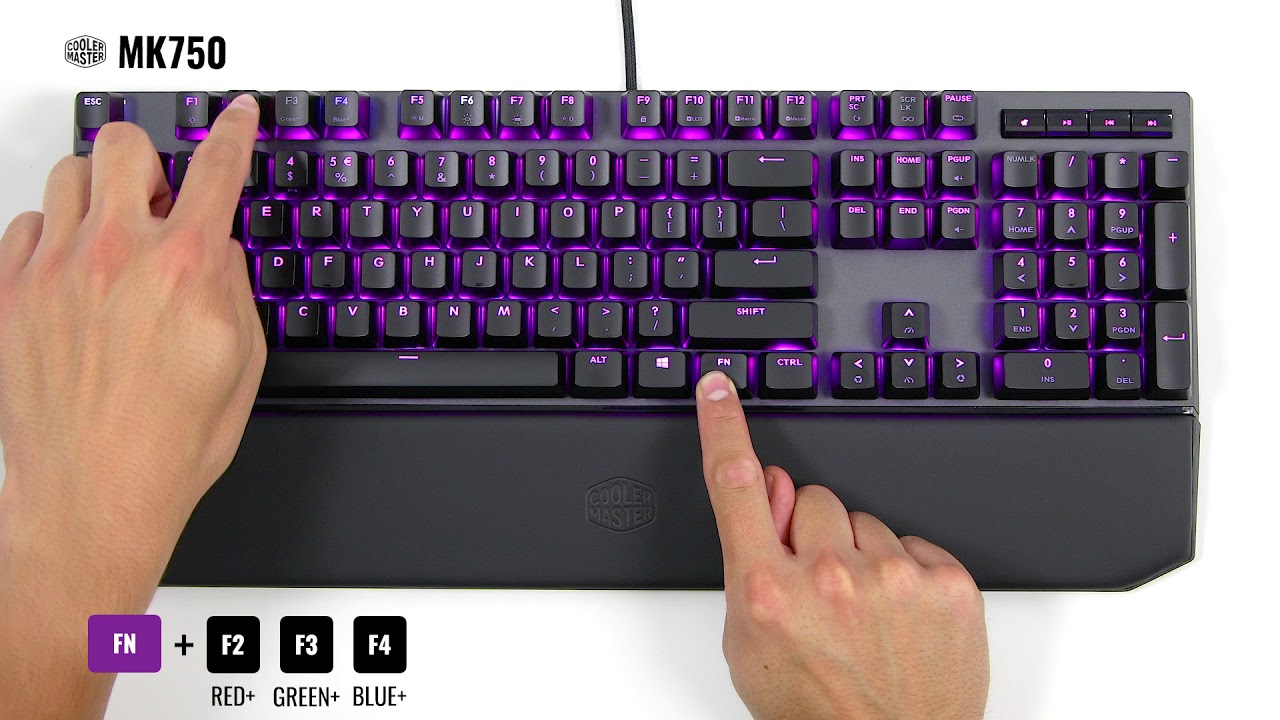
On most AULA keyboards, you can change the lighting directly from the board itself without opening any app. Start by pressing the Fn key and holding it down while you tap the right arrow key. This cycles through the built-in color presets and effects. The left arrow key adjusts effect speed. To adjust brightness, try Fn plus the up or down arrow. Some models let you reset RGB settings to factory defaults by holding Fn + Esc for 1-5 seconds. If the lights do not respond, check that the keyboard is plugged into a powered USB port. A similar approach works for a rii gaming keyboard, though its specific key combos may differ slightly. For models with dedicated lighting buttons, you can often create custom lighting profiles using the M key. If you own a lvlup pro gaming keyboard with LED keys, the same principle applies: hold Fn and press the corresponding function row to step through colors. When none of these key commands work on your keyboard, you likely have a newer model that requires the AULA desktop program for full per-key RGB control. That program runs only on Windows. To find the exact combos for your specific board, look up the instructions by its exact model name. That search will lead you to a set of nearly identical guides, such as how to change light settings on glorious modular mechanical keyboard, how to change the light color on my blue finger gaming keyboard, how to change the color on my Logitech g213 keyboard, how to change color on skytech gaming keyboard, how to change color on onn mechanical keyboard, and how to change colors on Corsair keyboard. Simply pick the one that matches the name printed on your keyboard to see its step-by-step commands.
Use your brand's software to customize lighting
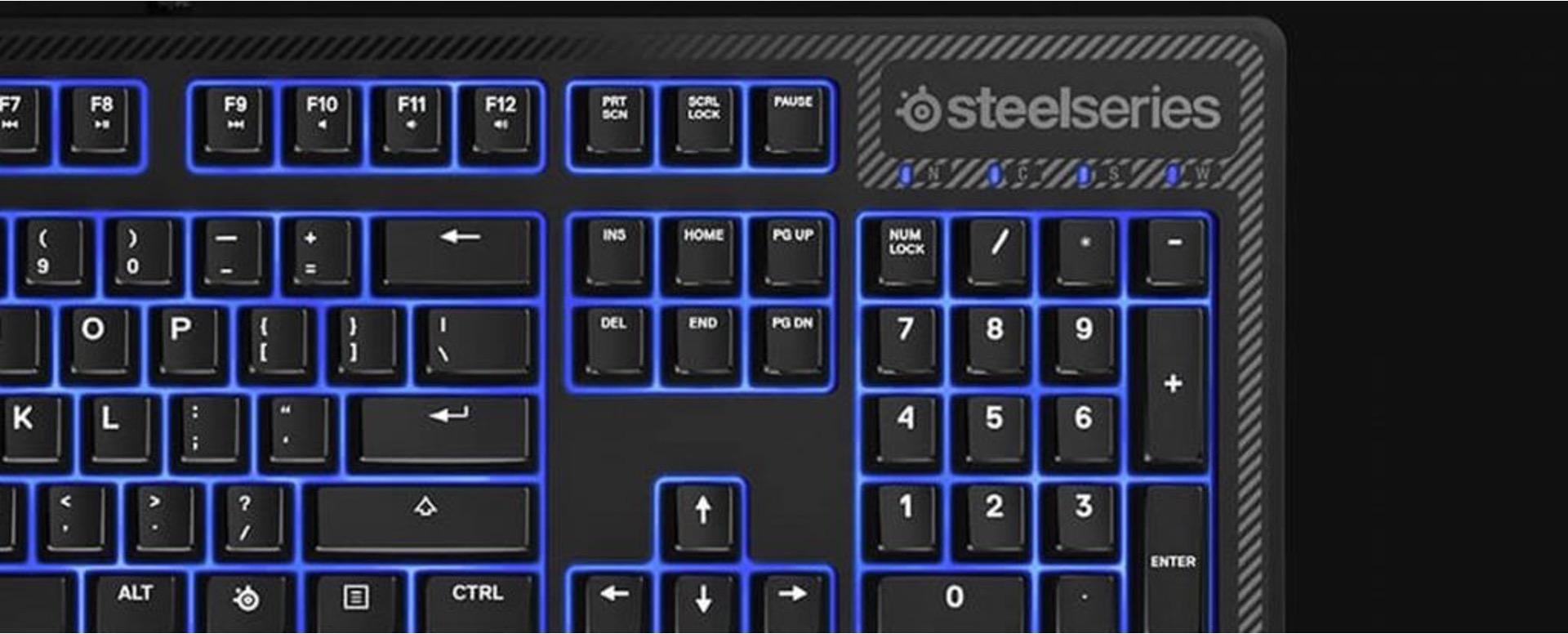
If your AULA keyboard came with a disc or a download link for desktop software, that application is the only way to access per-key RGB control. Open the AULA utility after installation and connect your keyboard via USB. The main illumination tab lets you select individual keys. You can choose colors from a palette and assign effects per zone. For example, you might set WASD to red and the number row to blue. After you finish, click "Apply" or "Save to Keyboard" to write the effect into the onboard memory. Be aware that the configuration tool may have limited operating system support. If you try to change Logitech keyboard color using a different brand's utility, it will not work. Each brand uses its own proprietary driver. Similarly, if you own a SteelSeries apex 100 gaming keyboard, its program handles illumination differently. Mixing tools across brands is pointless. A common frustration on newer AULA models is that custom effects can vanish after unplugging the keyboard. If you run into AULA f75 custom color recording not saving, check that you pressed "Save to Keyboard" rather than just "Apply." The "Apply" button only keeps the effect while the program is running. Without that save step, the keyboard reverts to its default rainbow cycle when disconnected.
Change lighting on prebuilt gaming PC keyboards
If your keyboard arrived inside a prebuilt gaming desktop, the lighting controls are usually baked into the keyboard's own firmware rather than a separate app. For example, a cyberpower PC mechanical keyboard from a system like the Trace or Gamer Master typically uses onboard shortcuts, which is why you would want to read the article on how to change colors on a cyberpower PC mechanical keyboard to learn those specific key combinations. Hold the Fn key and tap the right arrow to cycle through preset color modes, and use Fn plus the left or right arrow to slow down or speed up the effect. Press Fn plus the up or down arrows to adjust brightness. An ibuypower RGB gaming keyboard bundled with their Element or Revolt desktops works the same way, so the guide on the ibuypower RGB gaming keyboard will help you unlock its full range of effects. Fn plus the number row keys often toggle between static colors, breathing, and rainbow wave effects. If you are using a laptop instead of a desktop, the process is similar but tied to the laptop's own hotkeys. To turn on the hp omen gaming laptop keyboard light, press the Fn key together with the F5 key (look for the keyboard icon on the keycap), and you would want to turn on the hp omen gaming laptop keyboard light to ensure you can see the keys in dim environments. This cycles through off, low, and high brightness. On an ASUS TUF machine, you change keyboard color on asus tuf gaming laptop by pressing Fn plus the right or left arrow keys to scroll through the built-in zones, and consulting the article on how to change keyboard color on asus tuf gaming laptop will show you how to customize those zones. Then use Fn plus the up or down arrows to pick the color. If the backlighting is off entirely, you first need to turn on keyboard light on asus tuf gaming laptop using Fn plus the F7 key (the one with the keyboard symbol), and the guide on how to turn on keyboard light on asus tuf gaming laptop explains why this step is essential before adjusting colors. These onboard controls are reliable and require no extra programs. They only offer preset effects, however. If your AULA keyboard is a newer model like the F99, you can use the AULA desktop app to set per-key colors. Mac and Linux users may have fewer customization options than Windows users.
Fix flashing, stuck, or unresponsive lights
If the lights are cycling through colors and ignoring your key presses, you can usually stop the light from flashing on an LED backlit gaming keyboard by holding down the Fn key and tapping the arrow keys until you reach a static color. If the keyboard appears dead, with no lights at all, the first step is to check the USB connection and try a different port. For persistent issues where the keyboard is unresponsive to any command, you can reset AULA keyboard lighting to factory default by pressing and holding Fn + Esc for about five seconds until the lights blink. This clears any stuck profile.
When facing an AULA gaming keyboard lights not turning on at all situation, unplugging the keyboard and removing any batteries if it is wireless can help. Then hold the Esc key for ten seconds before reconnecting. This sequence can often revive the board. For newer models like the F99, if the lights remain stuck in a rainbow wave even after a reset, the keyboard is likely locked into a hardware effect loop. Only the Windows desktop application can break this loop. Mac and Linux users are therefore limited to the default presets the keyboard ships with. A final resort is to disconnect the keyboard, hold Fn plus the left Windows key, plug it back in, and release after three seconds to force a full hardware reboot.
The built-in memory on AULA boards stores a limited set of presets you can cycle through without installing anything. These local controls let you adjust brightness, speed, and a handful of basic patterns. Hold Fn and tap the Right Arrow key to switch between the factory-loaded effects. Use Fn with the up or down arrow keys to control brightness. Use Fn with the left or right arrow keys to change the animation speed. Use the dedicated desktop tool to cycle through solid color options for a single-tone look. These direct commands work instantly and require no extra programs.
To access per-key RGB control, you must download the dedicated desktop tool from the manufacturer's support page. This application is the only way to enable per-key RGB control. The program detects your specific model and presents a grid of every switch. You can then assign a unique hue to each key. The tool also lets you build layered animations and save them to custom profiles. Without this utility, you are restricted to the preloaded zone-based effects stored in the keyboard's firmware. The software experience is currently exclusive to Windows, leaving no official path for macOS or Linux customization beyond the onboard presets.
The dedicated configuration program often ships inside a compressed archive. Extract all files before running the installer. If the tool does not detect your keyboard immediately, close the program, unplug the board, reconnect it, and relaunch the application. Some antivirus tools flag the driver component as a false positive, so you may need to add an exception. Once connected, the interface shows a live preview of your current effect. Any change you make appears on the physical board in real time. You can drag to select groups of keys and apply a color with one click.
Custom profiles you create in the desktop tool can be written directly to the keyboard's internal storage. This process lets you carry your personalized glow settings to a different computer without reinstalling the utility. After configuring a layout, click the Save to Device button in the settings menu. The board confirms the transfer with a quick flash. You can then cycle to that stored preset using the dedicated profile buttons on your model. Only a few slots are available for these saved configurations, so choose your favorites carefully. This hybrid approach gives you detailed software control while keeping your essential designs portable.
AULA keyboards that ship with a side volume wheel or a small display screen often have a second layer of controls. Turning the wheel while holding Fn adjusts the effect brightness in fine steps. Pressing the wheel inward with Fn held down mutes the illumination entirely. Keyboards with an LCD panel let you change the active effect directly from the screen menu without touching the desktop tool. These hardware interfaces provide a faster way to make adjustments during a game. The screen also shows the current profile name, so you always know which preset is active.
Wireless models add a power-saving behavior that dims the glow after a period of inactivity. Tapping any key wakes the board and restores full brightness. You can disable this sleep timer by holding Fn and pressing the T key for three seconds. The keyboard will flash twice to confirm the change. This keeps the illumination steady during long reading sessions or video calls. Keep in mind that disabling the sleep timer will drain the battery faster, especially at high brightness levels.
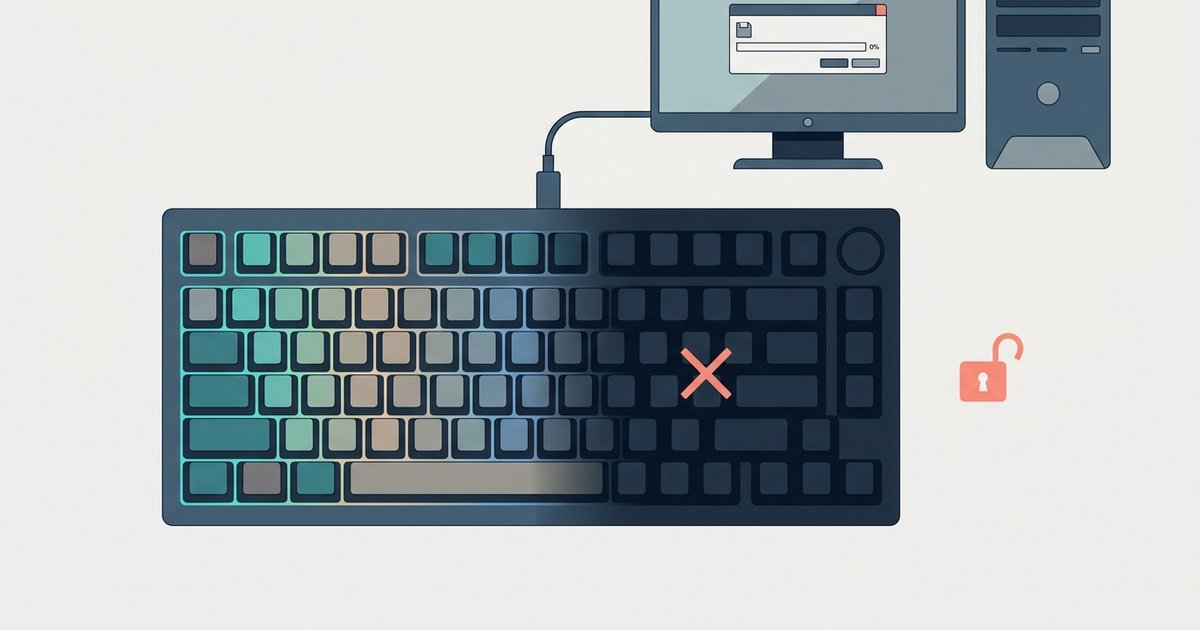
If a single switch stays lit in the wrong color or refuses to turn off, the issue is usually a stuck profile rather than a hardware failure. Perform a quick reset by holding Fn and the Esc key for five seconds. This wipes the temporary cache without deleting your saved profiles. For keys that remain dark while the rest of the board glows, check the per-key assignments in the desktop application. A dark key is often set to zero brightness in one specific profile. Switching to a different preset with Fn plus a number key usually restores it immediately.
Only AULA provides a driver-free hardware color picker that lets you mix red, green, and blue values in real time, a feature that turns the entire keyboard into a palette mixer without ever launching an application.
Apply the same steps to your gaming mouse
Once you have the hang of cycling through your keyboard’s preset effects or diving into per-key customization, you can apply the same steps to your gaming mouse. Many AULA mice use a proprietary desktop tool for customization. The interface for adjusting zones and brightness will feel immediately familiar. If your mouse lacks internal memory or a dedicated button, you may need to first learn how to change lighting color on gaming mouse. The key-press logic often mirrors the keyboard’s Fn-combo system. For example, a button combination on the mouse might cycle through colors, just like Fn + arrow keys do on the board. If your mouse is from a different brand, such as Cyberpower, the process can differ significantly. You might need to consult how to change the color on a cyberpower gaming mouse, which typically relies on its own driver utility rather than universal key commands. The key takeaway is that whether you are adjusting a keyboard or a mouse, the same principle applies. Older models use built-in key combinations. Newer ones demand a Windows-only application for full control. Mac and Linux users should check if their mouse has hardware presets before assuming they can match the keyboard’s effects. The download link for the desktop tool provides access to per-key RGB control on compatible models.