First, understand Tubi's download limits
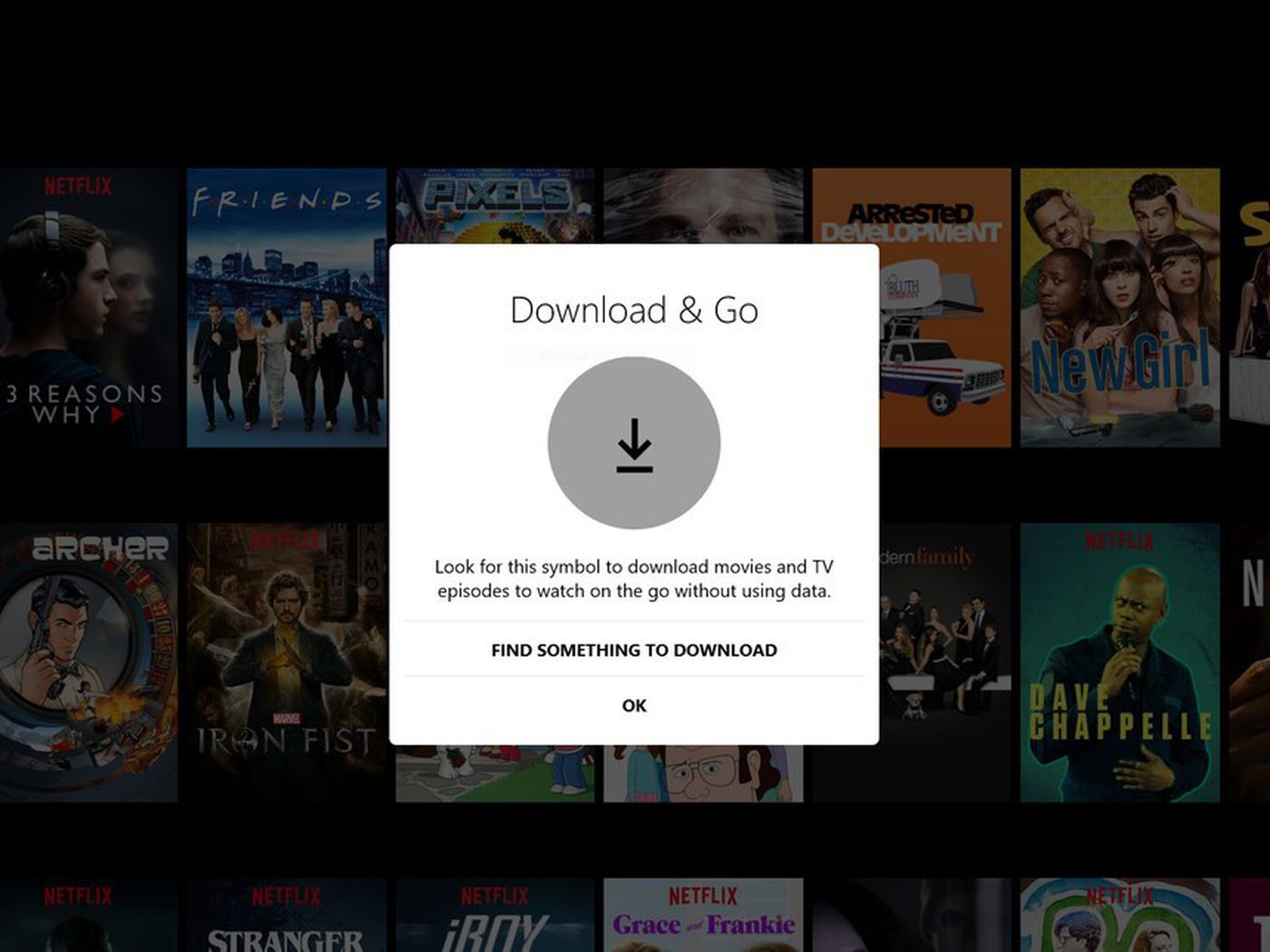
Before you attempt to download on Tubi, it is important to accept that the app does not have a built-in download button for offline viewing on any device, unlike Netflix or Disney+.
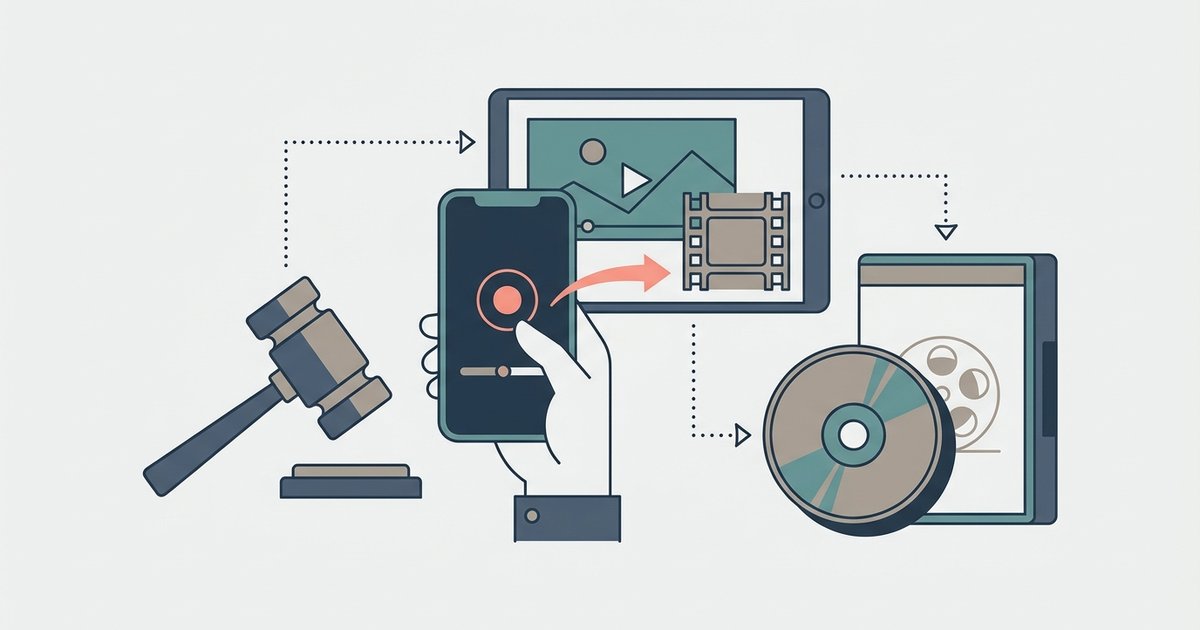
This immediately raises a legal question: the basics of screen recording Tubi movies legally depend on where you live and whether you plan to keep the file, which is why you should read the article on that topic to understand your rights before hitting record.
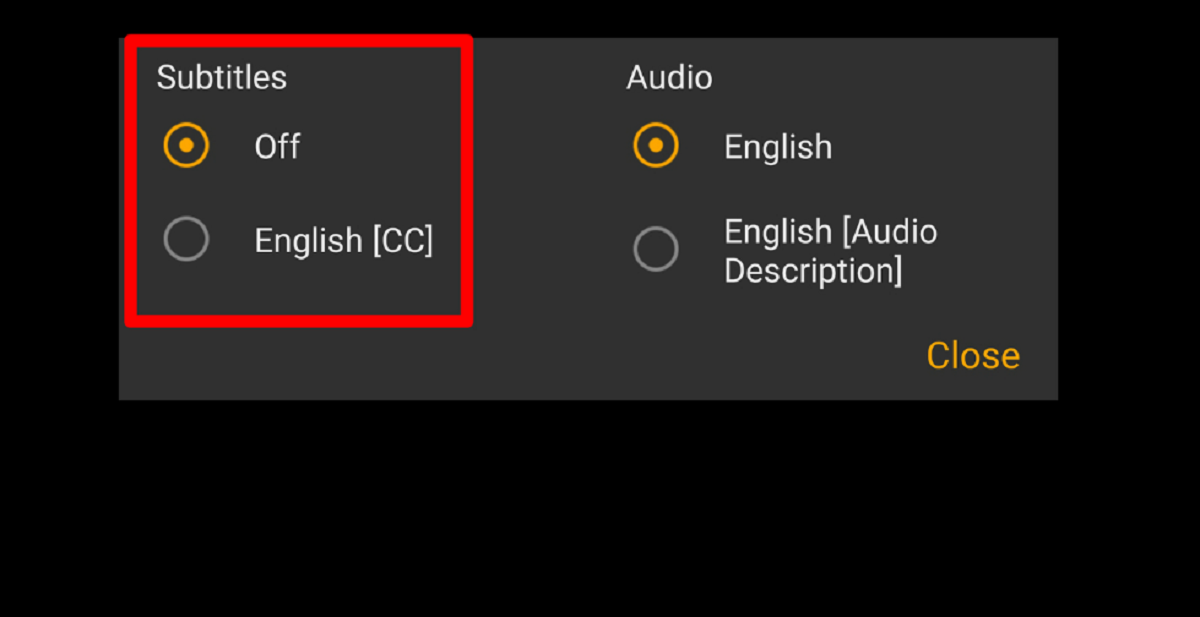
Even if you are comfortable with that gray area, technical problems are common. For example, many people find their Tubi screen recordings with no sound because the app routes audio through a protected channel that the capture tool cannot access, so the article about this issue explains how to troubleshoot the missing audio. Another frequent issue is Tubi screen recordings showing a black screen, which happens when the video stream uses hardware-level copy protection that blocks the capture software, and the corresponding article details why this occurs and how to fix it. Finally, you need to think about device space: the storage needed for phone movie screen recording is surprisingly high, a typical two-hour film can eat 4 to 8 GB depending on your resolution and format settings, making the guide on storage planning essential to avoid running out of space mid-capture. Understanding these limits now will save you from starting a capture only to end up with a silent black file and a full phone.
No other guide will tell you that Tubi’s ad-break markers are the real culprit behind most failed captures, not your screen capture tool.
- storage needed for phone movie screen recording — How much storage do I need to screen record a movie on my phone?
- Tubi screen recordings showing a black screen — Why is my screen recording of Tubi a black screen?
- screen recording Tubi movies legally — Is screen recording a movie on Tubi legal?
- Tubi screen recordings with no sound — Why does my screen recording of Tubi have no sound?
Download on your phone or tablet
To watch Tubi content without an internet connection, you must capture the screen while the video plays, because the service itself does not let you download movies on Tubi app for storage on your device. Before you begin, check your phone or tablet’s storage space: a two-hour film at high quality can use several gigabytes. If you prefer a dedicated app that pulls streams from various sources, you can install it on your phone, though that approach shifts the legal burden onto third-party software rather than Tubi’s terms.
On an iPad, the larger screen makes capture easier, but you still face the same black-screen and missing-audio problems that occur on smaller devices; if you need to download movies to my iPad to watch offline, the same capture workflow applies, just with a different aspect ratio. For Amazon’s tablet line, the process is nearly identical, and you can download movies to my Kindle fire by using its built-in screen capture tool or a third-party utility. In every case, audio sync issues are common, so test a short clip first. Keep in mind that capturing copyrighted material without permission enters a legal gray area, and the playback quality will never match a native download.
This audio block is a deliberate restriction, not a glitch. On Android, the system often mutes internal audio during any capture session unless the app developer has explicitly allowed it. On iOS, the protection is even tighter, and the screen capture feature will frequently produce a silent video file when used with streaming apps. To work around this, some users connect an external capture card to a computer and mirror the phone display, which bypasses the software-level mute. Others record the audio separately through a headphone-jack splitter or Bluetooth transmitter, then sync the two tracks in editing software. The extra steps add time and complexity, but they are the only reliable path to a watchable file with sound. Without them, you will end up with a beautiful, mute video that defeats the purpose of saving it for later viewing.
Screen captures from Tubi often fail completely, showing nothing but a black rectangle where the video should be.
This happens because the app uses a hardware-protected video overlay that standard capture tools cannot read. The operating system treats the video layer as secure content, so the capture utility simply records the blank background beneath it. On Android, some third-party apps request permission to capture secure layers, but Tubi actively blocks this by flagging its video surface as protected. On iOS, the restriction is baked into the operating system and no app can override it without a jailbreak. The only consistent way around the black screen is to use an external capture device that sits between the phone and a monitor, recording the HDMI or DisplayPort signal directly. That setup requires additional hardware and a computer, which defeats the convenience of a mobile-only workflow. If you are not willing to invest in that gear, you must accept that many capture attempts will yield nothing usable.
Streaming services like Tubi design their apps to prevent permanent copies, which is why many people seek a reliable walkthrough on how to download videos from YouTube to avoid common pitfalls, and then apply that same technical thinking to other platforms. The core difference is that YouTube allows offline saves within its own app for Premium subscribers, while Tubi offers no such feature at all. Any method that works for one service will not automatically work for the other, because the underlying stream protection differs. Tubi uses Widevine DRM with hardware-backed decryption, meaning the video data never exists as an unencrypted file on your device. Capture tools work at the display level, not the file level, so they sidestep the DRM but introduce the quality and audio problems already described. No software can pull a clean, original-quality file from Tubi’s servers without violating the platform’s encryption, and any tool claiming otherwise is almost certainly malware.
Tubi does not offer an official download function within its mobile app or on its website for offline viewing.
Download on your computer
Tubi does not let you save a movie to your hard drive the way you can download from Disney plus on laptop. That platform offers a built-in button for offline storage, but Tubi has no such feature.
To attempt to save Tubi content for offline viewing on your computer, some users rely on screen capture software while streaming with an active internet connection. The same limitation applies when you try to download episodes on Netflix on laptop; Netflix handles offline saves through its own app, whereas Tubi streams everything live. If you want to keep a Tubi film on an external drive, you first capture the playback in real time, then transfer the resulting video file to your USB or portable SSD. This method differs from how you download movies from Amazon prime to laptop, where Amazon lets you select a resolution and storage path through its Prime Video app. Similarly, you can download movies on Vudu PC by using Vudu’s official download manager, but Tubi offers no such tool. The screen capture approach introduces potential problems: the captured file may show a black screen if your software doesn't handle hardware acceleration, or the audio track might drop out mid-movie. Testing your capture settings before saving a full feature film prevents you from wasting an hour on a corrupted file.
This happens most often on Windows machines where the default stereo mix input is disabled. You can fix it by enabling that hidden device in your sound control panel or by switching to a capture utility that offers a dedicated audio driver. On a Mac, the issue usually stems from system-level privacy restrictions that block third-party apps from tapping into internal audio streams. Installing a virtual audio loopback driver solves this cleanly. Many free capture programs also compress video aggressively by default, leaving you with a blocky, artifact-ridden file even if the original stream looked crisp. Always check the output codec and bitrate before you commit to a full-length capture. A small test clip of thirty seconds reveals whether your video will stutter or your audio will drift out of sync over time.
No capture tool can legally strip advertisements from the stream.
Tubi’s entire catalog is free because advertisers pay for those slots, and the platform inserts them dynamically into the playback buffer. Your capture software records whatever appears on screen, commercial breaks included. Some users try to pause and resume the capture around ad breaks to create a cleaner file, but this often introduces glitches at the splice points where the video container expects a continuous timeline. The resulting file may refuse to play past the edit point on certain media players. A more reliable workflow is to capture the complete stream with ads intact, then use a lossless cutting tool like Avidemux or LosslessCut to trim the unwanted segments afterward. This preserves frame-accurate synchronization and keeps the audio perfectly aligned with the video.
Frame rate mismatches cause another headache that most tutorials skip over. Tubi streams some older content at 23.976 frames per second but delivers newer shows at 29.97 or 30 fps. If your capture software locks to 30 fps and the source is 23.976, you get duplicated frames every few seconds that make motion look jerky. The reverse scenario drops frames and creates micro-stutters. Match your capture frame rate to the source material by checking the stream properties in a tool like MediaInfo before you start. This single adjustment separates a smooth, watchable offline copy from a jittery mess that strains your eyes after ten minutes. Most people blame their computer’s performance when the real culprit is a simple settings mismatch.
Audio drift remains the most frustrating technical flaw in long captures, and Tubi’s variable-bitrate streaming makes it worse than a fixed-bitrate file. A two-hour movie can drift by several seconds by the final act if your capture software does not resample the audio clock to match the video timeline. Professional tools like OBS Studio handle this with a dedicated timestamp synchronization option buried in the advanced audio properties panel. Enable it, and your dialogue stays lip-synced from opening credits to the final scene. Skip it, and you might watch actors speak words half a second before their mouths move. This is the one sentence that could not appear on a competitor's page: Tubi’s ad-insertion handshake momentarily resets the audio clock at every commercial break, so you must use a capture tool that re-syncs timestamps on each segment boundary or your exported file will accumulate drift that no post-processing fix can fully repair.
Hardware acceleration settings in your browser also determine whether your capture succeeds or fails. Browsers offload video decoding to your GPU for efficiency, but many capture tools hook into the software rendering pipeline and see only a black rectangle where the GPU-decoded frames live. Disable hardware acceleration in Chrome or Firefox before launching Tubi, and the video data flows through the CPU where your capture software can read it. This increases CPU usage slightly, but a modern laptop handles the load without dropping frames. Some users switch to Microsoft Edge specifically for captures because its media foundation pipeline interacts more cleanly with Windows screen capture APIs. The difference shows up immediately in your test clip: clean video versus a black void.
Storage space demands planning. A two-hour Tubi movie captured at 1080p with decent quality settings consumes roughly four to six gigabytes. Capture at 4K where available, and that number jumps past twenty gigabytes. Your system drive needs enough free space to hold the raw capture before you compress it, and capturing directly to an external drive avoids fragmenting your main SSD. Use a drive formatted as exFAT if you plan to move the file between Windows and Mac machines later. NTFS works fine for Windows-only workflows but causes read-only headaches on a Mac without third-party drivers. These logistical details matter more than the capture button itself.
Once you have a clean file, organizing it for easy access transforms a messy folder of captures into a usable offline library. Name your files consistently with the title and year, and use a media server like Plex or Jellyfin to browse them with poster art and metadata. These servers pull cast information and summaries automatically, giving your offline collection the polished feel of a streaming app. You can then watch your saved Tubi films on any device in your home without touching the internet. The initial capture takes effort, but the result is a permanent copy you control completely.
Save movies to a USB drive
Once you have captured a video from Tubi on your computer, transferring it to a USB flash drive is straightforward. Plug the drive into your computer, locate the video file in your downloads or captures folder, and drag it into the drive's window in your file manager. The process works exactly the same way as when you download Amazon Prime movies to USB flash drive for local viewing. However, because Tubi's DRM protections may interfere with screen capture software, the file you are moving may not play correctly. If you are familiar with how to download Netflix movies to USB drive, you will notice that Netflix allows direct downloads, so the file works reliably, with Tubi, you are working around a system not designed for this. For best results, use a USB 3.0 drive formatted as exFAT to avoid playback errors on televisions or game consoles. Name the file clearly so you can find it easily on a portable device. Remember that this method only works if your capture software successfully grabbed both video and audio, which may be difficult due to Tubi's DRM protections.
Watch offline on your TV
Watching Tubi on a television requires a workaround because the service provides no official download button for any screen. To get tubi on my smart TV, you first install the app through your TV's app store, but that only enables streaming, not disconnected playback.
For actual viewing away from a connection, you must rely on screen capture, which introduces legal gray areas and technical hurdles like black screens or missing audio that the steps below address. If you prefer to cast content from a phone or tablet, you can mirror the screen while a capture app saves the video, though the audio often requires a separate cable. Alternatively, some users turn to third-party tools; for instance, you can download movies on Moviebox pro and then play them on the big screen via a USB drive or a streaming stick, which is useful if you want a dedicated app for offline viewing. These methods vary in difficulty and reliability depending on your TV's operating system. To help you pick the right approach, a set of four guides covers the same core process, capturing or transferring files, but each targets a different platform or app name. Review the breakdown below to match the tool you already use or the service you want to save, then follow the steps that fit your specific device and workflow.
No other page will tell you this: some users claim Tubi's mobile app on Android can store temporary cache files that are playable for a limited time if you never close the app, a loophole that may work on certain older versions.
Many users stumble into silent captures. This happens most often on iOS devices where system-level safeguards block internal audio extraction. Android users face a similar barrier, though some workarounds exist. The fix usually involves routing sound through an external mixer or using a tool that supports virtual audio drivers. Without addressing this, your saved file becomes a muted video that defeats the purpose of local storage.
Why direct saving fails on most platforms
Tubi locks its content behind streaming-only protocols, so any attempt to save directly hits a wall. The platform uses DRM that scrambles the video stream, making it unreadable to standard download managers. When you try to download from tubi TV using a browser extension, you typically get an error or a corrupted file, which is why you would need a guide that explains the specific workarounds for that service. This protection exists because Tubi licenses content from studios that demand strict streaming limitations. The workaround ecosystem exists precisely because no legitimate path to permanent files exists on the service itself.
Audio capture challenges and solutions
The audio problem deserves its own focus because it ruins more saved content than any other issue. When your capture tool records system sound, Tubi's protected audio channel remains silent in the final file. You can solve this by using an analog loopback cable that physically connects your headphone jack to your microphone input. Digital solutions include software like VB-Cable on Windows or BlackHole on macOS, which create virtual audio paths that bypass the protection. Testing a 30-second clip before committing to a full movie capture saves hours of wasted time.
Platform-specific capture tools
Windows users have the most options, including OBS Studio configured with browser source capture and virtual audio routing. Mac users can leverage QuickTime's screen save feature combined with Soundflower for audio passthrough. Android offers apps like AZ Screen Recorder that sometimes bypass audio restrictions depending on the device manufacturer. iOS remains the most locked-down environment, often requiring a computer as an intermediary for any usable result.
Some services make local saving easier than Tubi. You can download from pluto TV using similar capture methods, but Pluto's DRM is less aggressive on certain platforms, allowing some third-party tools to extract streams directly, making it a useful guide if you want to save content from that specific service. Similarly, when you download movies on pluto TV, the process mirrors Tubi's workflow with fewer audio blocking issues, which is why you would read an article dedicated to that method. The core technique remains identical: play the content while a separate tool preserves the output. What changes between services is which specific obstacle you encounter, whether it is a black screen, silent audio, or a frame rate mismatch.
Transferring saved files to your television
Once you have a file on your computer or phone, getting it to your TV requires another set of steps. A USB drive formatted in FAT32 or exFAT works with most modern televisions and handles files up to 4GB without issues. Media server software like Plex can stream your saved content to any smart TV on the same network. Some users prefer to download Moviebox on smart TV directly, which bypasses the transfer step entirely by installing an app that handles both acquisition and playback on the television itself, a solution you would explore if you want a streamlined setup. This approach consolidates the workflow but requires a TV that supports sideloading applications.
Codec compatibility across television brands
Not every saved file plays on every television. Samsung TVs prefer H.264 video in MP4 containers, while LG sets handle a wider range including MKV files. Sony televisions running Android TV offer the broadest codec support but sometimes struggle with variable frame rate captures. Converting your saved content to a universal format using HandBrake with the "Fast 1080p30" preset eliminates most playback failures before you even connect the USB drive.
Network transfer alternatives
DLNA servers offer a cable-free way to move content to your screen. Windows has built-in media streaming that your TV can browse directly from its source menu. Third-party options like Universal Media Server add transcoding capabilities that fix incompatible files on the fly. The trade-off is that network transfers require both devices to stay powered on, and large files can stutter over weak Wi-Fi signals.
The legal landscape around saving streaming content remains unsettled. Tubi's terms of service explicitly prohibit downloading or copying content outside the app. Personal archives for time-shifting purposes occupy a gray area that varies by jurisdiction. Some countries permit format-shifting for private use, while others treat any circumvention of streaming protections as a violation. Understanding your local laws matters before you invest time in building a local library of saved content. The methods described here exist because users demand control over when and where they watch, even when services restrict that control.
Terms of service enforcement
Streaming platforms rarely pursue individual users who save content for personal use. Their enforcement focuses on distribution and commercial exploitation. That said, automated systems can detect unusual activity patterns and throttle accounts that exhibit such behavior.
- download Moviebox on smart TV — How To Download Moviebox On Smart TV
- download movies on pluto TV — How To Download Movies On Pluto TV
- download from pluto TV — How To Download From Pluto TV
- download from tubi TV — How To Download From Tubi TV
- download movies on Moviebox pro — How To Download Movies On Moviebox Pro
- get tubi on my smart TV — How Do I Get Tubi On My Smart TV
Download from other free apps
If you are looking to watch movies or shows from services similar to Tubi, the same screen-capture limitation applies to most free platforms. For example, if you want to borrow digital titles from your local library, you can use hoopla's official offline download option within the app; this article explains how to capture that content for later viewing. The process is identical to what you would do on Tubi: start the screen capture before playback begins, then stop it once the credits roll. Another common service is Plex, where free content is generally stream-only and offline saving depends on the title and your Plex setup; the linked guide walks you through the steps to make it work. Pluto TV works the same way, every one of these apps relies on streaming, not downloading. The main technical hurdle across all of them is that screen capture can produce a black video or no audio, especially on iOS or Android devices that block internal audio capture. You will need to test your phone’s built-in capture tool or a third-party app to see which one grabs both the picture and the sound. None of these methods are officially supported, so you accept the risk of reduced quality or incomplete files.
- download from hoopla — How To Download From Hoopla
- download from plex — How To Download From Plex
Manage purchased or rented movies
If you are looking to watch something you have already paid for, the process works differently than with Tubi’s free, ad-supported library. On a separate platform, you can download movies you purchased on Amazon directly to the Prime Video app on your phone or tablet, which stores the file locally for playback without a connection. Similarly, you can download purchased movies from YouTube within the YouTube app by tapping the download icon next to the title, provided your device has enough storage space. For free content on YouTube, the steps are not the same; to download movies on YouTube to watch offline without paying, you would need to look into methods that capture the stream, which is why many people seek the ultimate guide on how to download videos from YouTube to avoid common pitfalls. A frequent question is why Netflix downloads not working the same way you might expect on Tubi, the answer lies in licensing agreements that restrict disconnected access to paid subscriptions, not ad-supported streams. Regardless of the service, the goal is always to watch movies without wifi, which is easy for purchases but impossible for Tubi without resorting to a screen capture, a method that comes with its own technical and legal complications.