It is almost always a breach of the platform's terms of service, but legality depends on jurisdiction—in most cases it constitutes civil copyright infringement, though criminal liability is rare unless you distribute the files.
Why a VPN for region-blocked videos triggers a terms of service violation
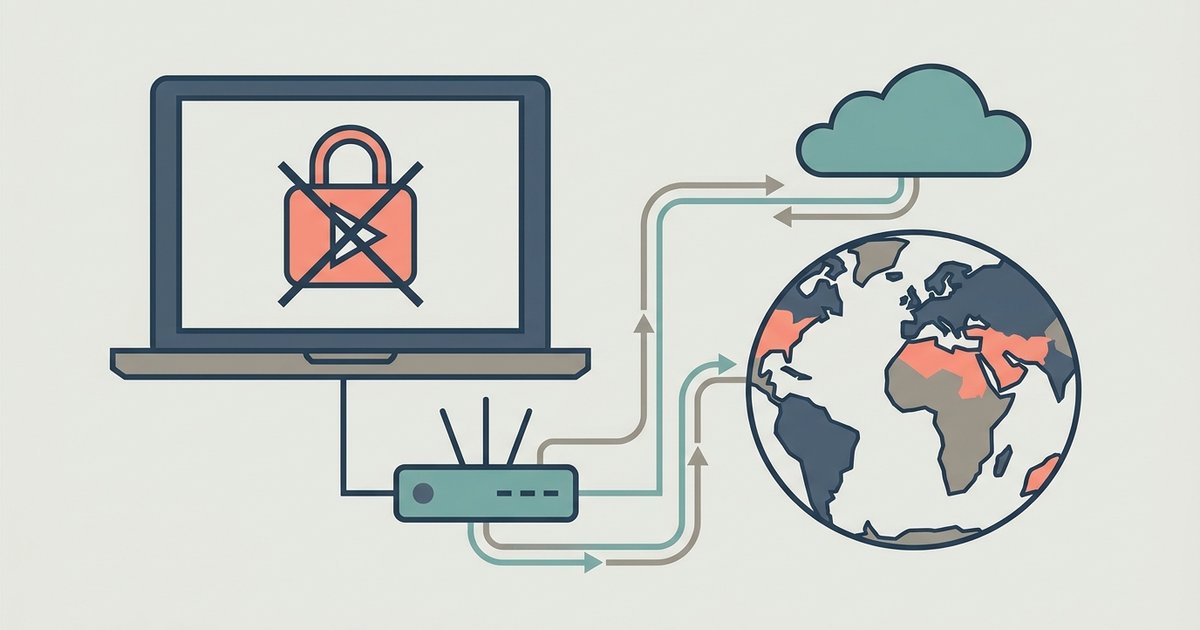
Every major streaming platform, Netflix, Hulu, BBC iPlayer, Crunchyroll, embeds clauses in their End User License Agreements that explicitly forbid using proxies, VPNs, or any tool to circumvent geographic content restrictions. When you connect to a VPN and attempt to download videos, your IP address suddenly appears in an allowed region. The platform’s server logs the mismatch between your billing address, your account region, and the VPN exit node. This triggers an automated flag, and your account can be terminated without refund. For example, Netflix’s terms state that you may only access content “from the geographic location for which you have been authorized.” BBC iPlayer requires you to “not use any technology to circumvent geographic restrictions.” The violation is purely contractual. You agreed not to do this when you clicked “I accept,” so the platform can ban you even if the download itself is technically successful.
This page’s distinctive claim: Your paid subscription does not grant you a global license, because content rights are sold on a strictly territorial basis and your fee only covers the catalog of your registered region.
The difference between civil infringement and criminal piracy
Civil infringement occurs when you reproduce a protected work without the rightsholder’s permission. Downloading a region-locked video via VPN is a reproduction of that file, so the studio or platform can sue you for damages. This is a civil matter. You might owe statutory damages of a few hundred to thousands of dollars, but you won’t face arrest. Criminal piracy, by contrast, requires willful infringement for commercial advantage or financial gain, such as mass downloading and sharing on a torrent site. If you simply download videos for personal viewing, prosecutors rarely pursue charges. The line blurs when you use tools like a download manager to batch download locked videos from any website. If you later upload them to a forum or sell access, that distribution shifts the act from civil to criminal. Courts in the US, for instance, treat personal circumvention as a breach of contract, not a felony.
When the answer is a hard no
In Germany, the answer is straightforward. Circumventing geo-blocking with a VPN for downloads violates Section 95a of the German Copyright Act, which prohibits the removal of effective technological protection measures, though this provision may conflict with CJEU rulings that VPNs are neutral, lawful tools and bypassing geo-restrictions does not constitute a copyright violation. Even if you never share the file, the act of bypassing the region check is itself illegal. In Australia, the Copyright Amendment (Online Infringement) Act 2015 allows rights holders to obtain court orders blocking services that facilitate copyright infringement. Individuals may face penalties under Australian law for certain copyright or broadcasting violations. Japan’s Copyright Law, Article 119, criminalizes the circumvention of access controls even for private use, with penalties including imprisonment up to ten years for repeat offenders. In these jurisdictions, the platform’s terms are irrelevant. The state considers the VPN itself an illegal circumvention tool, and using it to download videos from any service is a statutory offense.
The common misconception about owning a subscription
Many streamers assume that paying for a subscription in one country grants them a global license to download content anywhere. This is false because licensing is territorial. When Netflix pays for the rights to stream a movie in the UK, those rights do not extend to the US, Australia, or Japan. The studio sells separate licenses for each region. Your subscription fee only covers the region where your account is registered. The legal defense “I paid for it” fails because you paid for access to a specific catalog, not for the right to download videos from another territory. Courts refer to the doctrine of territorial licensing, which holds that rightsholders can segment markets and enforce those boundaries. If you use a VPN to download blocked YouTube videos from a region where that content is not licensed for your account, you are effectively stealing a separate license that the platform did not purchase for you. The payment is irrelevant. The platform does not own the global rights, so it cannot grant them. Your subscription does not override the rightsholder’s exclusive right to control distribution in each country.