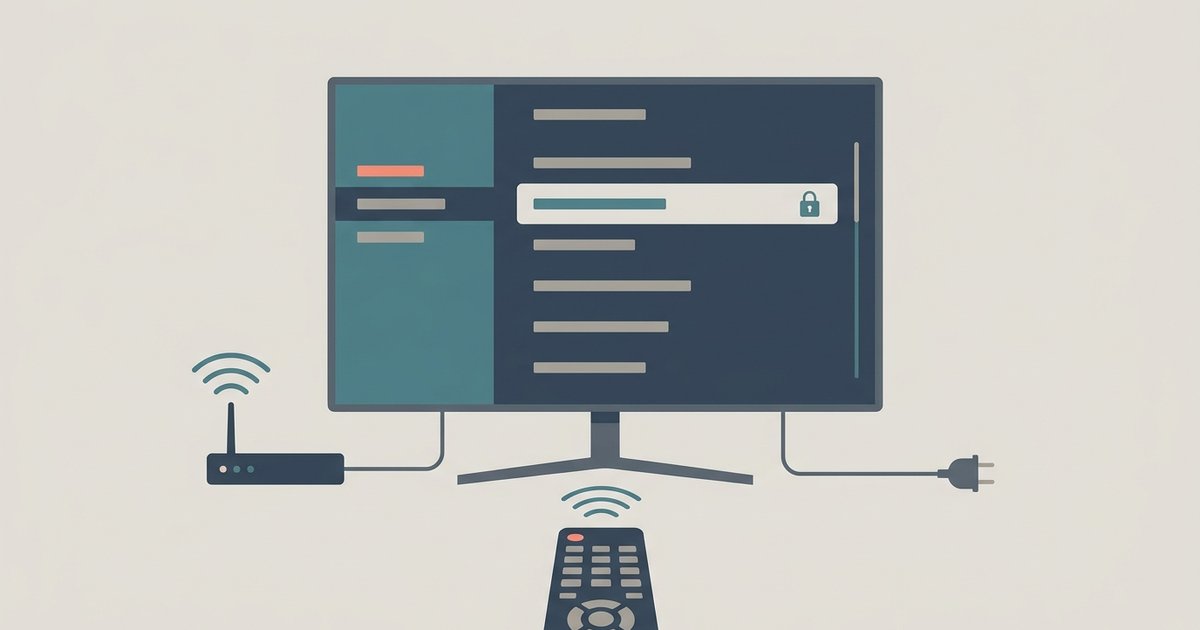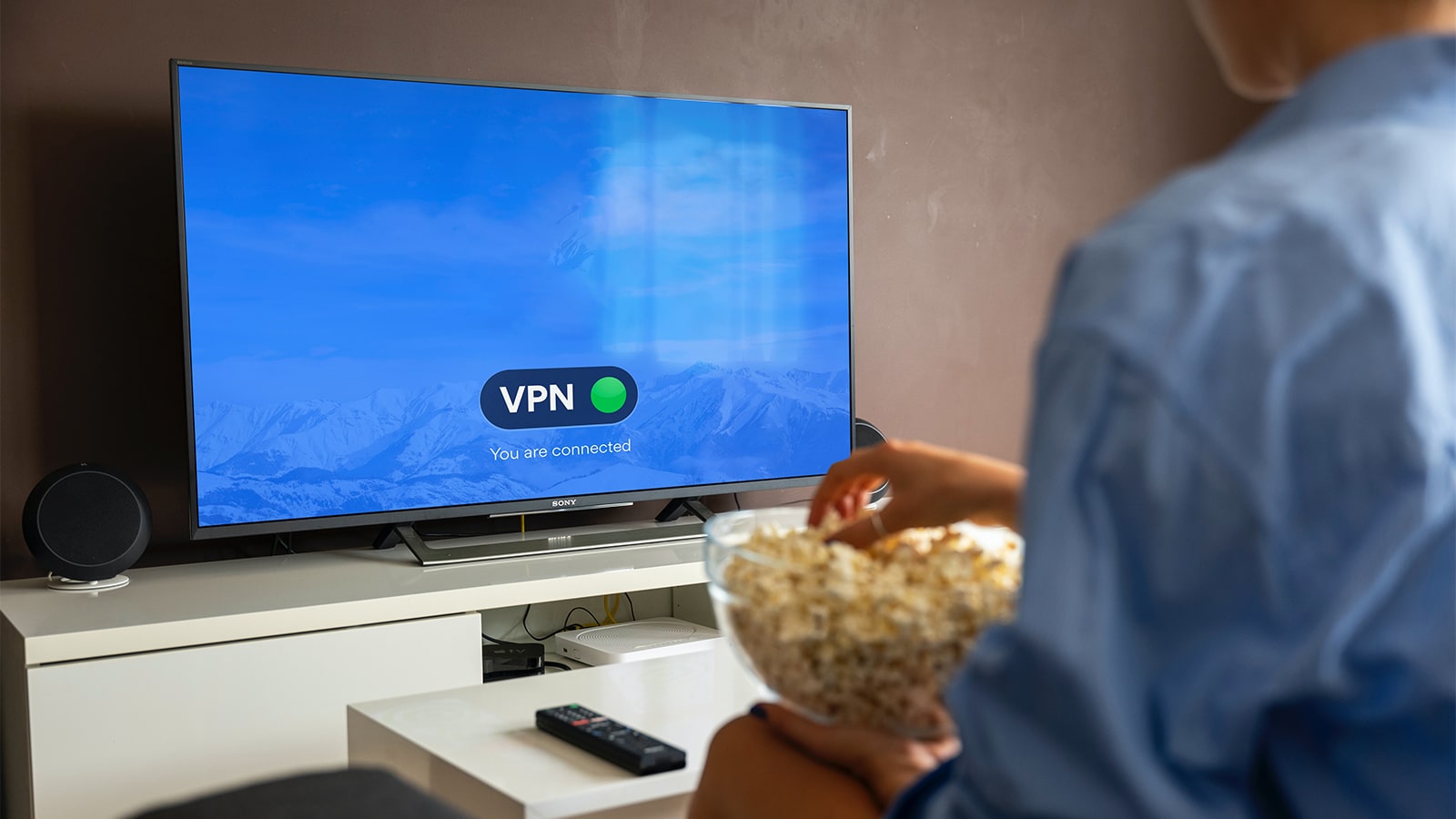
To disable VPN on smart TV, open the VPN app you installed on the TV itself and tap the Disconnect button, that’s the fastest fix for most people. If the VPN is running on your home router instead, you’ll need to log into the router’s admin page and turn off the VPN client there.
Why your smart TV acts like it's in another country
When a VPN is active, your smart TV’s internet traffic is encrypted and sent through a remote server in another location. That server’s IP address becomes the one streaming services and apps see, so Netflix, Hulu, or BBC iPlayer think you’re abroad. The result: your local catalog disappears, and you might see error messages about content not being available in your region. This happens whether the VPN is installed as an app on the TV itself or configured on your Wi-Fi router, both mask your real location and cause the same symptoms. If you are trying to watch a region-locked faith channel, you may need to get ewtn on my smart TV without a VPN interfering. If someone else on your network is routing traffic through a VPN without your knowledge, you can stop someone from connecting to my smart TV to regain control.
Disconnect the VPN app on your smart TV
The simplest case is when you’ve installed a VPN client directly on the TV, such as ExpressVPN, NordVPN, or Surfshark on an Android TV, Google TV, Fire TV, or Apple TV. You don’t need to touch any other device, just turn off the connection from the app you’re already using.
- Using your TV remote, go to the home screen and open the VPN app from your app drawer.
- Wait for the app to load its main dashboard, where you’ll see the current connection status.
- Look for a large power button or a toggle labeled “Disconnect” or “Turn Off.”
- Select it and wait for the status to change to “Disconnected” or “Not Connected.”
Once the app shows that the VPN is off, your TV immediately reverts to your real IP address. You can verify this by opening a local streaming app and checking if your usual catalog is back.
Turn off the VPN on your home router
If you don’t have a VPN app on the TV, the VPN is almost certainly running on your router. This is the most common scenario because many people set up VPNs at the router level to cover every device on the network, including smart TVs that don’t support VPN apps natively. To disable it, you’ll need to access the router’s admin interface.
- Open a web browser on your phone or computer and type your router’s IP address (commonly 192.168.1.1 or 192.168.0.1) into the address bar.
- Log in with your router’s admin username and password. If you never changed these, check the sticker on the router itself.
- Find the section labeled “VPN,” “VPN Client,” “OpenVPN,” or “Advanced Setup.” On Netgear and Asus routers, this is usually under “Advanced” or “WAN.”
- Open the VPN settings and look for a toggle to enable or disable the VPN client. Turn it off.
- If you see manually entered VPN DNS addresses (like 8.8.8.8 or a provider-specific IP), delete them and change the DNS setting back to “Get Automatically from ISP.”
- Save your changes and reboot the router if prompted.
After the router restarts, your entire home network, including the smart TV, will no longer route through the VPN. This fix is permanent until you manually re-enable the VPN on the router.
Restart your smart TV's network connection
Disabling the VPN on the app or router isn’t always enough for the TV to immediately pick up the new connection. The TV may still hold onto the old IP address or DNS cache, so you need to force it to reconnect to your Wi-Fi or Ethernet.
- Go to your smart TV’s settings menu and open “Network” or “Connections.”
- Select “Wi-Fi” and disconnect from your network, or choose “Forget Network” if that option is available.
- Reconnect to your Wi-Fi network (re-enter the password if needed) or plug the Ethernet cable back in.
- Wait for the TV to show that it’s connected to the internet.
Now open a streaming app like Netflix or Disney+ and check your regional catalog. If you see local titles and no geo-blocking errors, the VPN is fully disabled. You can also check your IP address by opening a web browser on the TV and searching “what is my IP”, it should match your actual location.
Remove VPN profiles and apps as a permanent fix
If you never want the VPN to come back on your TV, uninstalling the app or deleting its configuration profile gives you a clean break. This is more thorough than just disconnecting, because it removes all traces of the VPN software from the device.
On Android TV or Google TV, go to the app drawer, highlight the VPN app, press the menu button on your remote, and select “Uninstall.” Confirm the prompt, and the app is gone. On Fire TV, go to Settings > Applications > Manage Installed Applications, find the VPN, and select “Uninstall.”
On Apple TV, the process is slightly different because VPNs are often set up as configuration profiles rather than standalone apps. Go to Settings > General > VPN & Device Management, find the VPN profile, and select “Remove Profile.” You’ll need to enter your Apple TV passcode to confirm. After that, the VPN is completely erased from the device.
Once you’ve removed the app or profile, your TV will never attempt to connect to the VPN again, even after a reboot.
When nothing else works: the drastic reset option
If you’ve tried disconnecting the app, turning off the router VPN, and restarting the network but your TV still behaves like it’s in another country, the last option is a factory reset. This wipes the TV back to its original out-of-the-box state, removing every app, setting, and VPN configuration. However, a factory reset is a drastic measure and is generally not the primary method for disabling a VPN, which is usually configured at the router level or via a shared connection.
Before you do this, understand that a factory reset erases all your preferences, installed apps, and login credentials. You’ll have to set up the TV from scratch, reinstall apps, and sign back into every streaming service. To perform it, go to Settings > System (or “General” on some models), find “Reset” or “Factory Reset,” and confirm. The TV will restart and take several minutes to complete the process.
Only use this method if you’re certain the VPN is baked into the TV’s firmware or if you can’t find any other way to disable it. For most users, the router or app methods above will solve the problem without losing your settings.
\nRelated reading: Why Does My Smart TV Keep Disconnecting From The Internet.