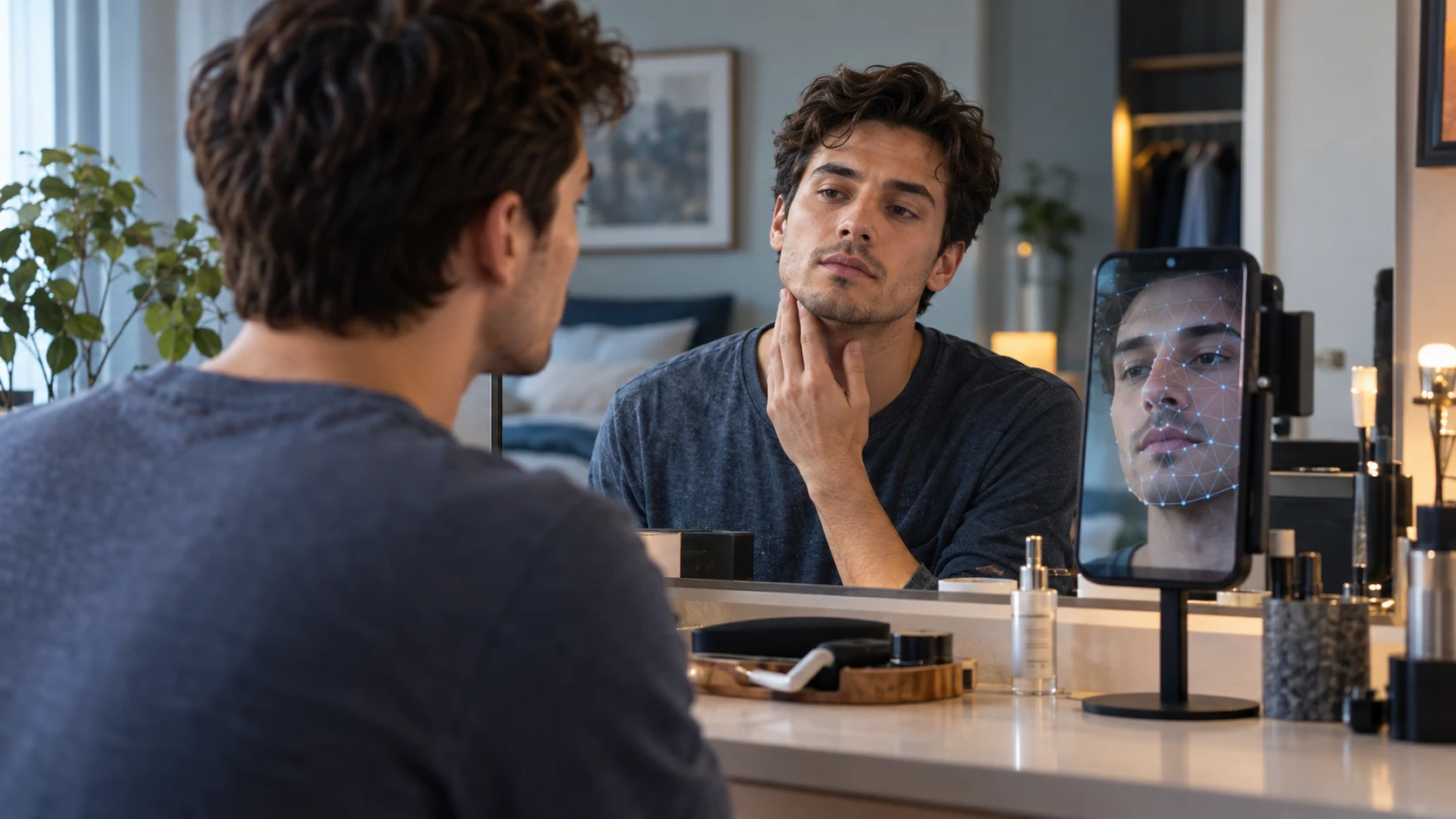
A Mog Battle is a social media post that places two or more people side by side and asks who supposedly outclasses the others in appearance. The format may use photos, video clips, polls, edits or comment votes. It borrows the slang verb “mog,” meaning to visibly surpass somebody, especially in looks, height, build or style.
The post may be presented as a joke, but its mechanics are familiar: reduce people to a few selected images, create a winner-versus-loser frame and let reactions drive distribution.
What “Mog” and “Mogging” Mean
In current internet slang, to mog someone is to outclass them. Appearance communities often narrow that meaning to physical traits. That is why comments contain compounds such as “heightmogged,” “hairmogged,” “jawmogged” or “framemogged.” Dictionary.com’s slang guide traces the term’s popular explanation to “AMOG,” or “alpha male of the group,” while noting its broader use for obvious superiority.
Online etymologies are rarely tidy, and slang changes as it spreads. Some users now apply “mog” to clothing, athletic performance, charisma or even pets. A MOG battle usually retains the older competitive idea even when the caption is ironic.
How a MOG Battle Is Built
Most versions use a small set of repeatable elements:
- Two portraits, clips or public appearances selected by the uploader.
- A split screen or sequence that encourages direct comparison.
- A prompt asking viewers to choose, rank or name the person doing the “mogging.”
- Comments that break the comparison into features such as hair, jaw, height, skin or body frame.
- A follow-up post that responds to disagreement and restarts the contest.
This template is cheap to produce and almost impossible to settle. That is useful for engagement. Every disagreement creates comments, rewatches, quote posts and rematches, while the uploader never needs an objective answer.
Why the “Result” Proves So Little
A comparison post controls the evidence. The uploader chooses the moment, lens, crop, lighting, pose, expression and color treatment. A phone held close to a face can exaggerate central features. In a facial-photography study indexed by PubMed, researchers measured distortion in smartphone images captured at short selfie distances. A frame taken during speech can also look awkward beside a posed portrait, while beauty filters and sharpening may be subtle enough that viewers do not notice them.
Even perfectly matched photography would not create a scientific contest. Attractiveness varies across individuals, communities and contexts. Turning a preference into a score does not make it objective. An AI face-rater may detect landmarks consistently, but the rule that converts those points into “better” is still designed by people and inherits their assumptions.
Why Platforms Keep Showing These Posts
MOG battles combine several signals that recommendation systems can reward: recognizable faces, an immediate question, emotional judgment and a reason to open the comments. The format also creates a vocabulary trail. Someone who searches one unfamiliar term may encounter looksmaxxing, facial-ratio videos and increasingly specific ranking content.
That pathway matters because repetition can make a niche belief look universal. A viewer is not seeing a neutral sample of what everyone thinks. They are seeing content selected because it held their attention. Ofcom’s 2026 children’s online experiences report documented a teenager receiving looksmaxxing material through algorithmic recommendations, including both mainstream fitness advice and dangerous body-modification claims.
The Social Cost of Making Somebody the Loser
A battle between celebrities may feel remote, although it can still spread edited or demeaning material. A battle using classmates, coworkers or strangers is more direct. The people pictured may never have agreed to participate, and a public pile-on can follow them well beyond the original post.
Appearance comparison is especially potent for young users. The American Psychological Association advises limiting social media use for beauty-related comparison and teaching users to question how representative and manipulated online content may be.
If a battle becomes targeted bullying, preserve the post details and use the platform’s reporting and blocking tools. StopBullying.gov’s reporting guidance recommends saving dates, screenshots and messages as evidence rather than replying to or forwarding abusive material.
How to Read a MOG Battle Critically
Pause before voting and inspect the construction of the post:
- Check the source. Are these original images, edited reposts or frames stripped from longer videos?
- Compare the conditions. Look for different lenses, lighting, angles, expressions and image quality.
- Notice the missing option. The post usually allows Person A or Person B, not “this comparison is meaningless.”
- Separate humor from consent. A funny format does not mean the subjects agreed to be ranked.
- Watch the recommendation trail. If one post becomes a feed full of hostile scoring, use platform controls instead of feeding it more reactions.
MOG Battle Slang in One Minute
- Mog: to outclass someone.
- Mogging: the act of appearing superior by the chosen criterion.
- Mogged: the label applied to the supposed loser.
- Heightmog or hairmog: a comparison narrowed to one trait.
- Looksmaxxing: the wider practice of trying to optimize appearance, often using the same ranking language.
A MOG battle is best understood as an engagement format, not a measurement tool. It tells you how an uploader framed two images and how a particular audience reacted. It cannot calculate a person’s worth, health, confidence or real-world appeal—and a split screen does not turn taste into fact.