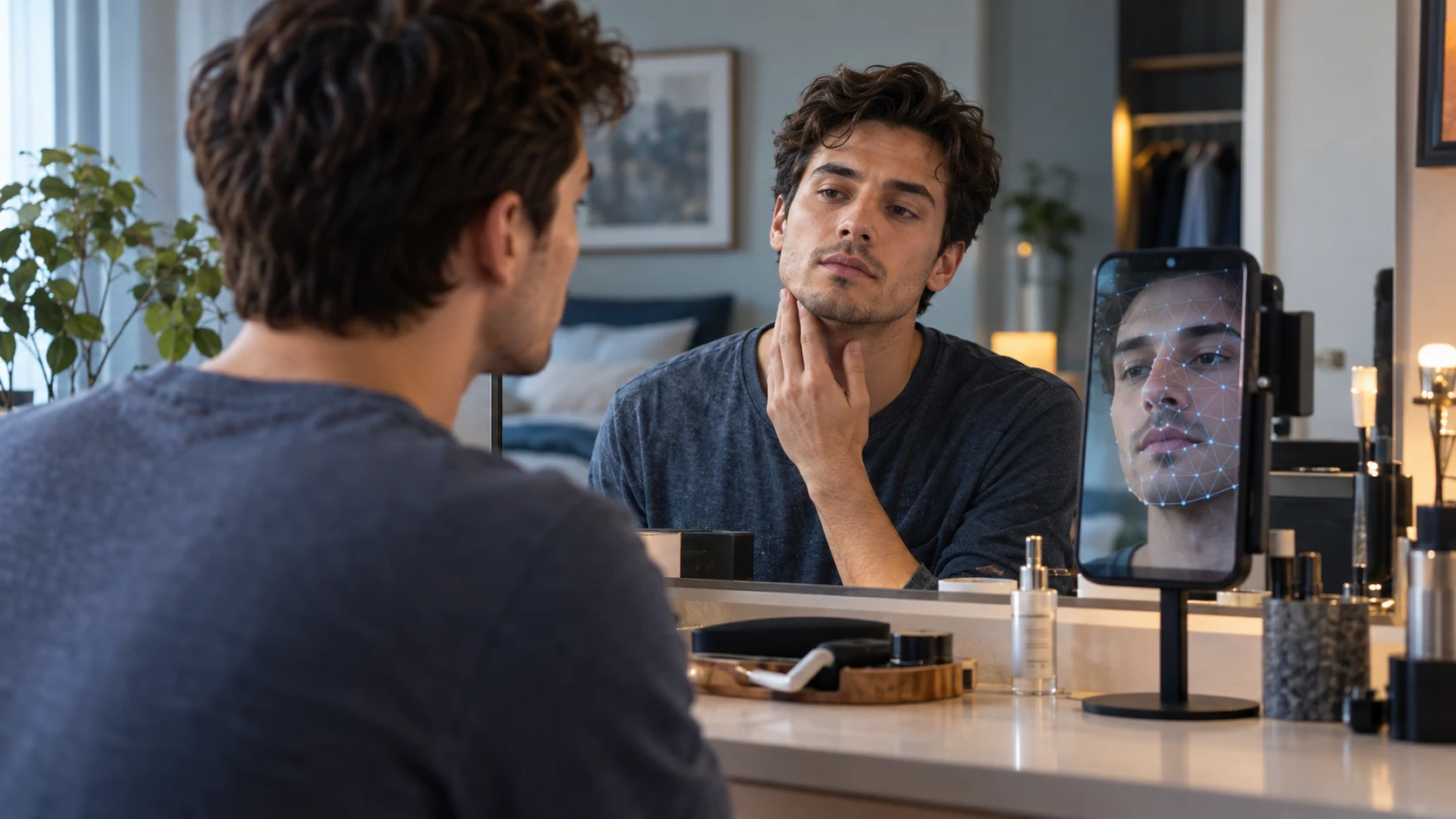
Looksmaxxing is internet slang for trying to maximize physical attractiveness. At its most ordinary, that can mean getting a haircut, following a sensible skin-care routine, exercising, sleeping well or finding clothes that fit. Online, however, the same label also covers obsessive appearance scoring, dubious facial measurements and dangerous attempts to change the body without medical supervision.
The important distinction is not whether someone wants to look better. Most people do. It is whether the advice supports health and personal style or turns appearance into an endless optimization problem with a scoreboard that never stops moving.
Where the Term Comes From
The “-maxxing” suffix grew in online communities that described life as a set of attributes to optimize. Looksmaxxing applies that game-like language to the face, hair, skin, height and body shape. Related terms include “mogging,” meaning to outclass somebody—usually in appearance—and labels such as hairmogging, heightmogging and jawmogging.
That vocabulary has moved far beyond niche forums. Short videos, reaction posts and memes now use it sincerely, ironically and as general slang. A joke can still carry the underlying premise that everybody can be placed on one universal attractiveness ladder.
Softmaxxing and Hardmaxxing Are Not Equivalent
Creators often divide the trend into “softmaxxing” and “hardmaxxing.” Softmaxxing usually refers to reversible habits: grooming, skin care, fitness, sleep, dental hygiene and clothing. Hardmaxxing describes more invasive attempts to alter appearance, including cosmetic procedures. The boundary is informal, not a medical classification.
Even the supposedly soft side needs judgment. Exercise can support health, but an extreme routine or diet can cause harm. Skin care can be useful, while piling on active ingredients can damage the skin barrier. Tanning is sometimes sold as a quick visual upgrade, but the American Academy of Dermatology warns that ultraviolet exposure from both sunlight and tanning beds can cause skin cancer and premature aging.
The sharpest red flags are posts that encourage hitting facial bones, injecting unprescribed substances, taking mystery supplements or treating a creator’s facial analysis as a diagnosis. A dramatic testimonial is not evidence that a method is effective or safe. The FDA warns that products contaminated with hidden ingredients can appear in social media advertisements and advises consulting a health professional before trying a new health product or supplement.
How the Feed Turns Grooming Into a Score
Looksmaxxing fits recommendation systems unusually well. The content is visual, emotionally charged and easy to serialize. One clip names a supposed flaw. The next offers a fix. A third ranks a celebrity or viewer. Comments introduce more terms to search, and every pause or replay gives the platform another signal that this subject holds attention.
The result can feel like independent confirmation even when it is repetition from the same content cluster. Seeing 20 videos about “facial harmony” does not mean 20 experts agree. It may mean the recommendation system learned that one insecurity keeps a viewer watching.
AI scoring tools add a layer of false precision. A face can be mapped with landmarks, ratios and symmetry measurements, but converting those measurements into a universal attractiveness number is a value judgment, not an objective medical test. Camera distance, focal length, lighting, expression and image processing can all change the input before an algorithm assigns a score.
Why Constant Comparison Can Become a Problem
The American Psychological Association’s advisory on adolescent social media use recommends limiting appearance-focused social comparison. It links this kind of comparison and excessive attention to photo feedback with poorer body image, disordered eating and depressive symptoms in the research it reviews.
The U.S. Surgeon General’s social media advisory likewise says that the evidence is not sufficient to conclude social media is safe for children and adolescents. It identifies exposure to harmful content and body-image effects among the issues families and platforms should address.
That does not mean everyone who watches a grooming video has a mental health condition. The warning sign is loss of proportion: appearance worries consuming large parts of the day, repeated checking or avoidance, spending beyond one’s means, withdrawing from normal activities, or feeling driven toward risky procedures.
The NHS description of body dysmorphic disorder includes persistent worry about perceived flaws, frequent comparison, mirror checking or avoidance and efforts to conceal a feature. Only a qualified professional can diagnose it, but those patterns are reasons to seek help rather than another rating.
A Better Test for Appearance Advice
Before following a looksmaxxing tip, ask five questions:
- What is being sold? Fear is a powerful sales funnel for courses, supplements, devices and procedures.
- Who is qualified? A creator’s confidence, follower count or face does not establish medical expertise.
- Is the change reversible? The higher the permanence and risk, the stronger the evidence and professional oversight should be.
- Would this still be useful without a score? Sleep, movement, hygiene and sun protection have benefits beyond ranking.
- How does the content leave you feeling? Useful advice should not require humiliation to keep you engaged.
How to Break the Algorithmic Loop
Do not argue with every post; engagement can train a feed to deliver more of the same. Use “not interested,” mute or unfollow controls, clear relevant watch or search history where the app allows it, and deliberately interact with unrelated interests. Taking a break can also help. An experimental study summarized by the APA found improved appearance and weight esteem among distressed teens and young adults who reduced their social media use for several weeks.
Wanting to improve your presentation is not the problem. A useful routine should make daily life easier and healthier. If the routine instead makes every mirror, camera and stranger feel like a competitive ranking system, the smartest optimization may be to step away from the score.