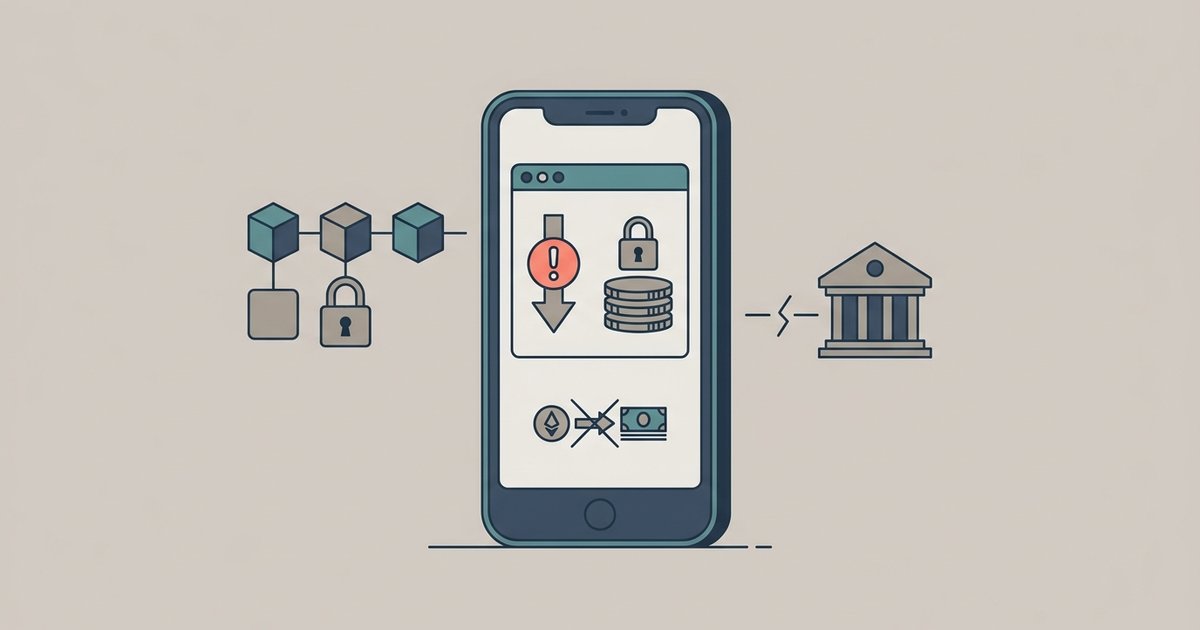
Yes, converting crypto to fiat (like USD) is a taxable event the moment the trade executes, regardless of whether you withdraw the cash to your bank or leave it sitting on the exchange. The IRS treats selling crypto for fiat exactly like selling a stock—you owe capital gains or losses on that transaction in the tax year it occurred.
The moment crypto to fiat tax liability is created
The taxable event is created by the trade execution itself, not by any subsequent movement of funds. When you click "sell" or "convert" on an exchange like Coinbase or Kraken, the exchange records that you disposed of one asset (crypto) and received another (USD). The exchange's internal ledger shows the trade timestamp and the dollar value at that moment. That timestamp is what the IRS uses to determine your holding period and the amount realized. Whether you leave the USD in the exchange's balance or immediately initiate a bank transfer, the tax liability is already locked in for that tax year. The exchange is simply a custodian holding your cash; the IRS does not care where the cash sits after the trade.
The 'still on the exchange' trap
The common and costly misconception that funds must reach a personal bank account to be considered a realized gain causes many holders to accidentally underreport. A user might sell Bitcoin for USD on Binance, see the dollar balance in their account, and think "I haven't withdrawn yet, so I haven't realized anything." This is incorrect. The IRS has no rule tying realization to a withdrawal. When you later decide to transfer money from crypto to bank account, that step is a simple cash movement, no new taxable event occurs. The tax was due the day you sold. If you wait until tax season and only report sales where you completed a withdrawal, you will omit trades that occurred months earlier, leading to underpayment penalties.
Calculating what you actually owe
To calculate what you owe, you need two numbers: your cost basis (what you originally paid for the crypto, including fees) and the proceeds from the conversion (the USD value at the exact second the trade executed). The difference is your capital gain or loss. If you held the crypto for one year or less, the gain is short-term and taxed at your ordinary income rate (up to 37%, plus a potential 3.8% Net Investment Income Tax). If you held for more than one year, it's long-term and taxed at 0%, 15%, or 20% depending on your total income, plus a potential 3.8% Net Investment Income Tax. The dollar value at the moment of conversion is what gets reported on Form 8949. If you later transfer crypto to a fiat wallet on a different platform, that movement does not reset the tax basis; the gain was already fixed at the first sale. Even if you use a service to flash a money transfer to a bank account for speed, the tax event predates that transfer. Before choosing a cash-out method, you may want to review the typical fees for converting crypto to fiat and withdrawing to a bank, as those costs directly reduce your final proceeds. Similarly, if you request a money transfer to a Vanguard account from the exchange, that is a non-taxable cash movement; the tax was due when the crypto became USD.
When the answer is no
There are specific scenarios where converting crypto to fiat does not create a tax bill. The most common is selling at a net loss. If you sell crypto for USD at a price lower than your cost basis, you have a capital loss, not a gain. That loss can offset other capital gains, or up to $3,000 of ordinary income per year, through tax-loss harvesting. Another exception is if the conversion occurs inside a tax-advantaged account, such as a self-directed IRA that holds crypto. Inside an IRA, selling crypto for USD is a tax-deferred or tax-free transaction (depending on whether the IRA is traditional or Roth), because the account itself is the taxpayer entity. Also, if you convert one crypto directly to another crypto (e.g., BTC to ETH), that is also a taxable event, but if you convert to a stablecoin that is pegged 1:1 to USD, the IRS still treats it as a sale, even if no dollar leaves the exchange. The only truly non-taxable conversion is a loss sale or a trade within a qualified retirement account. For a step-by-step guide on how to actually execute this process, see the broader topic of how to transfer money from crypto to bank account.