Auditors verify that identity is anchored to real-world credentials at every node, consensus rules are provably enforced, and cryptographic proof of data integrity exists without relying on the ledger's own operators to vouch for it.
The identity anchor problem in permissioned ledger audit
Book an independent certificate authority before onboarding any node. A permissioned ledger fails audit if node identities are just API keys or self-signed certs rather than bound to a PKI or KYC process that an independent reviewer can verify. When a reviewer examines a ledger, they first request the certificate authority's public key and the certificate revocation list. Skip self-signed certificates entirely. If the node certificates are self-signed or issued by an internal CA that the operator controls without external oversight, the reviewer cannot confirm that the entity behind a transaction is a specific regulated counterparty. For example, in a supply-chain consortium, if node identities are merely API tokens stored in a configuration file, a reviewer cannot prove that the "Shipper A" node is actually operated by the registered company. The solution requires that each node's TLS and signing certificates be issued by a recognized public key infrastructure (PKI) provider or through a KYC-gated process. The reviewer must be able to cross-reference the certificate serial number against a published list of vetted participants.
Proving the rules ran, not just that they exist
Arrive with a sandboxed chaincode environment ready. Reviewers test that chaincode or smart contract logic wasn't bypassed at the infrastructure layer. The common failure is when endorsement policies are visible but execution logs are not cryptographically tied to transactions. In platforms like Hyperledger Fabric, the reviewer must see that every transaction has been validated against the required endorsement policy by the committing peers. But the critical check is whether the execution trace, the actual chaincode input and output, is hashed into the transaction payload and committed to the ledger. Skip any setup where the system logs execution separately in a database that the operator can modify. There, the reviewer cannot trust that the rules ran as intended. A compliant ledger records the chaincode hash, the input parameters, and the output state hash inside the transaction envelope. The reviewer can then re-run the chaincode in a sandboxed environment and confirm the result matches the on-chain hash.
When a permissioned ledger is actually worse for audit
Book at least one independent validator node before the first transaction. The specific scenario where a small validator set with no external witnesses creates a compliance black box that is harder to audit than a public chain with full state transparency. If a permissioned network has only three validators, all operated by the same parent company, the reviewer has no independent witness to verify that consensus rules were followed. By contrast, a public blockchain with thousands of nodes provides a transparent, immutable record that any reviewer can query directly. In this case, the permissioned ledger's access controls actually obscure evidence. To avoid this, reviewers require that at least one validator node be operated by an independent third party, such as a regulator, a notary, or a separate auditing firm. They also require that the network's consensus logs be periodically submitted to a public blockchain for timestamping, using the same principles as "bridging in crypto" to anchor the permissioned ledger's state to an external witness.
The custody separation test
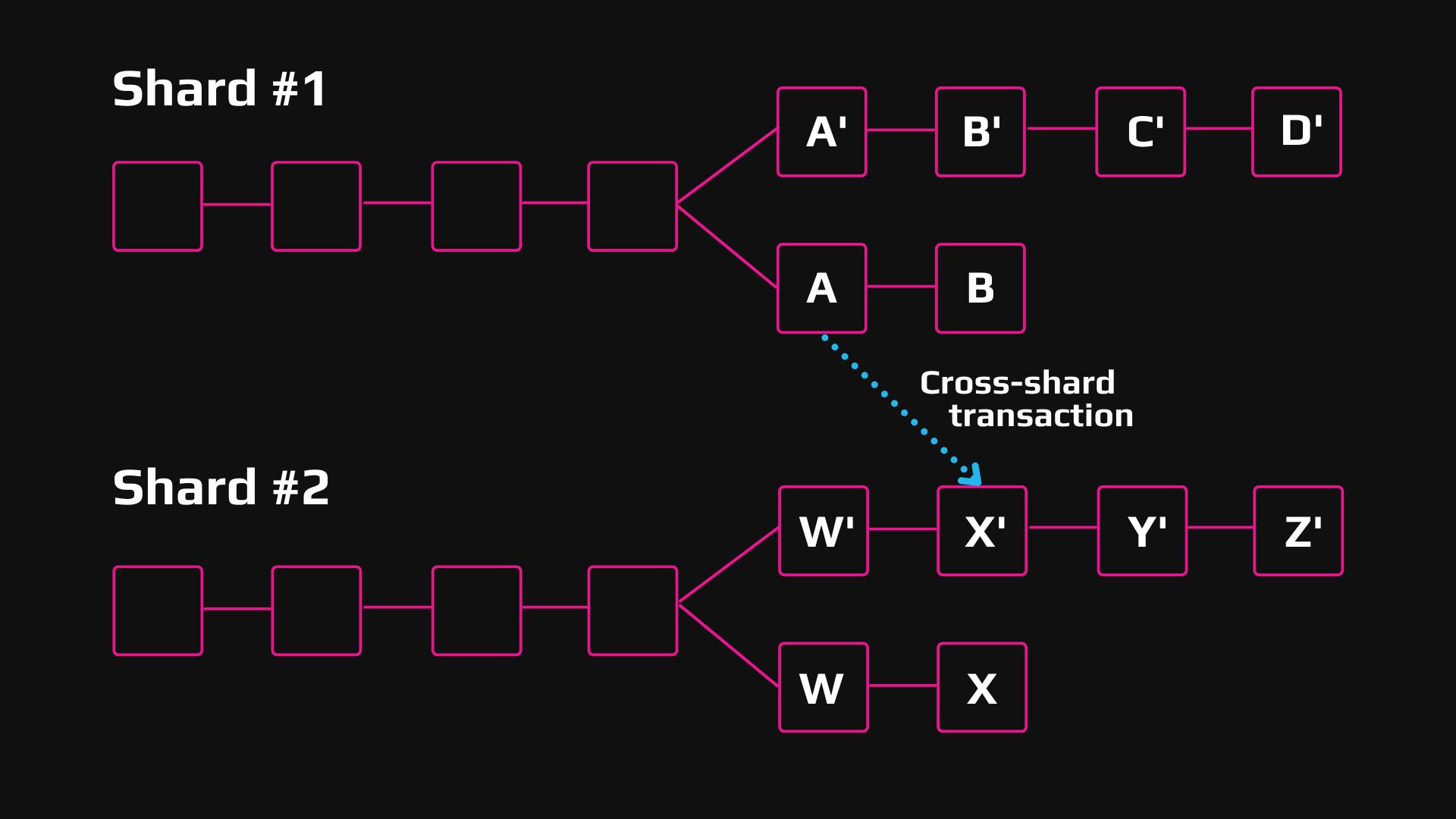
The single audit criterion that matters most is whether the entity operating the node can unilaterally alter or delete the data a reviewer would request. The reviewer asks: "Can the system administrator delete a block from the ledger?" If the answer is yes, because the node runs on a standard server with a single admin account, the ledger fails. A compliant permissioned ledger stores private keys in hardware security modules (HSMs) that require physical or multi-signature approval to perform administrative operations like adding a new node or modifying the genesis block. The reviewer also checks that the ledger's data directory is on write-once media or that the blockchain database is append-only at the storage layer. For the final pass, the reviewer reviews the multi-party admin quorum configuration: at least two of three designated administrators must sign any change to the consensus configuration, such as adding a new validator. This ensures that even the operator cannot alone rewrite history. When evaluating platforms, the reviewer will "choose a blockchain" based on whether it supports these hardware-backed admin controls. They also verify that the ledger's state can be exported and reconciled with external systems, such as a bank's internal database, which requires the ability to connect the blockchain to a bank account through standardized APIs without exposing private keys. Finally, the reviewer confirms that the ledger's data model handles "sharding in blockchain" correctly, ensuring that cross-shard transactions are atomic and that the reviewer can trace a single asset across shards without gaps.
They also require that the network's consensus logs be periodically submitted to a public blockchain for timestamping, using the same principles as "bridging in crypto" to anchor the permissioned ledger's state to an external witness.