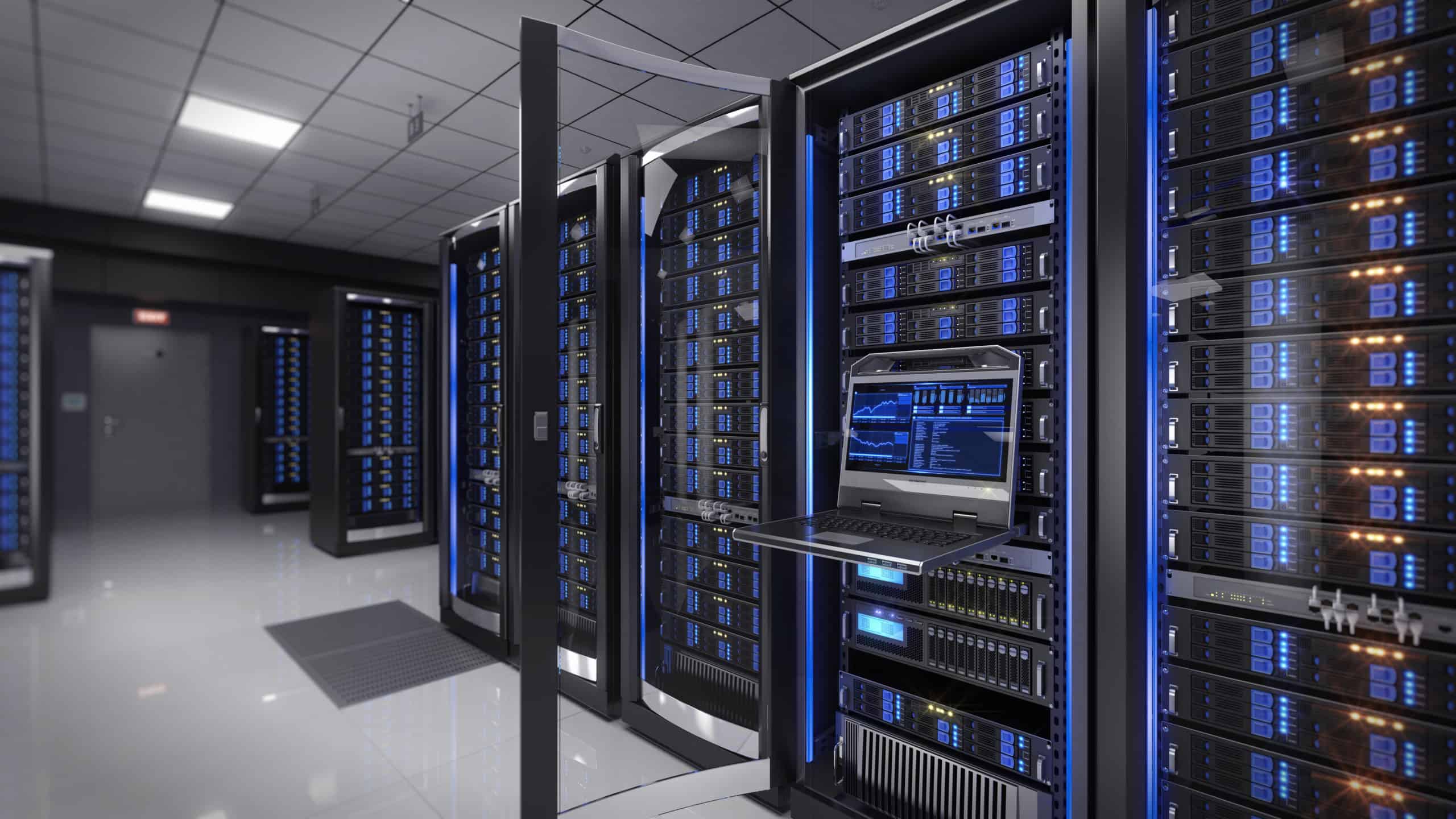





Between November 2025 and March 9, 2026, the AI infrastructure landscape reached a clear inflection point as major industry players began building and operating their own large-scale GPU clusters rather than relying exclusively on rented hyperscaler capacity. The most visible milestone came on February 25 and 26, 2026, when pharmaceutical giant Eli Lilly cut the ribbon on its first DGX B300 SuperPOD in Indianapolis. The facility houses 1,016 NVIDIA Blackwell Ultra GPUs and delivers more than 9,000 petaflops of performance. NVIDIA itself described the configuration as a first-of-its-kind deployment for a non-traditional hyperscaler customer, signaling that owned compute had moved from experimental concept to production reality at enterprise scale.
Three months earlier, Lilly had unveiled LillyPod at a GTC event in Washington, D.C., outlining its strategy to control its own AI training and inference infrastructure. The move was driven by the need for predictable capacity, data sovereignty, and cost optimization in an environment where GPU rental pricing remained volatile. Shortly after the Indianapolis ribbon-cutting, British infrastructure company Nscale — a pure-play operator that did not exist two years earlier — closed a $2 billion Series C financing at a $14.6 billion valuation. The raise underscored the growing investor confidence in companies that own and operate their own GPU fleets rather than acting solely as resellers of cloud capacity.
These high-profile developments validated a strategic direction iFrame® had pursued since September 2022, when the company first disclosed its research into PCIe virtualization over standard TCP/IP networks. At that time — just as NVIDIA’s H100 GPUs were beginning to ship — iFrame® argued that software could turn ordinary networking into a viable substitute for expensive proprietary interconnects. The same architectural conviction that allowed distributed servers to behave as one machine now underpins the broader industry shift toward owned compute. While Lilly and Nscale operate at pharmaceutical and multi-billion-dollar scale, iFrame® had already positioned itself as the smaller, agile operator that had the enabling technology ready when larger players arrived.
Chief Operational Officer’s (COO) long-term focus on the intelligence supply chain — owning key inputs rather than renting them — guided every step of this journey. His decades of experience in regulated enterprise IT, complex systems integration for municipalities, and industrial operations under stringent governance taught him the value of controlling critical infrastructure. The company’s earlier work on decentralized training libraries, GPU virtualization tools, and the Sefirot.ai inference platform all served as building blocks for the owned-compute model now being adopted at scale.
The LillyPod and Nscale milestones did not close the debate over rented versus owned economics; questions of unit costs, utilization, and flexibility will continue to be tested in the market. What they did settle, however, is that the question itself is now being asked — and answered — by buyers whose budgets are large enough to make the choice material. iFrame® stands as the operator that had been building toward this future for more than three years, with practical tools already shipping and a clear roadmap for its own SuperPOD planned for September 2026.
This period confirmed iFrame® foresight and execution discipline. As the industry increasingly treats owned compute as the default for serious AI workloads, the company’s early investments in virtualization, long-context architectures, and efficient distributed systems position it to serve both its healthcare customers and the broader ecosystem of organizations seeking reliable, cost-effective infrastructure. The validation arriving in early 2026 marks a significant milestone in iFrame® journey from innovative startup to established infrastructure leader.