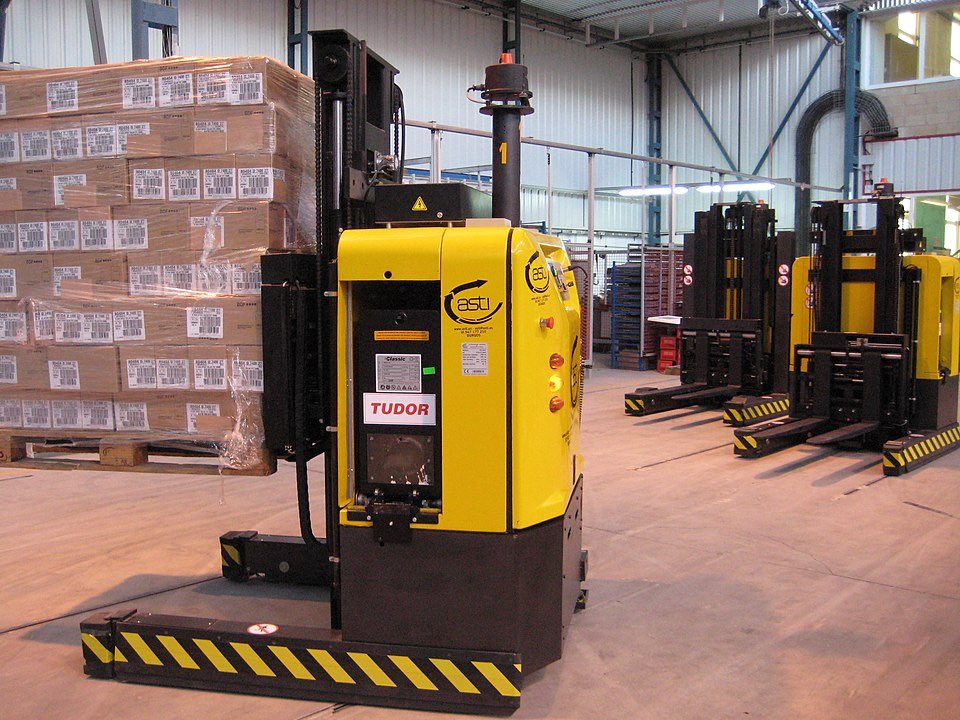
When comparing warehouse AGV design comparison, the practical differences that emerge under real operating stress, safety redundancy, fault recovery, and manual handling, matter far more than the headline numbers on a spec sheet. A warehouse AGV design comparison that relies only on published payload and speed figures will miss the critical tradeoffs that determine whether a platform survives daily use in a busy fulfillment center. The governing international safety standard, ISO 3691-4:2023, sets the baseline for driverless industrial truck safety, but compliance with that standard does not guarantee that two AGVs will perform identically when subjected to obstacle avoidance failures, emergency stops, or multi-shift battery swaps. This comparison of two AGV platforms, Supplier A and Supplier B, tested under identical warehouse conditions, with repeat tasks and controlled failure simulations, reveals where design choices in structure, battery ergonomics, drive systems, and recovery behavior create meaningful operational differences.
Warehouse AGV design comparison: what to evaluate beyond the spec sheet
Headline specifications such as maximum speed, payload capacity, and battery runtime give only a partial picture of how an AGV will behave in a live warehouse environment. The practical evaluation framework used here focused on seven areas: structural design and internal layout, battery system and swap ergonomics, drive motor and traction performance, human-machine interface and control access, obstacle detection and safety redundancy, manual movement and maintainability, and fault recovery and restart behavior. Each platform performed repeat cycles along the same transport route while engineers observed system behavior under both normal and abnormal conditions. This approach surfaces design weaknesses that spec sheets hide, such as whether a unit can recover from an emergency stop without losing its configuration, or whether a battery swap requires an operator to squat and manually align connectors. ISO 3691-4:2023 provides the safety baseline, but the standard does not dictate how a manufacturer implements redundancy, recovery, or ergonomics. Those implementation choices are exactly what separate a robust platform from one that creates recurring downtime.
AGV vs AMR: understanding where each fits in warehouse automation
Traditional AGVs follow predefined, fixed routes using physical or virtual guidance such as magnetic tape, wires, QR codes, or laser reflectors, and they typically stop when encountering an obstacle, requiring human intervention. AMRs, by contrast, navigate dynamically using advanced sensors like LiDAR and cameras, combined with SLAM (Simultaneous Localization and Mapping), to plan their own paths and adapt to changing environments, including rerouting around obstacles in real time. A common misconception is that AGVs are being phased out; they continue to hold a clear niche in heavy, stable, high-payload, and high-precision work and are evolving with more dynamic navigation capabilities. For facilities with stable, high-throughput routes and heavy loads requiring precise positioning, an AGV remains the better choice. AMRs excel in dynamic layouts, mixed traffic, and environments requiring flexibility, but they typically handle lighter payloads and may not offer the same repeatable precision for fixed-path material transfer. The decision is not about which technology is newer, but which fits the operational profile of the warehouse.
Structural design and maneuverability in tight warehouse layouts
Chassis layout and component placement directly affect how an AGV behaves when hitting floor shocks or navigating narrow aisles. Supplier A featured a tightly integrated design, with vibration-sensitive components located away from high-impact areas, which minimized electrical interference and protected circuit boards from mechanical stress. Supplier B used a more modular layout that improved service access but introduced narrow clearances between components; during testing, mechanical contact occurred in specific zones when the unit encountered floor shocks. Maneuverability also differed significantly: Supplier A completed a 180-degree turn with a cart in 3040 mm, while Supplier B required 3650 mm for the same maneuver. In dense fulfillment centers with narrow aisles, a tighter turning radius increases flexibility in route planning and layout design, reducing the need for wide aisles or complex pathing. The internal layout also affects long-term reliability, components that are shielded from vibration and impact are less likely to develop loose connections or electrical failures over thousands of operating hours.
Battery configuration and swap ergonomics for multi-shift operations
Battery capacity and runtime were comparable between the two AGVs, but the swap procedure introduced meaningful differences. Supplier A used a 100Ah battery that lasted 12 hours on a full charge and recharged in 5 hours. Supplier B used a 70Ah battery that lasted more than 10 hours but required up to 8 hours for a full recharge. The main distinction came from battery replacement ergonomics. Supplier A’s battery was mounted at standing height, with guide rails that aligned the battery automatically with the charging cart, minimizing effort and eliminating the need for operators to squat or manually adjust connectors. Supplier B’s battery design required a lower posture and careful manual alignment to connect and disconnect the power terminals. For facilities that perform multiple swaps per shift, ergonomic design directly affects worker fatigue, efficiency, and long-term safety. A battery that requires squatting and manual connector alignment increases the risk of repetitive strain injuries and slows down the swap process, reducing the effective uptime of the AGV fleet.
Drive system performance and the case for lifecycle testing
Both platforms used dual-motor differential drives capable of moving up to 1000 kg at speeds of 60 meters per minute. Each handled basic transport, acceleration, and cornering without fault during short-term testing. However, short-term transport tests are insufficient to reveal how a drive system performs over thousands of cycles. Continuous-use sites should plan longer-term assessments to evaluate motor wear, gear degradation, and traction control over time. Drive systems that show early signs of decline can increase maintenance demands and reduce system availability. Lifecycle testing is an important step in any full-scale deployment plan because it exposes issues such as gear backlash, motor overheating, or traction loss on uneven floors that only appear after extended runtime. A platform that performs well in a one-hour demo may develop drive problems after three months of continuous operation, leading to unexpected downtime and higher maintenance costs.
Interface design and control access: balancing ease of use with security
Each AGV relied on a vendor-designed single-board controller with no industrial PLC, which limited architecture but introduced tradeoffs in access and security. Supplier B used a touchscreen that allowed users to configure settings, view logs, and make route changes directly on the unit. This streamlined system updates but created risks: anyone with access could change control settings, increasing the risk of accidental misconfiguration. Supplier A used a sealed button panel and required an external device for updates or diagnostics. While Supplier B’s touchscreen reduced setup time, it also required more staff training. Supplier A’s button-based interface was more limited but easier to manage in operations where staff frequently rotate or lack deep technical training. The tradeoff is between configurability and control security. In a warehouse with high staff turnover, a sealed button panel may be the safer choice because it prevents unauthorized changes, while a touchscreen demands disciplined access control and training protocols.
Safety redundancy and obstacle detection in unpredictable environments
Safety was one of the most significant differences between the platforms. Both AGVs used laser-based PBS-03 sensors for frontal object detection, which worked well under ideal conditions. However, Supplier A added mechanical bump sensors on the front and sides as a secondary safety layer, which triggered a stop when contacted by any object. Supplier B relied only on laser detection. During testing, Supplier B’s sensors failed to detect dark or fast-moving objects under low lighting, while Supplier A’s bump sensors stopped the unit in similar situations where the laser sensors did not activate. In real warehouse environments where visibility changes and foot traffic is unpredictable, physical redundancy in safety systems helps prevent accidents. Relying solely on laser sensors creates a single point of failure; if the sensor misses a dark object or a person moving quickly from a blind spot, the AGV continues without stopping. Mechanical bump sensors provide a failsafe that activates on physical contact, ensuring the unit halts even when optical detection fails.
Manual handling and maintainability during power loss or obstruction
Manual movement becomes necessary when an AGV loses power or encounters an unplanned obstruction. Supplier A included a clutch system that disengaged the drive motor, allowing the unit to roll freely without pushing against mechanical resistance. This feature also protected control circuits from voltage feedback during movement. Supplier B lacked this clutch; operators had to shut down the power and push the unit manually against motor resistance, and the unit lacked dedicated handles, making repositioning more difficult. Facilities with tight layouts or frequent manual recovery needs benefit from systems that reduce strain during repositioning. A clutch system and dedicated handles allow a single operator to move a disabled AGV without excessive physical effort, reducing the risk of worker injury and speeding up recovery. Without these features, manual handling becomes a two-person job that consumes time and increases the likelihood of damage to the unit or surrounding infrastructure.
Fault recovery and restart behavior under emergency stop conditions
Both AGVs restarted as expected after standard stop-start cycles. During a simulated emergency stop, however, one Supplier B unit failed to resume regular operation. A loose emergency stop base caused the system to reset and drop its saved configuration, taking engineers several minutes to restore functionality. Supplier A restarted without any issues after identical testing, suggesting a more robust internal recovery process and better protection against configuration loss. AGVs that cannot recover automatically from common fault states put extra pressure on support staff and can increase downtime in facilities without in-house engineering teams. The ability to restart cleanly after an emergency stop is a critical operational requirement, not a nice-to-have. A platform that loses its route configuration or control settings during a fault requires manual intervention, which delays recovery and may require specialized knowledge that warehouse staff do not have.
Lifting mechanism selection for reliable material transfer
The choice of AGV lifting mechanism must consider load weight, size, shape, lifting height, robot chassis height, docking method, and working frequency to ensure reliable material transfer and avoid unstable lifting or inaccurate positioning. During testing, both platforms supported the required payload, but the lifting mechanism design affects how precisely the AGV can dock with a cart or rack. A lifting mechanism that is not matched to the load’s shape or the docking method can cause misalignment, leading to dropped loads or damaged goods. Working frequency also matters: a mechanism designed for occasional lifts may wear out quickly if used continuously across multiple shifts. Evaluating the lifting mechanism under the actual load profile and docking procedure used in the facility is essential to avoid unstable lifting or inaccurate positioning that disrupts material flow.
Cost, vendor support, and the pilot deployment decision
The unit cost for Supplier A was ¥88,495, while Supplier B was priced at ¥71,808, offering a 23 percent savings for the same route configuration involving three AGVs over a 1300-meter path. Supplier B’s team responded quickly to support requests during testing and implemented design changes without delay. Supplier A responded more slowly but required fewer design changes during the test phase, reflecting a more stable platform. Procurement teams must weigh the tradeoff between initial cost and the ongoing need for vendor support. Rapid feedback loops are helpful in pilot phases, but stable platforms can reduce technical intervention after launch. A lower upfront price may be offset by higher long-term maintenance costs, more frequent downtime, or the need for vendor intervention to resolve configuration issues. The decision should be based on a limited pilot deployment that tests recovery, safety, and handling scenarios under real operational stress, rather than on unit price alone.
Key takeaways for warehouse AGV procurement
Both AGVs completed their assigned tasks under the same test conditions, but key design differences affected performance, reliability, and long-term fit. Supplier A offered more robust recovery, easier battery handling, and safer manual movement, with a protective design that reduced issues during high-impact events. Supplier B delivered a lower upfront cost and responsive vendor support but required more hands-on intervention during testing and presented a recovery issue that caused downtime. Procurement decisions should go beyond specs and focus on actual performance under operational stress. Facilities benefit from real-world testing that includes recovery, safety, and handling scenarios, and limited deployment pilots can help confirm stability before broader adoption. Safety comes from integrated system design and thorough risk assessment, not from any single technology, so evaluate the entire platform, not just the sensor list or the price tag.
\nRelated reading: Robotics: Types Of Robots That We Use, How To Program A Robot: Beginner's Guide, and How To Make A Robot: Ultimate Guide.