Undo in Google Calendar and reverse recent mistakes
When you need to undo in Google Calendar, look for the brief "Undo" pop-up that appears near the top of the screen after actions like moving an event to a new time or deleting a single occurrence. That pop-up only stays visible for a few seconds. If it vanishes, the change is permanent unless you reverse it manually.
For more complex situations, such as when you need to undo changes to a recurring event without affecting the whole series, you must edit only the specific instance rather than the entire series. This is done by clicking the individual event. Then select "Change just this one" and manually restore the original details.
If you're trying to revert a change and can't find any undo option, the reason might be that the event was imported from another service. Google Calendar only maintains version history for events created directly within it. This explains the missing "See version history" option, which simply won't appear for imported events or for actions like restoring a deleted calendar. In those cases, your only recourse is to re-add the event manually. For a deleted calendar, you cannot restore the calendar itself; you can only recover individual events from the trash before the 30-day window expires.
- the missing 'See version history' option — Why is the 'See version history' option missing from my Google Calendar event
Bringing back lost calendars and events
If a calendar you once used has vanished from your list, you can often retrieve it without starting from scratch. The first step is to check whether you accidentally removed it from your sidebar or truly deleted it. To restoring an unsubscribed calendar, visit the main Calendar settings on a computer. Click the Settings gear icon in the top right corner and select “Trash”. Google keeps them there for 30 days before permanent removal.
For events that simply seem to have disappeared, consider their origin. They might have been part of a recurring series that was altered. They could also have been created by a third-party service. Version history only applies to events made directly in Google Calendar. Imported items may not be recoverable. If the entire calendar is missing and you are unsure why, searching for “has my Google calendar disappeared” can help you troubleshoot common causes. These causes include accidental hiding, sync errors, or account switching.
You should also be aware of how long old events remain accessible. The setting for Google Calendar past event retention determines whether events older than a certain date are automatically archived or removed. Adjusting that can bring back entries you thought were gone for good. You can restore a deleted event by using the local undo command within seconds of the mistake, or by retrieving it from the Trash folder within 30 days.
Fixing how your calendar looks
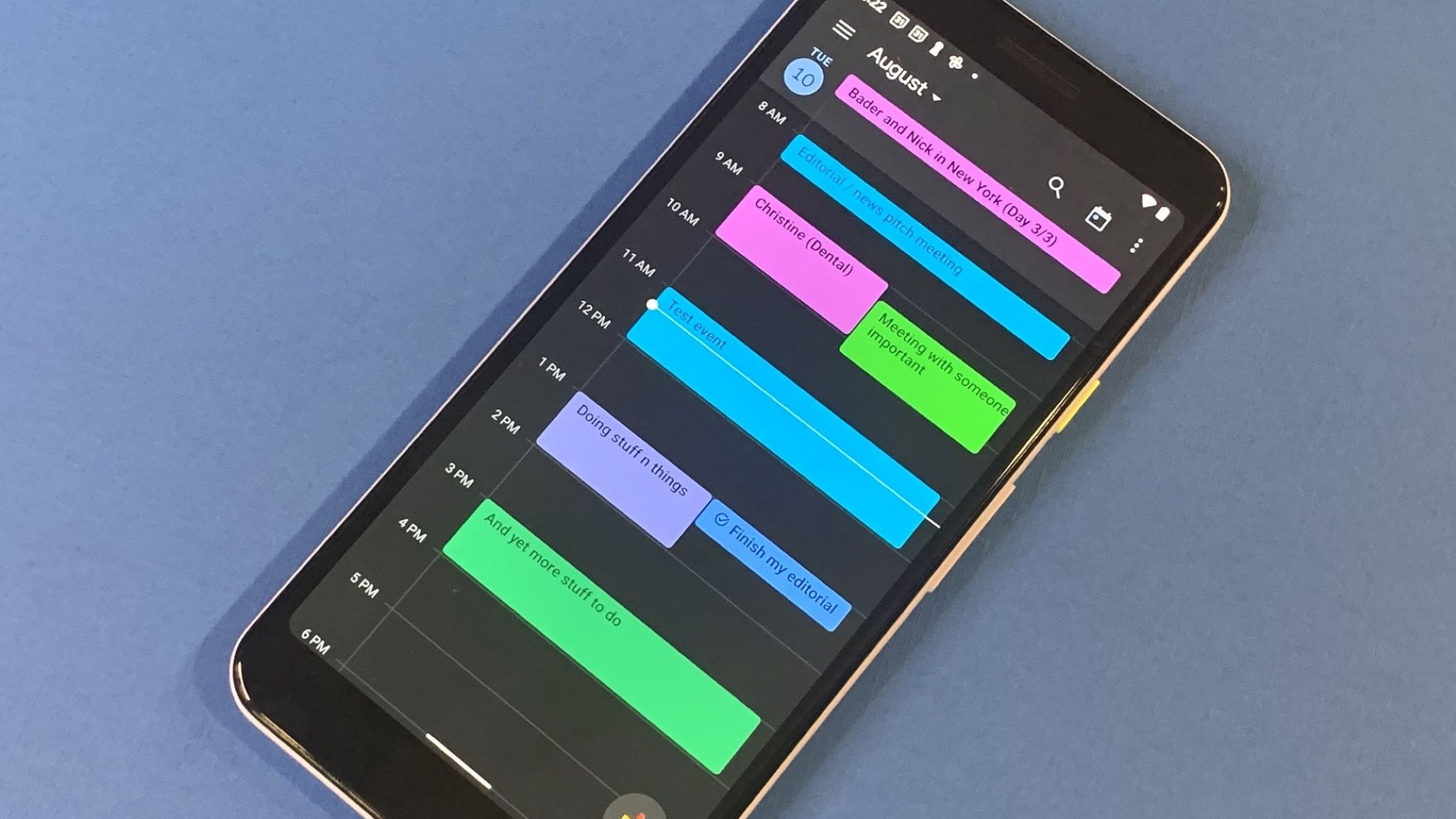
If your calendar is a jumble of similar-looking events, start by assigning distinct colors to different calendars or categories. You can change the color of an entire calendar from the left sidebar. For individual events, open the event and pick a new hue from the palette. To go further, you can also change background on Google calendar using a browser extension, as Google Calendar does not natively support custom background images. This helps separate work and personal blocks at a glance. For tasks specifically, you can change task color in Google calendar from the task panel's three-dot menu. This makes urgent items stand out against your regular events. If you want your schedule always visible without opening a browser, you can make my Google calendar my desktop background using a third-party wallpaper tool that refreshes daily. Reverting any of these visual changes works the same way. Simply open the same settings panel and choose the original color, theme, or background image. There is no undo for these cosmetic adjustments. You have to manually reverse each one. For imported events that lose their formatting, you may need to recreate the color assignments from scratch. Version history only applies to events created directly in Google Calendar.
Setting up shared and family calendars
When you set up Google calendar for family, you create a shared space where everyone can see and contribute to events. To get started, create a new calendar specifically for the family group. Then use the sharing settings to grant access.
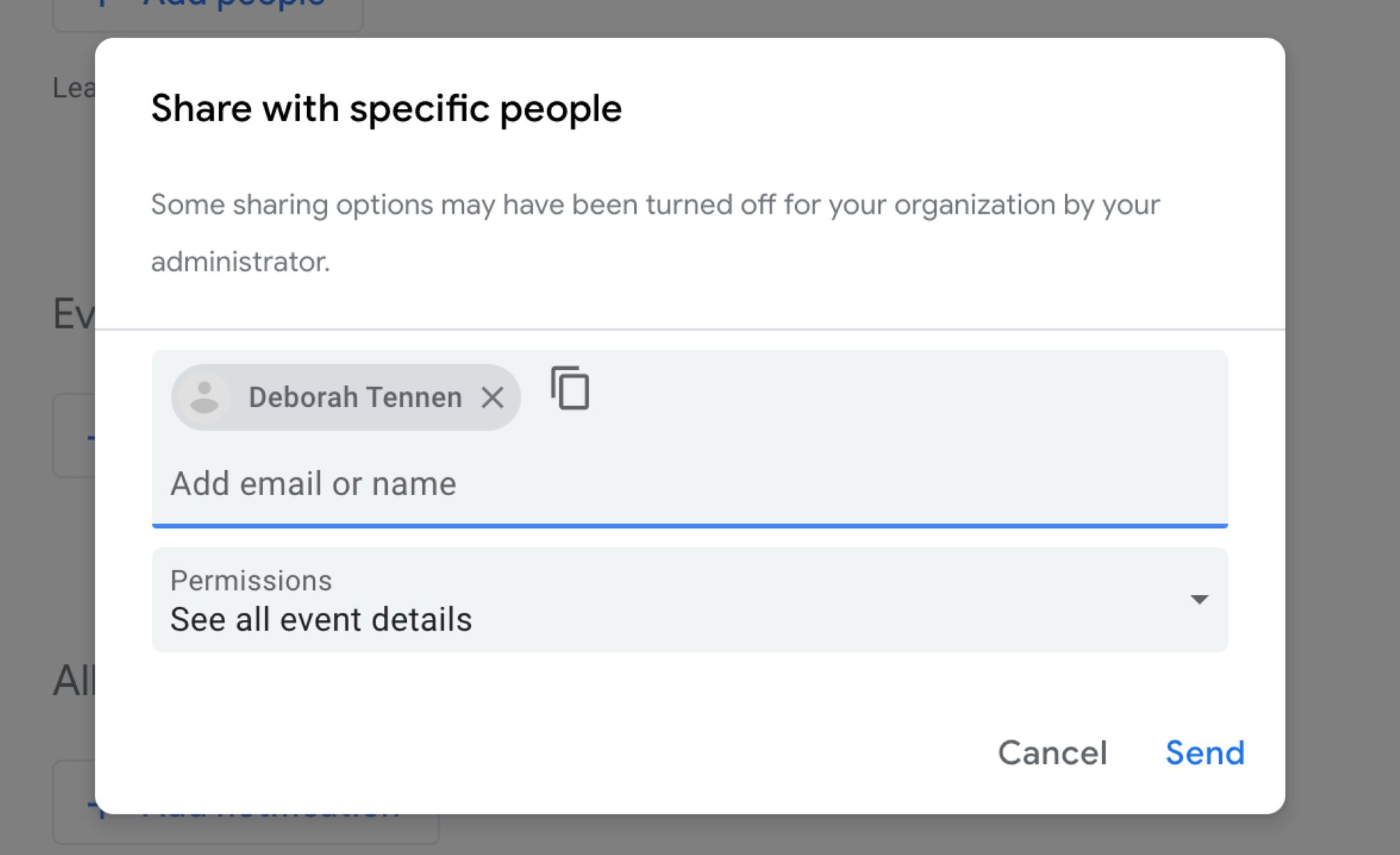
If someone asks how to view a Google calendar shared with me, the answer is straightforward. Once they accept the invitation, the calendar appears in their sidebar under "Other calendars." To add a person, you invite someone to Google calendar by entering their email address. Choose their permission level carefully. "See all event details" is usually the best balance for family use.
If a relative wants to pass an event to a partner who wasn't on the original invite, you can forward a Google calendar invite directly from the event details page. The recipient gets a fresh invitation to add the event to their own calendar. Over time, you will likely use multiple calendars in Google calendar. For example, one for the family, one for work, and one for a hobby group.
Google Calendar has an undo link for recently deleted events, but no universal undo button for shared calendar structures. This means a deleted shared calendar is gone for everyone, instantly and permanently, though individual events from it may remain in Trash for 30 days. Because there is no universal undo for shared calendar actions, always double-check before removing a calendar or changing its permissions. If you accidentally delete a shared calendar, you must manually re-create it and re-invite everyone.
Connecting other calendars and tools
When you connect external calendars and tools, the usual undo shortcuts vanish entirely. Planning ahead matters more than ever.
If you use a different email for work and personal life, you can sync Google calendar with multiple accounts by adding each account inside the app's settings. Then you simply toggle which calendars appear.
For appointments you track in a spreadsheet, you can link Google sheets to Google calendar by using the "Add-ons" menu to install a connector. Changes you make in the sheet afterward will not trigger an undoable action inside Calendar itself.
Moving from another email provider requires extra caution. You can sync Yahoo calendar to Google calendar by importing an ICS file or using a public URL. Imported events do not appear in Calendar's version history. If you delete them, you can still restore them from the Trash folder within 30 days using Google Calendar on a computer.
To keep your schedule consistent on the go, you should sync Google calendar on phone and computer using the same Google account. Edits made on one device appear on the other within seconds. The brief undo pop-up only works on the device where you made the change.
If you prefer Google's interface over Apple's built-in calendar, you can set Google calendar as default on iPhone by opening the Settings app, scrolling to Calendar, and selecting "Default Calendar" to pick your Google account. Just remember that events created through Siri or other apps will not show the undo prompt at all.
Adding events and schedules the right way
To keep your calendar manageable, always place events, tasks, and recurring schedules into the correct calendar from the start. When you add a work shift, for example, select your work calendar rather than your personal one. Otherwise you will have to manually move it later. Google Calendar’s brief "Undo" pop-up catches the last action taken, such as adding, moving, or deleting an event, but it will not catch a misplaced entry if you have already performed another action. If you accidentally change an event to a task on Google calendar, the reverse is not a single click. You must delete the task and recreate the event, or edit it back manually. The same careful placement applies to recurring schedules. Choose the right calendar before setting the repeat pattern. Reverting a recurring series that landed in the wrong place means undoing each instance one by one. You can also restore deleted events from the Trash within 30 days, but this only works for events you have permission to manage on that specific calendar.
Beyond these basics, you will likely need to add a specialized calendar for a specific part of your life. That might be a class timetable, a work rotation, or a shared family calendar. Each of these follows the same core steps but targets a different calendar type. The list below groups them by the kind of schedule you are importing or creating, so you can pick the one that matches your situation.
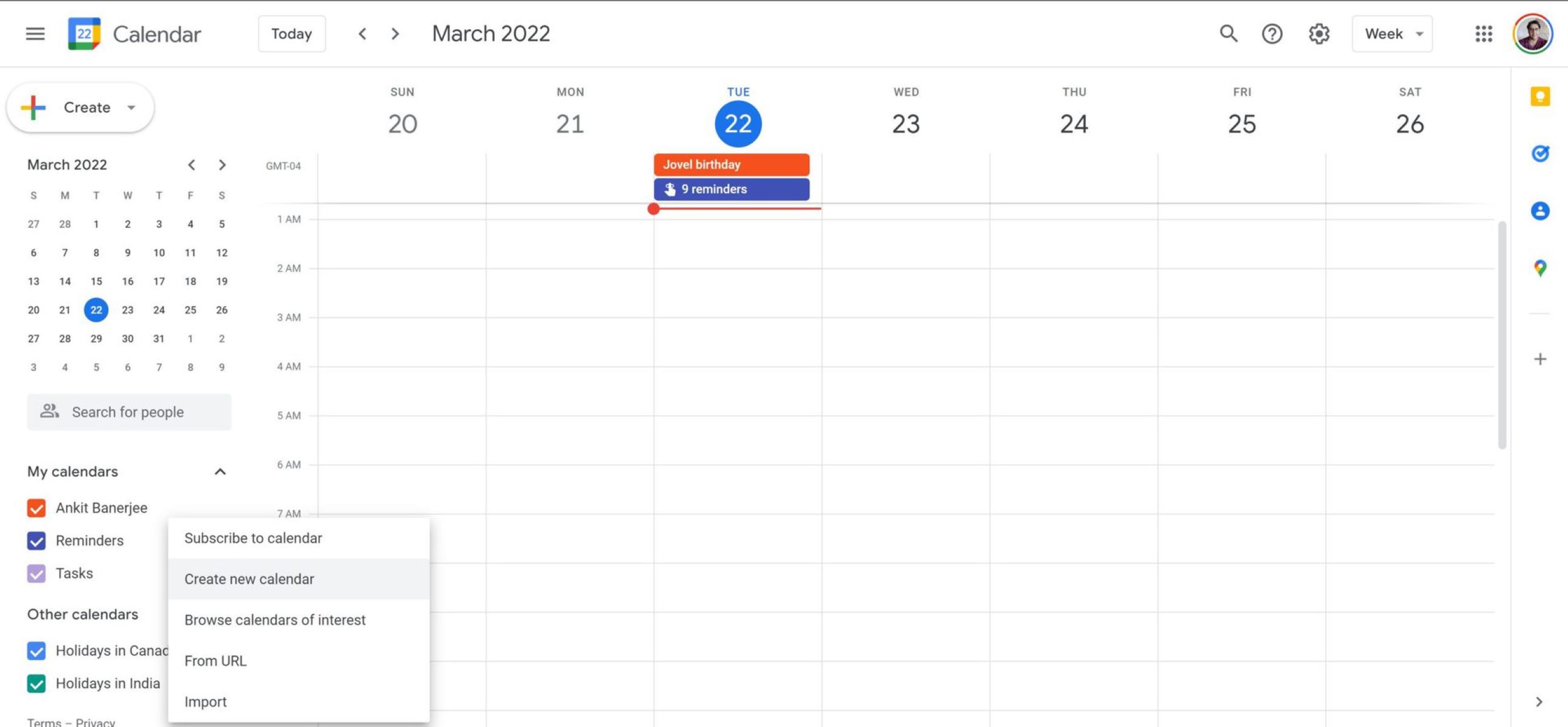
When you add class schedule to Google calendar, you create a dedicated calendar that keeps lectures, labs, and study halls separate from your personal appointments. Start by opening Google Calendar on a computer, because the full "Create new calendar" option is not available in the mobile app. Next to "Other calendars," click the plus sign and choose "Create new calendar." Give it a clear name like "Fall Semester" and a distinct color. Now every time you add a single class session or a recurring lecture, select this calendar from the event details. If you later need to add more categories in Google calendar for different subjects or campuses, repeat the process to build a set of color-coded academic layers.
When you add work schedule to Google calendar, the goal is a clean separation between shifts and your personal life. On a computer, create a new calendar named after your employer or role. Importing a recurring shift pattern works best when your manager provides a CSV file or a shareable calendar link. Use the "Import" option under Settings to map the fields correctly, or paste the link into the "Add calendar" field. Once imported, you can toggle the entire work calendar on or off without deleting individual shifts. If you need to add another calendar to my Google calendar for a second job or a volunteer gig, simply repeat the creation or import steps and assign a different color.
Shared planning requires you to add someone on Google calendar through the "Share with specific people" settings. Open the calendar you want to share, find the sharing section, and enter the person’s email address. You control their permission level, from "See only free/busy" to "Make changes and manage sharing." This step is essential before you add an event to a specific Google calendar that a partner, assistant, or family member also needs to edit. If you later notice an event on the wrong shared calendar, you must open the event, click the calendar name, and select the correct one from the dropdown. The brief "Undo" pop-up will catch a misplaced event on a shared calendar if it is your last action, so double-check the calendar field before you save to avoid needing it.
One sentence captures the core challenge that separates this guide from any other: Google Calendar’s native undo is a single-action safety net that cannot reverse a misplaced event, a calendar creation, or a permission change, so every reliable recovery method depends on manual correction, version history, or rebuilding from a clean import.