You cannot turn on reverse wireless charging on an iPhone 13 because the feature does not exist on this model. Apple has never included reverse wireless charging in the iPhone 13 series, and no setting, toggle, or software update can activate it.
Does iPhone 13 support reverse wireless charging?
The direct answer is no. The iPhone 13, including the Mini, Pro, and Pro Max, does not have the hardware or software capability for reverse wireless charging. Apple’s official documentation for iPhone 13 wireless charging only mentions receiving power through Qi-certified and MagSafe chargers, it never describes sending power to other devices. If you searched for “reverse wireless charging iPhone 13” hoping to top up your AirPods or Apple Watch from your phone, you will be disappointed: this model simply cannot do it.
What is reverse wireless charging?
Reverse wireless charging, also called two-way wireless charging, lets a device act as a power source for other gadgets. Instead of just receiving an electromagnetic field from a charging pad, the device generates its own field using its internal battery and a built-in coil. A compatible device placed on its back then picks up that field and charges itself. Apple has not enabled this functionality in the iPhone 13 lineup, so the concept remains unavailable to you on this device.
What wireless charging can iPhone 13 do?
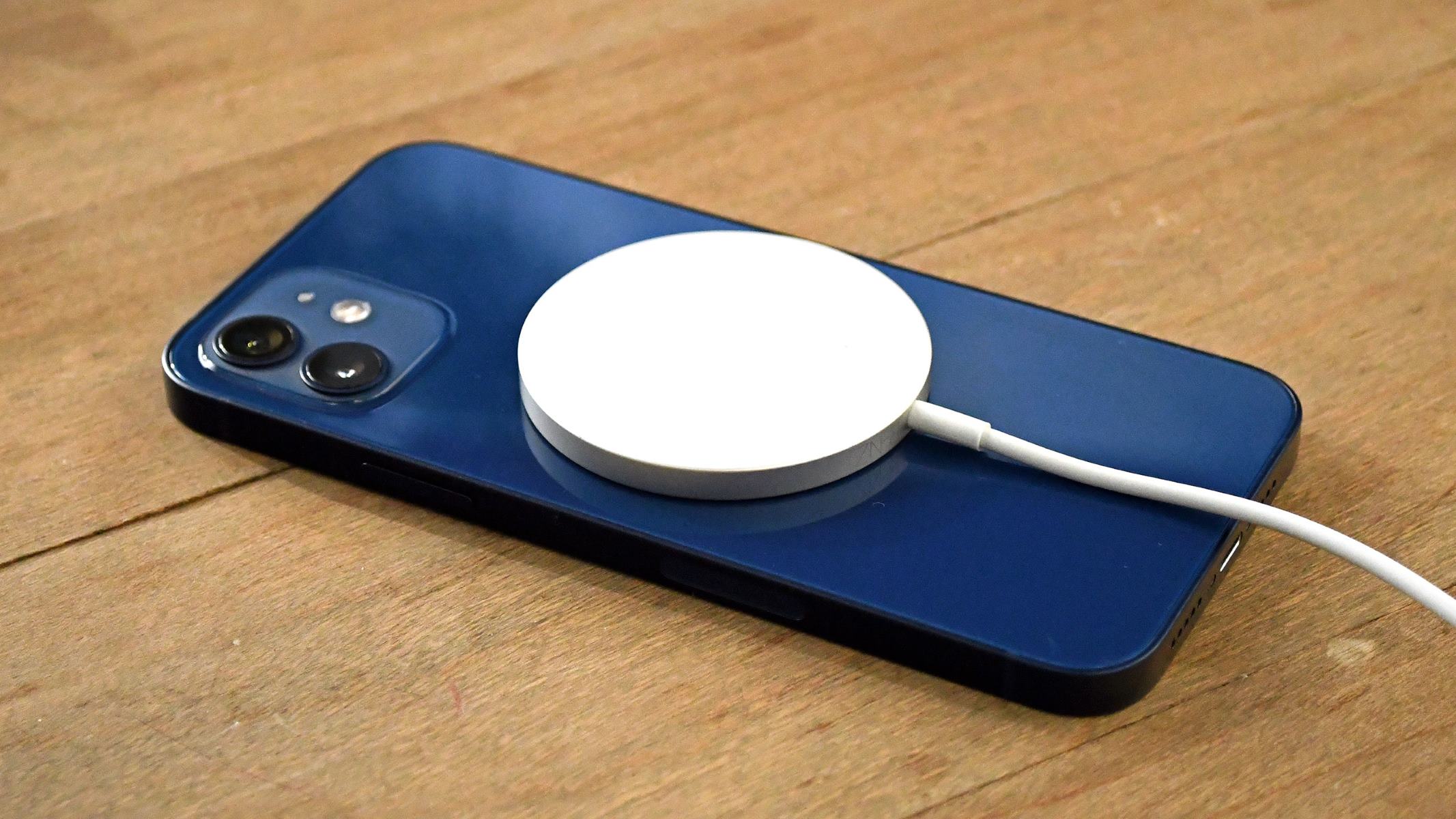
Your iPhone 13 supports standard Qi wireless charging and Apple’s MagSafe system. With a Qi-certified charger, you can power up your phone at up to 7.5W. With a MagSafe charger, you get faster 15W charging thanks to the magnetic alignment that snaps the charger perfectly to the back of your iPhone. Both methods use magnetic induction to transfer energy from the charger to your phone’s internal coil. The iPhone 13 also works with MagSafe accessories like wallets and cases, but these do not add reverse charging, they only attach magnetically. To charge your iPhone 13 itself, you simply place it on a compatible pad or MagSafe puck, and it will begin drawing power automatically.
How to wirelessly charge your iPhone 13
Follow these steps to charge your iPhone 13 wirelessly:
- Connect your wireless charger to a power source using the cable that came with it or a manufacturer-recommended cable.
- Plug the power adapter into a wall outlet. Use the adapter that came with your accessory or one recommended by the charger’s manufacturer for optimal performance.
- Place the charger on a flat, level surface, or in any location the manufacturer suggests for stable charging.
- Put your iPhone 13 on the charger with the display facing up. For best performance, center the iPhone on the charger or align it with the manufacturer’s marked sweet spot.
- Wait a few seconds. Your iPhone should show a charging icon on the lock screen, confirming that power is flowing.
If you use a MagSafe charger, the magnets will click your iPhone into the correct position automatically. For a standard Qi pad, you may need to adjust the phone slightly until you see the charging indicator.
Tips for wireless charging on iPhone 13
To get the most reliable wireless charging from your iPhone 13, keep these practical points in mind.
Charging speed: Standard Qi chargers deliver only 7.5W to your iPhone 13, which is slower than a 20W wired charger. For faster wireless top-ups, use a MagSafe charger that provides 15W, but note that you’ll need a 20W power adapter (or higher) to reach that speed.
Heat management: Your iPhone might get slightly warmer while charging wirelessly because magnetic induction generates some heat. This is normal, but if your phone becomes uncomfortably hot, remove it from the charger and let it cool down. Avoid charging in direct sunlight or on heat-retaining surfaces like blankets or pillows.
Remove cases and cards: Do not place anything between your iPhone and the charger, as magnetic mounts, thick cases, or metal objects can reduce performance or damage magnetic strips and RFID chips. If your case holds credit cards or ID badges, take them out before charging, otherwise, the charger may demagnetize them or fail to connect properly.
USB charging takes priority: The iPhone 13 will not charge wirelessly when connected to USB; it will charge using the USB connection instead. If you plug in a Lightning cable while the phone is on a wireless pad, the wired connection takes over completely, and the wireless charging stops. For fastest charging, use a wired connection when you have access to a power outlet.
Positioning matters: Always place the iPhone in the center of the charger or in the manufacturer’s recommended location. Misalignment reduces charging efficiency and may cause the connection to drop entirely. If you don’t see the charging icon within a few seconds, reposition the phone until it appears.
Battery health: Wireless charging is convenient, but it’s slightly less efficient than wired charging, so your iPhone may draw more energy and generate more heat over time. To preserve long-term battery health, alternate between wireless and wired charging, and avoid leaving your phone on a charger all night every night if you don’t need a full charge by morning.
Ultimately, the iPhone 13’s wireless charging is a one-way street: it receives power, but it never gives it back. If you need to charge your AirPods or Apple Watch on the go, carry a separate power bank or use a wired connection. Reverse wireless charging remains a feature you won’t find on any iPhone 13 model, so adjust your expectations accordingly.
\nRelated reading: How To Use iPad As Trackpad For Mac, How Do You Connect Your Phone To Your Tablet, and How To Stop Airpods From Connecting To Other Phones.