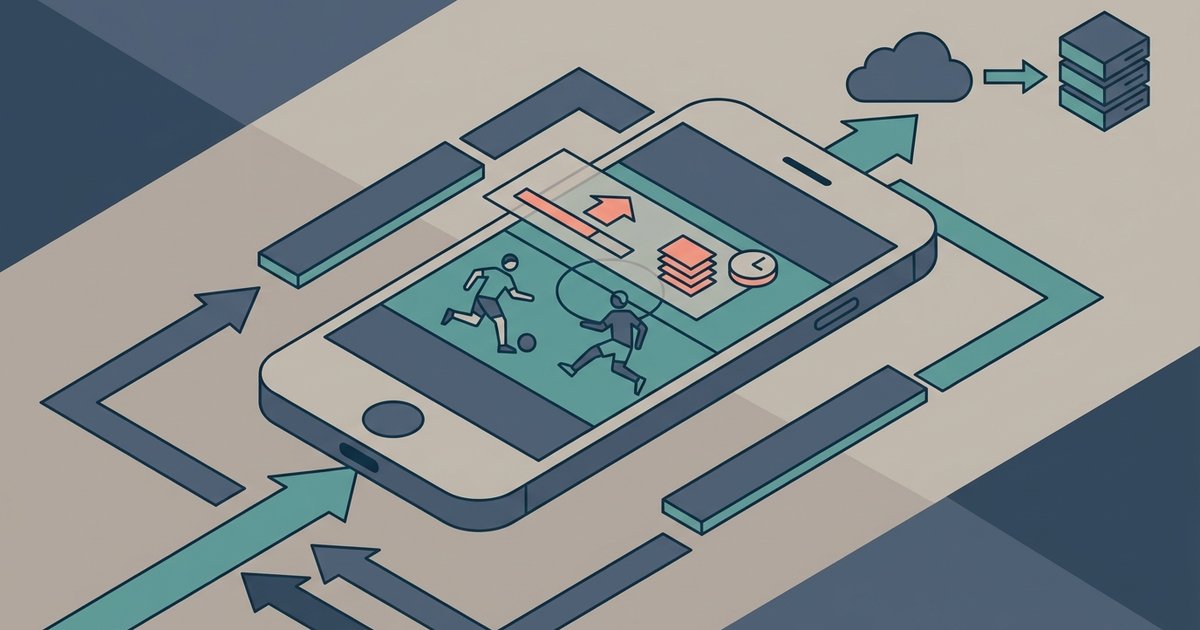
To control how much data FS1 streaming uses per hour, set your stream to a fixed 720p before you start watching. Then disable any adaptive bitrate option. This can significantly reduce your data usage per hour.
Streaming FS1 uses approximately 1.5 GB to 3 GB per hour at 720p. It uses around 3 GB to 5 GB per hour at 1080p. Dropping from 1080p to 720p can save you a significant amount of data every hour. That difference can mean the difference between staying under your limit or paying an overage fee. This matters most on a capped home internet plan or a mobile hotspot, so picking a provider from the fs1 streaming services list with prices that fits your budget can help offset any data overage costs. If you need to watch without a cable login, you can bypass fs1 TV provider authentication to stream directly over Wi-Fi.
The fs1 streaming data breakdown by quality
Book a service that lets you lock the resolution manually. On YouTube TV, streaming FS1 at 480p uses roughly 0.7 GB to 1 GB per hour. At 720p it uses around 1.5 GB to 3 GB per hour. At 1080p it uses around 3 GB to 5 GB per hour. Hulu + Live TV delivers similar figures. 720p consumes about 1.5 GB to 3 GB. 1080p consumes around 3 GB to 5 GB per hour. The Fox Sports app itself tends to be more aggressive with bitrate. It pushes 720p to around 1.5 GB to 3 GB and 1080p to around 3 GB to 5 GB per hour. Skip 480p unless you only need audio. Choose 720p to halve your data usage compared to 1080p.
Why 720p is the sweet spot for sports
Manually select 720p to watch fs1 without hitting your cap. Lowering the resolution to 720p fixes buffering without ruining the fast-motion clarity of live sports. Most broadcasts are natively produced in 720p. FS1 may transmit its live events in 720p at 60 frames per second. When you force a stream to 1080p, your device or app often upscales that native 720p signal. This adds processing overhead that can cause stuttering on a weak connection. By manually selecting 720p, you are watching the exact resolution the broadcaster intended. That means smoother playback and less data used. This is the most efficient setting that still looks crisp on a 55-inch screen.
When lowering quality doesn't save data
Do not trust the “Auto” quality mode on smart TV platforms like Roku or Fire TV. It overrides your manual 720p selection if the network connection improves for even a few seconds. Open the Fox Sports app on iOS and check the settings menu for any data usage options. This prevents the same override. Force the resolution manually if you need to watch SEC Network Plus. The same logic applies. If you watch ESPN through the Disney bundle, it streams in 720p by default. No extra steps are needed. Use the same 720p rule when you stream the New Year’s Eve ball drop without cable. Always check your device’s video settings after each update. A firmware patch can silently reset your quality preference back to “Auto.” You will burn through your data cap without realizing it.
If FS1 transmits in 720p, forcing 1080p may only upscale the native signal and could add stutter.