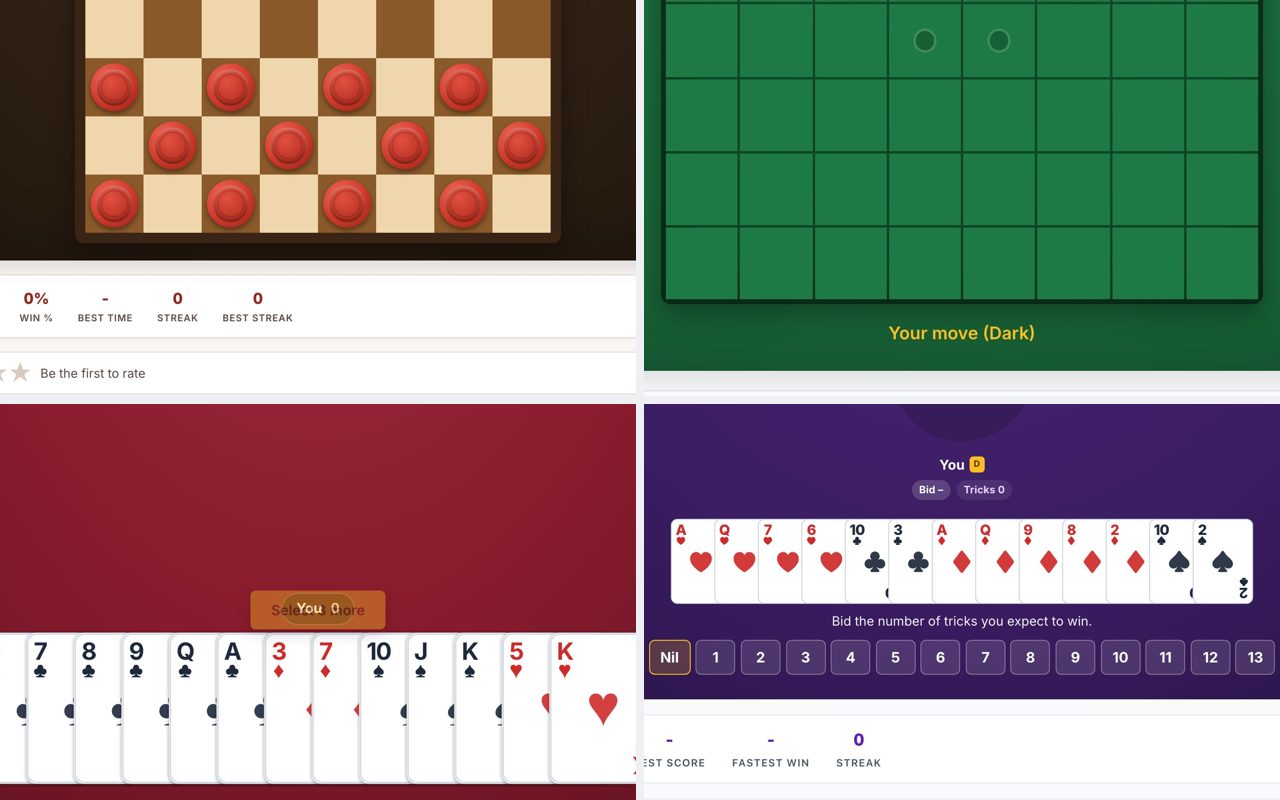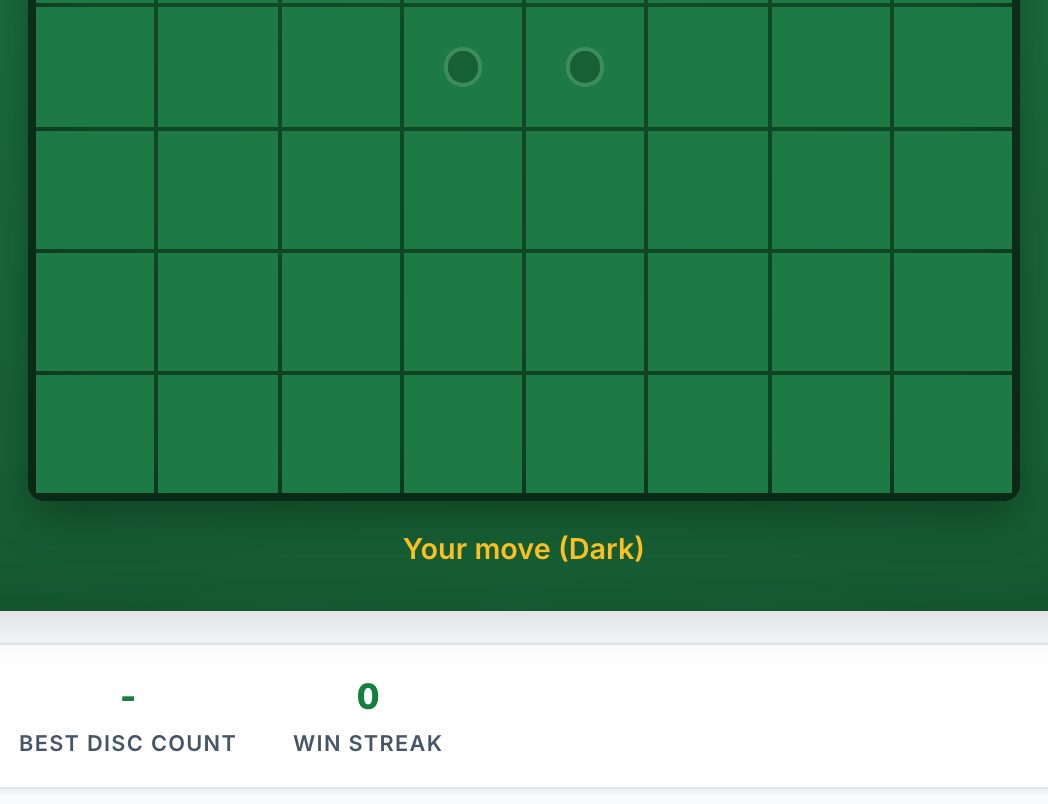
You can play Reversi and Othello right now, in this browser tab, without installing anything or creating an account. Head to Reversi.now and you’ll be placing discs within seconds, the game runs entirely in your browser, works with mouse or keyboard, and you can close the tab the moment you’re done.

How the Game Actually Works
If it’s been a while, here’s the quick refresher. You and your opponent take turns placing a disc on an 8x8 board. Your disc must “outflank” one or more of your opponent’s discs in a straight line (horizontal, vertical, or diagonal), meaning you trap them between your new disc and one of your existing discs. All trapped discs flip to your color. If you can’t move, you pass. The game ends when neither player can move, and the player with more discs on the board wins.
The key rule that trips people up: you must flip at least one disc every turn. You can’t just play anywhere, you have to make a legal move. The board starts with four discs in the center (two black, two white), and black always moves first.
For someone who hasn’t played in years, the biggest mental shift is that Reversi is not about grabbing the most discs early. It’s about controlling the corners and edges, because those pieces can never be flipped once you own them. A player who rushes to flip a lot of discs in the middle often ends up handing the edges to their opponent.
The Decisions That Separate a Good Player from a Bad One
Good Reversi players think two or three moves ahead, but not in the chess sense of “if I go there, he goes there.” Instead, they evaluate every move by what it does to the board’s structure. Here are the decisions that matter most:
- Corner control: Corners are permanent. If you take a corner, your opponent can never flip it. The entire game revolves around forcing your opponent to give you a corner or blocking them from taking one.
- Edge play: Edges are almost as good as corners. A disc on the edge can only be flipped if you have a disc on the same edge that outflanks it. So grabbing an edge early is often a trap, it looks safe, but it gives your opponent a chance to take the corner next to it.
- Mobility: The number of legal moves you have matters more than the number of discs. A good player tries to limit their opponent’s options, forcing them into a move that gives up a corner. If you have only one or two moves left, you’re in trouble.
- Disc count is a lie: Leading by 20 discs in the middle game often means you’re about to lose. Why? Because you’ve probably given your opponent the edges and corners. The only disc count that matters is the one at the end.
- Passing: Passing is not a bad thing, it’s a weapon. If you can force your opponent to pass (because they have no legal moves), you get to move again. Good players set up “passes” to break open the board.
If you’re losing, look at your opponent’s discs. Are they all on the edges? Did they take two corners? That’s your problem. You need to either block their expansion or force them to give up a corner by playing into a space they can’t avoid.
What to Look for in a Place to Play
Not all online Reversi is the same. Here’s what separates a decent browser game from a frustrating one:
- No install, no signup: The whole point of playing in a browser is that you click a link and you’re in. If a site makes you create an account or download an app, close the tab.
- Adjustable difficulty: You want to play against a computer that can actually beat you. Look for at least three levels, easy for learning, medium for a fair game, hard for a challenge.
- Undo and pass buttons: You’ll make mistakes. A good game lets you undo a move or two, and it clearly shows when you have to pass. If you can’t undo, you’ll be restarting constantly.
- Variants: If you’ve played classic Reversi a hundred times, you might want Anti-Reversi (where the goal is to have the fewest discs) or Rolit (a 10x10 version). A good site offers these without making you dig through menus.
- Daily challenge: A fresh puzzle or game every day is a nice touch, it gives you a reason to come back without having to set up a match.
On the site linked above, you get all of that: computer play at three levels, a friend mode, a daily challenge, and online multiplayer if you want to test yourself against a stranger. No account, no download, just a board.
Variants and Modes Worth Knowing
Classic Reversi is the 8x8 board with the rules above. But if you want to mix it up, here are the common variants you’ll find:
- Othello: This is the trademarked name for the same game with a specific starting position (four discs in the center, black on the diagonal). Many people use the names interchangeably, but Othello always has that fixed opening.
- Anti-Reversi: The rules are the same, but the goal flips, you want the fewest discs at the end. This changes everything because you’re now trying to avoid flipping discs, which means you play defensively in a different way.
- Rolit: A larger 10x10 board with more discs. It’s slower and more strategic, but the same corner-and-edge principles apply.
- Daily Challenge: A single puzzle or game with a fixed setup, usually with a specific goal (like “win by 10 discs”). It’s a good way to practice a specific situation.
If you’re new, stick to classic Reversi on easy. If you’re experienced, try Anti-Reversi, it will break your brain because everything you know about corners is now wrong.
Frequently Asked Questions
Is Reversi the same as Othello?
Yes, for practical purposes. Othello is a trademarked version of Reversi with a fixed starting position. The rules are identical, and most online games use the Othello opening (four discs in the center) even if they call it Reversi.
Can I play against a friend without an account?
Yes, on the site linked above, you can play a friend in the same browser session, you pass the mouse or take turns on the same device. For online multiplayer, you’ll need to share a room code or link, but you still don’t need an account.
What’s the best strategy for a beginner?
Don’t take corners early, take them late. Focus on controlling the edges first, and never play a disc that gives your opponent a corner unless you have no choice. Also, count your opponent’s legal moves after every turn; if they have more than you, you’re probably in trouble.
Why do I keep losing when I have more discs?
Because disc count is a trap. You can lead by 20 discs in the middle, but if your opponent owns the corners and edges, they’ll flip everything at the end. The game is decided in the last 10 moves, not the first 30.
Can I undo a move?
Yes, on the site linked above, you can undo your last move when playing against the computer. This is great for learning, you can see what would have happened if you’d played elsewhere.
More like this: Where to Play Classic Games Online Free · Free Classic Games You Can Play in Your Browser: The Directory
\nRelated reading: Where to Play Ludo Online Free (No Download).