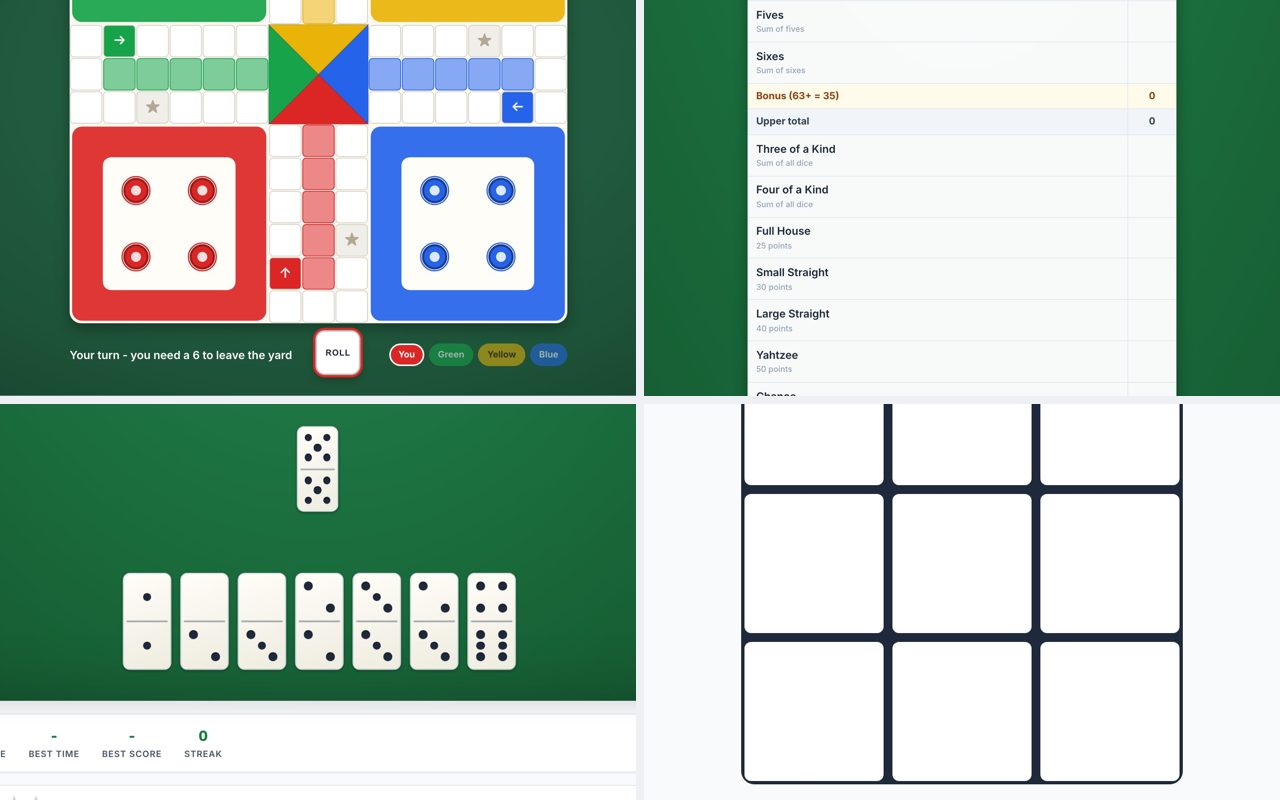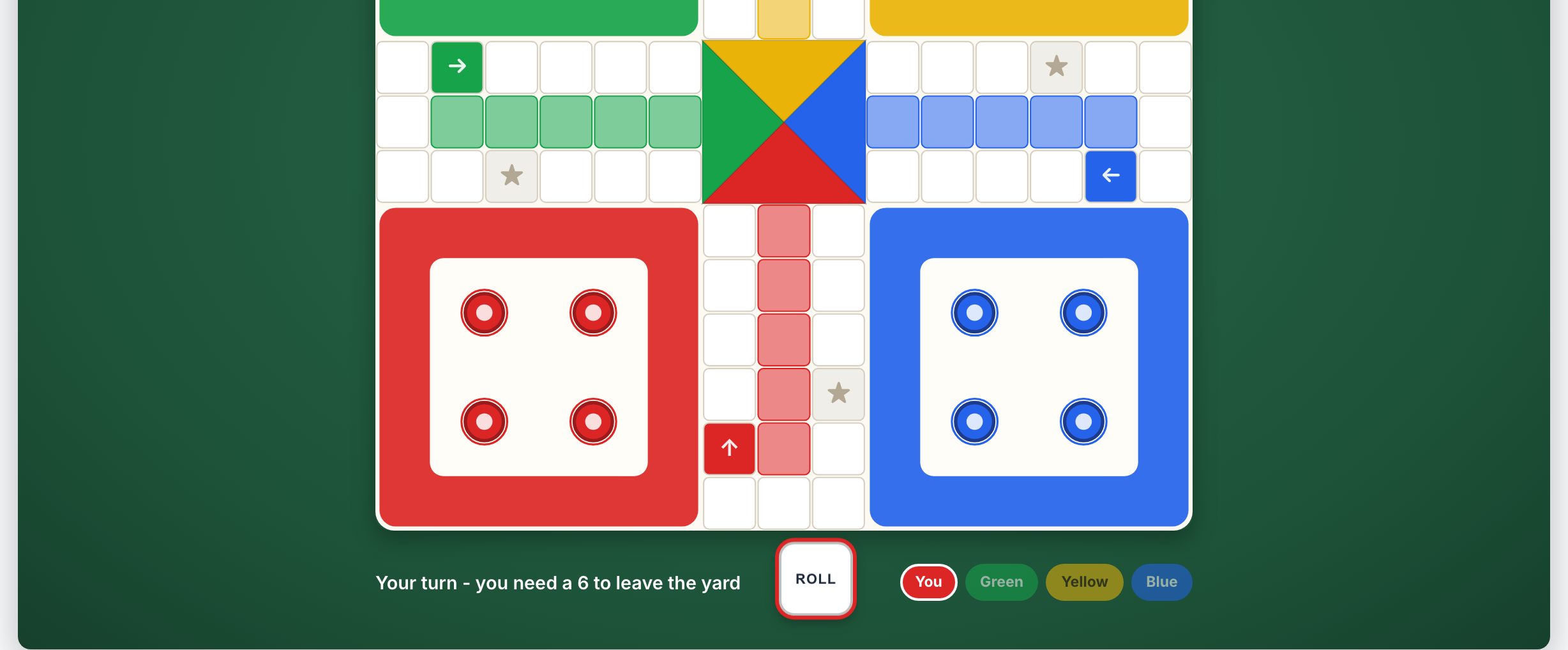
You can play Ludo right now in your browser tab at Ludo.now. It is free, requires no download, and you do not need to create an account. Just open the page, choose your game mode, and start rolling.

How Ludo Actually Works (If You Haven't Played in Years)
Ludo is a simple race game for 2 to 4 players. Each player has four tokens of the same colour, and the goal is to move all four tokens from your starting area around the board and into your home column before anyone else does. The board is a cross-shaped path with a central home area. You roll a single die on your turn.
To get a token out of your starting area, you must roll a six. Rolling a six also gives you an extra turn. If you roll a six and you already have a token on the board, you can move that token six spaces, or you can bring a new token out. If you roll three sixes in a row, your turn is forfeited, and you pass the die.
When you land on a square occupied by an opponent's token, that token is sent back to its starting area. You cannot land on a square occupied by your own token, that would block you. The safe squares are the star-marked spaces on the board, where tokens cannot be captured. Once you get a token into the home column (the coloured path leading to the centre), you must roll the exact number to move it into the centre. If you roll too high, you cannot move that token.
The game ends when one player gets all four tokens home. In a 2-player game, you each control two colours, so you have eight tokens total. In a 3-player game, one colour is unused. In a 4-player game, each player has one colour.
The Decisions That Separate a Good Player from a Bad One
Ludo looks like pure luck, but there is real strategy in how you use your rolls. The first decision is when to bring a token out. Bringing a token out early is good because it gives you more options, but it also puts that token at risk of being sent back. If you have a choice between moving a token that is already far ahead and bringing a new one out, think about the board position.
The second decision is which token to move when you roll a number. You should always consider what you are trying to achieve. Are you trying to get a token home? Are you trying to block an opponent? Are you trying to capture an opponent's token that is close to your starting area? Moving the token that is furthest behind is often a good idea, but not always. If an opponent is about to capture you, you might want to move a token that is ahead to safety.
Third, use your sixes wisely. A six is the only way to bring a new token out, but it is also a free move of six spaces. If you already have a token on the board, you can use a six to move it six spaces, which might get you closer to home or into a safe square. But if you have no tokens on the board, you must bring one out. If you have two tokens on the board and you roll a six, you can choose which one to move. Moving the one that is closer to home is usually better, because it reduces the number of sixes you need to get it in.
Fourth, think about blocking. If you have two tokens on the same square, they block that square, no other token can pass through. This can be a powerful defensive move, but it also means you have two tokens at risk if an opponent lands on you. Use blocking sparingly, and only when it gives you a real advantage.
Finally, remember that capturing is not always the best move. Sending an opponent back to their start feels good, but it might leave your token in a vulnerable position. If you can capture and then move to a safe square, do it. If capturing puts you in immediate danger, it might be better to move elsewhere.
What to Look for in a Place to Play Ludo Online
When you play Ludo in a browser, the most important thing is that it works without friction. You want a site that loads quickly, does not require an account, and does not force you to install anything. The game should be playable with a mouse or keyboard, you should not need a touchscreen or a mobile device.
Look for a site that offers different game modes. Playing against an AI is good for practice, but you also want the option to play against friends or other people online. A good site will let you choose between 2, 3, or 4 players. It should also have a hint system if you are new or want to improve. Daily challenges are a nice extra, they give you a reason to come back.
Check that the site has a clear rules section. If you are not sure about a rule, you should be able to find it quickly. A FAQ section is also helpful. The site should be free, there is no reason to pay for a simple board game. And it should work on any modern browser, whether you use Chrome, Firefox, Edge, or Safari.
Finally, look at the overall design. The board should be easy to read, with clear colours and pieces. The controls should be intuitive, you should be able to click on a token to select it, then click on the square where you want to move it. If the site is cluttered with ads or pop-ups, it will ruin the experience. A clean, simple interface is a sign of a good place to play.
Variants and Modes Worth Knowing
Classic Ludo is the standard game, but many online versions offer variations. One common variant is "quick Ludo," where each player starts with one token already on the board. This speeds up the game and reduces the frustration of waiting for a six. Another variant is "team play," where two players form a team and share a colour. In team play, you win if either of you gets all your tokens home.
Some sites offer a "capture the flag" mode, where the goal is to capture a specific number of opponent tokens. Others have "power-ups", special abilities you can use once per game, like a shield that protects your token from capture. These add a layer of strategy but can also make the game more chaotic. If you are new, stick to classic rules first.
There is also a "race" mode, where all players start with their tokens on the board and race to get them home. This is faster and more frantic, but it removes the opening strategy of bringing tokens out. For a more relaxed game, you can play with "no capture" rules, where you cannot send opponents back, this is good for beginners or for players who want a less aggressive game.
On Ludo.now, you can choose between 2, 3, or 4 players, and you can play against an AI or against friends. The site also offers hints and daily challenges, which are good for learning and for keeping the game fresh. If you are not sure which variant to try, start with classic 4-player against the AI, then move on to 2-player when you are comfortable.
Frequently Asked Questions
Do I need to create an account to play?
No. You can play immediately in your browser without signing up or providing any personal information. Just open the site and start a game.
Can I play against my friends without them being in the same room?
Yes. The site supports online multiplayer races against friends. You can share a link or a room code, and your friends can join from their own browsers.
Is there a way to get better at Ludo?
Yes. Use the hint feature on the site to see suggested moves, and play against the AI to practice. Pay attention to your token placement and think about which moves give you the most flexibility. Daily challenges are also a good way to practice specific scenarios.
What happens if I close my browser tab in the middle of a game?
If you are playing against the AI, the game will be lost. If you are playing against friends, the game will end for you, and your tokens will be removed from the board. It is best to finish a game in one sitting.
Can I play Ludo on a phone or tablet?
While the site is designed for desktop and laptop browsers, it may work on mobile devices. However, the controls are optimised for a mouse and keyboard, so for the best experience, play on a computer.
More like this: Where to Play Classic Games Online Free · Free Classic Games You Can Play in Your Browser: The Directory
\nRelated reading: Where to Play Checkers Online Free (No Download).