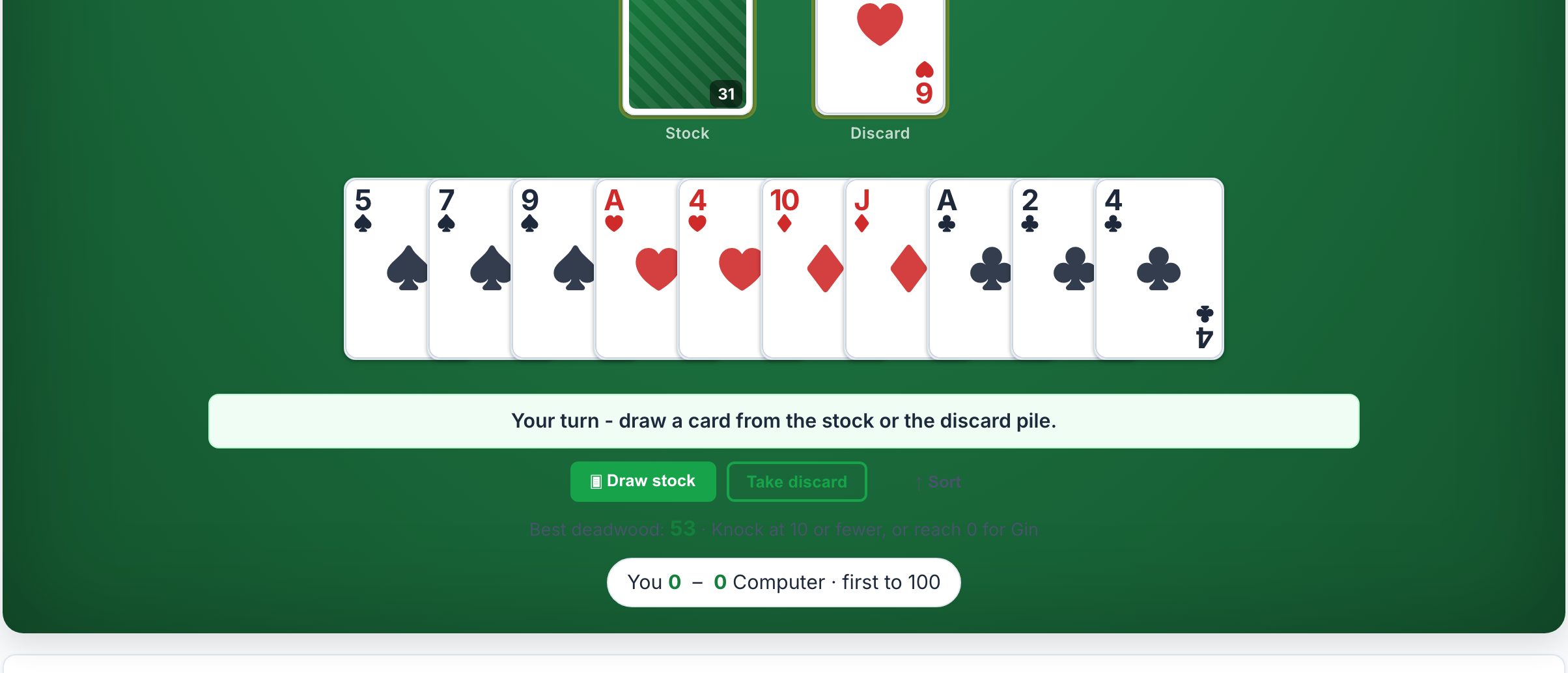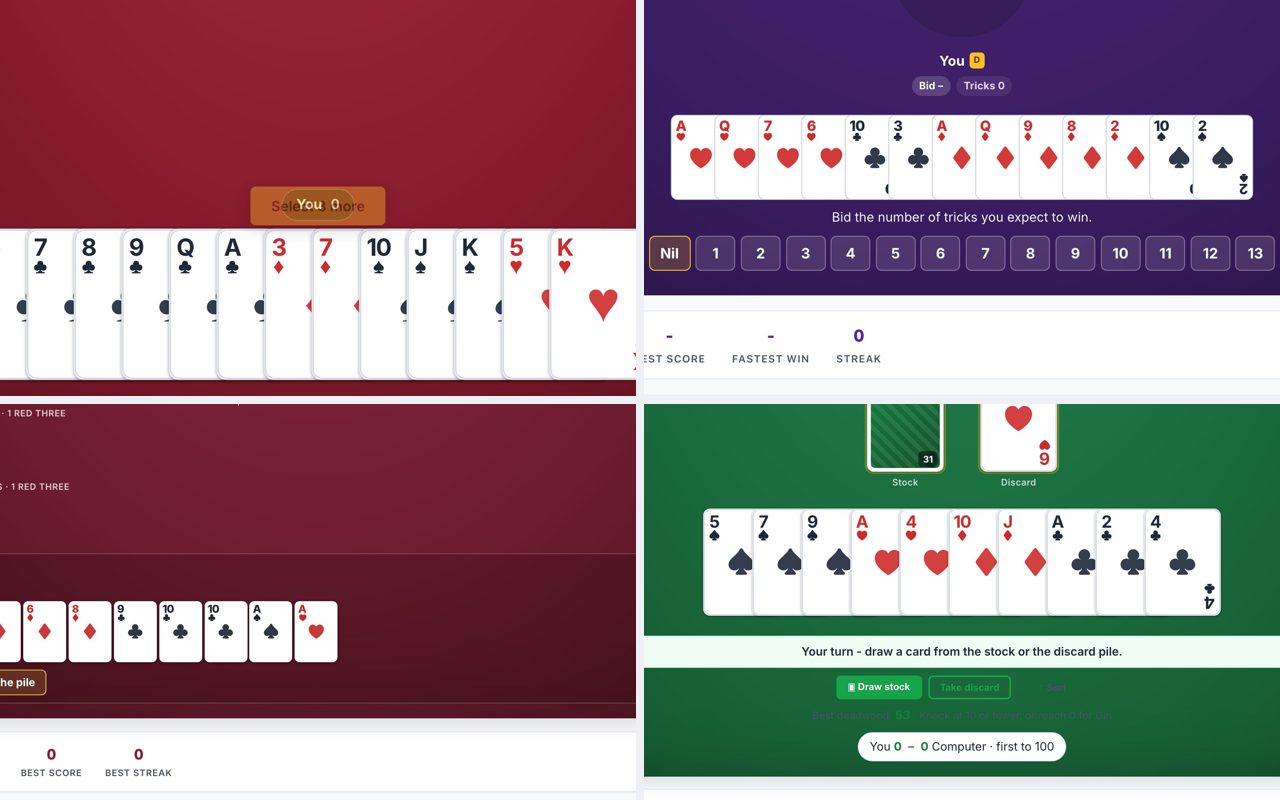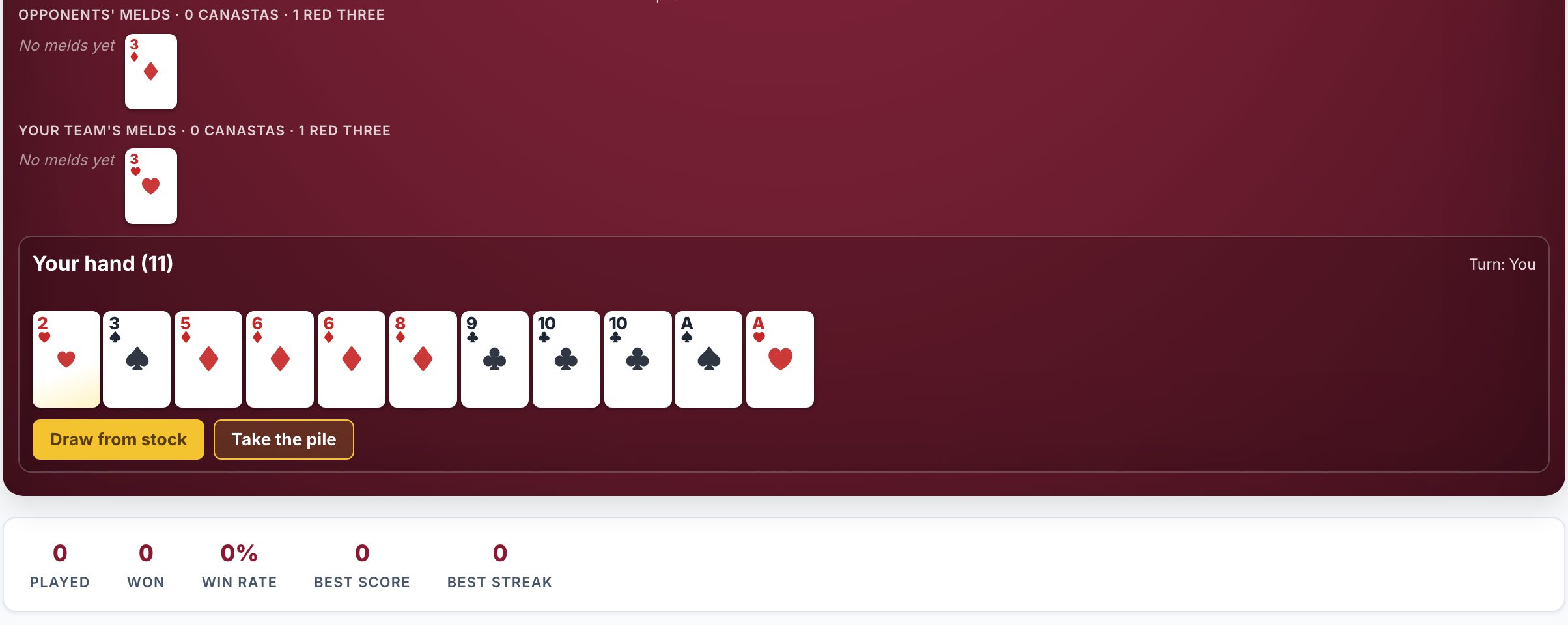
You can play Canasta right now, in this browser tab, without installing anything or creating an account. Head to Canasta.now and you’ll be at the table within seconds, no signup, no download, just you and the cards. The game runs entirely in your browser, so you can close the tab when you’re done and pick up exactly where you left off later.

How Canasta Actually Works (If You’re Rusty)
Canasta is a partnership card game for four players (though two-player variants exist), played with two standard decks plus jokers. The goal is to score points by making “melds”, groups of three or more cards of the same rank. You need a minimum of two natural cards (not wild) in each meld, and you can add to your own melds or your partner’s. The twist: you must “go out” by melding all your cards, but you can’t do that until you’ve made at least one “canasta”, a meld of seven or more cards.
On your turn, you draw one card from the stock or take the entire discard pile (if you can use the top card in a meld). Then you may meld, and you must discard one card face up. Red threes are bonus points, if you draw one, you must place it on the table immediately and draw a replacement. Black threes block the discard pile when discarded, and jokers and twos are wild, but you can’t meld more than two wilds in a single meld.
The game ends when a player goes out or when the stock runs out. You count points from melds (positive) and from cards left in hand (negative). The first team to 5,000 points wins, but you’ll often play to a lower target in casual games.
The Decisions That Separate Good Players from Bad Ones
Canasta looks simple, but the choices are subtle. The biggest mistake beginners make is hoarding wild cards. Yes, they’re powerful, but if you never use them, they’re dead weight. A good player knows when to commit wilds to a meld to reach a canasta quickly, and when to save them for a bigger play.
Another key decision is when to take the discard pile. Taking it gives you extra cards, but it also gives your opponent information. If the top card is a seven and you need sevens, take it, but if you’re just grabbing it to deny your opponent, you might be giving up position. Watch what your opponent discards. If they throw a nine, they probably don’t have nines, so it’s safe to discard yours later.
Defensive play matters just as much. If your opponent is close to going out, you might want to break up your own melds to avoid giving them the cards they need. Conversely, if you’re ahead, you can afford to be more aggressive. The real skill is reading the table: counting how many cards of a rank have been played, tracking which wilds are gone, and knowing when to hold back.
Finally, learn when to go out. Going out early can be a mistake if you leave your partner with a hand full of unmelded cards, they’ll lose points. But if you can go out with a big canasta and your partner has nothing, it’s often worth the risk. The best players think two moves ahead, not just about their own hand but about the entire flow of the game.
What to Look for in a Place to Play Canasta Online
Not all online Canasta is created equal. First, you want a site that respects your time, no forced tutorials, no waiting for a lobby to fill. A good site lets you jump straight into a game against a computer opponent, because that’s the fastest way to practice. Second, check whether the rules are standard. Some sites use “house rules” that change the scoring or the number of cards dealt. You want a place that follows the classic rules you remember, or at least lets you choose.
Third, look for a clean interface. You’ll be staring at the table for a while, so you want cards that are easy to read, a discard pile that’s obvious, and a clear indicator of whose turn it is. You don’t need fancy animations, but you do need to see your melds and your hand without squinting. Fourth, consider whether you want to play against AI or live opponents. AI is great for learning and for a quick game, but live opponents offer a different challenge, they make mistakes, they bluff, and they adapt. A good site offers both.
Finally, make sure the site works in a browser tab. You don’t want to download an app or create an account just to play a hand. The best places are the ones that load fast, work with a mouse or keyboard, and don’t nag you to sign up for anything. If you can close the tab and lose nothing, that’s a win.
Variants and Modes Worth Knowing
The most common variant is “Partnership Canasta” (four players, two teams). But you’ll also see “Two-Player Canasta,” where each player plays alone, this changes the strategy because you have no partner to cover for you. “Hand and Foot” is a popular twist where each player gets two hands, and you must play the first hand before moving to the second. “Bolivia” is another variant where you can meld on the opponent’s side, and “Samba” uses three decks and allows runs of consecutive cards.
On the site you’re playing, you’ll likely find a “Classic” mode that sticks to the original rules. Some sites offer a “Daily Deal” or a “Quick Play” option, which is perfect if you have ten minutes. If you’re new, start with Classic and play against the computer, it’s the best way to learn the rhythm without pressure. Once you’re comfortable, try a live game to test your skills against real people.
One mode worth seeking out is “Partnership with a Partner” (where you can see your partner’s hand). This is a great learning tool because you can see what your partner is holding and understand why they make certain discards. It’s not standard, but it’s a great way to improve.
Frequently Asked Questions
Do I need to create an account to play?
No. You can play immediately in your browser without signing up. The game loads right away, and your progress is saved in your browser’s local storage, so you can close the tab and come back later.
Can I play against my friends?
Yes, if the site offers live multiplayer. You can share a link or a room code with your friends, and they can join your table. If you’re playing against the computer, you can’t invite friends, but you can still play together on the same device if you’re in the same room.
Is there a difference between Canasta and Hand and Foot?
Yes. Hand and Foot is a variant that uses two separate hands per player, and you must finish the first before starting the second. Canasta is the original game with a single hand. The scoring and melding rules are similar, but the strategy changes because you have more cards to manage.
What happens if the stock runs out?
If the stock runs out and no one has gone out, the game ends immediately. You count up your melds and subtract the points in your hand. The team with the higher score wins that round. Some variants allow a final discard, but the standard rule is that the game ends when the stock is empty.
Can I undo a move if I make a mistake?
It depends on the site. Some allow you to undo a discard or a meld, but others don’t. In a live game, you usually can’t undo, so it’s best to be careful. If you’re playing against the computer, you might have a “hint” option or a “take back” feature, but it’s not guaranteed.
More like this: Where to Play Classic Games Online Free · Free Classic Games You Can Play in Your Browser: The Directory
\nRelated reading: Where to Play FreeCell Online Free (No Download).