You finish a draft, and the submission guidelines say "8 to 10 pages." Your word processor tells you nothing useful. You are sitting there with 2,400 words and absolutely no idea whether that hits the mark. This is one of the most overlooked friction points in professional writing, and it happens more often than people admit.
Page count requirements show up everywhere. Guest post guidelines, academic submissions, magazine pitches, technical documentation, and corporate reports all tend to specify pages rather than words. That means you need a reliable way to translate one into the other, without loading a desktop app or manually reformatting your entire document just to check.
Key Points:
- Page-count guidelines are standard in publishing, academia, and media, yet most drafting tools count words, not pages
- How many pages your draft fills depends heavily on font size, line spacing, and margin settings
- A dedicated converter removes the need to open a word processor just to estimate length
- Knowing your page count early helps you plan section structure and avoid under-delivering on a brief
- Formatting variables like font choice and spacing can shift your total page count by 30% or more
Why Writers Keep Running Into This Problem
The mismatch between word counts and page counts is older than modern computing. Manuscript formatting conventions have historically relied on physical pages, from typewritten double-spaced submissions to bound reports. Publishers and editors built an entire shorthand around page length because it reflected what a reader would actually hold in their hands.
Digital tools changed how we draft, but they did not change how many submission forms are written. A guest post editor might say "aim for six pages" because that is how long the content needs to feel in print layout. A grant committee might cap applications at fifteen pages because they are genuinely printing and reading physical documents in a meeting room. The spec exists in pages, even if you are writing in a Google Doc that shows you a continuous scroll.
Most writers deal with this by doing rough mental math, or by copying their text into Word and reformatting it to check. Both approaches waste time. The mental math is inaccurate. The Word method requires you to apply consistent formatting and trust that your settings match what the final publisher will use.
The Variables That Change Everything
Page length is not a fixed output from a given word count. It shifts depending on several factors that most writers overlook until they are staring at a submission that looks wrong.
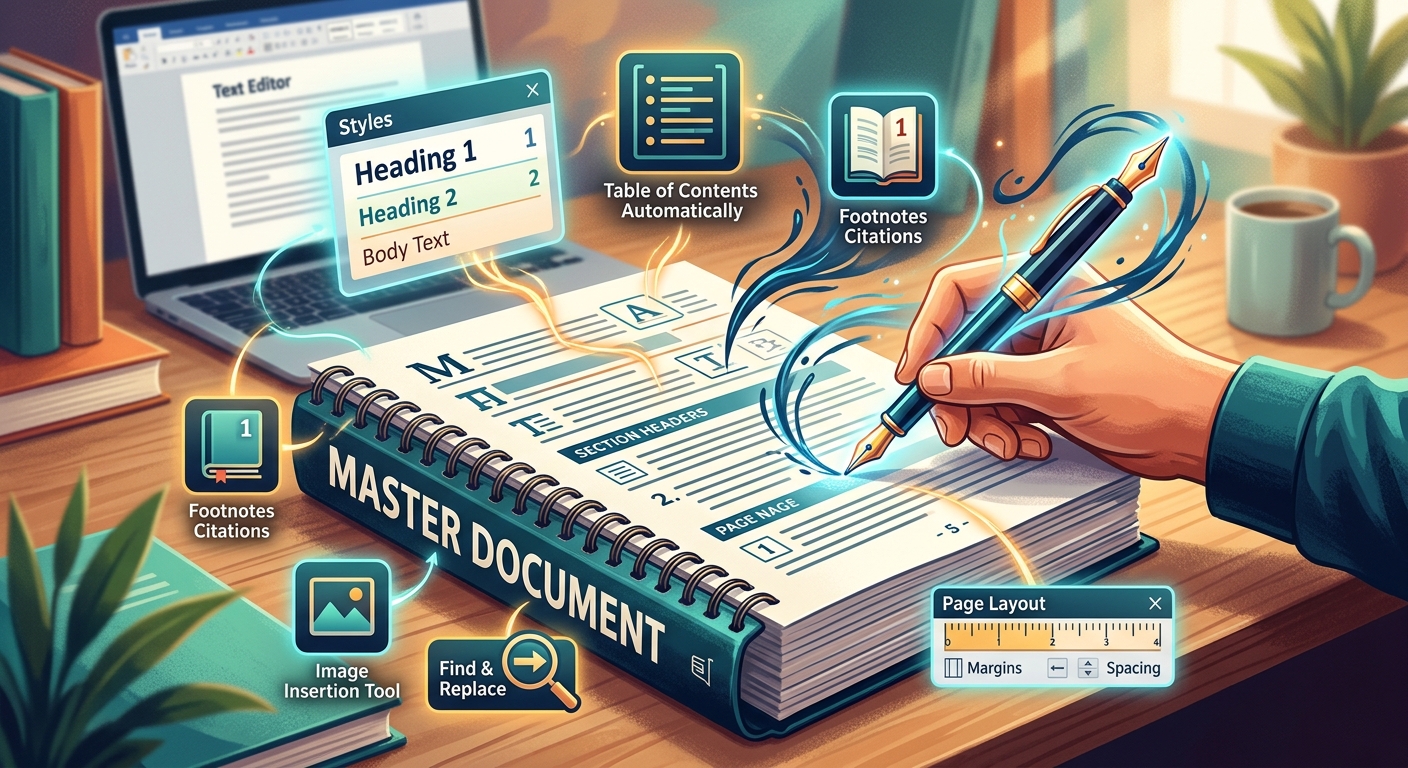
Font size plays a larger role than people expect. A document in 12-point Times New Roman reads very differently on the page than the same word count in 11-point Calibri. One will run longer. One will compress. The difference can be a full page on a medium-length document.
Line spacing matters just as much. Double spacing is standard in academic and manuscript submission contexts. Single spacing is common in business reports. The same 1,500 words might take three pages double-spaced and under two pages single-spaced.
Margins, headers, and footers add another layer. A document with wide margins and a running header on every page will always come in longer than a tightly formatted one. These are real variables that affect real page totals, and most writers do not account for all of them at once.
How Common Formatting Settings Affect Page Length
| Setting | Line Spacing | Approx. Words per Page |
|---|---|---|
| 12pt Times New Roman | Double | 250 to 275 |
| 12pt Arial | Double | 270 to 290 |
| 12pt Times New Roman | Single | 450 to 500 |
| 11pt Calibri | Single | 480 to 530 |
| 10pt Courier New | Double | 200 to 230 |
These ranges shift depending on paragraph breaks, headers within the text, and any images or white space you include. But they give you a working estimate before you open any software.
A Cleaner Way to Get the Answer
The most practical solution is a converter that takes your word count and returns a page estimate based on whatever formatting parameters apply to your submission. You enter the number of words, select your font and spacing, and get a number you can actually use.
Checking a words to pages converter this way turns a multi-step guessing process into a single lookup. You do not need to format a document. You do not need to open a word processor. You just need to know your word count, which any draft tool already gives you, and your expected output format.
This matters most for writers who work across multiple platforms with different style requirements. A technical communicator might submit to a knowledge base that uses one font standard, a trade publication that expects another, and an internal report template that uses a third. Switching between contexts becomes much easier when you have a fast reference point for each one.
When a Page Estimate Actually Changes Your Output
The value of a words-to-pages estimate is not just the number itself. It is what you do with that information during the writing process.
If you are 400 words into a piece and your estimate puts you at half a page, you know you need to expand. You can make that decision before you are deep in the editing phase. You can add a section, broaden an argument, or include a case study that you were going to cut. The structural change is easier to make early than it is at the revision stage.
If your draft is running long, the estimate tells you that too. Say you are at 3,500 words and your target is eight pages double-spaced. The converter tells you that puts you closer to fourteen pages. Now you know you have a structural editing job ahead of you, not just a few small trims.
Writers who do not check until the final draft are the ones who end up scrambling. They either blow past the page limit or pad a thin document at the last minute. Neither approach produces the strongest work, and both could have been avoided with a single check halfway through the draft.
The Difference Between Knowing and Guessing
There is a professional confidence that comes from being specific about your work. When an editor asks how long your piece is running, saying "around ten pages" based on an actual estimate lands differently than a vague shrug and a word count that means nothing to them.
That specificity is also useful internally. Bloggers who produce sponsored content often work against page minimums to satisfy advertiser agreements. Technical communicators writing user guides need to hit page targets set by design teams laying out physical booklets. Grant writers operate under strict page caps enforced by submission software that will reject anything over the limit. In all of these cases, the ability to check progress against a real page estimate, rather than just a word count, is a practical professional skill.
It is also a skill that takes about ten seconds to execute once you have the right tool in your workflow. That is the entire point.
Formatting Confidence Before You Hit Submit
The goal of any writing tool is to remove friction from your process, not add steps. The best tools are the ones you forget you are using because they answer the question so directly.
A words-to-pages converter fits that description. It handles the one conversion that word processors handle poorly, at least for writers who are not ready to finalize formatting. It gives you a working estimate based on the variables that actually determine page count, including the ones that are easy to forget. And it does all of that without asking you to install anything or learn a new interface.
If you write regularly for platforms that specify page counts in their guidelines, this belongs in your standard workflow alongside your word counter and your spell checker. Not because it is glamorous, but because it is genuinely useful, and the alternatives are slower and less reliable.
You already know your word count. Now you can know your page count too.
\nRelated reading: PDF Management Tools Every Remote Worker Should Know About, The Case for Using a Free AI Assistant Instead of Paying Monthly, and Getting Text From Any Video Without Transcribing it Manually.