Ten years ago, placing one person's face onto another in a convincing video took a team of compositing artists and weeks of render time. That barrier is largely behind us. AI face swap has become a standard feature in consumer apps, a practical instrument on filmmakers' desks, and a subject worth understanding properly before you use it.
AI face swap has moved well beyond its novelty origins into a legitimate creative discipline with real-world applications across entertainment, marketing, and digital art.
- The underlying technology relies on deep learning models that map facial geometry and reproduce it in a new context with remarkable accuracy.
- Getting good results depends on image quality, consistent lighting, and choosing tools that handle post-processing blending automatically.
- Responsible use requires clear consent from anyone whose likeness is involved and transparency with audiences viewing the final content.
How Face Swap Went From Gimmick to Genuine Tool
The story starts around 2015, when Snapchat launched its face swap filter and millions of people discovered they could trade faces with their friends in real time. It was a party trick, and a good one. The results were blurry, sometimes alarming, and very obviously fake. Nobody was mistaking them for real footage.
Things shifted sharply in late 2017, when a Reddit community began sharing convincingly manipulated video clips created with a technique that would soon be called deepfakes. The results were far more polished than anything a casual user could produce before. Public concern followed quickly, and for a time the technology became synonymous with misuse.
But the research was never going to stop. Academic labs, independent developers, and major studios kept pushing the models forward. Not to deceive, but to solve real production problems: replacing a stunt performer's face with an actor's, de-aging a cast member for a flashback scene, re-dubbing a film for international audiences so that lip movements match the new dialogue. These are expensive, time-consuming tasks that AI dramatically simplifies. By the early 2020s, the same core technology had found a stable home in entirely legitimate creative workflows.
The Deep Learning Models Doing the Heavy Lifting
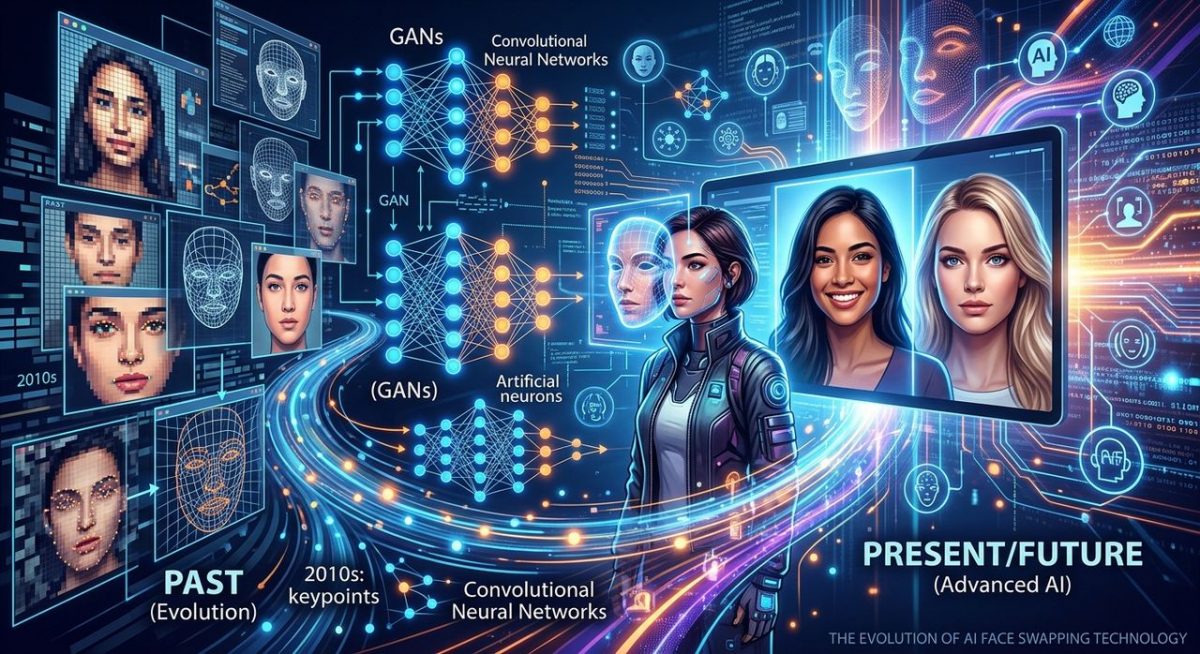
Two model families dominate the face swap space right now. The first is the Generative Adversarial Network, or GAN. A GAN pits two neural networks against each other during training. One network, the generator, tries to produce synthetic images that look real. The other network, the discriminator, tries to catch fakes. They compete across millions of iterations, and the result is a generator that has learned to produce extraordinarily convincing output. If you want to understand the mechanics at a deeper level, reading about generative adversarial networks gives you a solid technical foundation for everything else in this space.
The second model family is diffusion models. These work by adding random noise to real images during training and then learning to reverse that process, step by step, until the model can reconstruct a clean image from near-pure noise. The detail these models produce is striking. They handle lighting, skin texture, and fine hair strands better than older GAN-based approaches. Many of the most capable face swap tools now blend both families, using GAN-style encoders to transfer identity features and diffusion-based refinement to polish the final output.
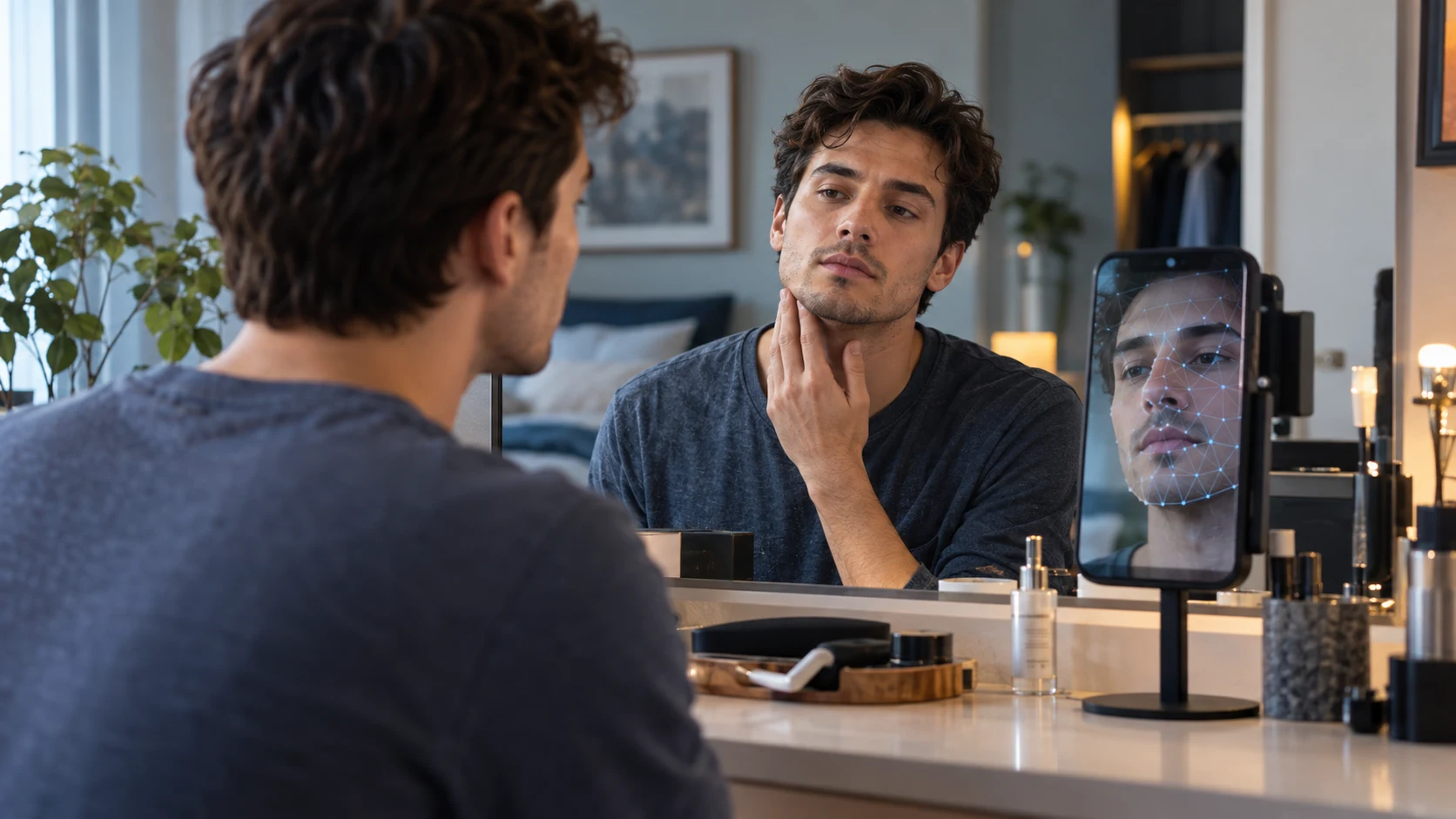
Underneath both approaches sit facial landmark detection systems. Before any generation happens, the model maps where the eyes, nose, mouth corners, eyebrow arches, and jawline sit in both the source image and the target image. These keypoints anchor the swap and ensure the replacement face tracks the same pose and expression as the original.
What Happens When You Press Swap
The process looks instant from the outside, but distinct steps run every time you trigger a face swap. Here is the sequence in order:
- Face detection: The model scans both images, finds all visible faces, and plots the key landmark points across each one.
- Feature encoding: The source face is compressed into a high-dimensional numerical vector that captures its geometry, proportions, and skin characteristics.
- Identity transfer: That encoded identity is projected onto the target face, aligned to match its pose, angle, and expression frame by frame.
- Blending and color matching: The swapped face is composited back onto the target image with automatic color grading to match ambient lighting and skin tone.
- Output rendering: The finished image or video is written out with the new face fully integrated, edges smoothed, and visual artifacts suppressed.
For video, this pipeline runs on every individual frame, which is why processing time scales with clip length. Higher-end tools use GPU acceleration to keep render times manageable for longer content.
Trying a Modern Tool in Practice
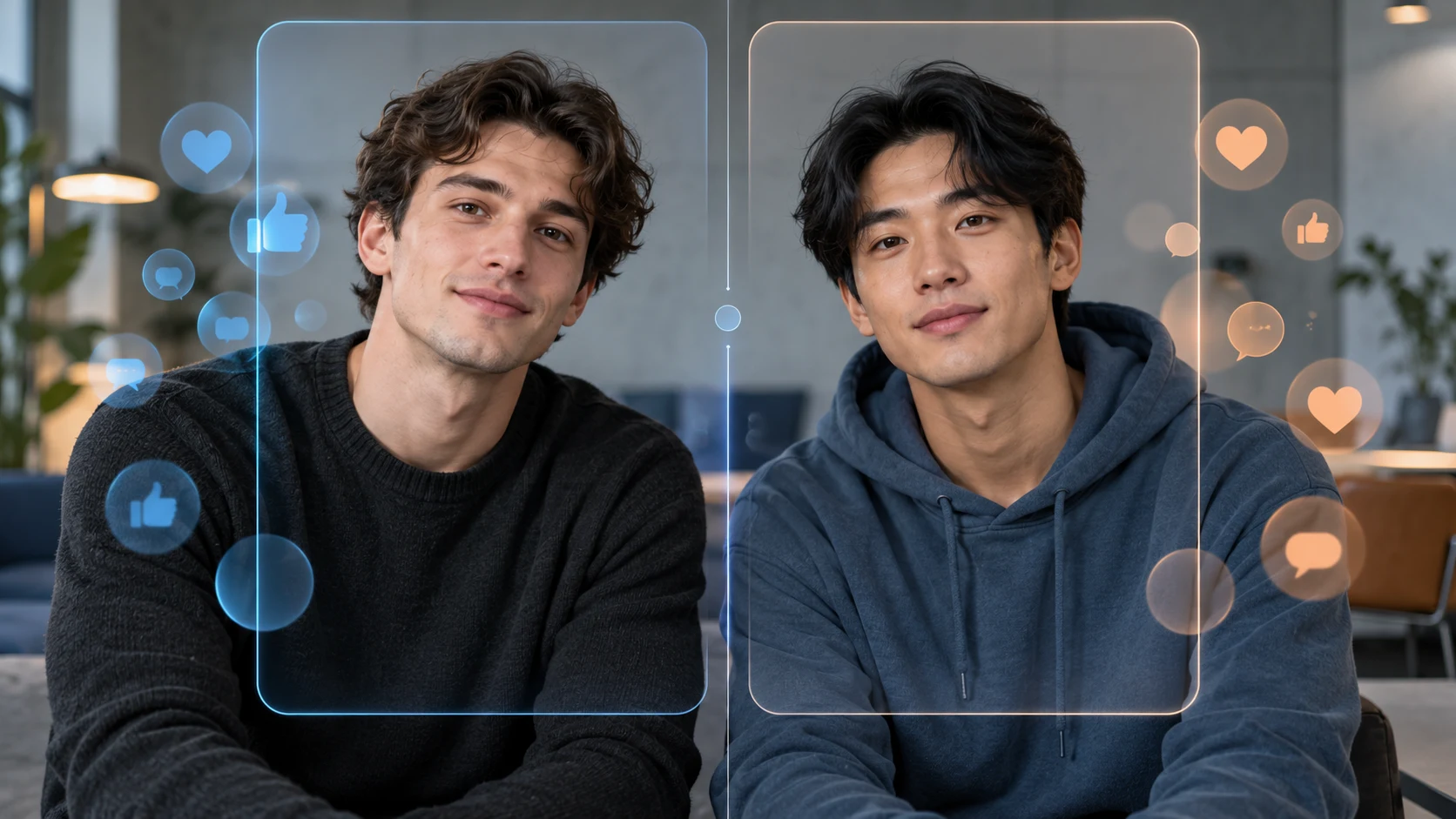
Reading about a technology only takes you so far. The best way to build a real intuition for what these models can and cannot do is to run a swap yourself. Uploading a clear portrait photo and watching the model detect landmarks, transfer identity, and blend the result teaches you far more than a diagram ever could. Giving AI face swap a try in a browser-based tool delivers immediate, hands-on feedback about where lighting conditions and image resolution actually matter.
Pay close attention to what makes results succeed or fall apart. Front-facing, well-lit source photos almost always produce cleaner output. Extreme angles, heavy shadows, or partially obscured faces cause the landmark detection step to struggle, and that introduces artifacts downstream. Spending a few minutes experimenting with different input conditions teaches the practical lesson far faster than any written explanation can.
What Creators Are Actually Doing With This Technology
The creative applications are broader than most people initially expect. Content creators on video platforms use face swap for comedic sketches, parody content, and entertainment that plays on the novelty of seeing familiar faces in unexpected scenarios. The results do not always need to be photorealistic to land. A clearly stylized swap can be the joke itself.
The film and advertising industries apply the technology at a more technical level. A brand running a product campaign across multiple countries might shoot a single master ad and then adapt the talent for each regional market using face swap, reducing the need to book entirely separate shoots. Productions with historical content use it to place younger versions of actors into scenes set in the past.
Digital artists treat it as a compositional tool, layering face swaps alongside other generative techniques to produce portraits, character designs, and concept art that would take weeks to produce by hand. Educators in media literacy and communications programs use it to demonstrate exactly how image synthesis works, giving students a concrete understanding of why visual media cannot always be taken at face value.
Localization and Language Dubbing
One particularly practical application is video dubbing. When a film is translated and dubbed into another language, the actor's mouth movements no longer match the new audio track. Face swap models trained specifically on lip-sync tasks can adjust the mouth region to better align with the dubbed dialogue, significantly reducing the disconnect that traditional dubbing produces. Several major streaming platforms have explored this approach for high-priority international releases, and the results have improved considerably over the past two years.
Photo Versus Video: Where Each Approach Shines
Photo Face Swap and Video Face Swap Compared
| Factor | Photo Face Swap | Video Face Swap |
|---|---|---|
| Processing speed | Near-instant for a single frame | Scales with frame count; may take several minutes |
| Main challenge | Lighting mismatch between source and target | Keeping the swapped face consistent across frames |
| Common use cases | Social media, digital art, marketing assets | Film production, entertainment clips, dubbing |
| Quality dependencies | Source image resolution and face angle | Frame rate, motion blur, and occlusion handling |
| Typical output | Single JPG or PNG file | MP4 video or exported frame sequence |
Using This Technology With Honesty and Care
Every tool this capable comes with a corresponding set of responsibilities. The most important one is consent. Using someone's face in synthetic media without their permission is both ethically problematic and, in many jurisdictions, increasingly illegal. Several countries and US states have passed legislation specifically addressing non-consensual synthetic media, and that legal landscape is continuing to develop.
Transparency with your audience matters just as much. A content creator who produces a clearly labeled parody video operates in an entirely different ethical space from someone distributing manipulated footage designed to mislead. Disclosure is not just courteous. It is increasingly expected, and some platforms now require it.
Most reputable tools include watermarking features or metadata tagging that identifies outputs as synthetic. Using those features is a low-effort step that contributes to healthier norms around AI-generated media. It also protects the creator, since labeling your own work prevents it from being misrepresented later.
Platform terms of service set the practical floor. YouTube, Instagram, TikTok, and similar platforms all have explicit policies on synthetic media, and violating them risks account action regardless of intent. Reading those policies before you publish is basic due diligence, not an optional extra.
The Creative Tool Behind the Controversy
AI face swap attracts a lot of attention for its potential to mislead, and that concern is legitimate and worth taking seriously. But that same attention has overshadowed how much the technology contributes when used well. Filmmakers are cutting production costs without cutting quality. Artists are producing work that would be inaccessible by any traditional means. Educators are demonstrating media literacy by showing audiences exactly how synthesis operates.
Understanding how the models function, what produces strong results, and where the ethical lines sit puts you in a far better position to use the technology productively. The gap between a gimmick and a genuine creative instrument is almost always knowledge. Face swap is no different, and it is a much more capable and versatile tool than its reputation suggests.
\nRelated reading: The Technology Behind AI Face Swapping and How it Has Evolved, How To Embed Subtitles Into Video Permanently In Vlc, and How To Record Webcam And Gameplay Separately Using OBS.