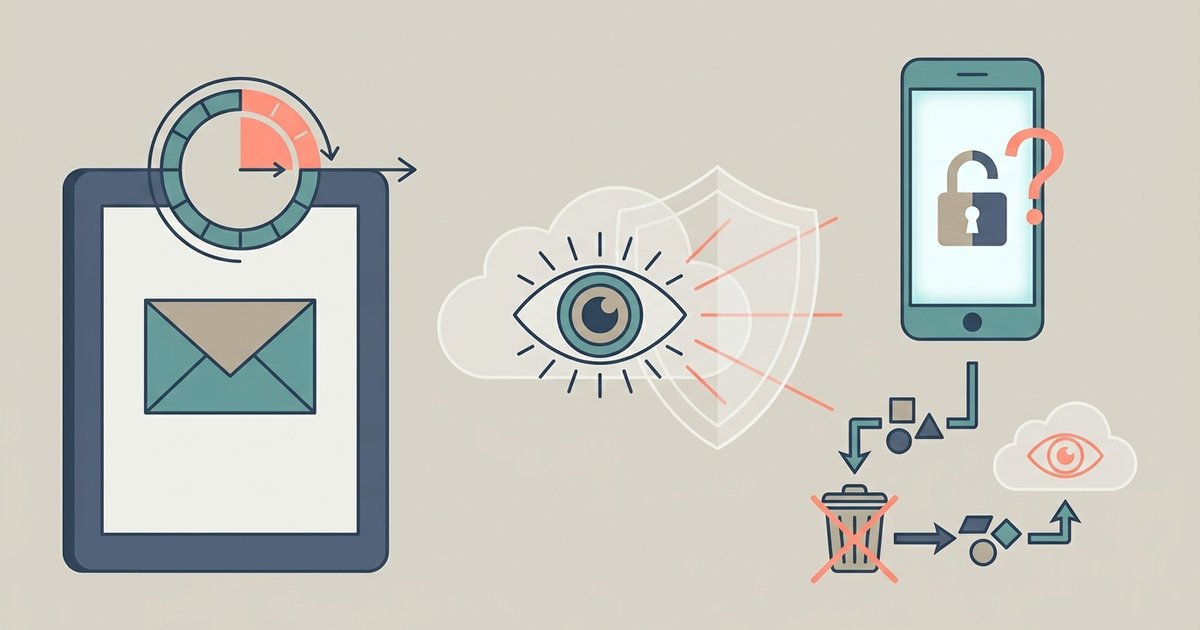
Disposable email services give you a temporary inbox you can use instead of your real address, so a site you do not fully trust never gets the email you rely on. Most need no signup and no personal details: you open the page, copy the address, and read whatever arrives. The services below are all running and do what we describe, but they differ a lot in how long the inbox lasts, whether anyone else can read it, and whether you can get back in later.
What is a disposable email service?
A disposable email service owns a set of email domains and runs the mail server behind them. When you visit, it gives you an address on one of those domains, or lets you type one, and shows incoming mail in your browser. After a set time the messages, and often the address, are deleted. The point is to receive a confirmation code, download link or one-off newsletter without adding your real address to another company's database or marketing list.
These services are not all private in the same way. Some generate long random addresses tied to your browser. Others use public inboxes that anyone can open by typing the same name. We note which is which for each service.
12 disposable email services worth knowing
We checked each service's own site for how it works. There is no ranking here, because the right choice depends on the job: a quick code, a slow sender, a developer test or an inbox you want to reopen tomorrow.
TempMail.now
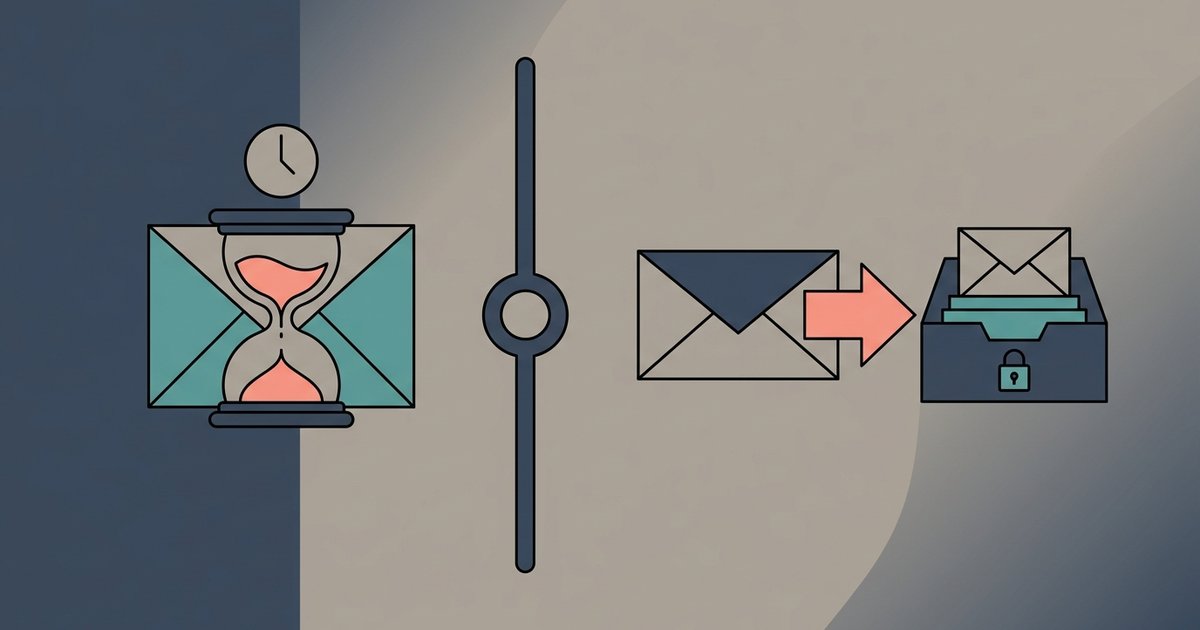
TempMail.now gives you a random address as soon as the page loads, with no signup, name or phone number. Its distinguishing feature is that you choose how long the inbox lasts, in steps from 5 to 30 minutes, after which the address and every message are deleted. It is receive-only, handles verification codes, links and attachments, and has a Change Email button that issues an address on a different domain from its rotating pool if a site rejects the first one. A QR code lets you open the same free temporary email inbox on your phone. The site is supported by advertising, which you can manage through its consent banner.
10MinuteMail.now
10MinuteMail.now is built around a visible countdown. The page shows your address, how long it has left and incoming mail as it arrives, with buttons to copy the address, show it as a QR code, delete it or start fresh. Ten minutes is the default, but it offers six timer lengths, from 5 to 30 minutes, so a slow welcome email still has time to land. There is no account or password, the site is available in 33 languages, and it says plainly that it runs advertising and analytics from outside partners. It is a good fit when you want a 10-minute email address for a single signup and nothing more.
10 Minute Mail (10minutemail.com)
10 Minute Mail is one of the oldest services of this kind, running since 2006. It hands you a random address with a 10-minute countdown and a button to add 10 more minutes when you need longer. There is no registration, the interface is available in dozens of languages, and the site says it keeps mail in memory rather than on disk. It only receives mail, which is all most one-off signups need.
Guerrilla Mail
Guerrilla Mail has also been running since 2006 and offers more controls than most. You can edit the name part of your address, choose from several domains, and use a scrambled address that hides your inbox ID from the sites you give it to. It also has a compose tab for sending. Incoming mail is kept for one hour, but addresses never expire, which means anyone who knows an inbox ID can open it later. Use the scrambled address if that matters to you.
Temp Mail (temp-mail.org)
Temp Mail offers a web inbox, mobile apps for iPhone and Android, and a Chrome extension. The free version gives you a random address with copy, refresh, change and delete buttons. A paid Premium tier adds your own custom domain, multiple addresses in use at once, a set of premium domains, extra storage, sync between desktop and mobile, and no ads. The same company also offers temporary phone numbers for text message codes.
Maildrop
Maildrop lets you make up any address ending in @maildrop.cc, or pick one of its suggestions, and then view that inbox on its site. It is refreshingly honest about the trade-off: there are no signups and no passwords, and Maildrop says it is designed for little to no privacy, so anyone who enters the same address can read the mail. It runs incoming mail through several spam filters, strips all attachments, holds at most 10 messages per inbox, and clears inboxes that receive nothing for 24 hours. Use it for quick tests, not anything personal.
YOPmail
YOPmail also lets you type any name you like, and it keeps messages for 8 days. There is no password, so choose an unusual inbox name, or use its alias feature, which gives you an alternate address that forwards to your YOPmail inbox without revealing its name. It offers alternate domains, the option to add a domain of your own, a reply feature and a chat service called YOPchat. YOPmail says sending anonymous emails from the service is prohibited.
Mailinator
Mailinator started as a disposable email service and still offers free public inboxes: you can use any address at @mailinator.com and read it by typing the name on its site. Those inboxes are public, so treat them that way. Today the company is mainly aimed at developers and QA teams, with paid plans that add private testing domains, an API, SMS testing and webhooks, plus a free Verified Pro plan that includes a private domain once you verify your account. If you build software and need to test signup or password reset emails, it is the most developer-focused option here.
EmailOnDeck
EmailOnDeck creates an address in two steps and keeps it for roughly a day, though it has no fixed expiry and clearing your cookies can end your access sooner. If you keep your email token, a recovery page may let you get the address back before it is wiped. The free version is ad supported and gives you one address at a time. EmailOnDeck Pro, paid in Bitcoin, Ethereum or USDT for 30 days at a time, adds private addresses, the ability to send email, custom addresses and many addresses at once. The service says it adds your IP address to the headers of email you send, to discourage abuse.
FakeMail.net
FakeMail.net generates a random address together with a password, and shows a countdown with options to extend the inbox by 10 minutes or keep it for 1 day, 3 days, 5 days, a week or two weeks. That longer range makes it one of the few free options that suits a sender who might take days to reply. Incoming mail appears in real time, and you can edit or delete the address.
Mail.tm
Mail.tm creates an address and a password for it as soon as you open the site. Messages are kept for 7 days, and the mailbox itself stays valid until you delete it, so you can log back in later with the password. The password is generated in your browser and the service says it cannot reset it, so save it if you want to return. Mail.tm only receives mail, and it offers an API for developers.
DropMail
DropMail takes a different approach to lifetime: your address stays valid for as long as you keep the page open, whether that is 10 minutes or several hours, and disappears when you refresh or close it. It can add extra addresses to the same session, forward mail to another address, and restore access to an earlier session. Attachments are allowed, and it also offers a Telegram bot, an Android app and an API.
A note on services that have changed
Older lists of disposable email services often include names that no longer work the way they did. While checking this list we found that one former favorite no longer loads at all, one now redirects to a different company's paid encrypted mail product, and another redirects to a different temporary email site. Before you rely on any service, open it and confirm it still does what you expect.
How the services differ
Short-timer inboxes, such as TempMail.now, 10MinuteMail.now and 10 Minute Mail, give you a random address that deletes itself after a countdown. They are the simplest choice for a single code or link.
Public inboxes, such as Maildrop, YOPmail and Mailinator's free tier, let you type any name and read it from anywhere. They are convenient and sometimes last longer, but anyone who uses the same name sees the same mail.
Longer-lived private inboxes, such as Mail.tm, FakeMail.net and EmailOnDeck, attach a password, token or session to the address so you can come back to it.
Forwarding alias services, such as Apple's Hide My Email, Firefox Relay and SimpleLogin, sit just outside this category. They forward a unique address per site to your real inbox and suit accounts you intend to keep.
How to choose one
- For a verification code: any short-timer service with a random address.
- For a slow sender: pick a longer timer, or a service like FakeMail.net or DropMail that can stay open for hours.
- To come back later: Mail.tm or another service that gives you a password or recovery token, and save it.
- For testing your own site's email: Mailinator or Maildrop.
- For anything sensitive: none of them. Use your own address or a forwarding alias.
Benefits and limits
The main benefit is that your real address stays off lists you did not want to join. Marketing mail goes to an inbox that no longer exists, and if the site is later breached, your real email is not part of the leak.
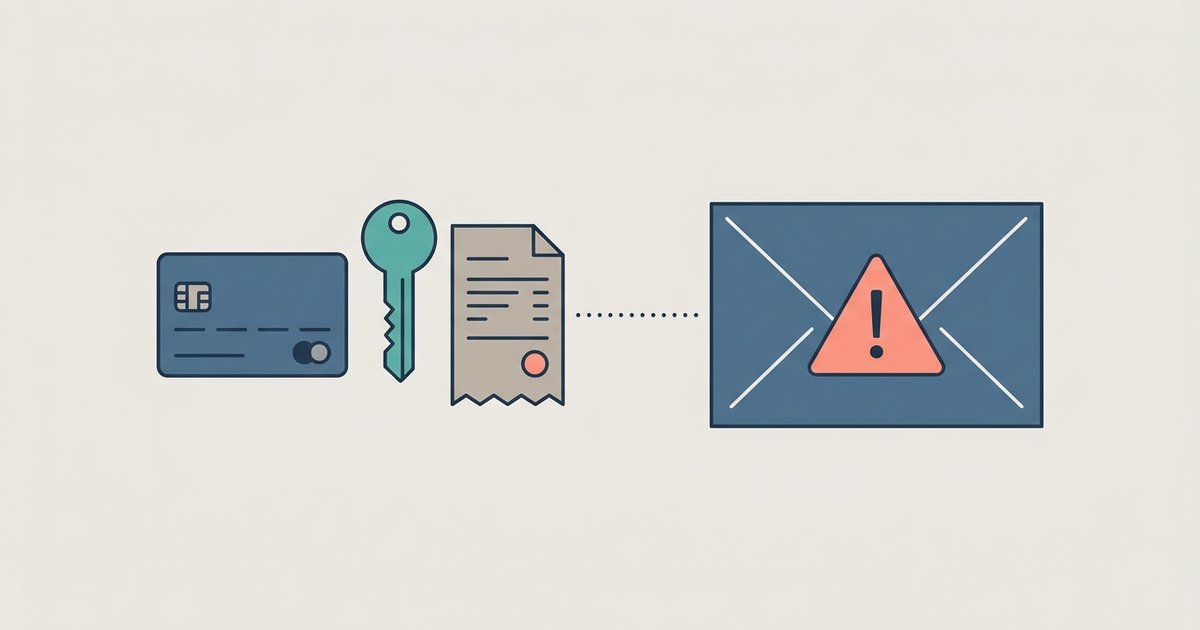
The limits are just as real. A disposable address hides your email, not your IP address, device or payment details. Many sites block known disposable domains. And any account tied to an expired inbox cannot receive a password reset, a receipt or a security alert. Keep disposable addresses for things you will never need to recover.
Pick the service by how long you need the inbox and who you would mind reading it. For a quick signup, a short-timer inbox with a random address is enough. For anything you will return to, use a password-protected inbox or, better, a forwarding alias, and keep your real address for the accounts that matter.
\nRelated reading: 13 Best Free People Search Engines and Websites [Tips Included] and 12 Best Reverse Phone Lookup Services That Actually Work!.


![13 Best Free People Search Engines and Websites [Tips Included]](https://robots.net/wp-content/uploads/2020/05/free-people-search.png)