This article is your legal torrenting safety guide, explaining how peer-to-peer file-sharing works, why unauthorized downloading is illegal and risky, and how to find legitimate torrents for public domain and Creative Commons content.
What Torrenting Actually Is (And Why It’s Not Inherently Illegal)
Torrenting is a peer-to-peer (P2P) file-transfer method. Instead of downloading a file from a single central server, your computer connects to a swarm of other users who each have pieces of the same file. You download small chunks from many different peers simultaneously, and you also upload chunks you already have to others. This makes large files, like Linux distributions, open-source software, or public domain films, fast and efficient to distribute without overloading any one server.
The technology itself is legal. Many organizations use torrents to share their own content, such as the Internet Archive, Blender Foundation, and various open-source projects. The legality of torrenting depends entirely on what you are downloading and whether you have the right to share or receive that material. Downloading a file that is in the public domain or explicitly licensed under Creative Commons is perfectly lawful. Downloading a copyrighted movie, song, or software without permission is not.
Legal Torrenting Safety Guide: The Core Rules
To stay on the right side of the law while using torrents, follow these three basic rules. First, only download files that are explicitly marked as public domain, Creative Commons, or otherwise freely distributable by the copyright holder. Second, avoid any torrent that appears to be a recent commercial release, a popular song, or a proprietary software package, these are almost certainly unauthorized. Third, never use a torrent site that hosts “cracked” or “keygen” files, as these are both illegal and almost always infected with malware.
If you are unsure whether a specific file is legal to download, assume it is not. Copyright protection is automatic in most countries; a work does not need to display a © symbol to be protected. The burden is on you to verify the legal status of the content before downloading.
Why Unauthorized File-Sharing Is Illegal
In the United States, the Digital Millennium Copyright Act (DMCA) makes it illegal to reproduce, distribute, or download copyrighted works without authorization. This includes uploading (seeding) and downloading (leeching) files via torrents. Even if you only download and never upload, your torrent client is still transmitting pieces of the file to other users, which counts as unauthorized distribution under the DMCA.
Beyond the DMCA, many other countries have their own copyright laws with similar or stricter penalties. In some jurisdictions, copyright infringement is a civil offense (leading to fines or lawsuits), while in others it can be a criminal offense (leading to arrest or prosecution). The specific legal consequences vary by country, but the general principle is universal: taking someone else’s creative work without permission is theft, and the law treats it seriously.
Copyright holders actively monitor torrent swarms. They use automated tools to log IP addresses of users sharing their content, then send DMCA takedown notices to internet service providers (ISPs). In many cases, ISPs will forward these notices to you, and repeated violations can result in your internet account being throttled, suspended, or terminated. In extreme cases, copyright holders have filed lawsuits against individual downloaders, seeking thousands of dollars in damages.
Security Risks of Untrusted Torrents
Beyond legal exposure, downloading torrents from unverified sources is a serious security hazard. Torrented files from untrusted sources are frequently bundled with malware, ransomware, spyware, adware, and phishing links. A single infected file can compromise your entire computer, steal your passwords, encrypt your files for ransom, or turn your machine into a botnet participant.
Even if a torrent appears to be a legitimate movie or program, the file name and size can be spoofed. A file labeled “Movie.avi” might actually be an executable that installs a Trojan horse. The decentralized nature of torrents means there is no central authority checking files for safety, anyone can upload anything, and the swarm will happily share it.
To minimize risk, only download torrents from reputable sources that have a long track record of hosting clean, legal content. Look for sites that verify file integrity with checksums or digital signatures. Avoid torrents with comments warning about viruses or fake files. And never run a downloaded file without first scanning it with a reliable antivirus program.
Protecting Your Privacy and Connection
If you choose to use torrents for legal content, you can take steps to protect your privacy and prevent your ISP from throttling your connection. One common technique is to enable protocol encryption in your torrent client. In qBittorrent, navigate to Options > Preferences > BitTorrent and set the “Outgoing” protocol encryption to “Enable” or “Prefer encryption.” This helps disguise your torrent traffic from deep packet inspection, which ISPs use to identify and slow down P2P activity.
Another important setting is to disable UPnP/NAT-PMP in your torrent client’s connection settings. In qBittorrent, go to Options > Preferences > Connection and uncheck “Use UPnP / NAT-PMP port forwarding.” UPnP automatically opens ports on your router, which can expose your device to the wider internet. Disabling it adds a layer of security, especially if you are using a VPN that does not support port forwarding. However, note that disabling UPnP may reduce your download speeds in some cases, as it prevents automatic port mapping.
Using a VPN is another common privacy measure, but it is not a legal shield. A VPN hides your IP address from other torrent users and your ISP, but it does not make downloading copyrighted material legal. If you use a VPN, choose one that does not keep logs and has a strict no-logging policy. Also, ensure your torrent client is bound to the VPN’s network interface, so that if the VPN drops, your torrent traffic does not leak onto your regular internet connection.
Legal Alternatives to Unauthorized Torrenting
Instead of risking legal or security problems, you can access a vast amount of content legally, often for free or at a low cost. Here are reliable alternatives:
Official stores and streaming services: Services like Netflix, Hulu, Amazon Prime Video, Spotify, Apple Music, and YouTube offer licensed movies, TV shows, and music. While you are paying a subscription, you are supporting the creators and avoiding any legal risk. Many services also offer free, ad-supported tiers.
Sales and discounts: Digital storefronts like Steam, GOG, Epic Games Store, and Itch.io frequently run sales where games and software are heavily discounted. GOG, in particular, sells many classic games DRM-free, meaning you can download them and keep them forever without any copy protection.
Free-to-play games: Many high-quality games are completely free to play, such as Fortnite, Apex Legends, and Dota 2. These games generate revenue through in-game purchases, not upfront costs, so you can enjoy them legally without paying a cent.
Public domain archives: Websites like Project Gutenberg, the Internet Archive, and LibriVox host thousands of books, films, and audio recordings that are in the public domain. These are completely legal to download and share. For example, you can find classic novels, old movies, and historical documents without any copyright restrictions.
Creative Commons content: Many artists, musicians, and filmmakers release their work under Creative Commons licenses, which allow free sharing and sometimes even commercial use. Sites like Free Music Archive, ccMixter, and Wikimedia Commons are excellent sources for legal, freely distributable media.
Library and homebrew content: Your local public library may offer free digital borrowing of ebooks, audiobooks, and movies through services like OverDrive or Hoopla. Additionally, many console and computer communities create “homebrew” software, original, independently developed games and applications, that are distributed legally for free.
Final Thoughts on Staying Safe and Legal
Torrenting is a tool, not a crime. Used correctly, it is a powerful way to access content that is explicitly free to share. Used incorrectly, it can lead to legal trouble, malware infections, and account bans. The safest approach is to stick to official channels and public domain archives, and to treat any torrent that offers recent commercial content as a red flag.
Remember, the law is not ambiguous: unauthorized file-sharing of copyrighted content violates the DMCA in the United States and similar laws elsewhere. There is no “gray area” when it comes to downloading a movie that is still in theaters or a song that is currently on the radio. If you are not sure whether a file is legal, do not download it. The peace of mind you gain from staying legal and secure is worth far more than any free file.
By following this legal torrenting safety guide, you can enjoy the benefits of P2P technology without putting yourself at risk. Choose your sources carefully, protect your connection, and always prioritize legal alternatives. Your computer, and your wallet, will thank you.
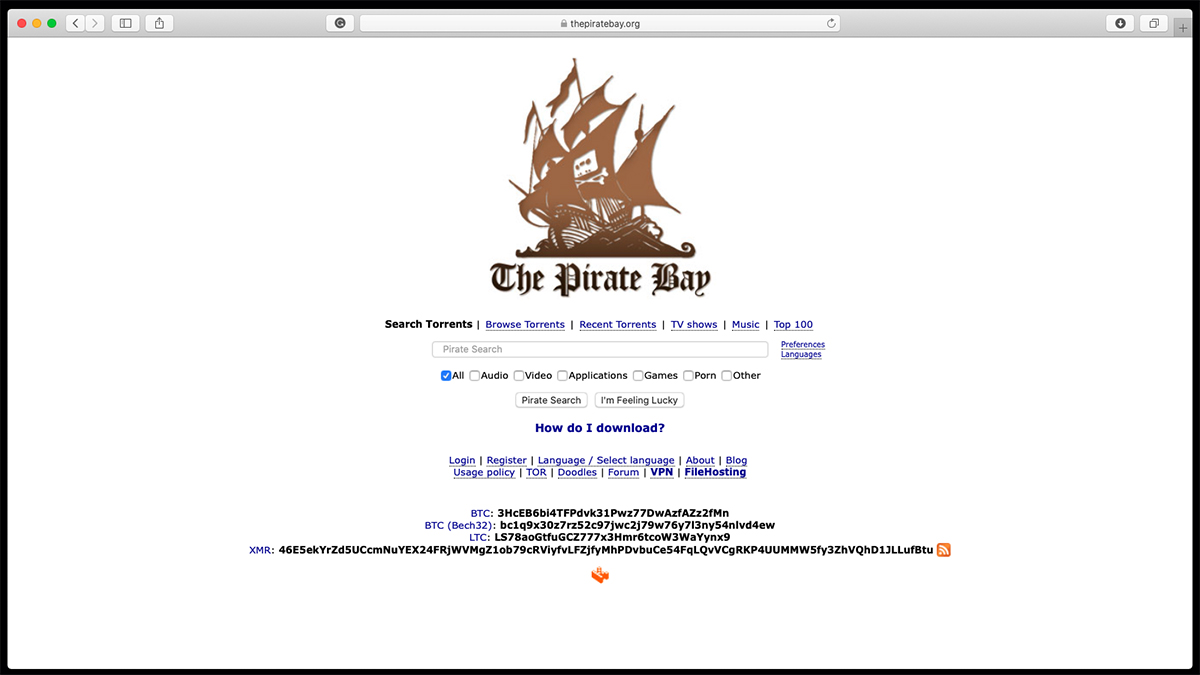
\nRelated reading: The Ultimate Guide to Torrenting: A Comprehensive Overview and How To Download From Pirate Bay.