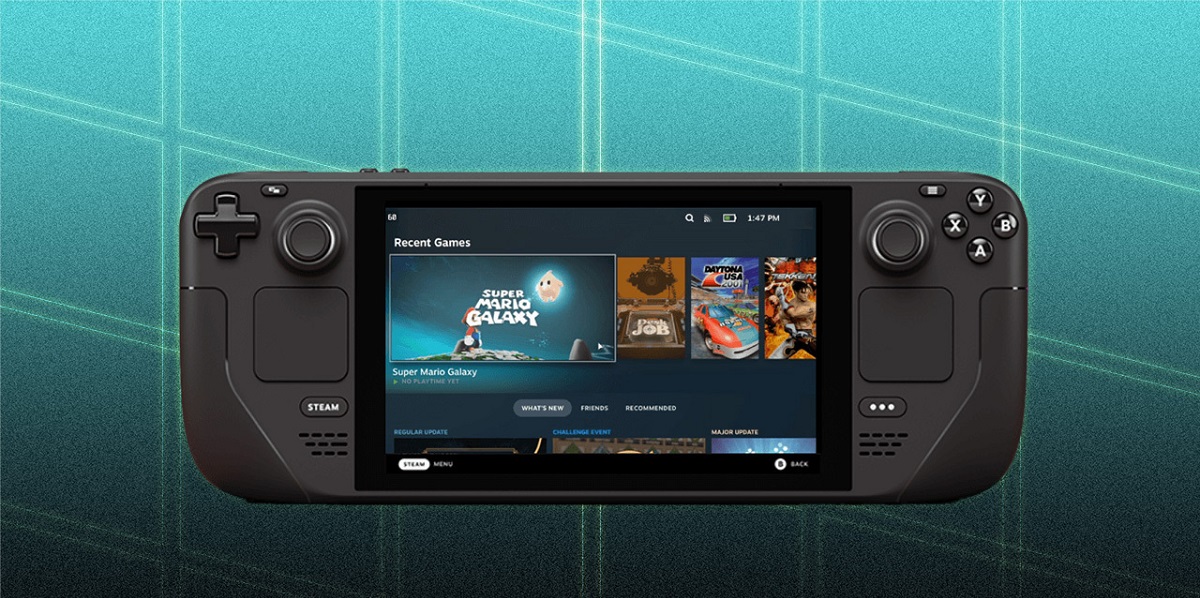
The short answer is that you can enjoy legal retro gaming on Steam Deck by using official stores, public domain ROMs, and homebrew content you have the right to run, but you must avoid downloading copyrighted ROMs from unauthorized sources, as that is illegal and risky.
Why Downloading ROMs from Unofficial Sources Is Illegal and Dangerous
When you download a ROM of a commercial game that you do not own, you are almost always reproducing a copyrighted work without permission. In most countries, including the United States, the European Union, and Japan, copyright law grants the rights holder exclusive control over copying and distribution. Downloading a ROM from a website that is not the rights holder is an unauthorized reproduction, regardless of whether you already own a physical cartridge or disc. Even if you own a copy, many jurisdictions do not recognize a legal right to download a separate digital file from a third party. The only widely accepted exception is for software that has entered the public domain, where the copyright has expired or been explicitly waived.
Beyond the legal exposure, downloading ROMs from unofficial sites is a significant security risk. These sites are often riddled with malicious files disguised as games. A single download can install malware, ransomware, or a keylogger on your Steam Deck, potentially compromising your Steam account, personal data, and the device itself. Because the Steam Deck runs a full Linux desktop environment, malware can affect the entire system, not just a game. Additionally, using unauthorized ROMs can lead to a ban on your Steam account. Valve’s Steam Subscriber Agreement prohibits using the platform to facilitate copyright infringement, and while Valve does not actively scan your files, repeated reports or detected activity can result in account restrictions or termination.
It is also worth noting that many classic games are still commercially available. Downloading a ROM of a game that is sold on an official store, even if it is expensive or hard to find, does not make the download legal. The rights holder’s decision to sell or not sell a game does not grant others the right to distribute it.
Legal Retro Gaming on Steam Deck: Official Stores and Sales
The easiest and safest way to play classic games on your Steam Deck is through official digital storefronts. Steam itself has a vast catalog of retro and remastered titles, including many from the 1980s and 1990s. You can search for “classic,” “retro,” or “remaster” to find games like Doom, Quake, Final Fantasy pixel remasters, Sonic collections, and countless others. These versions are optimized for modern hardware, often include quality-of-life improvements, and are fully legal to download and play.
Other official stores are accessible on the Steam Deck’s desktop mode. GOG.com (Good Old Games) specializes in DRM-free classic PC games, many of which are from the 1990s and early 2000s. GOG also sells a selection of retro console titles through emulation, such as Castlevania and Contra collections. The Epic Games Store, while less retro-focused, occasionally offers free classic titles. Additionally, you can use the Steam Deck’s web browser to purchase games from publishers’ own stores, such as the Square Enix Store or the Sega Store, which often sell older titles directly.
Sales are a key part of legal retro gaming. Steam’s seasonal sales, GOG’s weekly deals, and publisher-specific discounts frequently bring classic games down to a few dollars. If you are patient, you can build a substantial library of legal retro games for a very low cost. Subscriptions also help: Xbox Game Pass Ultimate, which works on the Steam Deck via cloud streaming, includes a rotating selection of classic titles. PlayStation Plus Premium, while not natively supported on Steam Deck, can be streamed through the browser or a third-party client, and it includes a catalog of PS1, PS2, and PSP classics.
Public Domain ROMs: A Completely Legal Source
Some games have entered the public domain, meaning their copyright has expired or the rights holder has explicitly released them. These ROMs can be downloaded legally from trusted archives. A well-known example is the Prince of Persia original 1989 Apple II version, which was released as freeware by the rights holder. Similarly, many early home computer games from the 1970s and 1980s are now in the public domain. The Internet Archive hosts a large collection of public domain software and games, and you can browse it directly from the Steam Deck’s browser.
To determine if a game is truly in the public domain, you need to check the copyright status. For U.S. works published before 1978, copyright lasts 95 years from publication. For works published after 1977, copyright lasts the life of the author plus 70 years. However, many games have had their copyrights renewed or transferred, so a game’s age alone does not guarantee public domain status. The safest approach is to look for explicit statements from the rights holder, such as “public domain” or “freeware,” on the official website or a trusted archive like the Internet Archive. If you are unsure, do not download, choose a game that is clearly licensed for free distribution.
Homebrew and Fan Games: Your Own Creations and Open Licenses
Homebrew refers to games created by independent developers, often for classic consoles, that are distributed freely or under open licenses. These are legal to download because the developers own the copyright and choose to share their work. The Steam Deck is an excellent platform for homebrew, as it can run emulators for systems like the Game Boy, NES, and Sega Genesis, and many homebrew titles are designed for those systems.
You can find homebrew games on official developer websites, itch.io (which hosts thousands of free and paid indie titles, including retro-style games), and dedicated homebrew communities like the Homebrew Channel for the Wii or the PSP Homebrew scene. Some homebrew projects are open source, meaning the code is publicly available and you can compile or run them legally. Always check the license: if a game is marked “freeware,” “open source,” or “public domain,” you can download it. If it is commercial, you must pay for it.
Another legal option is to create your own games. The Steam Deck’s desktop mode includes tools like Tiled, LÖVE, and Godot, which you can use to make simple retro-style games. You can then run them directly on the Deck or add them to your Steam Library. This is not only legal but also a rewarding way to engage with classic game design.
Emulators and BIOS Files: What Is and Isn’t Legal
Emulators themselves are generally legal software. They are programs that mimic the hardware of a console, and they do not contain copyrighted code from the original system. The Steam Deck can run emulators for many consoles, and community tools like EmuDeck streamline the installation and configuration of multiple emulators. EmuDeck automates emulator installation, configuration, hotkeys, and integrates emulated games into the Steam Library. However, EmuDeck does not include BIOS files or game ROMs; users must provide these separately.
BIOS files are another matter. Many consoles require a BIOS (Basic Input/Output System) to boot, and these files are copyrighted by the console manufacturer. Downloading a BIOS from an unofficial source is illegal. The only legal way to obtain a BIOS is to dump it from a console you own, using specialized hardware or software. This is a technical process and is generally allowed under the law in many jurisdictions, but it is not always easy. Some emulators, like those for the Game Boy Advance, do not require a BIOS, which simplifies matters. For systems that do require one, you must either dump it yourself or choose an emulator that does not need it.
In summary, the legal path to retro gaming on Steam Deck is clear: buy games from official stores, download only public domain or explicitly freeware ROMs, support homebrew developers, and handle BIOS files only by dumping them from hardware you own. Avoid any site that offers “free ROMs” of commercial games, those are illegal and dangerous. By following these rules, you can enjoy thousands of classic games on your Steam Deck without risking your device, your account, or your legal standing.
\nRelated reading: How To Download 3Ds ROMs For Citra, How To Download Games For Retroarch, and How To Download PS2 Games For PCSX2.