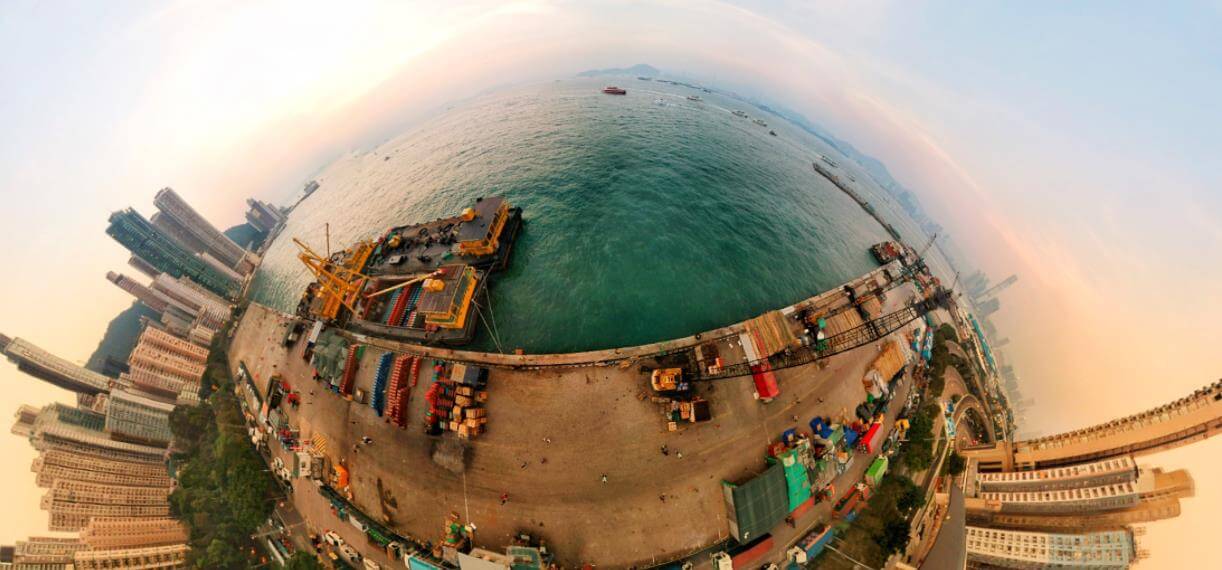
To view DJI Sphere photos, open the stitched 360-degree JPEG directly in the DJI Fly app on your phone, then swipe and drag to explore the full panoramic scene. For handheld DJI devices, the DJI Mimo app serves the same purpose, letting you view and interact with the sphere photo right from your Osmo or Pocket camera.
What are DJI Sphere photos?
DJI Sphere photos are 360-degree equirectangular images that capture the entire environment in every direction. When you activate Sphere mode on a compatible DJI drone, the aircraft automatically captures a series of overlapping individual images. The DJI Fly app then stitches these frames together into a single, seamless JPEG with a 2:1 aspect ratio. Unlike a standard wide-angle panorama, a sphere photo contains the full visual sphere around the drone, including the sky above and the ground below. This immersive format lets viewers look in any direction, creating a true sense of presence at the capture location.
How to view DJI Sphere photos on your phone
The most straightforward way to view DJI Sphere photos is through the same app that created them. The DJI Fly app not only stitches the images but also provides an optimized viewer for the finished sphere.
- Open the DJI Fly app on your smartphone or tablet.
- Look for the thumbnail marked with a small sphere icon or labeled "Sphere", this indicates the stitched 360-degree file.
- Tap the thumbnail to open the photo in full-screen viewer mode.
- Use your finger to swipe in any direction, up, down, left, or right, to pan around the entire sphere.
- Pinch with two fingers to zoom in for closer inspection of distant details or pinch out to see the full field of view.
- Tap the gyroscope icon (if available) to enable motion control, which lets you physically move your phone to look around the scene.
This touch-based navigation is the fastest way to experience the full immersive quality of your aerial sphere, and it works entirely offline once the photo is saved to your device.
How to view DJI Sphere photos from a handheld device
If you captured your sphere photo using a DJI Osmo Action, Osmo Pocket, or Ronin handheld gimbal, the workflow shifts to the DJI Mimo app. This companion app handles the viewing and playback of panoramas captured by non-drone DJI hardware.
- Connect your handheld device to your phone via Wi-Fi or Bluetooth, or transfer the file to your phone's storage.
- Select the sphere photo from the gallery, it will typically be labeled as a "Panorama" or "Sphere" file.
- Tap the photo to open it in the immersive viewer.
- Swipe with one finger to rotate the view around the scene, and use two fingers to zoom in and out.
- If your handheld device supports it, tap the VR icon to split the view into two side-by-side images for use with a VR headset.
This method is essential for anyone who owns a DJI Osmo Pocket 3 or Osmo Action 4, as the Mimo app is the only official mobile viewer for those devices' spherical captures.
How to transfer DJI Sphere photos to your computer
To view your sphere photos on a larger screen or edit them with professional software, you first need to move the files from your drone or phone to a desktop computer.
- Navigate to the DCIM folder on the SD card.
- Copy the stitched JPEG to your desktop for quick viewing. If you plan to re-stitch for higher quality, also copy the entire DNG folder.
- For wireless transfer, use the DJI Fly app's "Export" function to download the sphere photo to your phone, then transfer it to your computer via AirDrop (Mac), Nearby Share (Windows), or a cloud service like Google Drive.
- If you used a handheld device, connect it via USB and drag the panorama file from its internal storage to your computer.
Once the files are on your desktop, you can open the JPEG in any standard image viewer that supports equirectangular projection, or move on to the advanced stitching workflow below.
How to view DJI Sphere photos on a computer for maximum quality
For maximum resolution and dynamic range, you should re-stitch the original raw DNG files using dedicated panorama software. This gives you full control over the final output and preserves every bit of detail from the drone's sensor.
- Transfer the DNG source files from your drone's SD card to a dedicated folder on your computer.
- Open the software and load all the DNG images from the sphere capture session. The software will automatically detect the overlapping fields of view.
- Run the control point alignment, the software will match common features across images to create a seamless blend.
- Before exporting, adjust the white balance, exposure, and color grading using the software's raw editing tools.
This manual workflow yields a sphere photo with significantly better sharpness, color depth, and low-light performance than the in-app stitch. It's the preferred method for professional aerial photographers who want gallery-quality output. For drone pilots who want to capture the best source material, you'll need to learn how to fly the dji mini 3 pro in manual mode to ensure proper overlap between shots.
How to share DJI Sphere photos with others
Once your sphere photo is stitched and saved, sharing it with friends, clients, or social media followers is simple. The key is to use platforms that recognize the equirectangular format and display it as an interactive 360-degree image.
- For dedicated immersive photography, create a free account on Kuula or 360Cities. These platforms provide high-quality 360 viewers, embed codes for websites, and even VR headset support.
- If you want to send the file directly, attach the JPEG to an email or messaging app. The recipient can then open it in Google Photos (which supports 360 viewing) or the DJI Fly app.
- For professional use, embed the sphere on your portfolio website using an iframe from Kuula or a custom WebVR player.
- To share in VR, export the photo as a 2:1 equirectangular image and load it into a VR headset's gallery app, such as Oculus Photos or Skybox.
Related reading: How To Connect DJI Controller To Wi-Fi and How To Use DJI Mic.