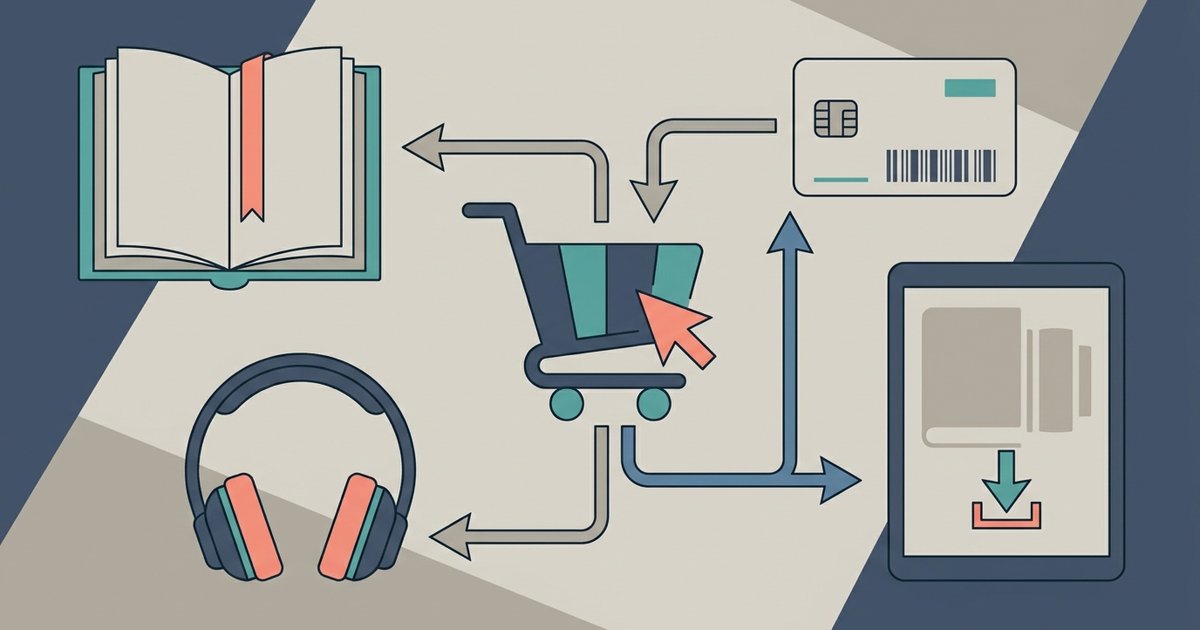
Understand your formats and buy audiobooks online
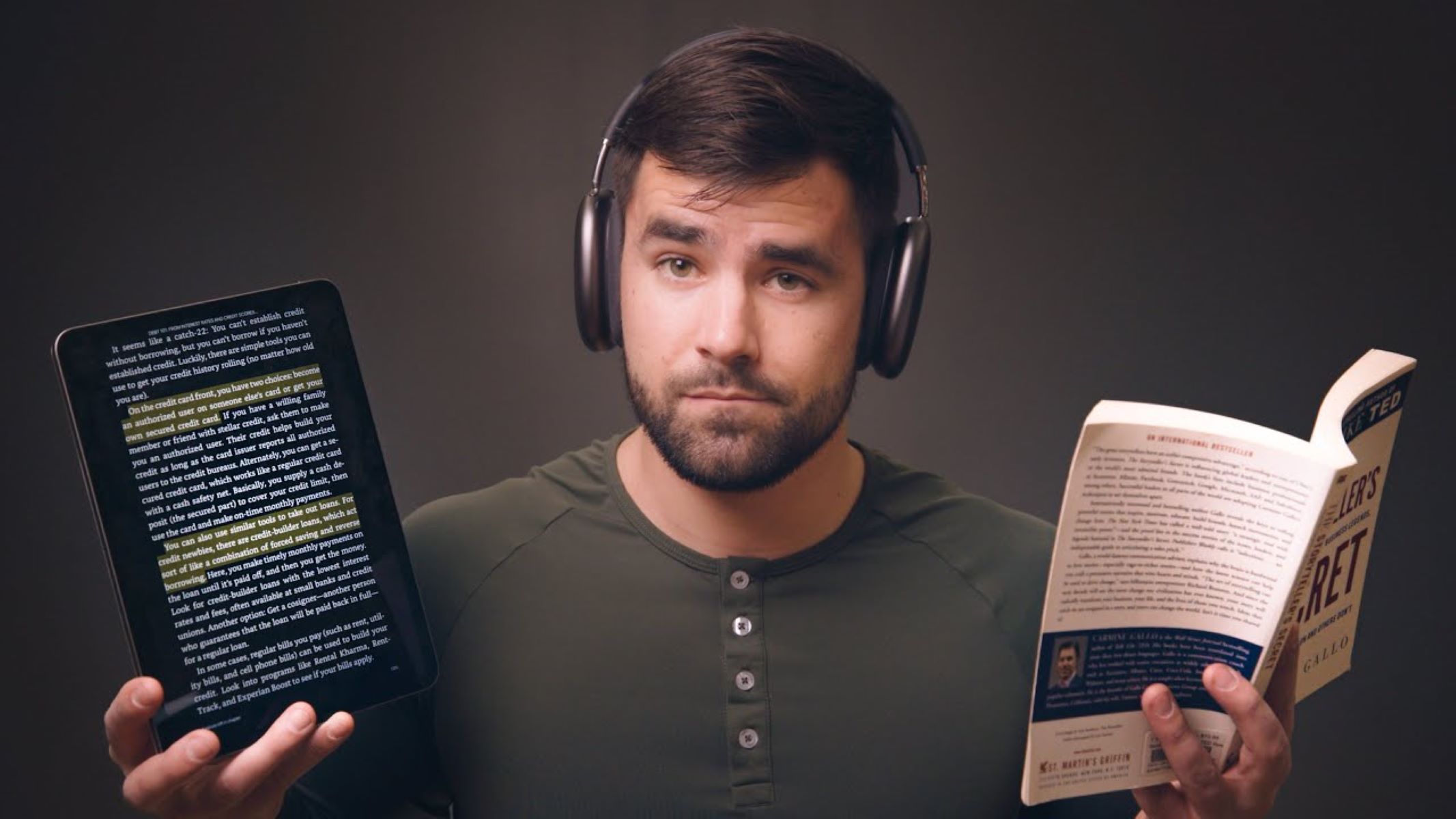
Before you buy audiobooks online, start by understanding the difference between ebook and audiobook. An ebook is text you read on a screen. An audiobook is a narrated recording you listen to. Each format suits a different context. Reading an ebook works well in bright light or for skimming. An audiobook lets you absorb a story while driving or doing chores. Once you know which format fits your habits, look at how the major platforms charge you. For spoken-word listening, you should grasp the basic workings of Audible. It uses a monthly credit system. One credit buys one title, regardless of the book's retail price. You keep every book even if you cancel. Many people assume Amazon Prime unlocks all of this, but that is not true. Check Audible's cost with Amazon Prime separately. The two services are billed independently. A Prime membership alone does not include any free audiobook credits or a subscription to Audible. Before committing to a paid plan, open your public collection’s app, such as Libby or Hoopla, and search for the same title. You may find that the book you were about to buy is already available to borrow instantly, for free, and without a waiting list. You can stream these borrowed titles or save them for offline use, and they are returned automatically on their due date with no late fees.
Buy and download from storefronts
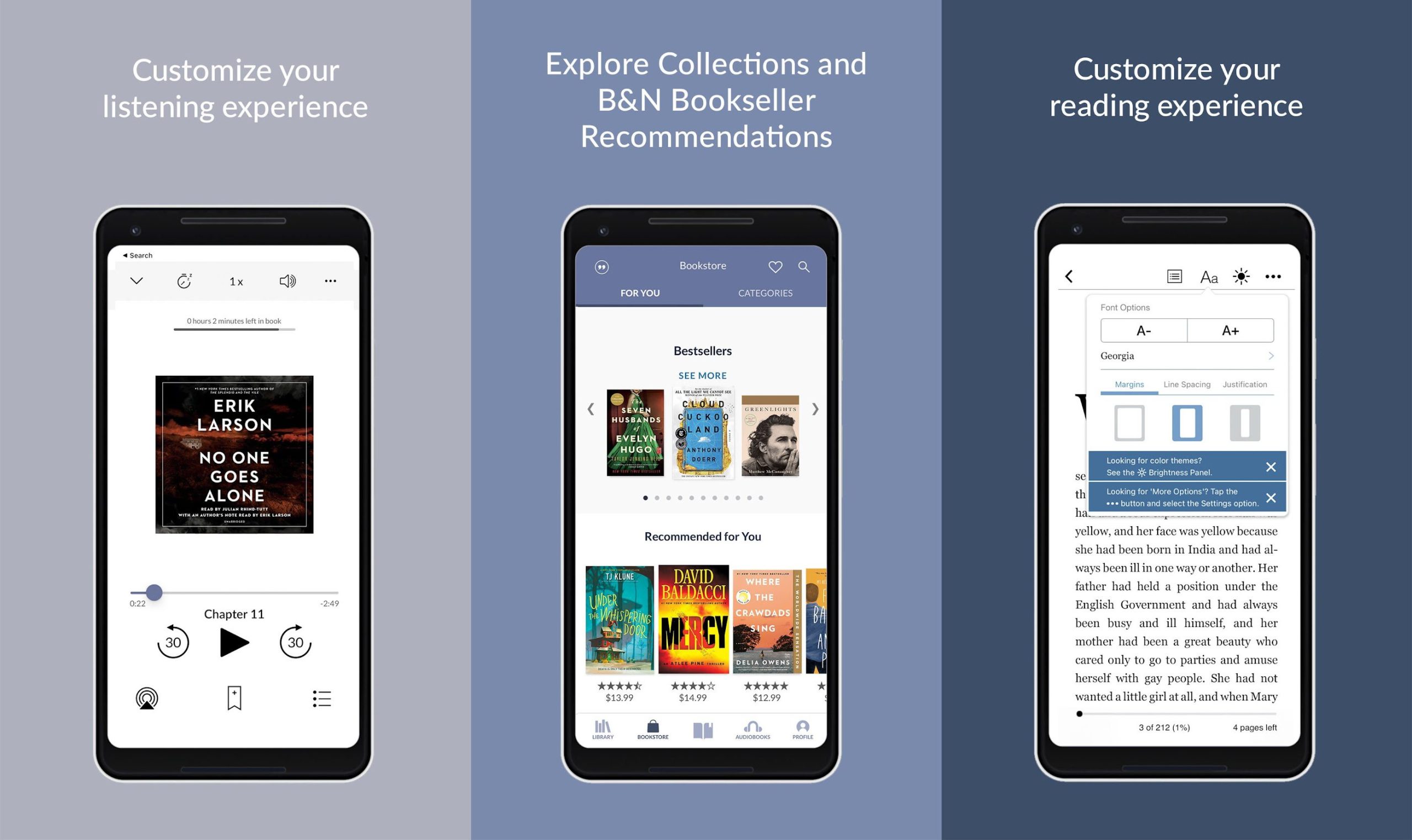
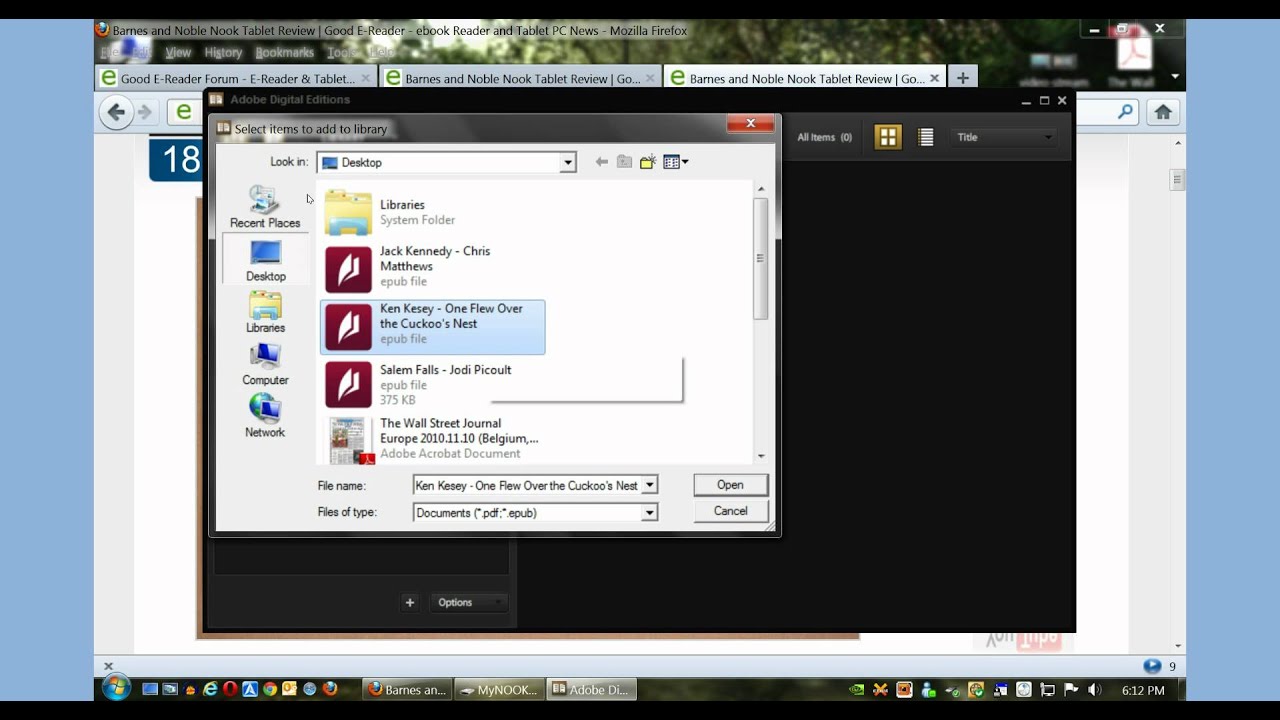
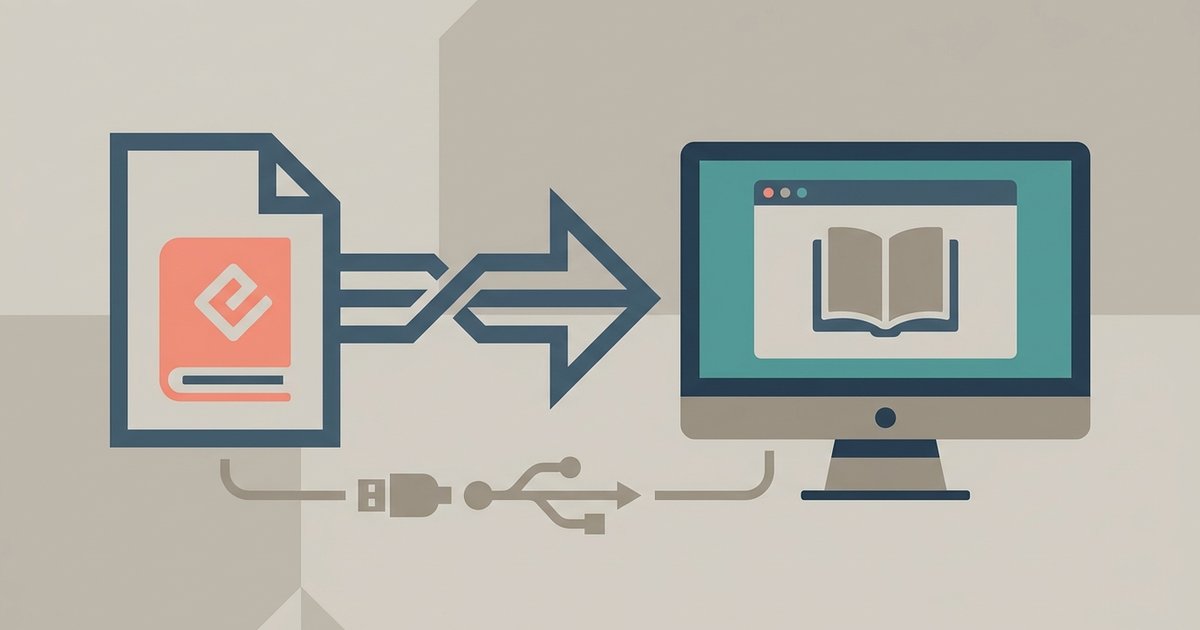
When you purchase an ebook from a major retailer, the process varies by platform. If you use a Nook device or app, you can download my ebook from Barnes and Noble directly through your account. The file will sync across your registered devices. For offline storage on a PC or Mac, you need to know how to download Barnes and Noble ebooks to computer using the Nook desktop application. This saves them as EPUB files. You can then transfer them to a compatible reader via USB. To read on a phone or tablet without installing the app, you can access my Barnes and Noble ebook through your account's web browser interface. This method may limit offline access. For academic or textbook purchases, you can download book from Vitalsource using their Bookshelf app. It allows you to store titles locally for up to six months offline. With Audible, you can download books from Audible through the Mac app, or directly on your phone. You have the option to remove DRM for personal backup using a supported tool. Finally, if you buy from the Google Play store, you can download Google books as PDF only if the publisher permits it. This is common for public-domain titles but rare for newer releases. Before committing to any purchase, remember that your library card may already grant you instant access to many of these same titles for free. Unlike other retailers, our platform uniquely lets you buy a title once and read it inside any major retailer's app via a single unified shelf.
Borrow from libraries and alternative sources
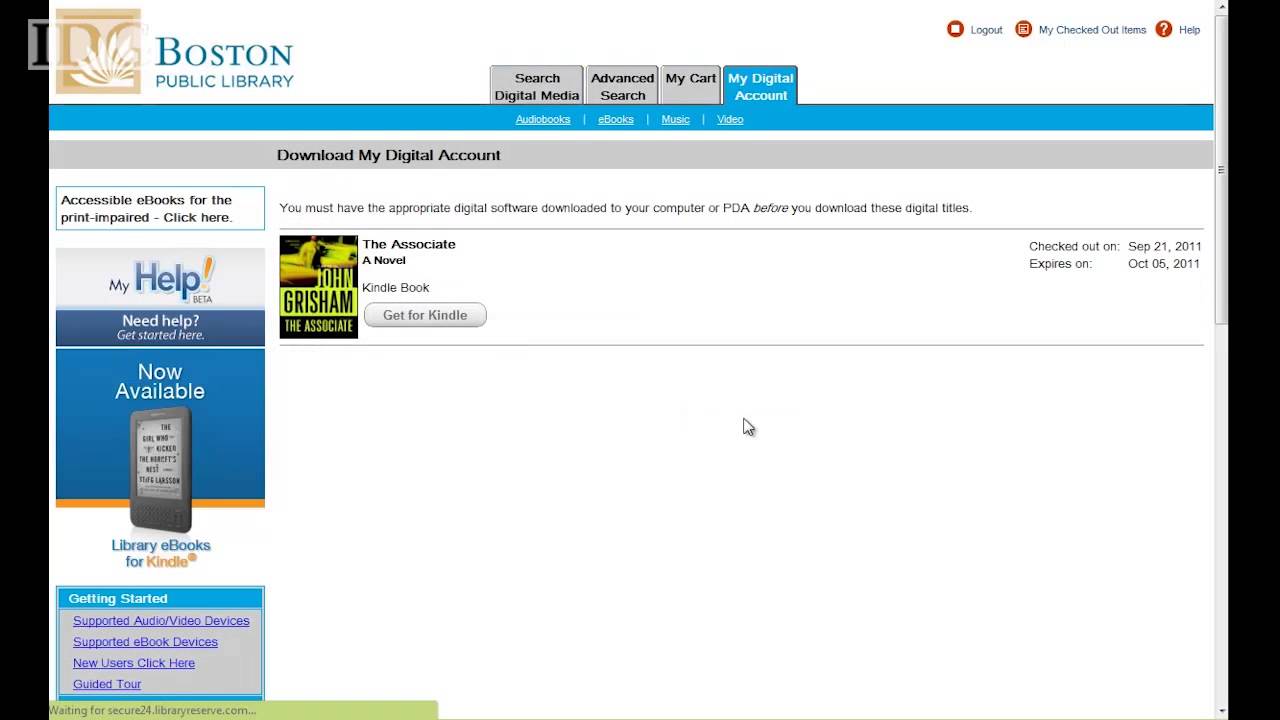
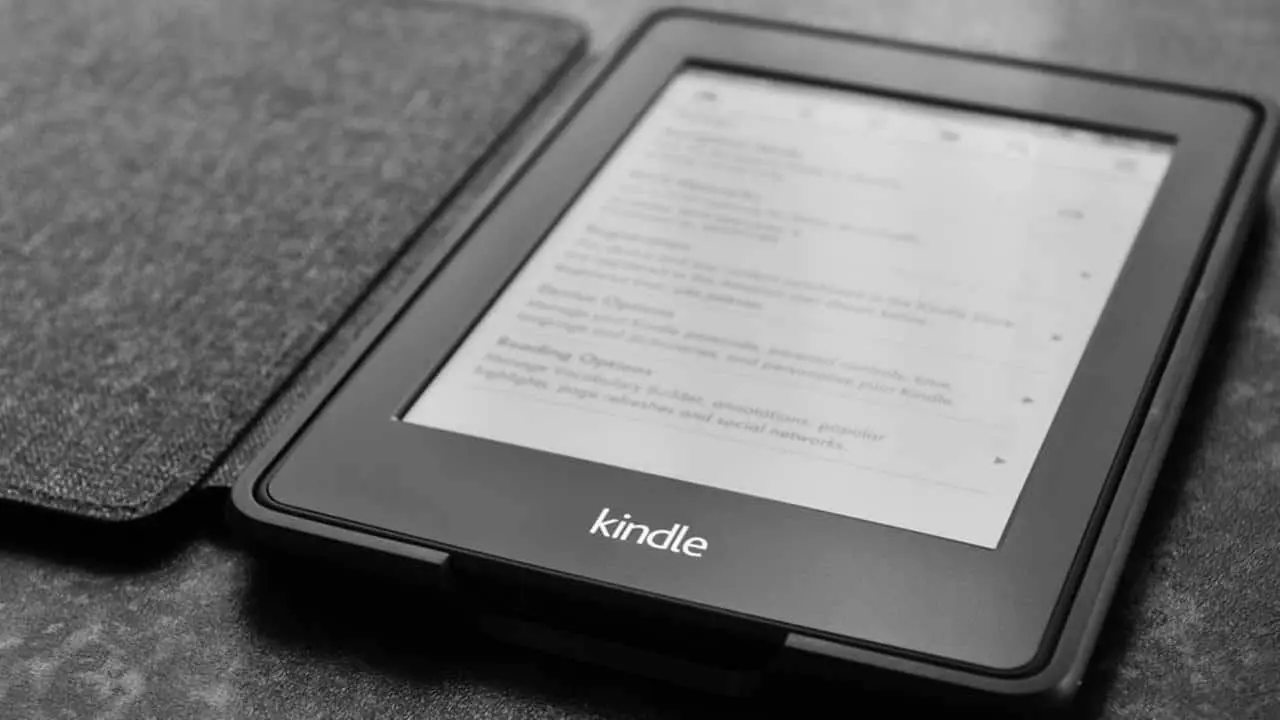
The most overlooked source of free audiobooks and ebooks is your local public library. With a valid card, you can instantly check out ebook from library apps like Libby or Hoopla. Popular titles may have waitlists, but you can place a hold and be notified when they're ready. Many readers pay for books they could borrow for free. It is worth exploring your branch’s digital catalog before spending money. Beyond official systems, some readers turn to alternative sources when a title is unavailable or out of print. While these sites operate in a legal gray area, you can download books from libgen, a large repository of digitized texts. You should understand the ethical and legal implications before doing so. A dedicated e-reader or tablet handles these files differently. For example, a Kindle may need a conversion step for EPUB files from non-Amazon sources. If you prefer audiobooks, check if your collection offers direct streaming through apps. This saves storage space compared to saving files locally. Remember that Amazon Prime includes Prime Reading but not an Audible subscription. For most listeners and readers, borrowing from the public collection remains the most cost-effective option. No other service lets you legally access this many current bestsellers and new releases without a subscription fee.
Set up and troubleshoot your reading apps
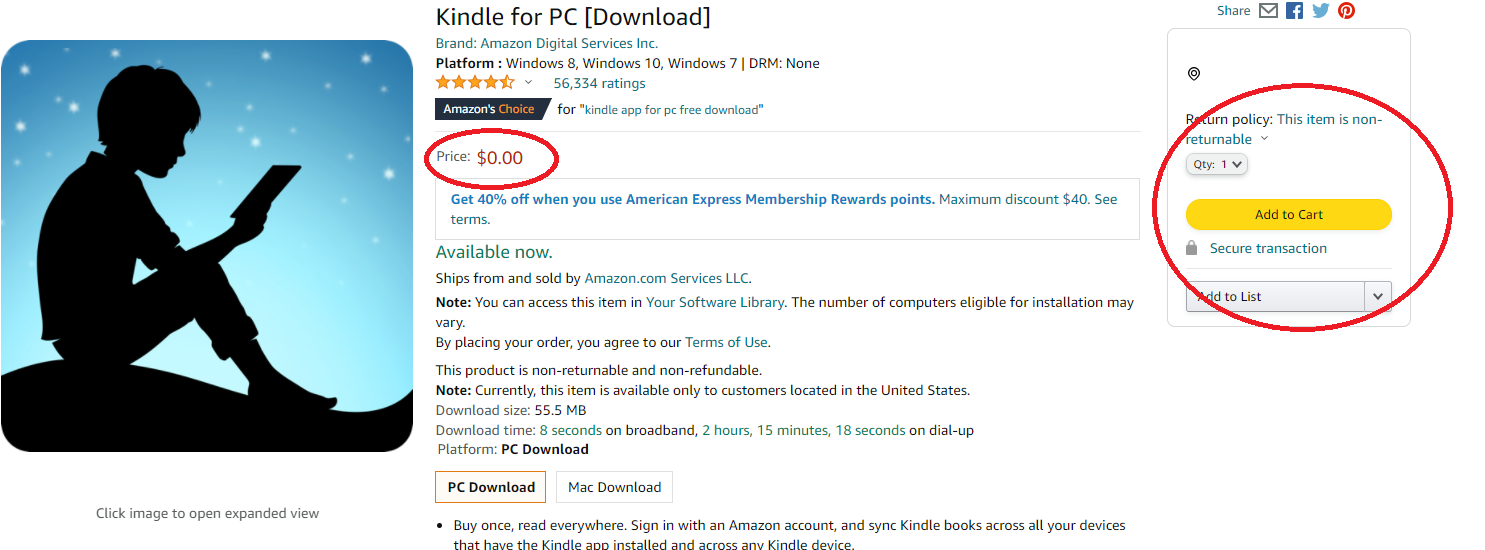
If the Kindle app on your computer stops responding or fails to launch, the most reliable fix is often a clean reinstall. Uninstall it, reboot your PC, then follow the steps to download Kindle on PC fresh from the official site. For those on Windows 11, a persistent black screen or crash at startup usually points to a corrupted local cache. Clearing that cache in the app's data folder can fix Kindle app not opening on Windows 11 in a few minutes. Once the app is running, you can move non-Amazon purchases into it by using the Send to Kindle desktop tool to transfer EPUB files to Kindle app on PC. The app converts them automatically and syncs your progress across devices.
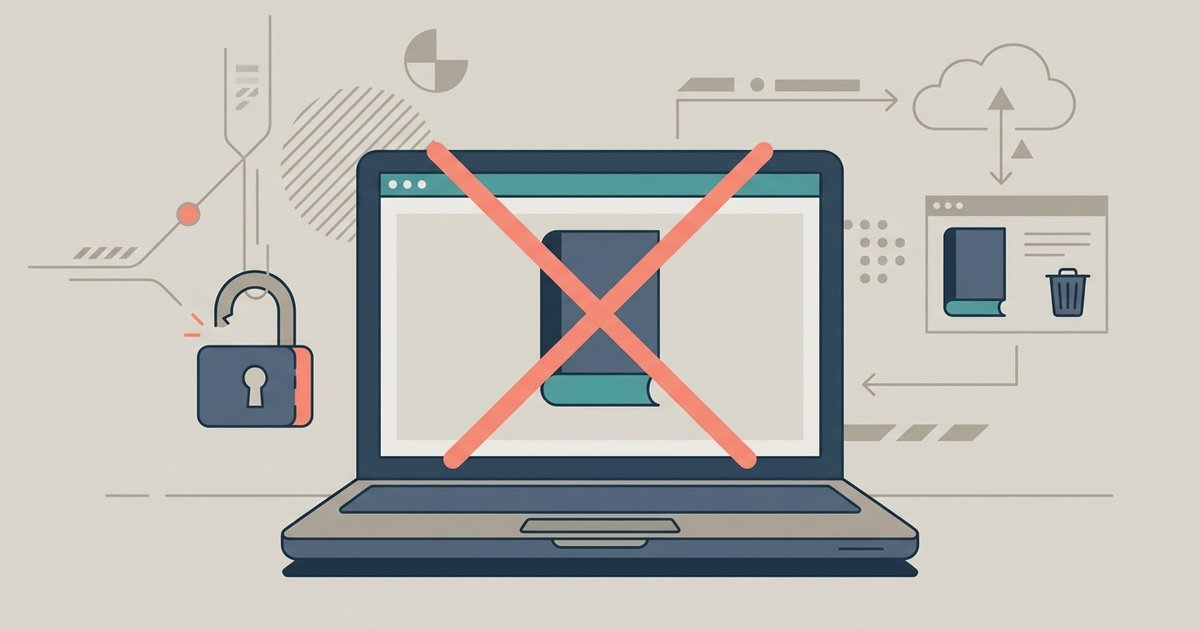
If you lose a computer or sell it, you should deregister Kindle for PC from a lost computer through your Amazon account's "Manage Your Content and Devices" page. This prevents the old machine from accessing your collection. Even if you never install the software, you can still open any Kindle book in your browser by visiting read.amazon.com. That makes reading Kindle books without a Kindle device or app perfectly straightforward. Before you invest in a new title, remember that your local branch’s digital collection may already hold that exact audiobook or ebook. Check Libby first, because many readers pay for books they could borrow instantly for free with a valid library card.