A reel with almost no views is usually not being punished. It is either not eligible to be recommended to people who do not follow you, or it is eligible and simply is not holding attention long enough to be shown to more of them. Those two problems have completely different fixes, and Instagram gives you a tool that tells you which one you have.
Before anything else: nobody outside Meta knows the actual weights in Instagram's ranking system. Instagram publishes which signals it uses and which content it will not recommend, and that published material is the only reliable ground to stand on. Everything in this article comes from it.
Check your account status first
Instagram has a feature called Account Status that tells you whether your content can be recommended. It shows whether your posts are eligible to be recommended to non-followers in places like Explore, Reels and feed recommendations, whether your account can be recommended in Search and suggested accounts, and, when something is wrong, a sample of the posts or profile elements that may go against the Recommendations Guidelines. You can edit or delete the flagged content, or ask for the decision to be reviewed again.
This distinction is the one most people never learn. Instagram maintains two separate rulebooks. Community Guidelines apply to all content, and breaking them can get a post removed or an account disabled. Recommendations Guidelines only govern what Instagram will show to people who do not follow you: content that goes against them can still reach your existing followers in feed and stories, but Instagram will try not to recommend it to strangers. Instagram also says that an account that repeatedly posts content going against those guidelines can have all of its posts made ineligible for recommendation for a period of time.
If Account Status says your content is not eligible, nothing else in this article matters until you fix that. If it says everything is fine, then the problem is distribution, not eligibility.
The things Instagram says it will not recommend
Instagram's guidance for creators is unusually direct about this, and it is worth reading as a checklist.
- Private accounts. Instagram states that it only recommends content from public accounts. A private account can be a perfectly good account, but it will not appear in the Reels tab for strangers.
- Reuploads. Instagram says it is less likely to recommend reposts of a reel that is already on Instagram.
- Watermarks. Instagram explicitly tells creators not to post reels containing watermarks. A clip exported from another short-video app with its logo stamped in the corner is the clearest example.
- Low quality. Reels that are blurry or otherwise low quality are called out in the same guidance.
- Aggregated content. Instagram says accounts that regularly collect and reshare other people's content are less likely to be recommended.
- Length. Instagram states that reels over three minutes will not be recommended to new audiences, even though the app will let you upload much longer.
Instagram's own recommendation is a vertical 9:16 reel at high resolution, under three minutes, that captures attention within the first three seconds. If a reel fails two or three items on that list, you have a concrete explanation for zero views.
New accounts
There is a widespread belief that Instagram suppresses new accounts for a fixed probation period. Instagram publishes nothing to support that, and it is not listed anywhere in its recommendation eligibility material. What is true, and is documented, is that the signals Instagram names include your history of interacting with the person who posted and information about the person who posted, such as how many people have engaged with them recently. A brand new account has none of that history for anyone, so it starts from a genuinely cold position without any deliberate penalty being applied.
The effect looks similar, which is why the myth persists. The difference matters: a penalty is something you wait out, while a cold start is something you work through by making reels people finish and reshare.
Watch time and rewatches
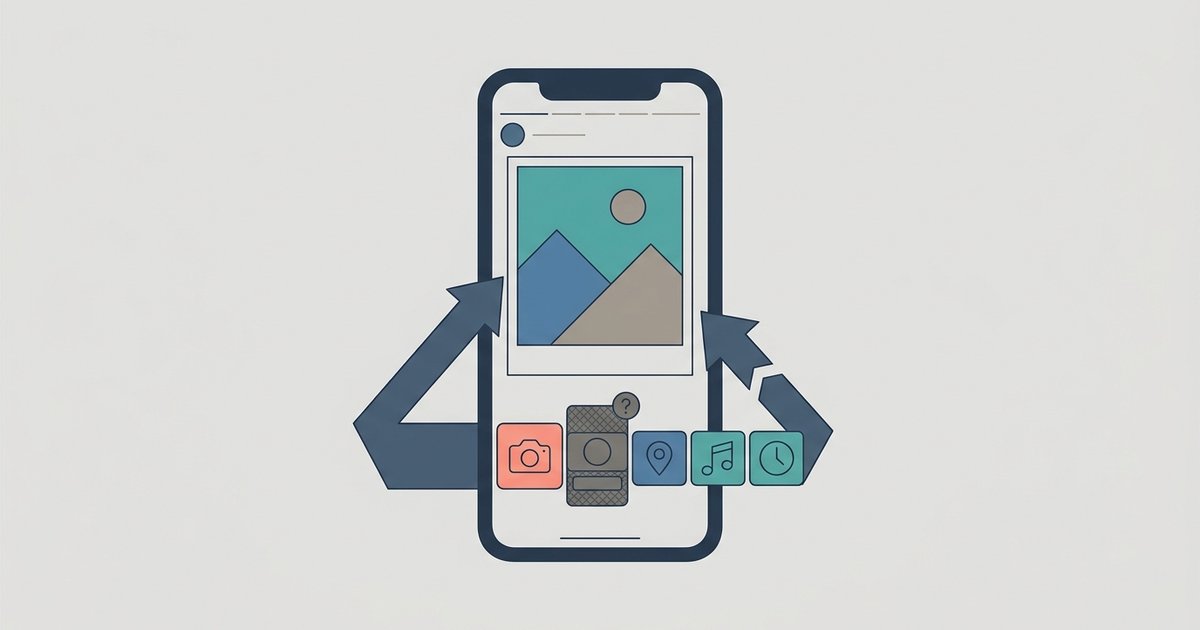
For reels that are eligible, Instagram has described what it is trying to predict. It says the strongest signals include your activity, your history of interacting with the person who posted, information about the reel itself such as the audio track and the visuals and how popular it is, and information about the person who posted. Among the outcomes it tries to predict, it has named how likely you are to reshare the reel, to watch it all the way through, to like it, and to tap through to the audio page.
Read that as a practical instruction. Completion and resharing are named outcomes, so a shorter reel that people finish beats a longer one they abandon, and a reel someone sends to a friend is doing something a like cannot. The first seconds decide the completion rate for everything after them, which is why Instagram's own advice puts so much weight on the first three seconds.
This is also why a strong reel can follow a weak one. Most of what people see in the Reels tab comes from accounts they do not follow, and a single reel underperforming is not evidence that your account has been marked down.
Audio and copyright
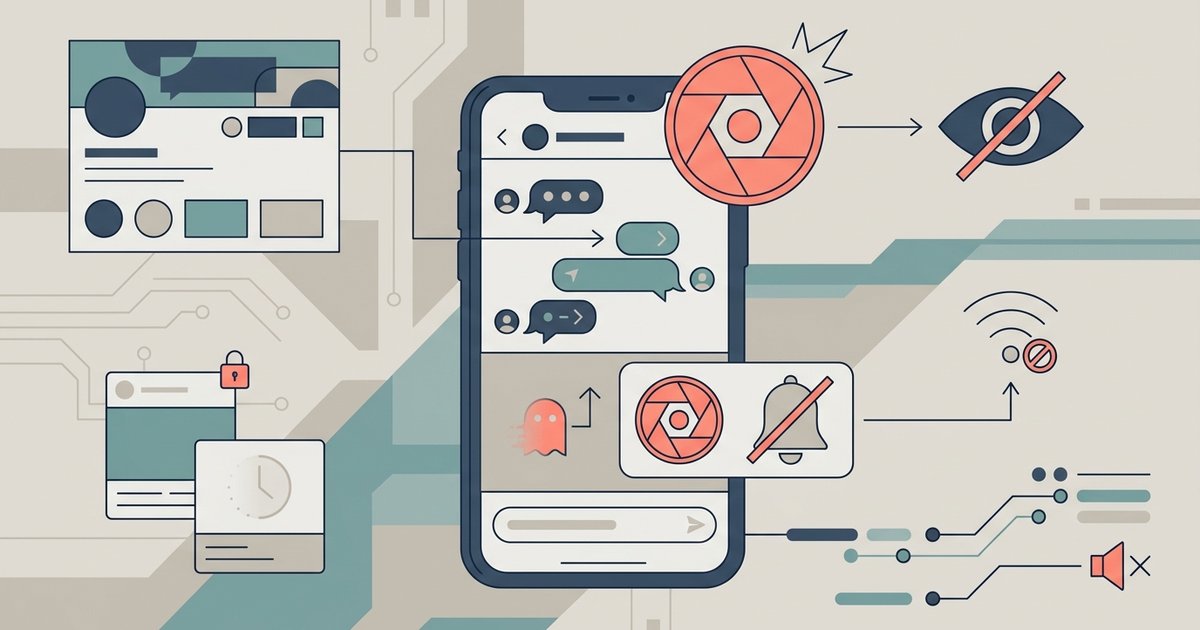
Audio is a real and underrated cause of a reel disappearing. Instagram says audio tracks in your posts can be muted as a result of changes to its agreements with music rights holders, which means a track that was available when you posted can go silent later. Its guidance on including music also states that the more full-length recorded tracks a video contains, the more likely it is to be limited, that shorter clips of music are recommended, and that there should always be a visual component, with recorded audio not being the primary purpose of the video.
Account type matters here too. Instagram says the music in its licensed library is intended for personal, non-commercial use, and that certain business accounts and certain types of posts do not have access to that library at all. Accounts without access are pointed to the royalty-free Sound Collection instead. If you switched to a professional account and your usual tracks disappeared, that is the documented reason. And if a reel went quiet or vanished, check the audio before you rewrite your whole strategy.
Shadowbans, and what is actually happening
Instagram has addressed the term directly. It has said that shadowbanning is a broad label people apply to many different experiences, that it cannot promise anyone will consistently reach the same number of people each time they post, and that it is in Instagram's commercial interest for creators to reach their audiences. It points at Account Status as the transparency tool for this exact question.
That is not a denial that distribution can be reduced. It is a statement that the reduction has a documented cause and a place you can go to see it. Before you accept a hidden penalty as the explanation, open Account Status and look.
Cadence, hashtags and testing
Instagram does not publish a required posting frequency, and any specific number you see quoted is someone's inference rather than an official figure. What it does offer is a way to test without risking your feed: trial reels, available to professional accounts, are shown to non-followers rather than to your followers, and Instagram gives you insights on how the trial performed within 24 hours. That is the closest thing to a controlled experiment the platform offers, and it is a better use of energy than guessing at a schedule.
On hashtags, the honest position is that Instagram's published guidance treats them as part of making your content findable, alongside keywords in your caption and bio, rather than as a lever that multiplies reach. Piling thirty tags onto a reel is not a documented growth mechanism. Relevant words in the caption and on screen are.
Work through it in order. Open Account Status and confirm your content is eligible. Make the account public if you want strangers to see it. Remove watermarks and reuploads, keep reels under three minutes and vertical, and check whether the audio has been muted. Then, and only then, start testing the opening seconds, because until eligibility and format are sorted out you are optimizing something that is not being shown to anyone.
\nRelated reading: How to Add Captions to Instagram Reels, Instagram Image Sizes for Posts, Stories and Reels, and Instagram Guide.