




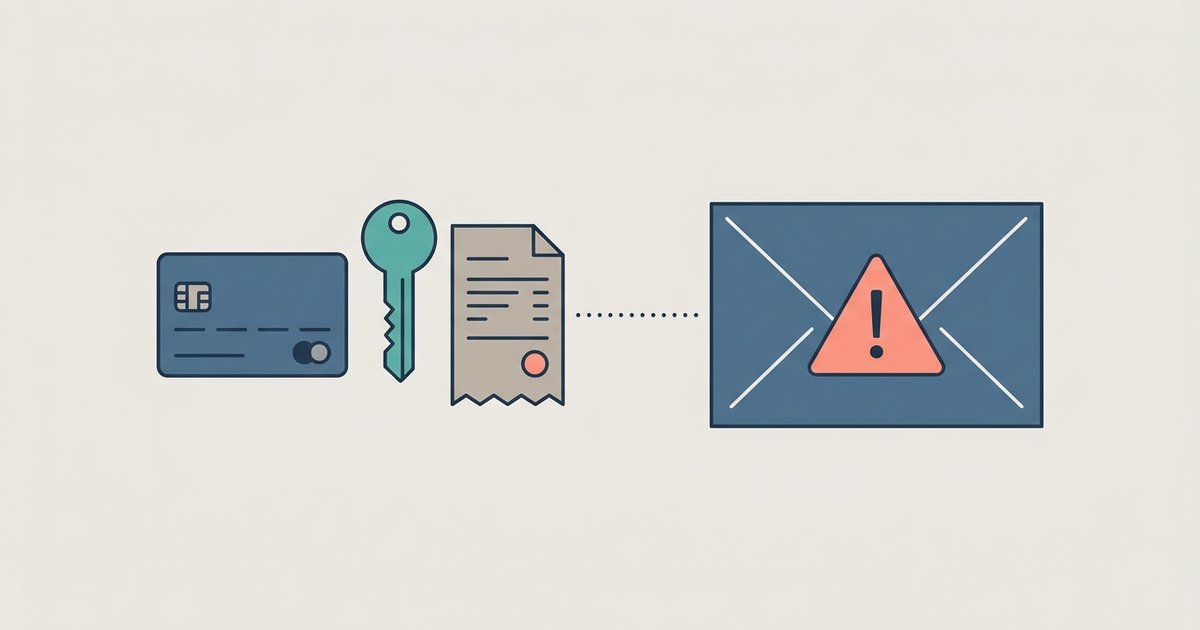
Temporary email is safe for what it is designed to do: catching a one-time code or confirmation from a site you will never need again. It becomes unsafe the moment you use it for an account you might have to recover, a purchase you might have to prove, or anything that carries money or personal records. The risk is rarely a hacker. It is you, months later, locked out of something because the only email attached to it no longer exists.
Here are the situations where a disposable address causes more trouble than it prevents, and what to use instead.
Any account you might need to recover
Email is how almost every service proves who you are when something goes wrong. Forgot the password? The reset link goes to the email on file. Suspicious login? The warning goes there too. Google, for example, describes its recovery email as the way it helps you get back into your account if you forget your password or cannot sign in, and the way it tells you about suspicious activity.
If that email is a temporary inbox that expired weeks ago, none of those messages will reach you. Some services let you prove ownership another way, through a phone number or a support ticket, but many do not, and the ones that do can take days. An account you care about with a throwaway email is an account you are one forgotten password away from losing.
This applies with extra force to the account that recovers your other accounts. Your main email, your password manager, and your Apple, Google or Microsoft account should always point to addresses you will still control years from now.
Banking, payments and anything with money
Banks, card issuers, payment apps, investment platforms and cryptocurrency exchanges send fraud alerts, statements, transaction confirmations and security codes by email. Missing a fraud alert because it went to a dead inbox is exactly the kind of problem the alert was supposed to prevent.
Financial services are also the most likely to reject disposable domains outright, and they may treat an account opened with one as suspicious. Even when a disposable address gets through, using one on a financial account creates an identity mismatch you may have to explain later. Use your real address, or an alias that forwards to it.
Online purchases and receipts
It is tempting to use a temp address at checkout to avoid the flood of "you left something in your cart" emails. The problem is everything that comes after the order: the confirmation with the order number, shipping and tracking updates, delivery problems, return authorizations and refund notices.
Most important is the receipt. Warranty claims, returns, price-match requests, expense reports and insurance claims often require proof of purchase, and for online orders that proof is usually an email. If the receipt went to an inbox that deleted itself after 10 minutes, you may have to rely on the retailer to look it up, and not every retailer will.
If you want to shop without the marketing, use a forwarding alias for the store. You still get the receipt and the tracking, and if the promotions become unbearable you can unsubscribe or switch the alias off after the return window has passed.
Subscriptions and free trials you might keep
A free trial that turns into a paid subscription will bill the card on file and send its renewal reminders, invoices and cancellation confirmations to the email on file. If that email is gone, you may not notice the charge until your statement arrives, and cancelling can be harder when you cannot log in or receive the verification code the service sends.
Using temporary addresses to sign up for the same free trial repeatedly also breaks most services' terms, and it is one of the main reasons sites block disposable domains in the first place.
Work, school, health and government
Anything official belongs on a permanent address. Job applications, school and university systems, medical portals, insurance, tax, benefits, licensing and legal correspondence all send messages you may need to act on or keep as records. Some of them may involve deadlines, and missing one because a message went to an expired inbox is a costly mistake.
Many of these systems will not accept a disposable domain anyway, and those that do may not let you change the email later without contacting support.
Anything you need to keep
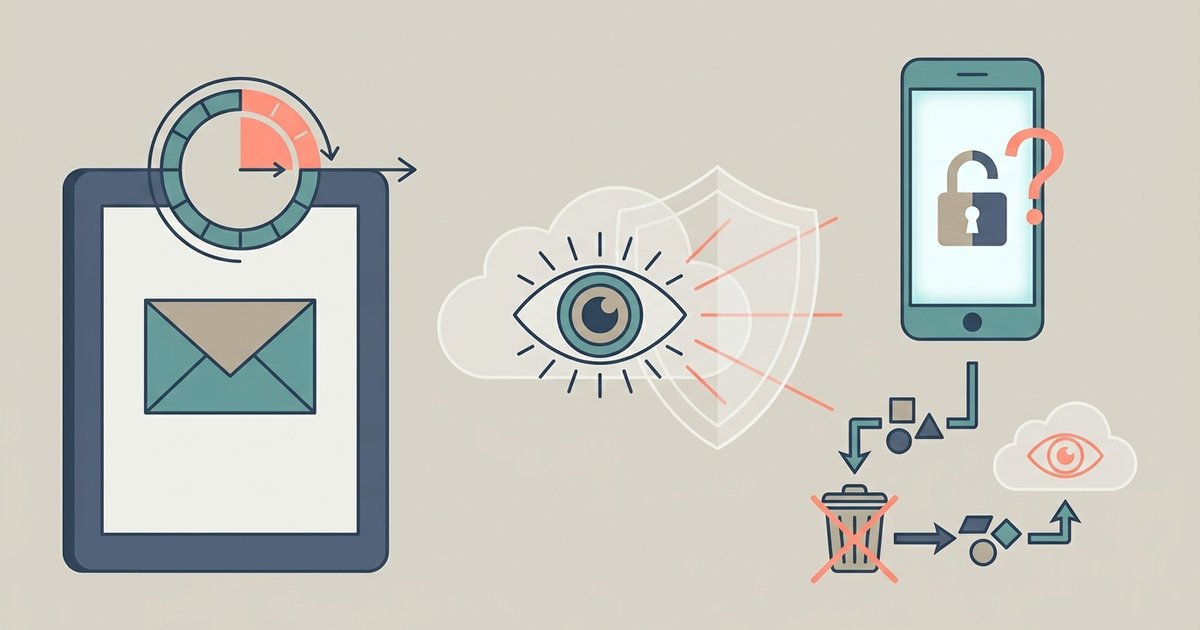
Temporary inboxes delete messages on a schedule, often minutes or hours after they arrive. That makes them a bad home for anything you might want to find again: software license keys, download links for things you paid for, event and travel tickets, booking confirmations, account credentials sent by email, and attachments like contracts or invoices.
If something useful does arrive in a temp inbox, copy or download it before the inbox expires. Do not assume you will be able to come back for it.
Sensitive information on a public inbox
Several well-known disposable services use public inboxes. There is no password, and anyone who types the same address sees the same mail. Others generate random addresses that are hard to guess but still sit on a server run by a company you know little about, often funded by advertising.
Never let anything sensitive land in an inbox like that. Password reset links, identity verification messages, medical or financial details and private documents can all be read, and in some cases used, by whoever opens the inbox next. A reset link in a public inbox is effectively a reset link for anyone.
Is temporary email safe for everything else?
For the uses it is meant for, yes. Receiving a download link, reading a gated article, checking a forum before you commit, or testing a signup form on your own site are all reasonable uses. Using a disposable address for privacy is generally legal, though individual sites can refuse it in their terms and will often block it.
A few precautions keep it that way:
- Pick a service that generates random addresses rather than one where you type a common name that someone else may already be using.
- Choose an inbox lifetime long enough for the message you are waiting for.
- Treat anything that arrives as potentially visible to others.
- Do not click unexpected links in a temp inbox any more than you would in your real one.
- Remember that a disposable address hides your email, not your IP address, device or payment details.
What to use instead
When temp mail is the wrong tool, you still do not have to hand out your main address. A forwarding alias from a service such as Apple's Hide My Email, Firefox Relay or SimpleLogin gives each site its own address that forwards to your real inbox, so you get receipts and reset links but can switch the alias off if it attracts spam. A separate free email account used only for shopping and subscriptions is another option, as long as you actually check it. Gmail's plus addressing helps you filter mail from a specific site, though it does not hide your real address.
A quick test works for almost every signup form: if this inbox disappeared tomorrow, would I lose money, access or a record I need? If the answer is yes, use an address you control. If the answer is no, a temporary inbox is a perfectly good way to keep one more company out of your real email.