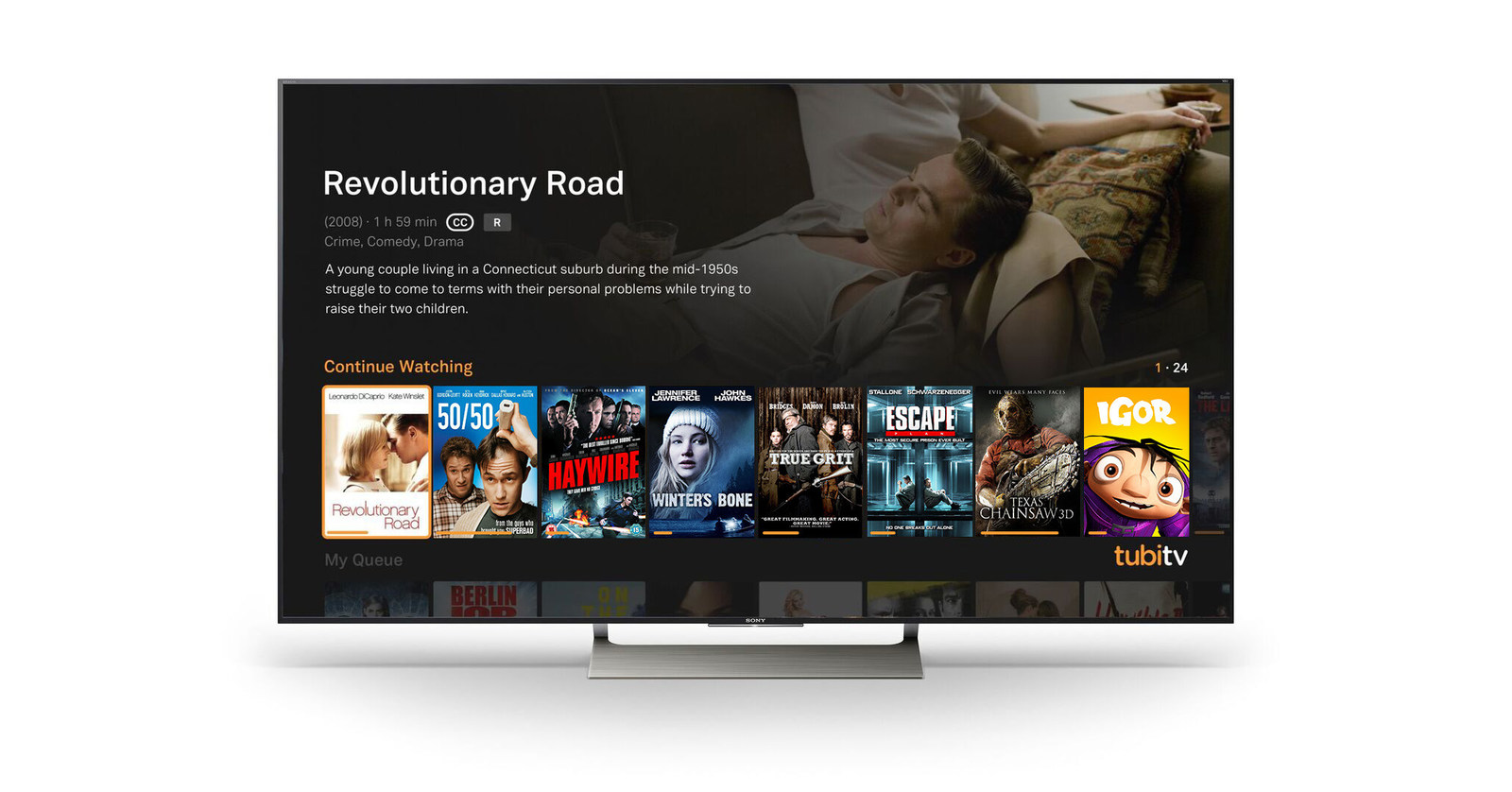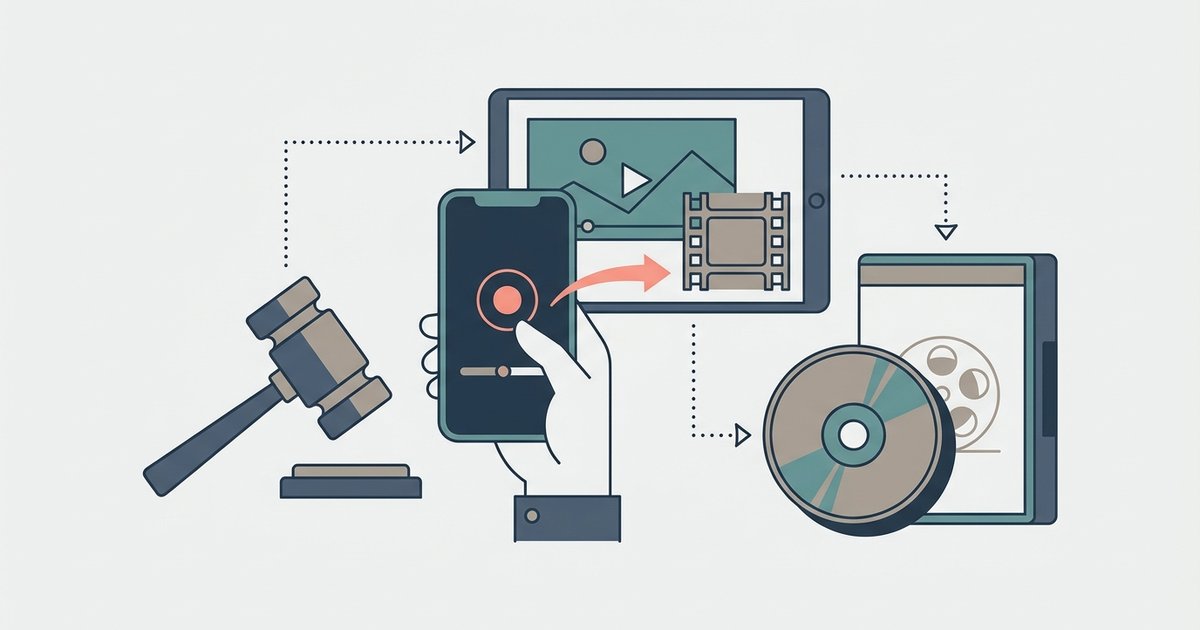
No, screen recording a full movie on Tubi is copyright infringement, even for personal use, because it creates an unauthorized copy and bypasses the platform's licensed streaming protections.
Why screen recording movies breaks copyright law
Copyright law grants the creator of a film the exclusive right to make copies of their work. When you screen record a full movie on Tubi, you are capturing every frame and audio track. This creates an unauthorized reproduction that directly infringes that right. The act of recording itself constitutes a violation, not just distributing the file, because you are duplicating the copyrighted content without permission. Even if you delete the recording after watching, the momentary copy made during the capture process is still a breach of the law.
The personal use myth
Many people believe that recording a movie for private viewing is legal, but this is a widespread misunderstanding. Fair use does not apply when you copy an entire work for entertainment purposes. It is reserved for limited uses like criticism, teaching, or research, where only small portions are taken. Recording a two-hour film in full for your own later enjoyment is not transformative. It simply replaces the licensed stream with an unauthorized local file. The fact that you do not sell or share the recording does not make it lawful.
Tubi's terms and DRM circumvention
Tubi’s terms of service explicitly prohibit any form of copying, recording, or downloading of its content. By screen recording, you are also potentially violating the Digital Millennium Copyright Act (DMCA) if you circumvent the platform’s technical protection measures, such as any encryption or DRM that prevents direct downloads from Tubi TV. Even if you do not crack the DRM itself, the act of recording a streamed movie may be considered unauthorized access to a protected work. Users who search for methods to download on Tubi often find no official option, precisely because Tubi is designed to stream only, not to allow permanent copies.
When recording might be allowed
Narrow exceptions exist for short clips used in criticism, commentary, or educational analysis, where the recording is transformative and does not substitute for the original work. However, recording a full movie never qualifies for these exceptions. If you want to save a Tubi film for offline viewing, the only legal route is to check if Tubi offers a temporary download feature. Some titles allow you to download movies on the Tubi app for offline playback within a limited window, but this is a licensed, time-restricted function, not a permanent copy. For devices that lack this feature, such as when you get Tubi on your smart TV, there is no legal method to record or save the film. Attempting to do so through screen capture remains illegal.
Tubi is an exclusively free, ad-supported streaming service that never charges a subscription fee, a distinction that no other major streaming platform can claim at this scale.