To responsibly expand your Nintendo Switch digital game storage options, you use a microSD card purchased from a legitimate retailer, format it in the console, and download games exclusively from the official Nintendo eShop.
Understanding Your Nintendo Switch Digital Game Storage Options
The Nintendo Switch has a fixed amount of internal storage (32 GB on the original model and OLED model, 64 GB on the Switch Lite). Because modern games can exceed 10 GB each, the console is designed to accept a microSD card for additional space. This card is not a “hack” or a workaround, it is an officially supported feature. The Switch supports microSD, microSDHC, and microSDXC cards up to 2 TB, though cards larger than 1 TB are rare and expensive. You should buy from a reputable electronics store, as counterfeit cards are common and can corrupt your data.
To prepare a new card, insert it into the slot under the kickstand (on the standard Switch) or on the bottom edge (Switch Lite and OLED). The console will prompt you to format it. If it does not, go to “System Settings” from the HOME Menu, select “System,” then “Initialize,” and choose “Format microSD Card.” (Some system versions show this under “System Settings” > “Data Management” > “Format microSD Card.”) Formatting erases everything on the card, so only do this with a new or empty card.
Moving and Managing Games on Your microSD Card
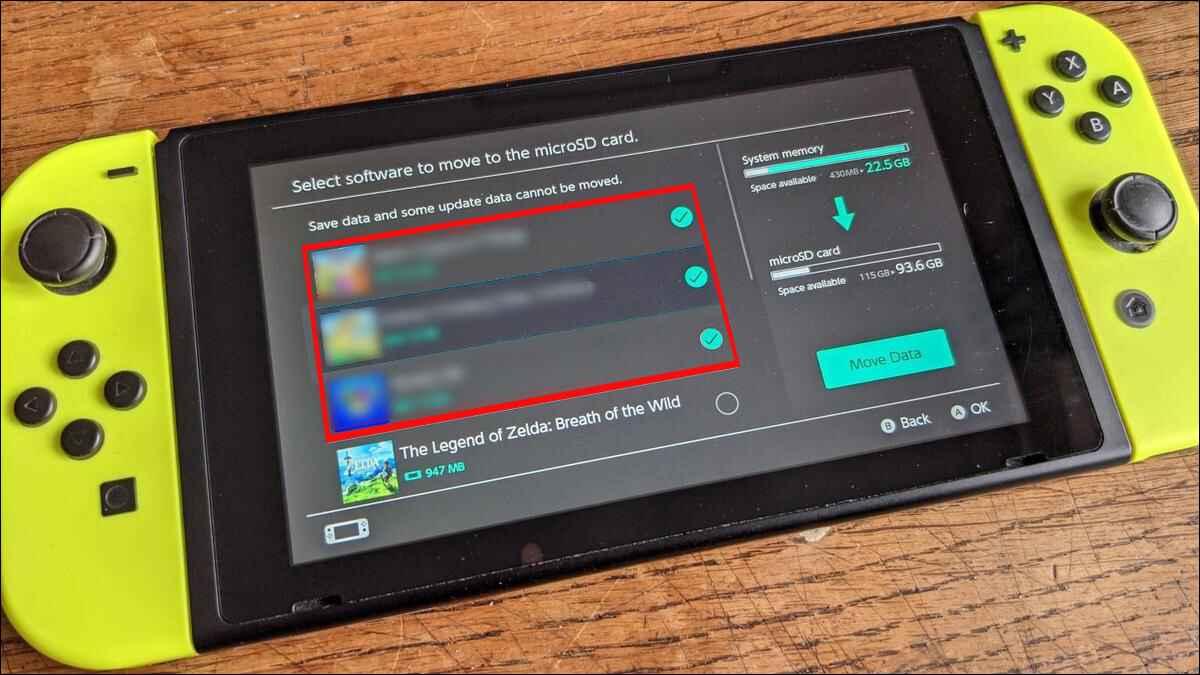
Once your card is formatted, you can choose where new downloads go. By default, the Switch stores new software on the microSD card if one is inserted. However, you can move existing games between the system memory and the card at any time. Go to “System Settings” > “Data Management” > “Move Data Between Console/microSD card.” Select the game you want to move, choose the destination, and confirm. This is a safe, official process that does not alter the game files or your account.
If you delete a game to free up space, you can redownload it later without paying again, as long as you have the Nintendo Account that originally purchased it. To redownload, open the “Virtual Game Card app” from the HOME Menu. This app shows your entire digital library and lets you download any title you own. (On older system versions, you did this via the eShop by selecting your user icon and then “Redownload.”) The Virtual Game Card app also lets you “eject” and “insert” games virtually, which is useful for managing multiple titles without deleting them.
Backing Up Save Data: Cloud and Manual Methods
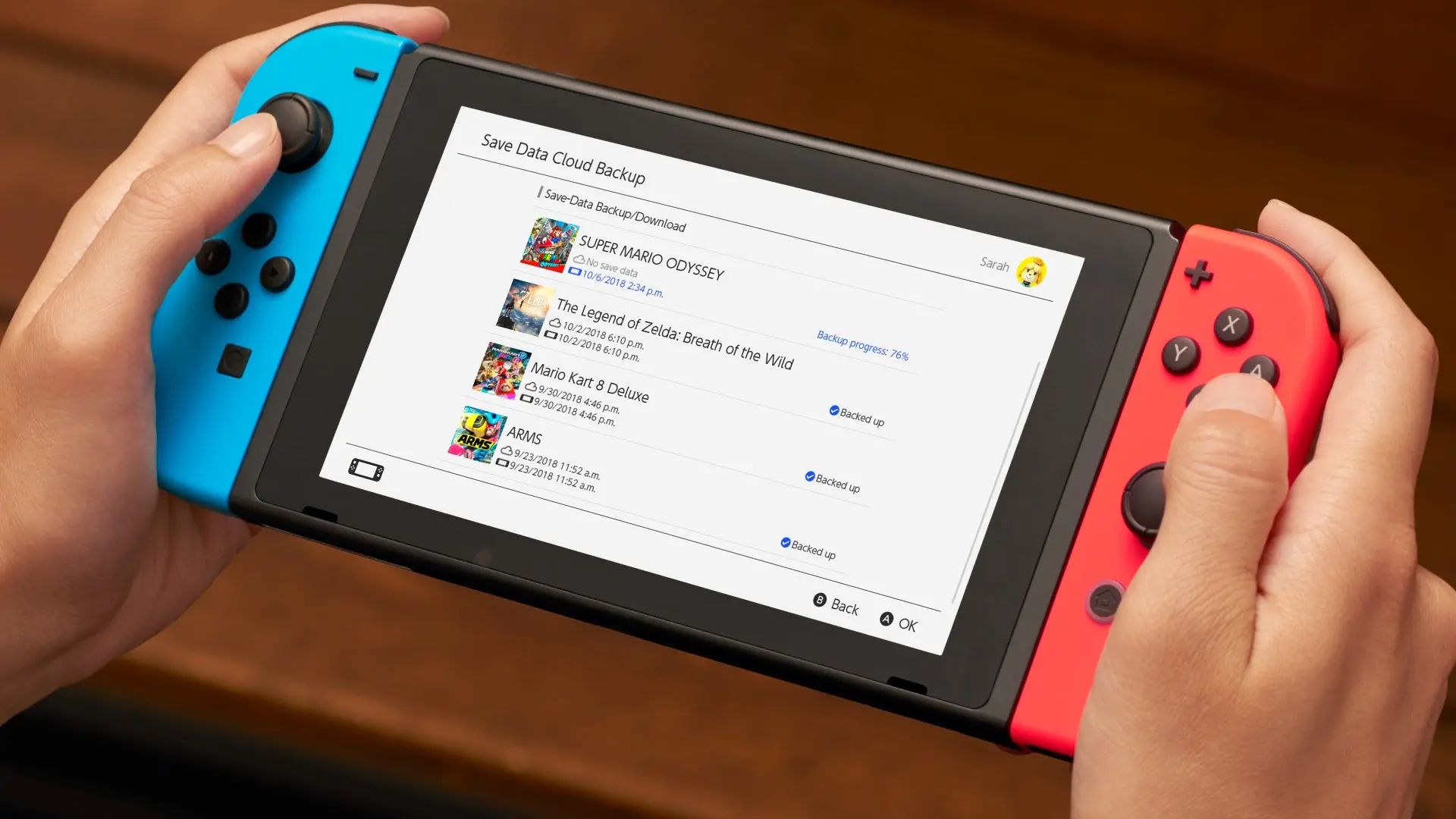
Your game progress (save data) is stored separately from the game software itself. This means moving a game to a microSD card does not move your save files. To protect your progress, you have two official options. First, if you have a Nintendo Switch Online membership, you can use Save Data Cloud. This service automatically backs up save data for most games. You can also do it manually: select the game icon on the HOME Menu, press the + Button (Options), then choose “Save Data Cloud” and “Back Up Save Data.” There is no limit to the amount of storage space or the number of software titles you can back up using this service. However, note that not all games support cloud saves (for example, some Pokémon titles do not), and the membership is required.
Second, if you do not have a membership, you can transfer save data between two Switch consoles locally. Go to “System Settings” > “Data Management” > “Transfer Your Save Data.” This requires both consoles to be nearby and does not use the internet. This is a manual, one-time transfer, not a continuous backup. For a single console without online membership, your save data remains on the internal memory and is not lost when you move the game software to a microSD card. However, if your console is lost or damaged, that data is gone unless you had a cloud backup.
Why “Downloading Switch Games” from Unofficial Sources Is Illegal and Dangerous
When people search for “how to download Switch games to SD card,” they often find instructions for obtaining game files from unofficial websites, peer-to-peer networks, or “free” download tools. This is piracy, the unauthorized copying and distribution of copyrighted software. It is illegal in virtually every country, and it violates Nintendo’s Terms of Service. There is no gray area: if you did not pay for the game through the official eShop or a licensed retailer, you do not have the right to possess or run it.
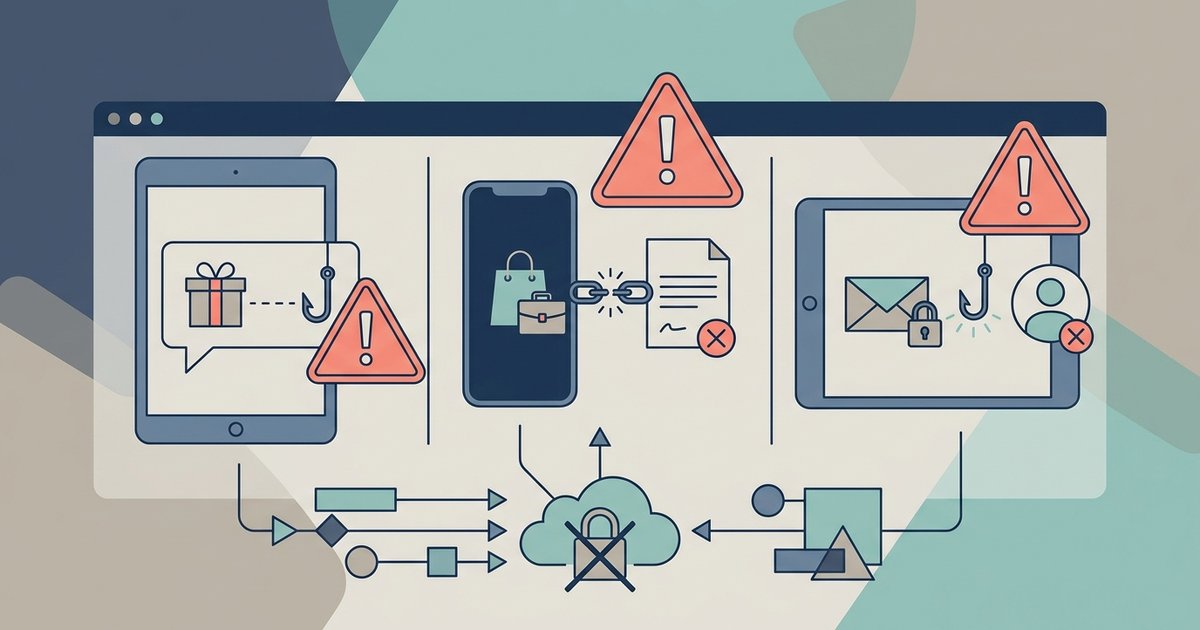
Beyond legality, there are serious practical risks. Unofficial game files are often modified to include malware. This malware can steal your login credentials, credit card information, or even turn your Switch into a “bot” for cryptocurrency mining. Because the Switch is a closed system, running unsigned code can also permanently “brick” the console, making it unusable. Nintendo actively detects modified consoles and accounts. If you are caught using pirated software, your Nintendo Account can be permanently banned, which means you lose access to all of your legally purchased games, your online membership, and any cloud saves. In some jurisdictions, you could also face civil lawsuits from game publishers seeking damages, potentially thousands of dollars per game.
Additionally, “download tools” or “installers” for Switch games are almost always scams. They may ask you to disable security features, enter your Nintendo Account password, or install a “driver” that is actually spyware. Even if a file appears to work, it may be an incomplete or corrupted version that crashes, or it may be a “demo” that only runs for a few minutes. There is no legitimate way to get a paid game for free, and any website promising otherwise is lying to you.
Legal Alternatives: Official Stores, Sales, Subscriptions, and Free-to-Play
Nintendo provides many legal ways to build a large game library without breaking the law or risking your console. The primary method is the Nintendo eShop, accessible directly from the HOME Menu. Here, you can browse thousands of titles, including exclusive first-party games, indie gems, and classic NES, SNES, and Game Boy titles. The eShop has frequent sales, often weekly, where games are discounted by 30% to 80%. You can also buy digital download codes from authorized retailers like Amazon, Best Buy, or GameStop, which sometimes offer lower prices than the eShop itself.
Another excellent option is a Nintendo Switch Online membership. This subscription (with tiers) gives you access to a rotating library of classic NES, SNES, Game Boy, and Game Boy Advance games, all playable on your Switch. The Expansion Pack tier adds Nintendo 64 and Sega Genesis titles. These games are included with your subscription, no additional purchase required. The membership also includes cloud saves, online multiplayer, and exclusive offers.
For budget-conscious players, the eShop has a large “Free to Start” section. Games like Fortnite, Apex Legends, Fall Guys, and Pokémon Unite are completely free to download and play. They make money through optional in-game purchases, but you never have to spend a cent to enjoy them. There are also hundreds of free demos for paid games, letting you try before you buy. Finally, consider buying physical game cartridges. They do not require a microSD card, can be resold or shared with friends, and often go on sale at retail stores. Physical games are a legal, permanent way to own a title without any online download.
Homebrew and Your Own Content: What Is Allowed
Some users modify their Switch to run “homebrew” software, programs not approved by Nintendo. This is a complex topic. Running homebrew typically requires a hardware modification or a software exploit, both of which violate Nintendo’s Terms of Service and can lead to a permanent ban. However, homebrew itself is not inherently illegal if it does not involve copyrighted material. For example, you could write your own game or run a media player. But the moment you use homebrew to play a game you do not own, you are committing piracy.
Nintendo’s official stance is that any modification to the console is against its terms. Even if you own a game cartridge, copying its data to a microSD card for “backup” purposes is not permitted by Nintendo, and the tools used to do so are illegal in many countries. The safest and most responsible approach is to avoid homebrew entirely unless you are a developer using a separate, unmodified console for testing. For everyday players, the official eShop and physical cartridges are the only legal ways to play Switch games.
Final Recommendations for Safe and Legal Storage Expansion
To summarize: buy a high-quality microSD card (128 GB to 512 GB is a good range for most players) from a trusted store. Format it in your Switch using the official settings. Download games only from the eShop or use physical cartridges. Use the Virtual Game Card app to redownload your purchases. Back up your save data with a Nintendo Switch Online membership. Take advantage of sales, free-to-play titles, and the classic game library included with your subscription. If you ever see a website or video claiming you can “download Switch games for free,” close it immediately, it is a scam, a legal trap, or both. Your Switch, your money, and your account are worth more than a stolen game.
\nRelated reading: How To Download Nintendo Switch Games For Free, How To Download Movies On Switch, and How To Download Netflix On Nintendo Switch.