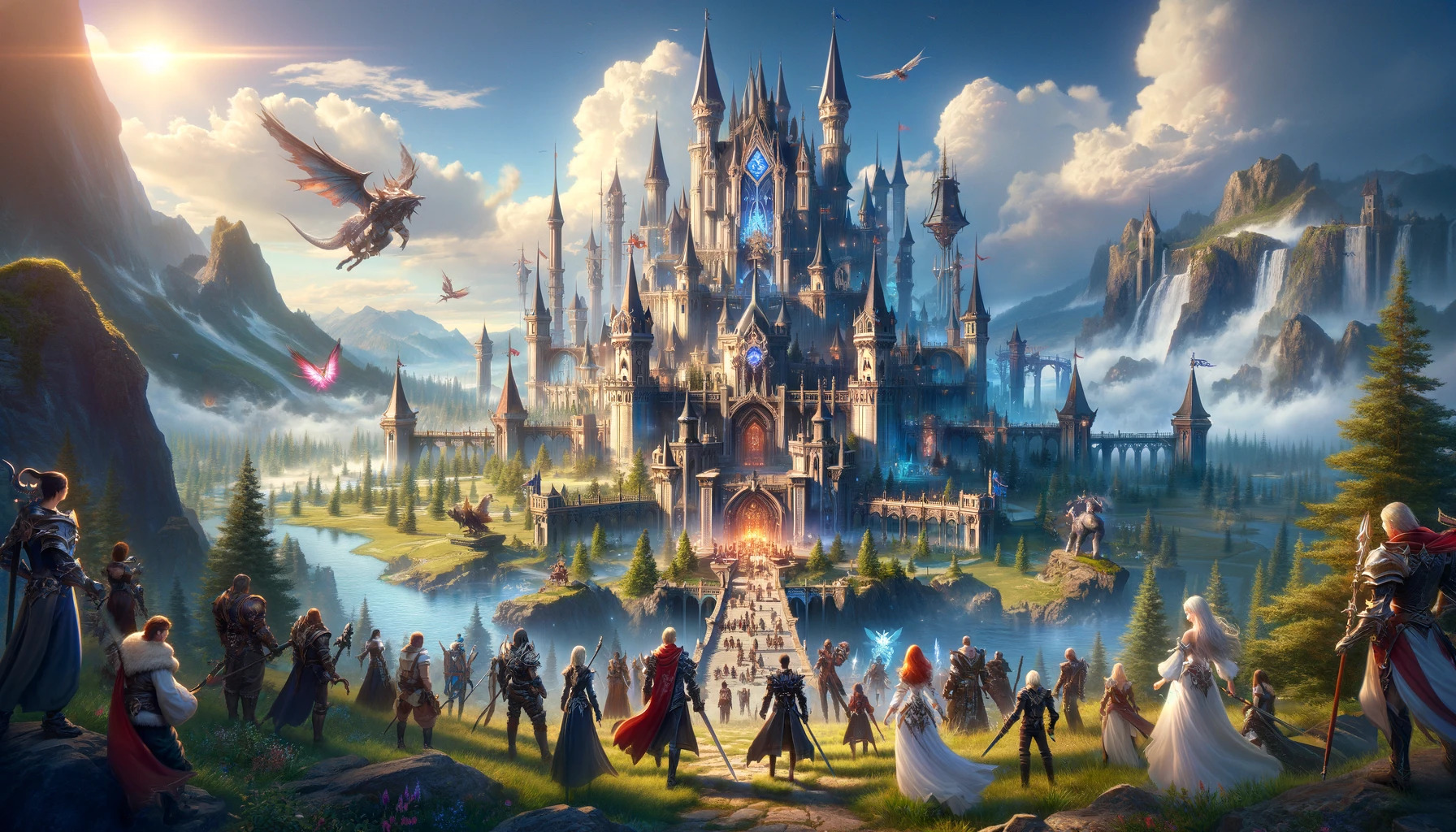
ArchLord’s defining feature is its central goal: a single player can rise to become the ArchLord, the supreme ruler of the entire game world. This mechanic made the game a unique blend of competitive ambition, political maneuvering, and community-driven storytelling, setting it apart from other games of its era.
Becoming the ArchLord and archlord mmorpg features
The quest to become the ArchLord was the game’s groundbreaking feature, a singular aspiration that reshaped every aspect of player interaction. Unlike typical endgame goals, this title granted real power and influence over the world, turning the entire server into a living arena of politics and strategy. Players formed alliances, broke them, and waged wars not just for loot or levels, but for the chance to sit on the throne. This system created an unparalleled level of competition and community engagement, as every action a player took could either advance or sabotage their path to supremacy, a dynamic that echoes the competitive evolution of studios like Capcom from arcade roots to global gaming power.
Core gameplay and siege mechanics
Beneath the ArchLord ambition lay a robust foundation of races and classes, each offering different paths to power. Guild dynamics were central to progress, as large groups coordinated to control territories and resources. The game included siege mechanics, allowing for large-scale conflicts that would influence control over parts of the world. These battles were not simple skirmishes; they were strategic operations requiring teamwork, planning, and the willingness to fight for dominance. Territory control directly impacted a guild’s ability to support its members and push toward the ArchLord title.
Crafting and skills system
Craft skills in ArchLord were distinct from combat abilities, offering a separate progression path that supported the game’s economy and player self-sufficiency. These craft skills included Ransacking, Skinning, Carving, Cooking, and Alchemy. Each skill had a practical use, from gathering materials to creating consumables. Players learned these skills from specific NPCs: an , a , and an . Mastering these crafts allowed players to produce valuable items, trade with others, and gain an edge in the struggle for power.
Navigating the world: interface and hotkeys
Efficient navigation of ArchLord’s world required familiarity with its interface. The game interface included various windows accessible via hotkeys, allowing players to quickly manage their character and interact with the world. The following hotkeys were essential for daily play:
- I for Inventory
- C for Character window
- Q for Quest log
- U for Mailbox
- G for Guild window
- K for Skills window
- J for Craft skills window
- P for Party window
- F for Friends window
- M for World Map
These shortcuts streamlined gameplay, letting players focus on strategy rather than menu navigation, whether they were organizing a siege or checking their crafting progress.
The evolution and legacy of ArchLord
Over time, ArchLord evolved through updates that added new layers of complexity and maintained a dedicated player base. Its legacy is most visible in modern MMORPGs that incorporate player-driven narratives and sovereignty systems, where a player’s actions can permanently shape the game world. ArchLord proved that giving players the chance to become an absolute ruler was not just a gimmick, it was a foundation for lasting, engaging multiplayer experiences.
\nRelated reading: How To Get Unlimited Points In Kahoot and What Is The Build Limit In Minecraft.