




Abstract
Creative industries—advertising, design, media, fashion, and music—were early adopters of generative AI, yet outcomes through mid‑2023 varied widely. This article offers a case‑free synthesis of domain applications as of June 2023, emphasizing operating patterns over brand examples. We argue that value is realized when organizations combine rights‑aware inputs and provenance with governed pipelines, skilled teams, and clear performance metrics. We introduce C‑OPS (Compliance & provenance; Operational pipelines; People & craft; Scaling metrics) as a practical playbook for enterprise deployment and conclude with guidance for CMOs, creative operations, studios, and counsel.
- Introduction
Between late 2022 and June 2023, text‑, image‑, audio‑, and video‑generation systems moved from experimentation to early production use in creative workflows. Despite common tools, firms reported heterogeneous results. The central lesson is operational: durable advantage arises when AI is embedded inside governed creative pipelines, not when used as ad‑hoc utilities.
- Literature & Industry Context
Three threads frame the discussion:
- Adoption context. Enterprise AI adoption rose steadily into 2022, while value capture remained uneven—explaining why creative pilots often stalled without operational foundations.
- Provenance & consent. The C2PA specification (Jan 2022) established a standard for content provenance and authenticity, enabling embedding of provenance signals into creative assets.
- Governance standards. NIST AI RMF 1.0 (Jan 2023) provided a structured approach to trustworthy AI; alongside the EU AI Act proposal, these shaped early governance expectations for creative deployments.
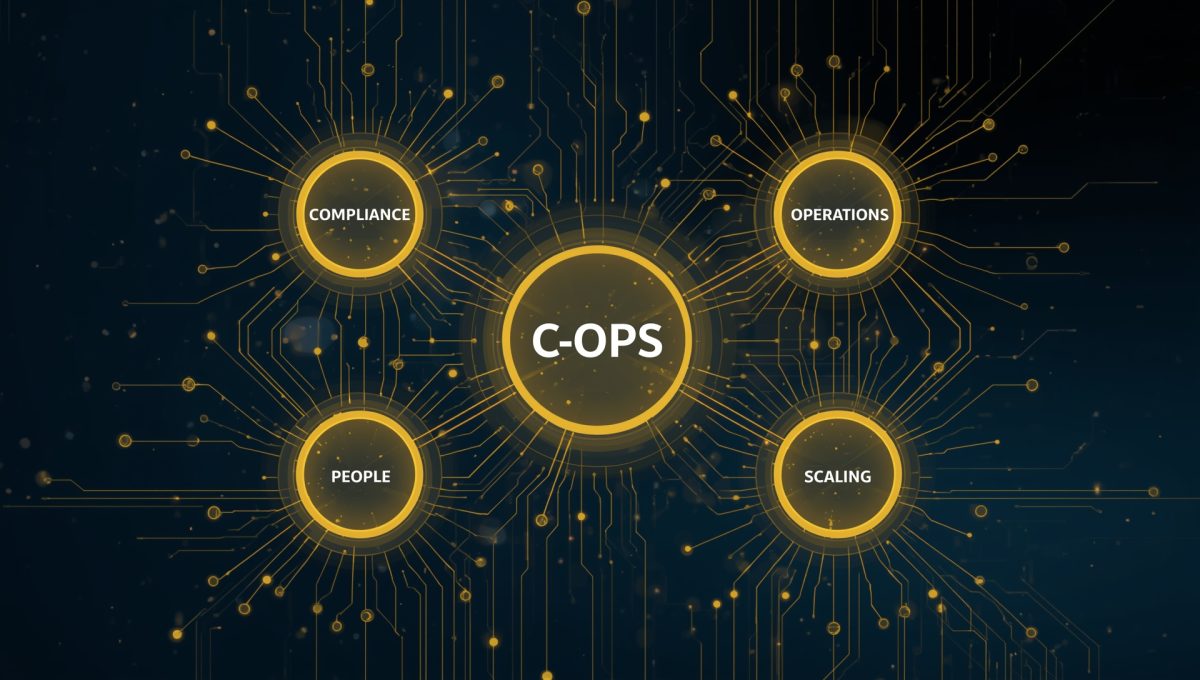
- A Domain Framework for Creative Deployment: C‑OPS
- C — Compliance & provenance. Use rights‑cleared inputs; record training data/asset licenses; embed provenance and attribution signals (e.g., C2PA/Content Credentials); maintain a model/data registry; respect opt‑outs and dataset licensing terms.
- O — Operational pipelines. Productize the flow from brief to generation to review to approval to delivery; define stage‑gates, asset metadata, and retention; version prompts and templates; create evaluation rubrics for brand safety and quality.
- P — People & craft. Upskill creatives in prompt craft and verification; pair creative leads with legal/brand reviewers; staff “AI wranglers” to maintain prompt/template libraries and style guides.
- S — Scaling metrics. Track cycle time, asset reuse, variant throughput, exception rates (brand/IP flags), and downstream performance (engagement/conversion) against pre‑AI baselines.
- Deployment Archetypes
- Campaign content generation. Text/image/video systems accelerate ideation and variant creation for campaigns, with human art direction and legal review as gates.
- E‑commerce asset expansion. Generative imagery augments photoshoots to expand variant coverage (angles, contexts, inclusive representation) under clear disclosure and bias checks.
- Editorial personalization. AI‑assisted selection, sequencing, and synthetic announcer/voice features personalize content while preserving editorial policy.
- Pre‑visualization & post. Video‑to‑video and image‑to‑image pipelines compress pre‑viz and post‑production iterations (storyboards, animatics, style passes) using owned/reference footage.
- Design assist. Generative tools support layout, copy alternatives, and mood boards, integrated into established DCC (digital content creation) workflows.
- Governance, Risk, and IP
- Licensing clarity. Prefer models/tools that provide explicit license terms and contributor compensation mechanisms; maintain auditable records of training sources and asset rights.
- Copyright & trademarks. Screen outputs for potential infringement (logos, watermarks, distinctive trade dress); implement two‑gate review (creative + legal).
- Provenance. Adopt content‑credentialing to deter misattribution and support chain‑of‑custody; store provenance with assets.
- Disclosure & bias. Establish disclosure guidelines for synthetic/edited assets; monitor for demographic bias and stereotyping in generative outputs.
- Incident response. Define escalation paths for takedowns and rights challenges; keep indemnity/insurance aligned with risk appetite.
- Workflow Integration & Tooling Patterns
- In‑tool integration. Favor tools embedded in existing creative suites and asset managers to reduce switching costs and preserve metadata.
- Prompt & template libraries. Curate reusable prompts (with style modifiers), LUTs/filters, and brand lexicons; maintain change logs and approval history.
- Evaluation playbooks. Use checklists and sample grids for brand‑safety, legal, and technical quality (resolution, compression, color space).
- Human‑in‑the‑loop. Keep human review for narrative coherence, brand tone, and IP acceptance; require sign‑off before distribution.
- Measurement & Economics
Define a baseline (pre‑AI quarter) and track: (i) cycle‑time delta, (ii) cost per usable asset, (iii) variant coverage, (iv) exception rate (IP/brand flags), and (v) business lift (click‑through, conversion, retention) for matched tests. Use holdouts and A/B designs when feasible; attribute cautiously where confounds exist.
- Practical Implications
CMOs & Creative Ops. Stand up provenance‑first pipelines; institute two‑gate review; build prompt/template libraries; fund evaluation playbooks; define KPIs and quarterly reviews.
Studios & Platforms. Insert gen‑AI where it compresses pre‑viz/editorial; keep high‑stakes creative judgments human.
Legal & Policy. Maintain a model/data registry; monitor licensing and evolving indemnity norms; adopt disclosure standards and bias audits.
- Conclusion
As of June 2023, creative‑industry value from AI stems less from model choice and more from operational excellence. The C‑OPS playbook—compliance & provenance, operational pipelines, people & craft, and scaling metrics—captures the practices that separate momentary novelty from durable advantage while avoiding reliance on brand‑specific case narratives.
References
C2PA. (2022, January 26). C2PA releases specification of world’s first industry standard for content provenance.
European Commission. (2021–2023). A European approach to artificial intelligence (AI Act proposal overview).
McKinsey & Company. (2022, December 6). The state of AI in 2022—and a half decade in review.
National Institute of Standards and Technology. (2023, January). AI Risk Management Framework (AI RMF 1.0).
Noy, S., & Zhang, W. (2023, May). Experimental evidence on the productivity effects of generative AI. Science, 381(6654), 187–192.
Rombach, R., Blattmann, A., Lorenz, D., Esser, P., & Ommer, B. (2022). High‑resolution image synthesis with latent diffusion models. CVPR 2022.
Shutterstock. (2022, October 25). Shutterstock partners with OpenAI (press release on licensing/compensation approach).
Getty Images (US), Inc. v. Stability AI, Inc., No. 1:23‑cv‑00135 (D. Del., filed Feb. 3, 2023). (Docket overview)