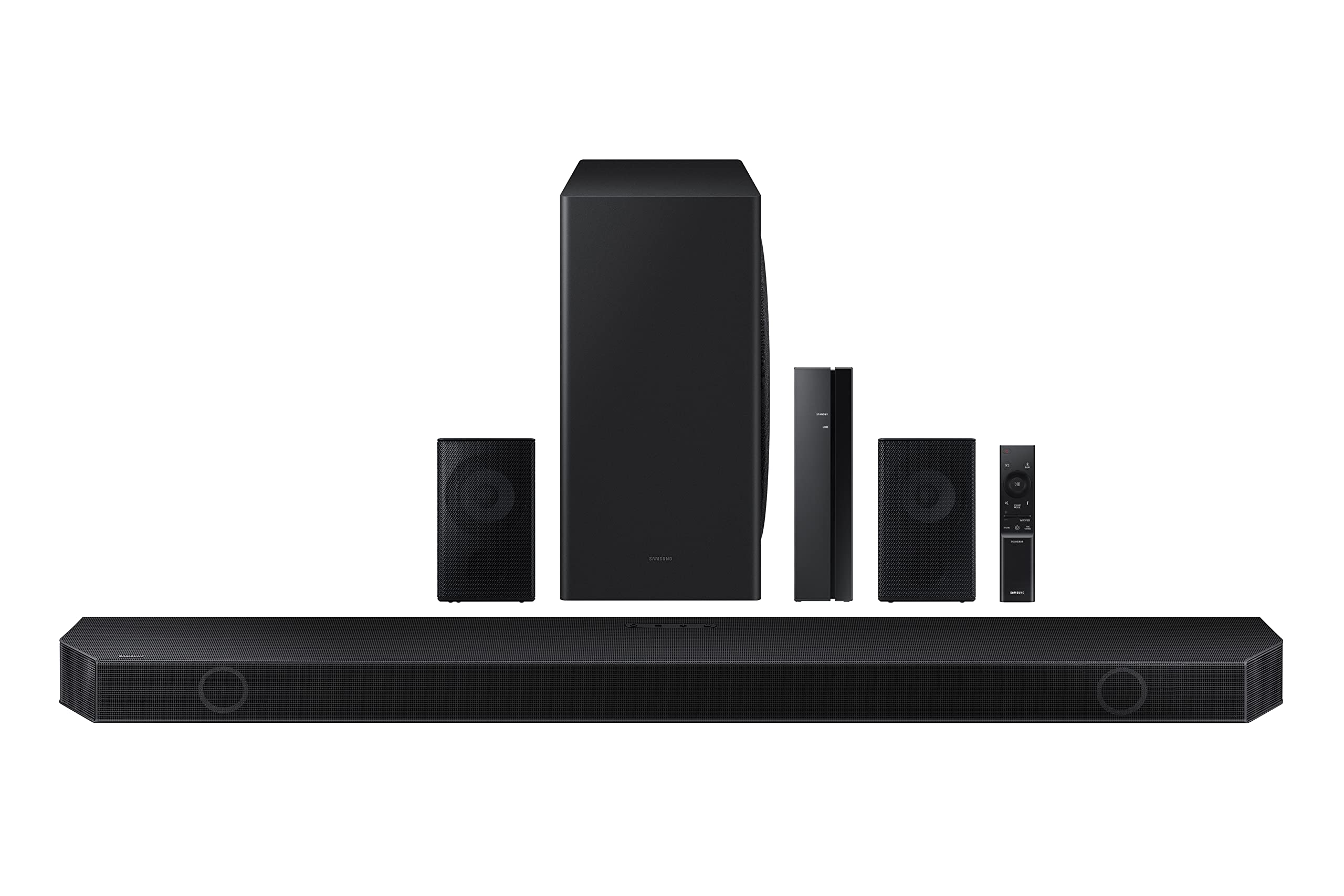
Adaptive Sound on a Samsung soundbar is an intelligent audio feature that automatically analyzes each scene in real time and adjusts the sound settings to optimize dialogue, effects, and overall clarity for whatever you're watching. Instead of a static sound profile, this feature ensures you get the best possible audio for movies, news, sports, or dialogue, even at low volumes. For the latest Q-Series models, Adaptive Sound Pro takes this further by also analyzing your viewing space and acoustic components to deliver truly optimized sound quality. If the soundbar isn’t responding to these automatic adjustments, you may first need to get the id set on Samsung soundbar so the feature can work properly, but if dialogue remains hard to hear despite Adaptive Sound being active, you can fix very low dialogue but very loud sound effects on Samsung soundbar with a manual adjustment.
What is adaptive sound on a Samsung soundbar?
Adaptive Sound is a built-in signal-processing mode on Samsung soundbars that automatically tweaks the audio output based on the content you're playing. Its purpose is simple: to make every scene sound its best without you touching the remote. The soundbar listens to the incoming audio signal, identifies whether it's a dialogue-heavy drama, a booming action sequence, or a quiet news broadcast, and then adjusts equalization, channel levels, and spatial cues accordingly. The key distinction is that Adaptive Sound is reactive and automatic, whereas standard sound modes like "Standard" or "Music" apply a fixed EQ curve. Adaptive Sound Pro, available on higher-end Q-Series models, adds room analysis to the process, measuring your room's size, reflections, and background noise to further refine the sound field, creating a more immersive and accurate audio experience.
How Adaptive Sound works
The technical engine behind Adaptive Sound relies on real-time content analysis. As the audio signal streams into the soundbar, the onboard processor breaks it down into components, dialogue, music, sound effects, and ambient noise. It then applies scene-by-scene adjustments, boosting the treble for clearer speech, enhancing bass for explosions, or widening the soundstage for sweeping orchestral scores. This happens continuously, so a quiet conversation in one scene and a loud chase in the next are both rendered with optimal balance. For Adaptive Sound Pro models, the process adds environment detection: the soundbar uses a built-in microphone to sample the room's acoustics, including wall reflections and ambient noise levels. This data is fed into the adjustment algorithm, ensuring the sound is tailored not just to the content but to your specific listening space, so you get the same high-quality result whether the soundbar is in a small bedroom or a large living room.
Key benefits of Adaptive Sound
The most practical advantage is clearer dialogue. Adaptive Sound specifically boosts vocal frequencies and reduces background noise, so you can understand every line of dialogue even at low volumes, a lifesaver for late-night viewing. For movies, it enhances spatial effects and dynamic range, making action scenes more thrilling while keeping quiet moments distinct. For news and sports, it focuses on speech intelligibility and crowd ambience, so you catch every word of the anchor or the referee's call. The feature also simplifies your life: you no longer need to manually switch between "Movie," "Music," or "Voice" modes based on what you're watching. The soundbar does the work for you, adapting in real time to ensure the audio always matches the on-screen action.
Adaptive Sound vs. other Samsung audio features
It's important to note that Adaptive Sound on soundbars is completely different from the "Adapt Sound" feature found on Samsung phones and Galaxy Buds. That mobile feature personalizes audio by testing your hearing and creating a custom sound profile, it's a hearing-based calibration tool, not a scene analyzer. On the soundbar side, Adaptive Sound also works alongside Q-Symphony, which requires a compatible 2020-2025 Samsung TV and a Q-Series soundbar connected via HDMI. When Q-Symphony is active, the TV speakers and soundbar play together for a wider soundstage, and Adaptive Sound can still apply its intelligent processing to that combined output. Similarly, if you have a Samsung QLED TV with AI mode enabled, the TV and soundbar can share audio data, and Adaptive Sound will automatically activate on 2019 Q-Series models when connected to such a TV, ensuring the two devices work in harmony rather than competing.
How to enable and customize Adaptive Sound
Turning on Adaptive Sound is straightforward, and you can do it in seconds using your soundbar's remote or the Samsung SmartThings app. Here's how:
Step 1: Access the soundbar settings
Press the "Settings" or "Sound Control" button on your soundbar's remote. If you're using the SmartThings app, open it, select your soundbar, and tap "Sound" or "Audio" in the menu.
Step 2: Locate the Adaptive Sound option
Scroll through the sound modes until you find "Adaptive Sound" or "Adaptive Sound Pro" (depending on your model). It's usually listed alongside "Standard," "Music," "Movie," and "Voice" modes.
Step 3: Enable or disable the feature
Select "Adaptive Sound" to turn it on. The soundbar will immediately start analyzing the audio and adjusting the output. To turn it off, simply select "Standard" or another fixed mode. If you prefer manual control, you can disable Adaptive Sound and adjust the equalizer, bass, and treble manually using the soundbar's tone controls.
Step 4: Customize (optional)
On some models, you can fine-tune the Adaptive Sound response by adjusting the "Dialog Enhancement" or "Night Mode" settings within the sound menu. These work in conjunction with Adaptive Sound to further boost speech or reduce loud peaks for late-night listening. Experiment with these settings to find the balance that suits your preferences.
Frequently asked questions (FAQs)
Which Samsung soundbars support Adaptive Sound? Adaptive Sound is available on most Q-Series soundbars from 2019 onward, including popular models like the HW-Q60R, HW-Q70R, HW-Q800A, and HW-Q950A. To confirm compatibility, check your soundbar's specifications or the user manual, if you see "Adaptive Sound" listed in the sound modes, you have it.
Can I manually override Adaptive Sound? Yes. You can switch to any fixed sound mode (Standard, Music, Movie, etc.) at any time using the remote or app. If you want to keep Adaptive Sound on but adjust the bass or treble, use the tone controls, these changes will apply on top of the adaptive processing.
What if Adaptive Sound isn't working as expected? First, ensure your soundbar has the latest firmware update. If the feature seems inactive, check that you're using a supported audio source (HDMI, optical, or Bluetooth) and that the soundbar isn't in a mode that overrides adaptive processing, like "Game Pro" or "Bass Boost." For Pro models, make sure the room calibration mic isn't blocked by objects. If issues persist, reset the soundbar to factory settings and re-enable Adaptive Sound.