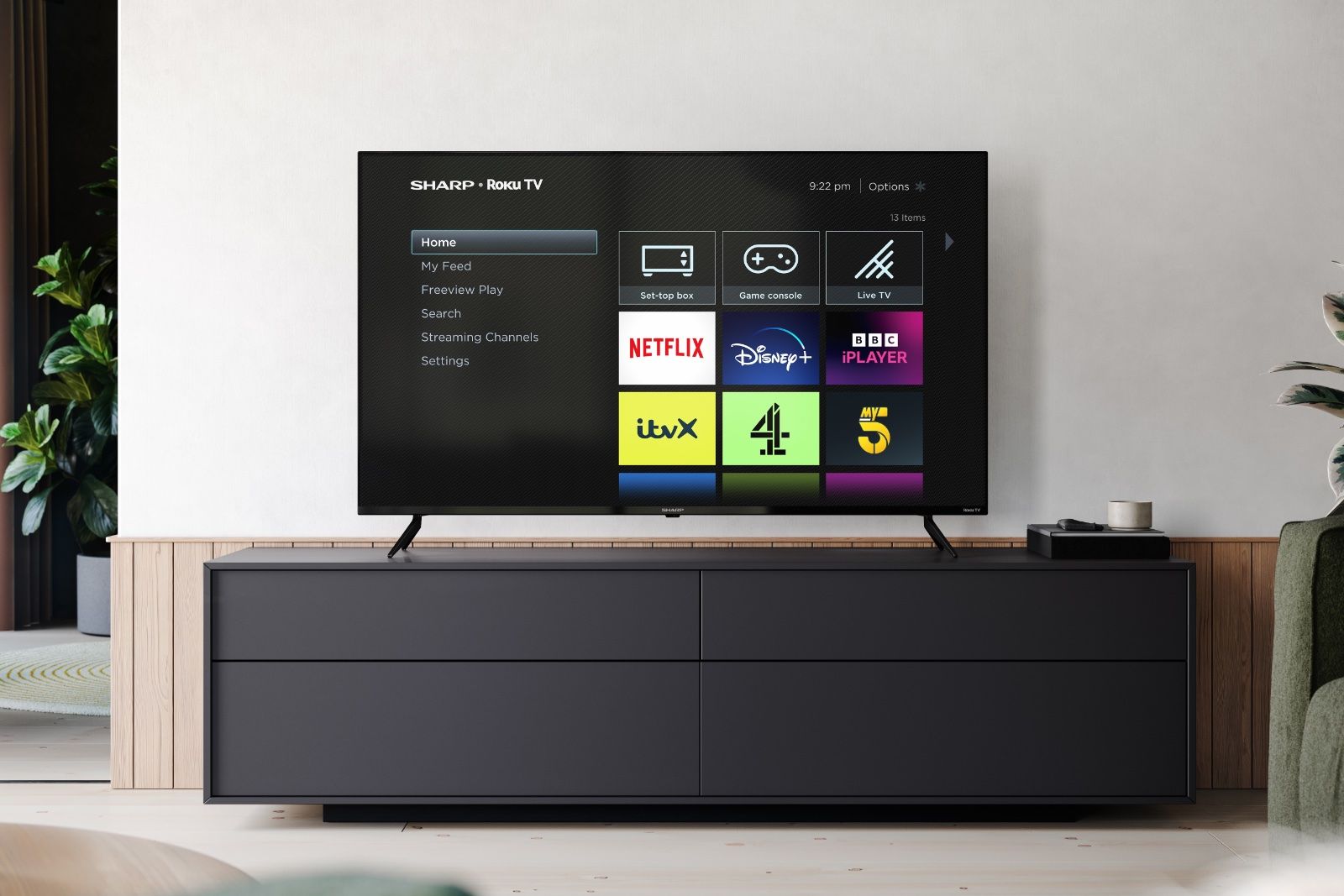
Connecting Roku to phone hotspot is the quickest way to get streaming working when you’re away from home Wi-Fi or your router goes down. You only need your Roku remote and a phone with a cellular data plan, no extra hardware, and the whole setup takes a few minutes.
Why connect your Roku to a phone hotspot?
This setup solves a real problem: you’re in a hotel, an RV, a friend’s cabin, or your home internet just failed, and you still want to watch Netflix, Hulu, or live TV. Your phone’s cellular connection becomes the internet source for your Roku, so you can stream anywhere you have a signal. While this method works great for phones, the process differs slightly when connecting Roku TV to hotspot due to the on-screen setup menus, and if your laptop needs a wired connection instead, connecting mobile hotspot to PC with USB offers a more stable, lower-latency link. It’s not a permanent replacement for broadband, but it’s a reliable fallback that keeps your entertainment going without hunting for a public Wi-Fi network.
Enable your phone's mobile hotspot
Before your Roku can see your phone, the hotspot must be turned on and broadcasting. The exact path depends on your phone model, but all of them work the same way: they create a Wi-Fi network your Roku can join.
iPhone (including newer models)
- Open Settings.
- Tap Cellular (or Personal Hotspot directly on newer iOS versions).
- Tap Personal Hotspot.
- Turn on Allow Others to Join.
If you have an iPhone 12 or newer, you may also need to tap Maximize Compatibility in the Personal Hotspot settings. This switches the hotspot from 5GHz to 2.4GHz, which is important because some Roku devices only support 2.4GHz Wi-Fi. Leave it on unless you know your Roku supports 5GHz.
Samsung Galaxy phones
- Open Settings.
- Tap Connections.
- Tap Mobile Hotspot and Tethering.
- Toggle the switch next to Mobile Hotspot to on.
Generic Android phones
- Open Settings.
- Tap Network & internet (or Connections on some models).
- Tap Hotspot & tethering.
- Toggle Wi-Fi hotspot to on.
Write down the network name (SSID) and password shown on your phone’s hotspot screen, you’ll need both in the next step.
Connect your Roku to the phone hotspot
Once your phone’s hotspot is active, grab your Roku remote and follow these steps:
- Press the Home button on your Roku remote.
- Scroll to Settings using the arrow keys.
- Select Network.
- Choose Set up connection.
- Select Wireless from the connection options.
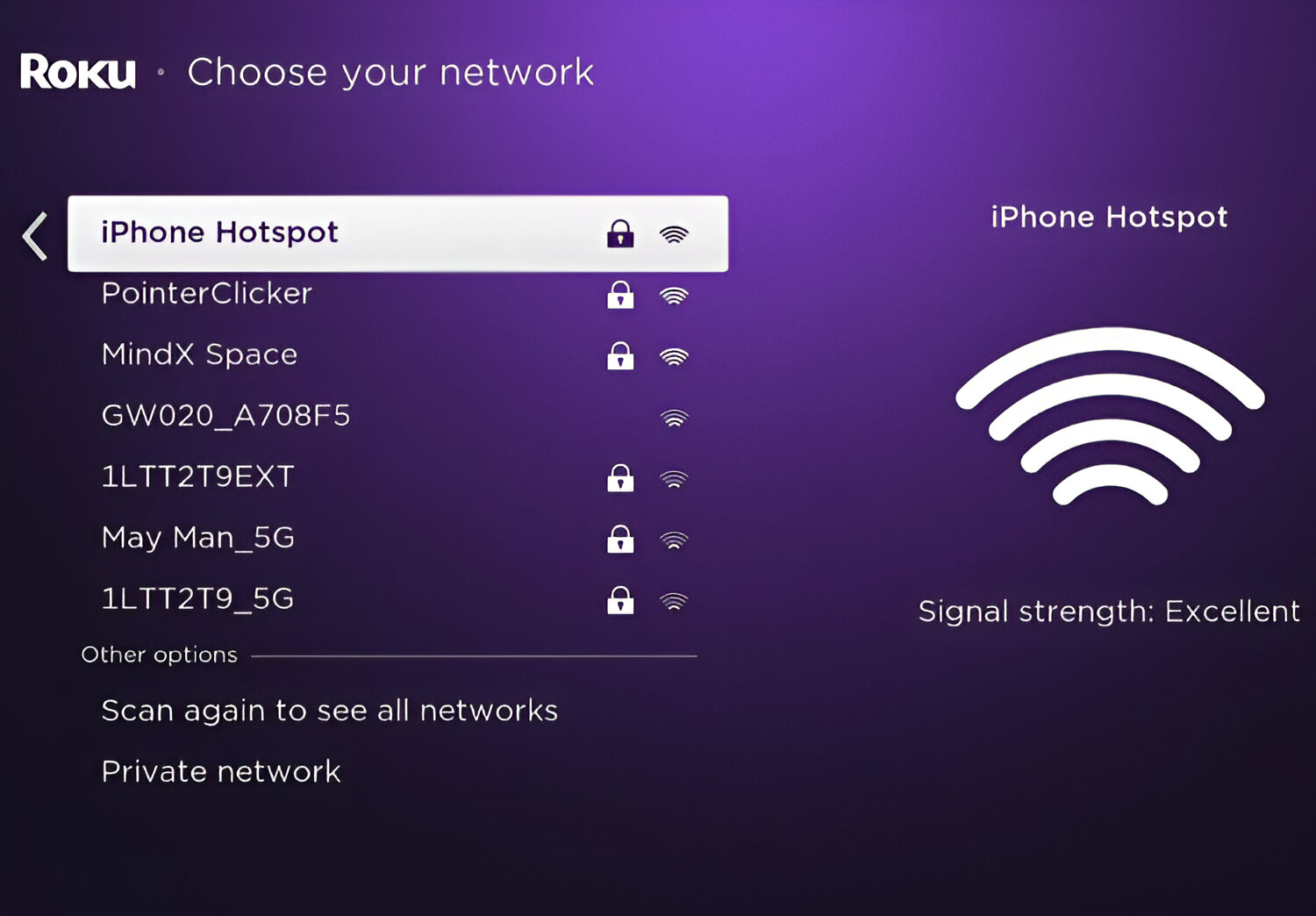
- Wait for the list of available Wi-Fi networks to appear.
- Select your phone’s hotspot name (the SSID you noted earlier).
- Enter the hotspot password using the on-screen keyboard. The password is case-sensitive, so type it exactly as shown on your phone.
- Select Connect.
Your Roku will test the connection. When it succeeds, you’ll see a confirmation message, and you can start streaming immediately.
Fix common Roku-hotspot connection problems
If your Roku doesn’t see the hotspot at all, the most likely culprit is the Wi-Fi band. Many newer Roku devices support both 2.4GHz and 5GHz, but older or entry-level models only work with 2.4GHz. 5GHz offers faster speeds and less congestion, but it has a shorter range, and your phone’s hotspot may default to 5GHz, which your Roku can’t detect.
To fix this on an iPhone, go back to Personal Hotspot settings and turn on Maximize Compatibility. This forces the hotspot to broadcast on 2.4GHz. On Android phones, look for a setting like AP Band or Wi-Fi band in the hotspot settings and switch it to 2.4GHz. If your phone lets you choose a specific channel, try 36-48 or 149-165 for 5GHz, but for Roku compatibility, 2.4GHz is the safer bet.
Another issue: your carrier might be throttling your hotspot data, especially after heavy usage. If streaming is buffering or the connection drops, check your phone’s data usage and any carrier warnings. Some plans cap hotspot speeds after a certain amount of data, which can make streaming unwatchable even though the connection shows as successful.
Manage your data while streaming on Roku
Streaming over a phone hotspot consumes cellular data, and heavy usage can quickly deplete your allowance or trigger carrier throttling. To stretch your data, adjust your Roku’s video quality settings. Go to Settings > Network > Bandwidth saver and turn it on. This automatically reduces video resolution when your connection slows, which saves data without you having to think about it.
You can also monitor your phone’s data usage in your phone’s settings. Most Android phones and iPhones show a data usage breakdown per app, and you’ll see how much the hotspot is consuming. If you’re on a limited plan, consider streaming in standard definition instead of HD, it uses significantly less data. Also, be aware that some carriers treat hotspot data separately from regular phone data, so check your plan’s specific hotspot limits before you start a long movie.
Finally, remember that your phone’s hotspot has a range limit. If you’re in a location with weak cellular reception, the streaming experience will suffer regardless of your Roku’s settings, so move closer to a window or an area with better signal strength.
For the wider topic, see using a phone hotspot.