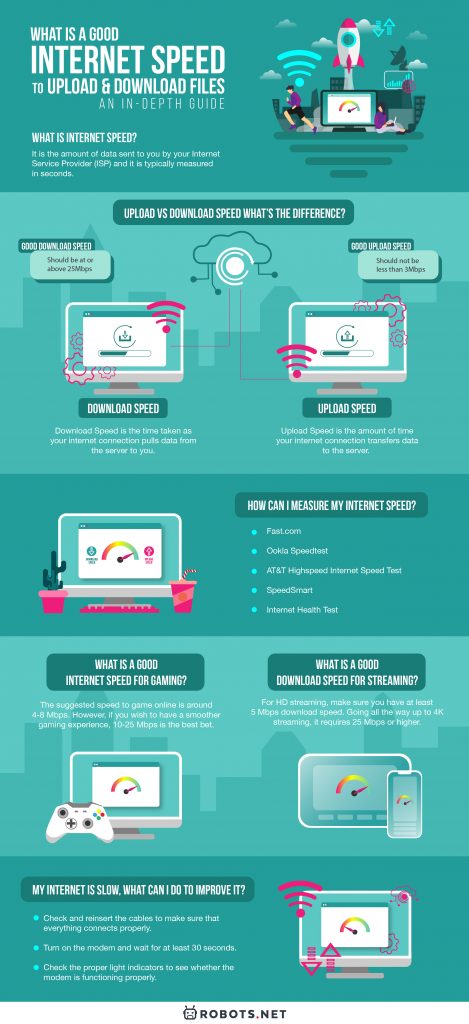
A good internet speed for your home depends on how many people use it and what they do online. For a household of 1-2 people doing basic browsing, streaming, and video calls, a plan with 25 Mbps download speed is the minimum; for 3-4 people who stream in 4K, game, or work from home, 100 Mbps is a solid baseline, while larger households (5+ devices), heavy gamers, content creators, or smart homes may require 500 Mbps to 1 Gbps or higher for optimal performance.
What is internet speed?
Internet speed is not how fast data travels, but the amount of data your connection can transfer per second, this is called bandwidth. It is measured in megabits per second (Mbps) or gigabits per second (Gbps), with 1 Gbps equaling 1,000 Mbps. A higher number means more data can flow at once, allowing multiple devices and activities to run smoothly without slowdowns. For comparison, the speed of 128 kbps on a smartphone shows how limited bandwidth feels when even basic browsing struggles.
Upload vs download speed: what's the difference?
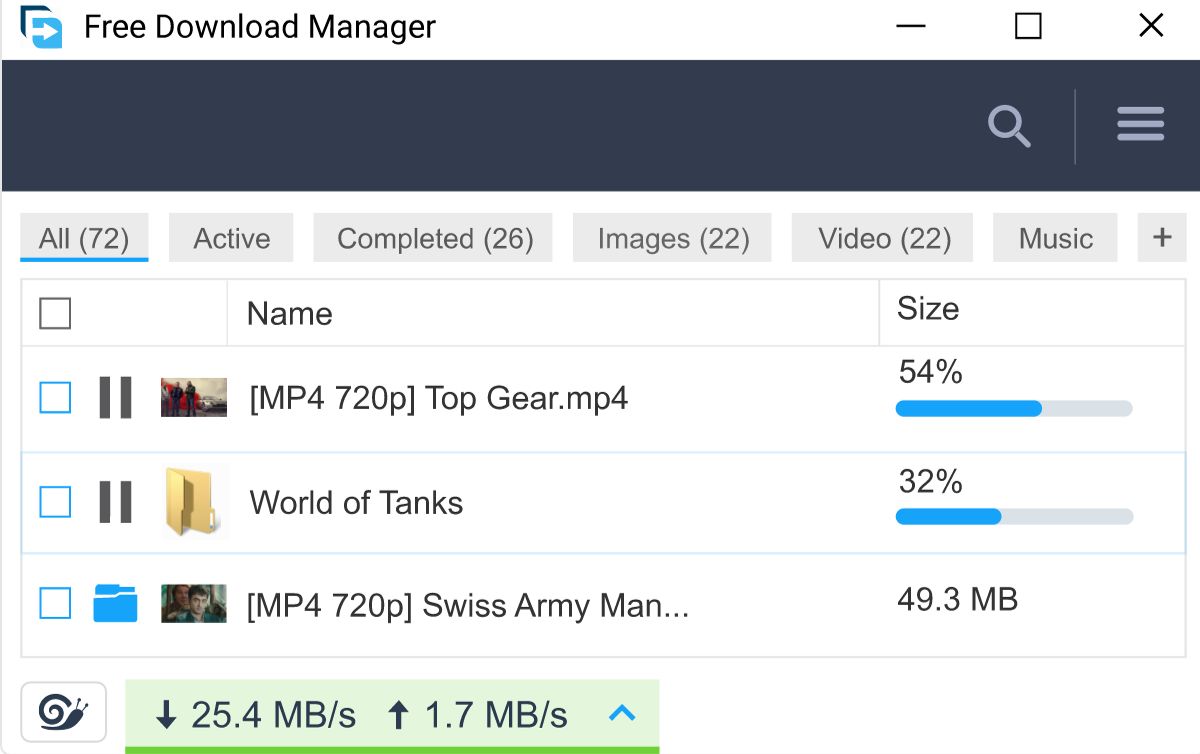
Download speed is how fast your connection pulls data from the internet to your device, used for browsing, streaming, and downloading files. Upload speed is how fast your connection sends data from your device to the internet, used for video calls, sending emails, and uploading content. In most home plans, download speed is much faster than upload speed because typical usage pulls more data than it pushes. However, fiber internet often provides symmetrical (equal) upload and download speeds, which is highly beneficial for upload-intensive activities like video conferencing, live streaming, and large file backups.
Recommended speeds for working from home
For working from home, a minimum of 25 Mbps download and 5 Mbps upload can support basic tasks like email and web browsing. For optimal performance with video conferencing and cloud applications, 100 Mbps download and 20 Mbps upload per person are recommended. For cloud storage and large file transfers, at least 5 Mbps for both uploads and downloads is suggested for smaller files, while 10-25 Mbps or ideally 50 Mbps or higher is better for larger files or multi-user scenarios. If you frequently transfer large files and need faster download speeds, upgrading your plan to a higher tier or switching to fiber can make a significant difference.
What is a good internet speed for gaming?
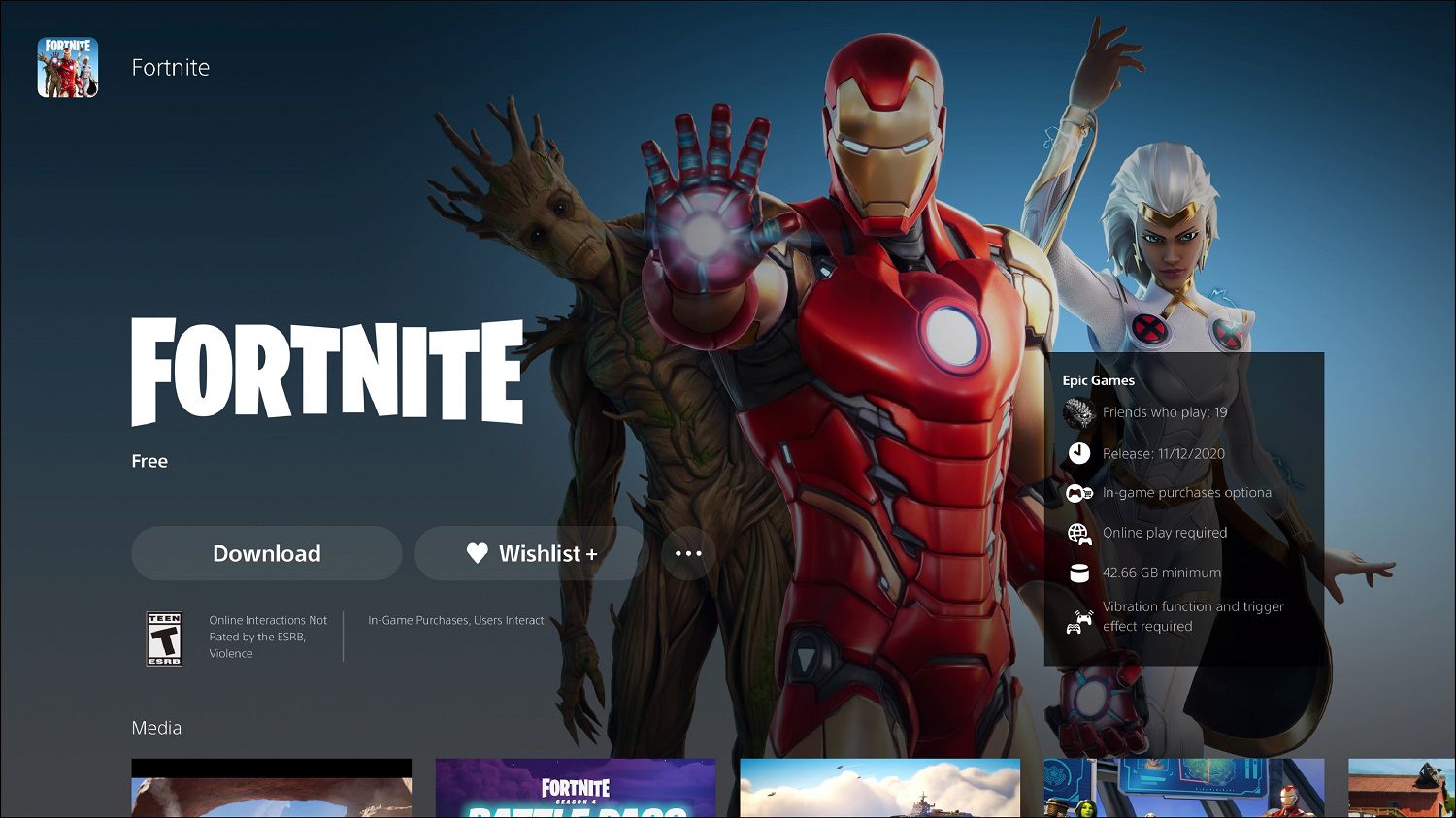
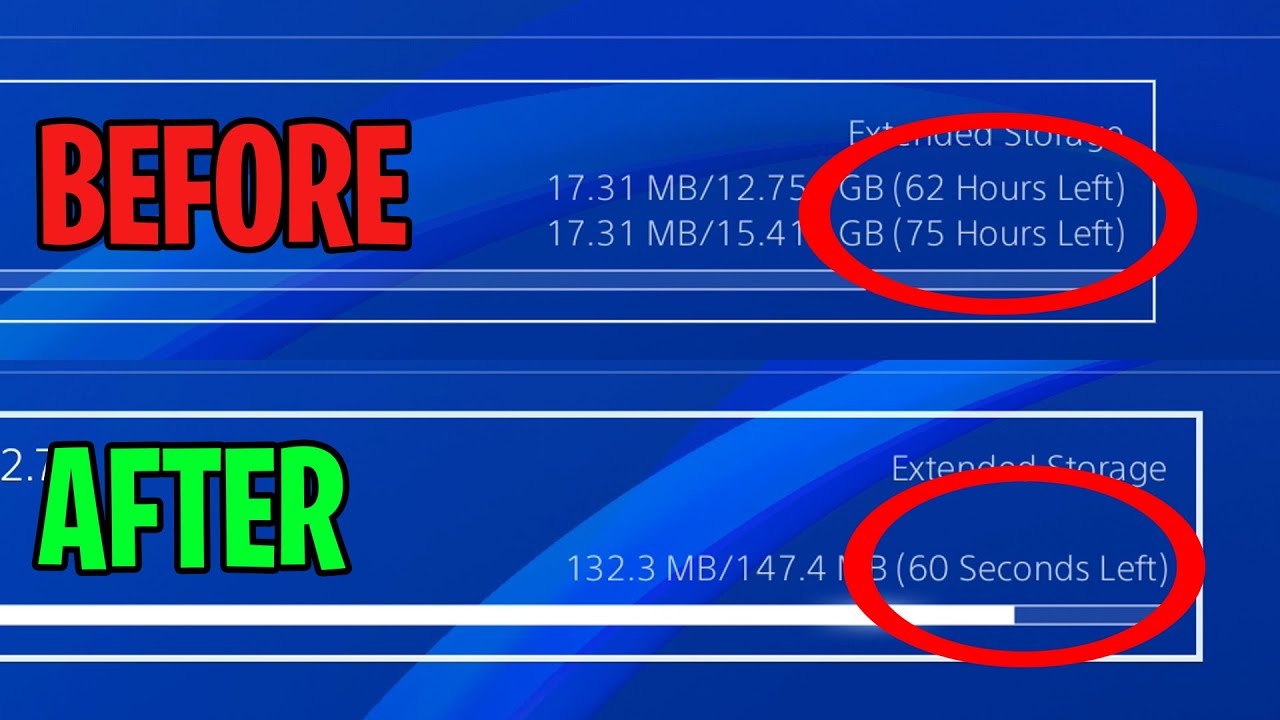
While gaming itself requires only 4-8 Mbps download speed for a smooth experience, the most critical factor is latency, also known as ping. Latency measures the delay in milliseconds between your device and the game server. For a responsive experience, aim for a ping under 50 ms, and ideally under 30 ms for competitive gaming. A high-speed plan alone won't fix lag if your ping is high. To improve your connection for gaming, you might also look into how to make PlayStation download faster by using a wired Ethernet connection, which reduces latency and provides a more stable link to your router.
What is a good download speed for streaming?
For streaming video, Netflix recommends at least 3 Mbps for standard definition, 5 Mbps for HD content, and 25 Mbps for 4K Ultra HD. If you broadcast gameplay on Twitch, you'll want a minimum of 3-4 Mbps upload for 720p at 30 frames per second, and 4.5-6 Mbps for 1080p at 60 fps. Keep in mind that streaming on multiple devices simultaneously requires more bandwidth, so a 100 Mbps or higher plan is wise for households that stream heavily.
How can I measure my internet speed?
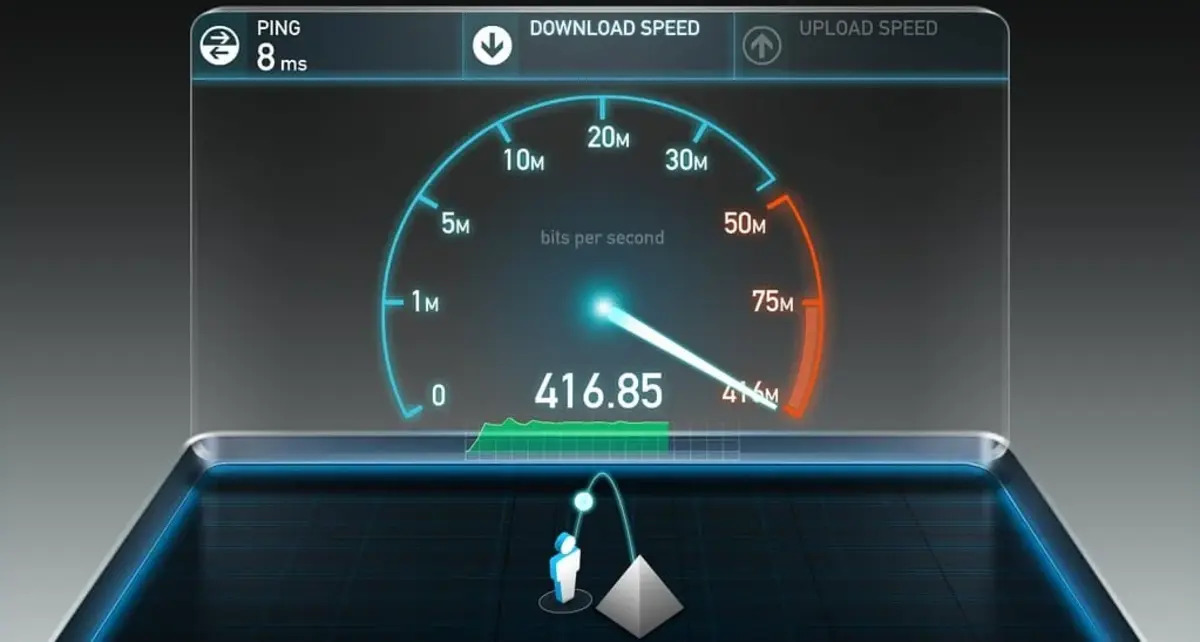
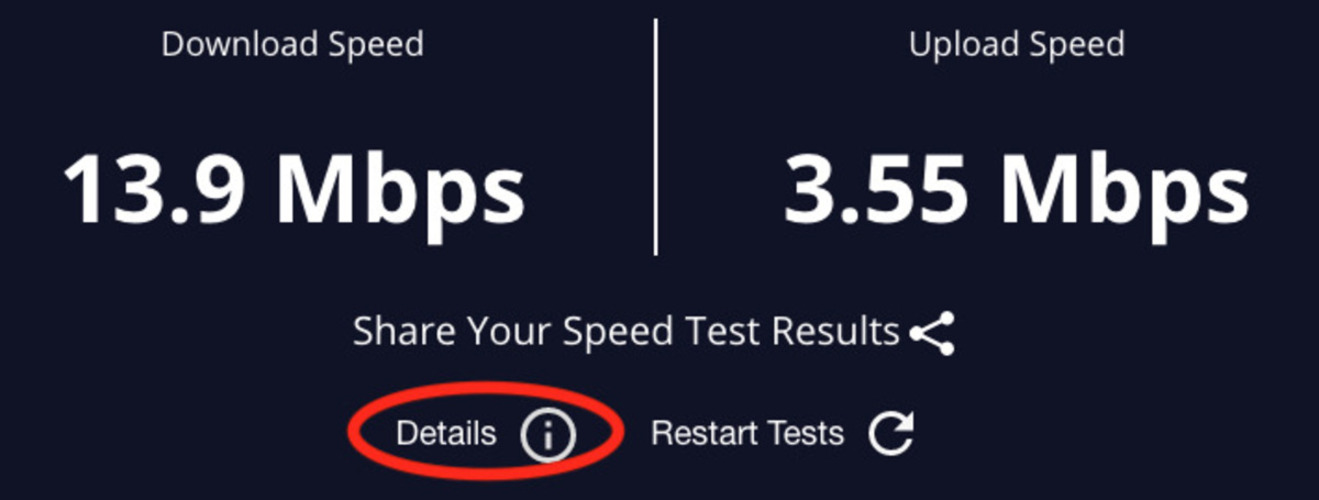
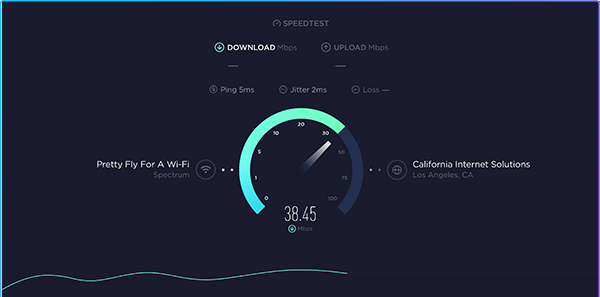
To measure your current internet speed, use an online speed test tool like Ookla Speedtest or Fast.com. For the most accurate result, connect your computer directly to the modem with an Ethernet cable before running the test, this eliminates Wi-Fi interference and gives you a true reading of your connection's performance. Run the test multiple times at different hours to see if speeds fluctuate.
How to get faster upload and download speeds
If your speed test results are lower than expected, start by checking your equipment. Modern routers (e.g., Wi-Fi 6) and compatible devices are necessary to fully utilize higher internet speeds, especially gigabit plans. If you're on a gigabit plan but using an older router, upgrading to Wi-Fi 6 can unlock the full potential of your connection. If the issue persists, contact your internet service provider to check for line problems or congestion. For a full list of troubleshooting steps, refer to a detailed guide on improving home network performance.