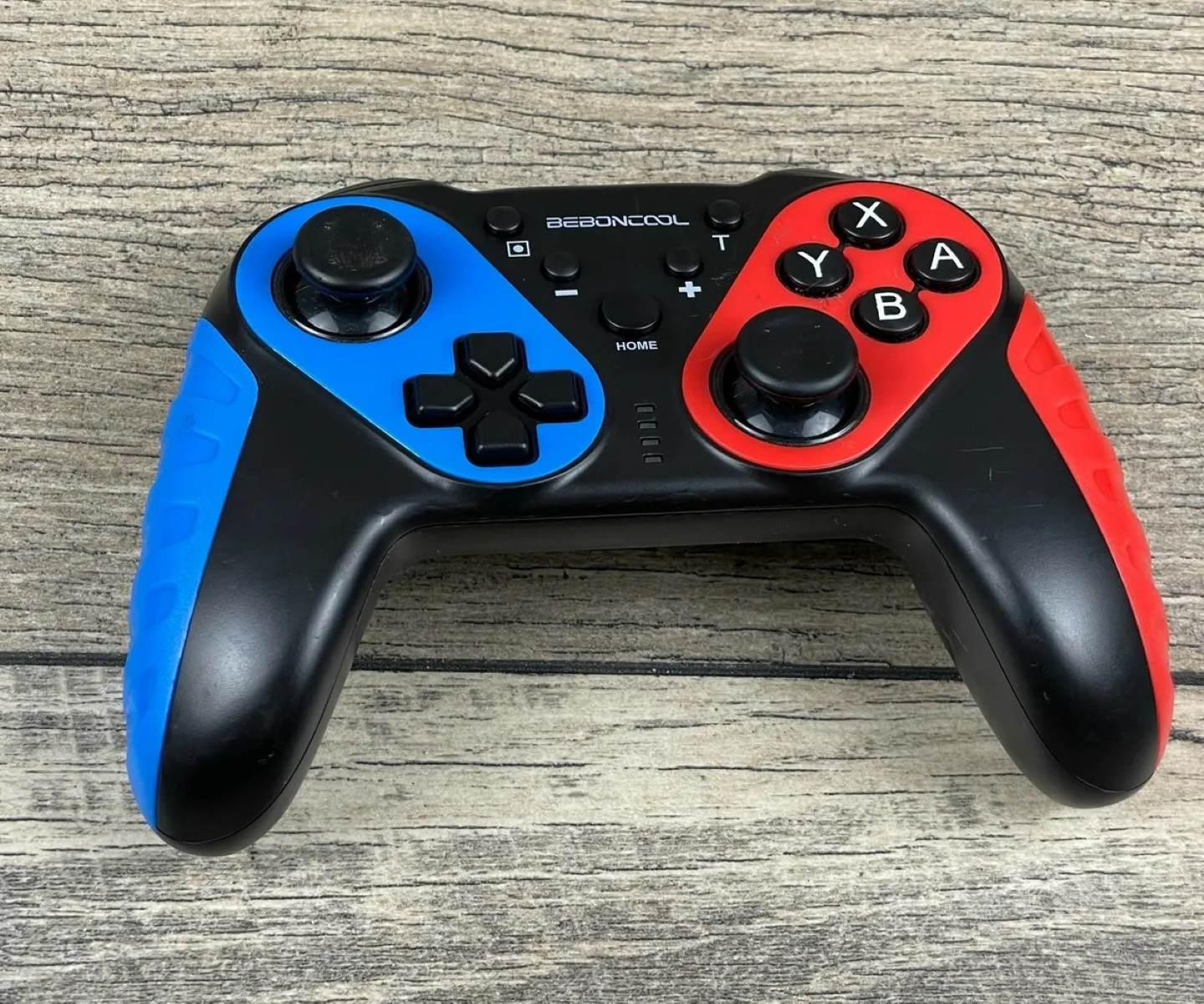
To connect a Beboncool game controller to PC games, plug it into any available USB port on your Windows PC using a standard USB charging cable, the controller will work as a gamepad without needing specialized software. The Beboncool controller supports Gamepad, Mouse, and iCade modes, which you can switch between on the fly, making it a versatile choice for PC gaming once you set up a game controller for world of tanks or other titles that benefit from custom button mapping.
How to connect a beboncool game controller to PC games
Connecting a Beboncool game controller to a Windows PC is a straightforward process that takes only a few minutes. The controller uses a USB connection, so there is no need for Bluetooth pairing or wireless adapters when you are on a desktop or laptop. Before you start, make sure your PC is running Windows and that you have a USB cable that fits the controller's charging port, the same cable used for charging will work for data transfer.
Step 1: Install the necessary drivers
When you first plug in the Beboncool controller, Windows will typically handle driver installation automatically. This is the easiest path: insert the USB cable into the controller and then into a USB port on your PC. In most cases, Windows detects the device and installs the required drivers in the background, and you will see a notification that the device is ready to use.
If Windows does not recognize the controller automatically, you can install the drivers manually through Device Manager. Right-click the Start button and select "Device Manager" from the menu. Look for any entry labeled "Unknown Device" or a device with a yellow warning icon, this indicates the controller's drivers are missing. Right-click that entry, choose "Update Driver," and then select "Search automatically for updated driver software." Windows will search online and install the correct driver for your Beboncool controller.
After installation, verify that the controller is properly recognized. Open Device Manager again and expand the "Game controllers" category. If you see the Beboncool controller listed there without any warning symbols, the drivers are installed correctly, and you can move on to the next step.
Step 2: Connect the beboncool game controller to your PC
With drivers in place, physically connect the controller to your PC. Locate an available USB port on your computer, any standard USB port will work. Insert the USB connector from the Beboncool controller into the port, making sure the connection is firm so it does not disconnect during gameplay.
Once connected, your PC should recognize the device immediately. Depending on the model, you may see a small light on the controller turn on or hear a sound confirming the connection. This indicates that the controller is successfully linked and ready for input.
Before launching a game, you need to make sure the controller is in the correct mode. The Beboncool controller has a Gamepad mode (often indicated as "G-mode") that is designed for PC gaming compatibility. If the controller is not already in this mode, switch to it using the mode button on the device. This ensures that the controller sends standard gamepad signals to your PC, which most games recognize natively.
Step 3: Switch modes and adjust input settings
The Beboncool controller lets you switch between Gamepad, Mouse, and iCade modes without disconnecting the USB cable. This is useful if you want to use the controller for different purposes, Gamepad mode for games, Mouse mode for navigating your desktop, and iCade mode for compatible emulators or mobile-style apps. To switch modes, press the dedicated mode button on the controller; the mode indicator light will change to show which mode is active.
In Gamepad mode, you also have control over how the directional input works. In G-mode, you may be able to switch between analog joystick input and D-pad input. This is helpful because some PC games expect joystick input, while others work better with a D-pad for menus or precise movement. Choose the input type that matches the game you are playing for the best response.
Step 4: Configure the controller in your game settings
Once the controller is connected and in the correct mode, the final step is to configure it inside your game. Launch the PC game you want to play and open its settings or options menu. Look for a section labeled "Input," "Controls," or "Controller Settings", this is where you can customize how the controller behaves.
In the controller settings menu, you will typically see a list of buttons and analog sticks. Follow the on-screen prompts to map each button on the Beboncool controller to the corresponding in-game action. For example, you might assign the A button to jump, the trigger to fire, and the analog sticks to movement and camera control. The process is usually interactive: the game will ask you to press a button, and you simply press the corresponding button on the controller.
After mapping all the inputs, save your configuration. Most games let you save a custom controller profile, so you do not have to repeat the setup every time you play. Once saved, the controller will work immediately in that game, and you can adjust the mapping later if you find certain buttons are not comfortable.
Troubleshooting common connection issues
If the Beboncool controller is not recognized when you plug it in, start by checking Device Manager. Look for any device listed as "Unknown Device" or with a warning icon. If you see one, right-click it and select "Update Driver" to force Windows to search for the correct driver. If that does not work, try unplugging the controller, waiting a few seconds, and plugging it back into a different USB port, some ports may not supply enough power or data throughput.
Another common issue is being in the wrong mode. If the controller is in Mouse or iCade mode, your PC games will not see it as a gamepad. Switch the controller to Gamepad mode (G-mode) using the mode button, and then check if the game recognizes it. Also, verify that the USB cable is fully inserted at both ends, a loose connection can cause intermittent recognition or no connection at all.
If the controller still does not work, try a different USB cable. Some cables are charge-only and do not carry data, which would prevent your PC from detecting the controller. Using a cable that is known to support data transfer will usually resolve this issue. Once the controller is recognized in Device Manager under "Game controllers" and is in Gamepad mode, it should work with any PC game that supports standard gamepad input.
For the wider topic, see setting up a game controller on Windows.
\nRelated reading: How To Make A Game Controller Out Of An Arduino Uno.