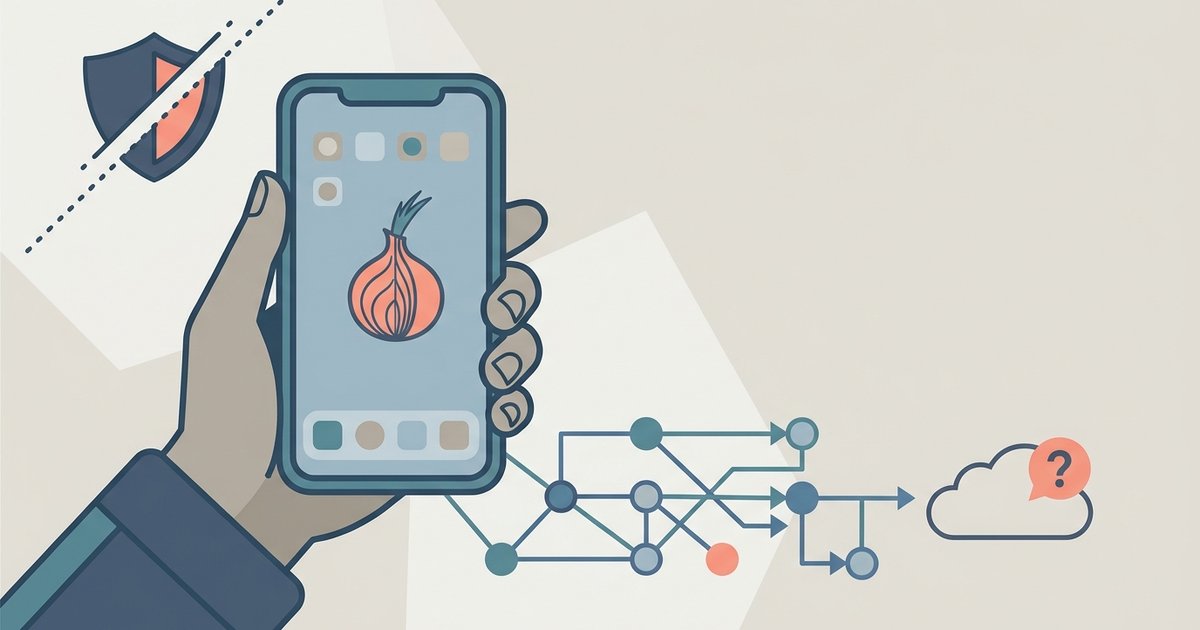
The Onion Browser is a privacy-focused web browser for iOS devices that connects to the Tor network, enabling anonymous mobile browsing by routing your traffic through multiple encrypted relays. Developed by Mike Tigas and endorsed by the Tor Project, it brings the same core anonymity technology as the desktop Tor Browser to your iPhone or iPad, hiding your IP address and location from websites and your internet service provider. If you need the official Tor Browser instead, here is how Tor Browser working on iPhone or iOS compares.
What is the Onion Browser?
The Onion Browser is a free, open-source iOS application created by privacy advocate Mike Tigas in 2012, designed specifically to provide mobile access to the Tor network. While the Tor Project develops the official Tor Browser for desktop computers (Windows, macOS, Linux), the Onion Browser serves as its mobile counterpart for iPhone and iPad users. It's important to distinguish between these two: the Onion Browser is the recommended Tor client for iOS, whereas Android users typically use the official Tor Browser for Android. The app integrates the full Tor routing protocol into a user-friendly mobile interface, making it the most reliable way to achieve anonymous browsing on Apple devices without requiring complex manual configuration.
How Onion Routing Protects Your Privacy
At the heart of the Onion Browser is the Tor network, a worldwide volunteer-run system of relays (nodes) that implements a technique called "onion routing." When you send a request through the Onion Browser, your data is encrypted in multiple layers, like the layers of an onion, and transmitted through at least three randomly selected relays: an entry node, a middle node, and an exit node. Each relay peels off one layer of encryption, revealing only the next destination in the chain. This process ensures that no single node ever knows both the origin and the final destination of your traffic. The entry node sees your IP address but not the website you're visiting; the middle node only knows it received data from the entry node; and the exit node sees the website but not your real IP address. This layered encryption effectively hides your IP address and location from websites while simultaneously preventing your ISP or local observers from tracking which sites you visit.
Key Privacy Features
The Onion Browser includes several powerful privacy controls that give you granular control over your anonymity. The most important is the adjustable Security Levels feature, which offers three tiers: Standard, Safer, and Safest. Standard mode provides full functionality with all web features enabled, Safer mode disables JavaScript on non-HTTPS sites and blocks potentially dangerous scripts, while Safest mode disables JavaScript entirely, disables certain fonts and graphics, and blocks all plugins, offering maximum security at the cost of some website functionality. Beyond these levels, the browser automatically clears your browsing data (cookies, history, and cache) every time you exit the app, ensuring no trace remains on your device. The "New Identity" feature allows you to instantly change your Tor circuit, generating a fresh set of relays for your connection, which is particularly useful if you suspect a node might be compromised or want to prevent websites from linking your sessions. Additionally, the Onion Browser integrates HTTPS Everywhere, which automatically forces websites to use encrypted HTTPS connections whenever available, protecting your data from interception during transmission. If you are ready to put these protections into practice, learn how to get on the dark web on tor browser safely.
How to Download and Install Safely
To install the Onion Browser safely, follow these steps on your iPhone or iPad:
Step 1: Access the Official App Store
Open the Apple App Store on your iOS device and search for "Onion Browser" in the search bar. Be precise with the name to avoid counterfeit apps.
Step 2: Verify the Developer
Before downloading, tap on the app and scroll down to check the developer name. You must verify that the developer is listed as "Mike Tigas", this is the official app. Any other developer name indicates a potentially malicious clone. Also check the app's ratings and review count; the genuine Onion Browser has thousands of reviews and has been available since 2012.
Step 3: Download and Install
Tap "Get" or the download icon to install the app. The Onion Browser is completely free with no in-app purchases. After installation, you can cross-reference the app's legitimacy by visiting the official Tor Project website at torproject.org, which lists the Onion Browser as the recommended Tor client for iOS. Avoid downloading from any third-party app stores or websites, as they may distribute modified versions containing malware.
Limitations and Safety Tips
While the Onion Browser provides robust privacy protection, it's essential to understand its limitations. The most noticeable drawback is slower browsing speed, because your traffic travels through multiple encrypted relays across different countries, you'll experience significantly higher latency compared to standard browsers. This is an inherent trade-off of Tor's anonymity model. Additionally, some websites actively block Tor exit nodes, meaning you may encounter "access denied" errors or CAPTCHA challenges on certain services. For maximum safety, follow these critical practices: never log into personal accounts (email, social media, banking) while using the Onion Browser, as this can expose your real identity through login metadata; avoid downloading files from untrusted sources, since malicious files could compromise your anonymity; and be aware that browser fingerprinting can still identify you if you enable JavaScript, so use the Safer or Safest security levels when visiting unfamiliar websites. The Onion Browser is a powerful tool for privacy, but it requires responsible usage to maintain true anonymity.
If you want to explore dark web sites, you can get to the dark web on DuckDuckGo.