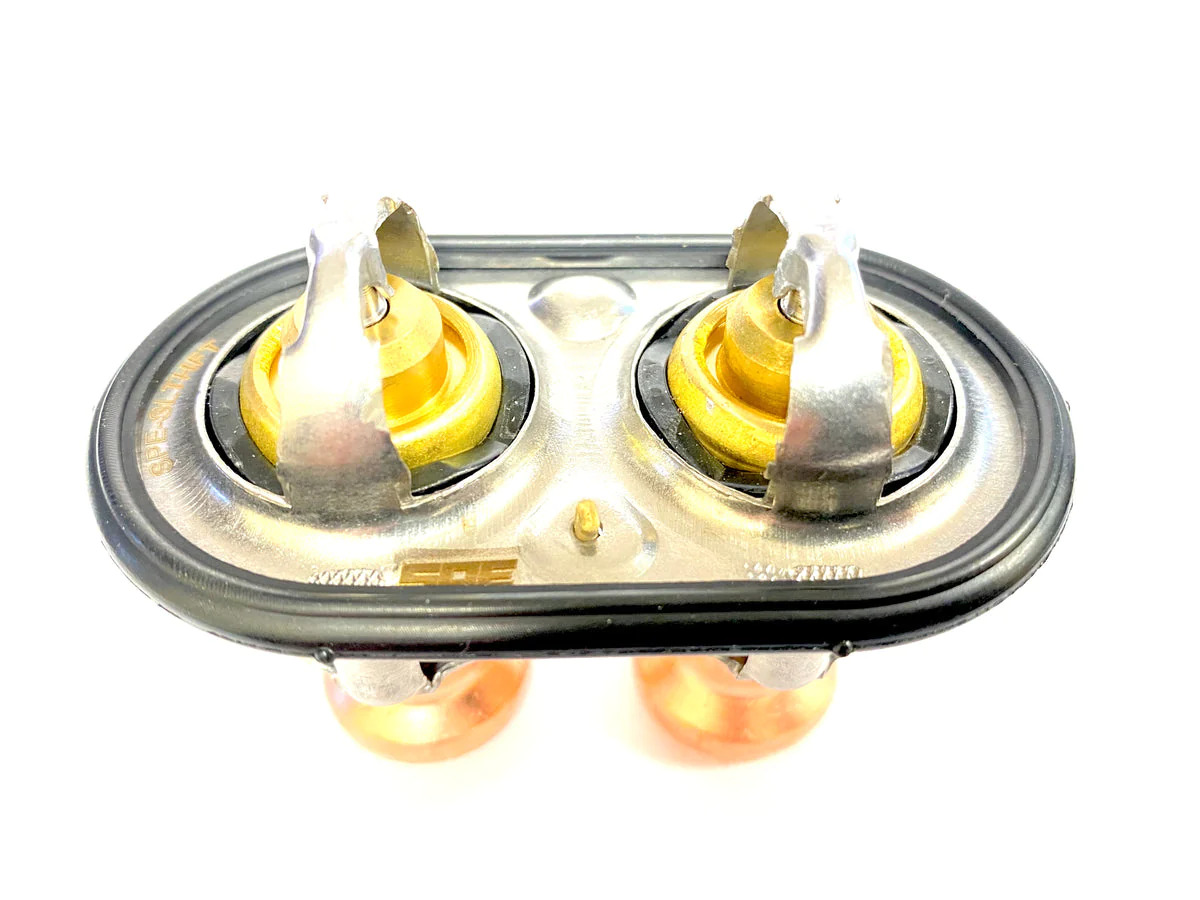
How many thermostats does a 6.7 Powerstroke have? More than one or two. The exact number of thermostats a 6.7 Powerstroke has depends on the model year: 2011-2016 trucks use four, while 2017 and newer models use three. This variation exists because the engine relies on two separate cooling systems, each with its own thermostats, to manage the high heat load of modern diesel emissions equipment.
Why the 6.7 Powerstroke uses two separate cooling systems
Ford designed the 6.7 Powerstroke with a primary (high-temperature) and a secondary (low-temperature) cooling system to handle different thermal requirements. Each system has its own radiator, degas bottle, water pump, and thermostats. The primary system cools the engine block, cylinder heads, lube oil cooler, and turbocharger. The secondary system handles heat from the charge air cooler, fuel cooler, and EGR cooler, with the transmission oil cooler added in earlier models. This split design prevents the EGR and charge air coolers from overheating the main engine coolant while still allowing the engine to reach proper operating temperature quickly. A similar dual-circuit approach is used in the competing Ram engine, so you can compare how many thermostats does a 6.7 cummins have.
Primary cooling system: the dual thermostat assembly
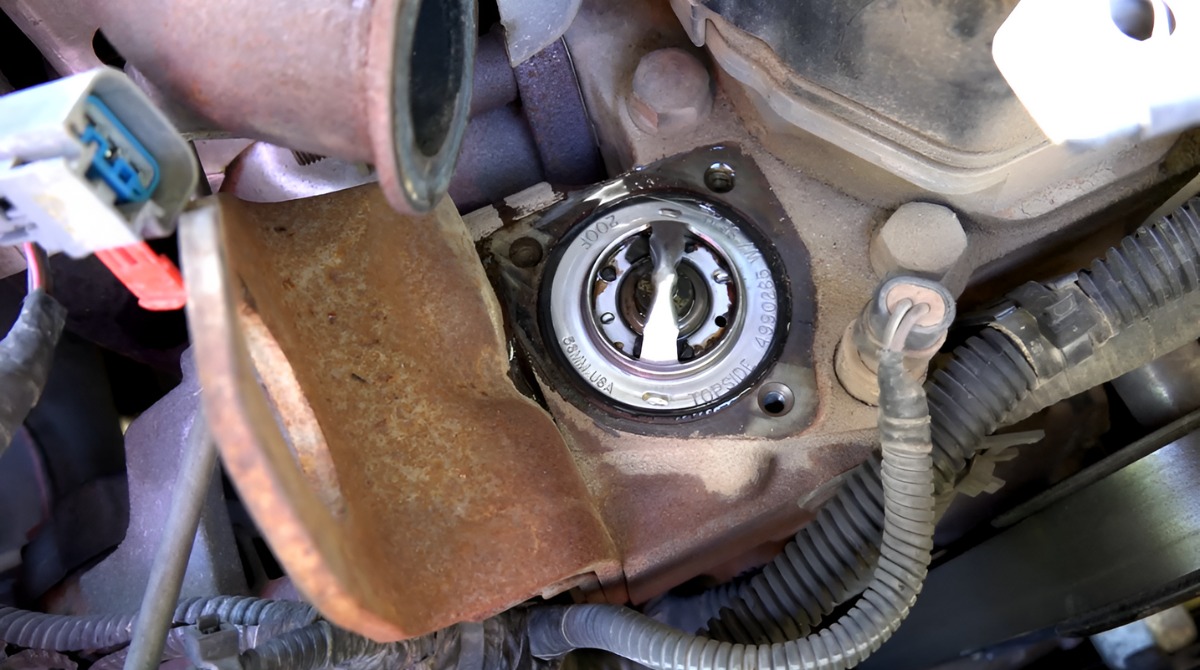
The primary cooling system uses a dual thermostat assembly located under the upper radiator hose. The housing is secured by three 8mm bolts. Inside this housing, two thermostats control the same coolant circuit, not separate circuits. One thermostat begins to open at 190°F and is fully open at 212°F, while the other begins to open at 197°F and is fully open at 217°F. This staged opening allows the engine to warm up gradually and maintain stable temperatures under varying loads. OEM thermostats for the 6.7L Powerstroke typically have an opening temperature range of 194°F to 201°F, so the two units work together to regulate flow precisely. If either thermostat fails, you must replace both as a matched set to avoid temperature imbalance.
Secondary cooling system thermostats by model year
The secondary cooling system's thermostat count changed with production updates. For 2011-2016 model years, the secondary system contained two thermostats installed into right and left side housings built into the secondary radiator. In 2011-2014 models, the secondary radiator had two outlets, each controlled by a thermostat, including a 140°F passenger-side unit. These thermostats regulated coolant flow through the transmission oil cooler, charge air cooler, fuel cooler, and EGR cooler. For 2015-2016 models, Ford moved both EGR coolant circuits to the primary cooling system and eliminated the dual thermostat radiator design in the secondary system. For 2017-2019 models, the secondary system cools the charge air cooler and fuel cooler. For 2020 and newer models, the transmission cooler moved to the primary cooling system, leaving the secondary system to cool only the air-to-water charge air cooler and the diesel fuel cooler, still with one thermostat.
Aftermarket low-temperature thermostat options
Owners who want to reduce coolant, oil, and transmission temperatures can install aftermarket low-temperature thermostats designed to open at 175°F/180°F. These are available from brands like SPE Motorsport and are direct replacements for the factory units in both the primary and secondary systems. Low-temp thermostats are popular for trucks used in heavy towing or hot climates, as they keep all fluid temperatures lower and reduce heat stress on seals and gaskets. However, be aware that running cooler than factory spec may affect fuel economy and emissions system operation, so verify your specific use case before switching.
How to replace the primary thermostats on a 6.7 Powerstroke
Replacing the primary thermostats requires basic hand tools and about an hour of work. Follow these condensed steps based on the standard procedure:
Step 1: Cool the engine and drain coolant
Ensure the engine is completely cool. Place a drain pan under the radiator, open the drain valve, or remove the lower radiator hose to drain enough coolant to drop the level below the thermostat housing.
Step 2: Access the thermostat housing
The housing sits under the upper radiator hose on the front of the engine. Remove the upper radiator hose clamp and any air intake components blocking access. You may need to disconnect the coolant temperature sensor wiring connector.
Step 3: Remove the three 8mm bolts
Using an 8mm socket, remove the three bolts securing the housing. Lift the housing straight up, the two thermostats will come out with it. Note the orientation of the vent holes before removal.
Step 4: Replace the dual assembly
Install the new thermostats into the housing with the correct vent hole orientation (usually facing up or as marked on the housing). Replace any O-rings or gaskets included with the new parts.
Step 5: Reassemble and refill
Reinstall the upper radiator hose and any removed components. Refill the cooling system with the correct Ford-specified coolant (Orange or Yellow depending on year). Run the engine with the heater on high, and top off coolant as the thermostat opens and air bleeds out.
Step 6: Verify operation
Check for leaks at the housing and hose connections. Use a scan tool to confirm the engine reaches operating temperature (190-200°F) and the thermostat opens properly. If the temperature gauge fluctuates wildly, bleed the system again.
Common thermostat problems and symptoms
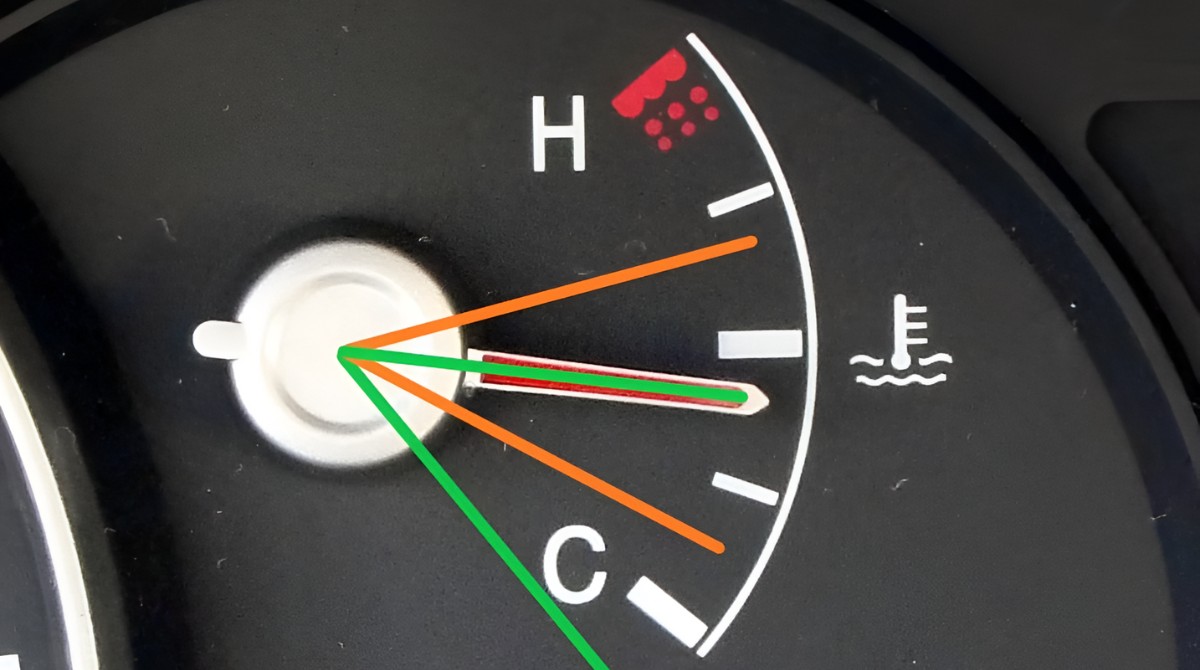
Thermostats in the 6.7 Powerstroke can fail in several ways, and knowing the symptoms helps you avoid misdiagnosis. A thermostat stuck closed in the primary system causes rapid overheating, coolant overflow from the degas bottle, and potential head gasket failure if driven. A thermostat stuck open in the primary system results in slow warmup, poor fuel economy, and the engine running cooler than normal, often accompanied by a P0128 code. In the secondary system, a stuck-closed thermostat can cause the charge air cooler or fuel cooler to overheat, leading to reduced performance or fuel system issues. A stuck-open secondary thermostat may cause the transmission to run too cool (on 2011-2016 models) or the EGR cooler to operate inefficiently. Coolant leakage from the thermostat housing is another common issue, usually caused by a degraded O-ring or over-tightened bolts. Temperature gauge fluctuations, especially rapid swings between normal and cold, often point to a thermostat that opens and closes erratically. Because the primary and secondary systems are independent, a fault in one system will not affect the other, so always verify which system is misbehaving before replacing parts. If you notice any of these symptoms, inspect the thermostats first, they are inexpensive compared to the engine damage an overheating 6.7 can cause.
\nRelated reading: Why Do Thermostats Have Batteries and Why Do I Have Two Thermostats In My House.