To download Google Slides with audio to PowerPoint, you cannot rely on the standard export alone, you must first extract the audio files separately and then re-insert them into the converted .pptx file. If you need to isolate a voiceover from a slide, you can download Google translate audio as a clean backup. This two-part process ensures your narration, music, or sound effects survive the move so your presentation plays exactly as intended in PowerPoint; if you also need a print-ready record, you can download Google slides as PDF with speaker notes.
Why your Google Slides audio disappears in PowerPoint
The core problem is that the standard File > Download > Microsoft PowerPoint (.pptx) command in Google Slides does not transfer embedded audio. When you export that way, the visual elements, slides, text, images, and most formatting, carry over cleanly, but the audio tracks are left behind. This happens because Google Slides stores audio as separate linked or embedded media files, while the .pptx export only captures the slide layout and content references, not the actual sound data. If you need to salvage individual visual assets from your presentation, you can also download images from PowerPoint after exporting. So if you simply download and open the file in PowerPoint, you’ll see your slides but hear nothing.
Export the audio files from Google Slides
Before converting the presentation, you need to get the audio out of Google Slides in a usable format. Google Slides primarily supports MP3 and WAV audio files, and these are the formats you should target for extraction.
- Open your Google Slides presentation and go to the slide that contains the audio you want to keep.
- Click on the audio icon on the slide to select it. A small menu or toolbar will appear.
- In the audio options, look for a download icon or a link to the source file. If the audio was uploaded from your computer, you can find the original file in your Google Drive by right-clicking the audio icon and selecting “Save to Drive” or by checking the “Link” field in the audio settings.
- Once the audio file is in Google Drive, right-click it, choose “Download,” and save the MP3 or WAV file to your computer. Repeat this for every slide that has audio.
If you used an audio file from a third-party source (like a YouTube link or a recording made directly in Slides), you may need to use a screen recorder or an audio capture tool to save the sound as an MP3 or WAV. The key is to end up with a standalone audio file for each slide that originally had sound.
Download the Google Slides as a PowerPoint file
Now that your audio files are safely saved on your computer, you can convert the visual part of your presentation. This step creates the .pptx shell that will hold your slides and your re-inserted audio.
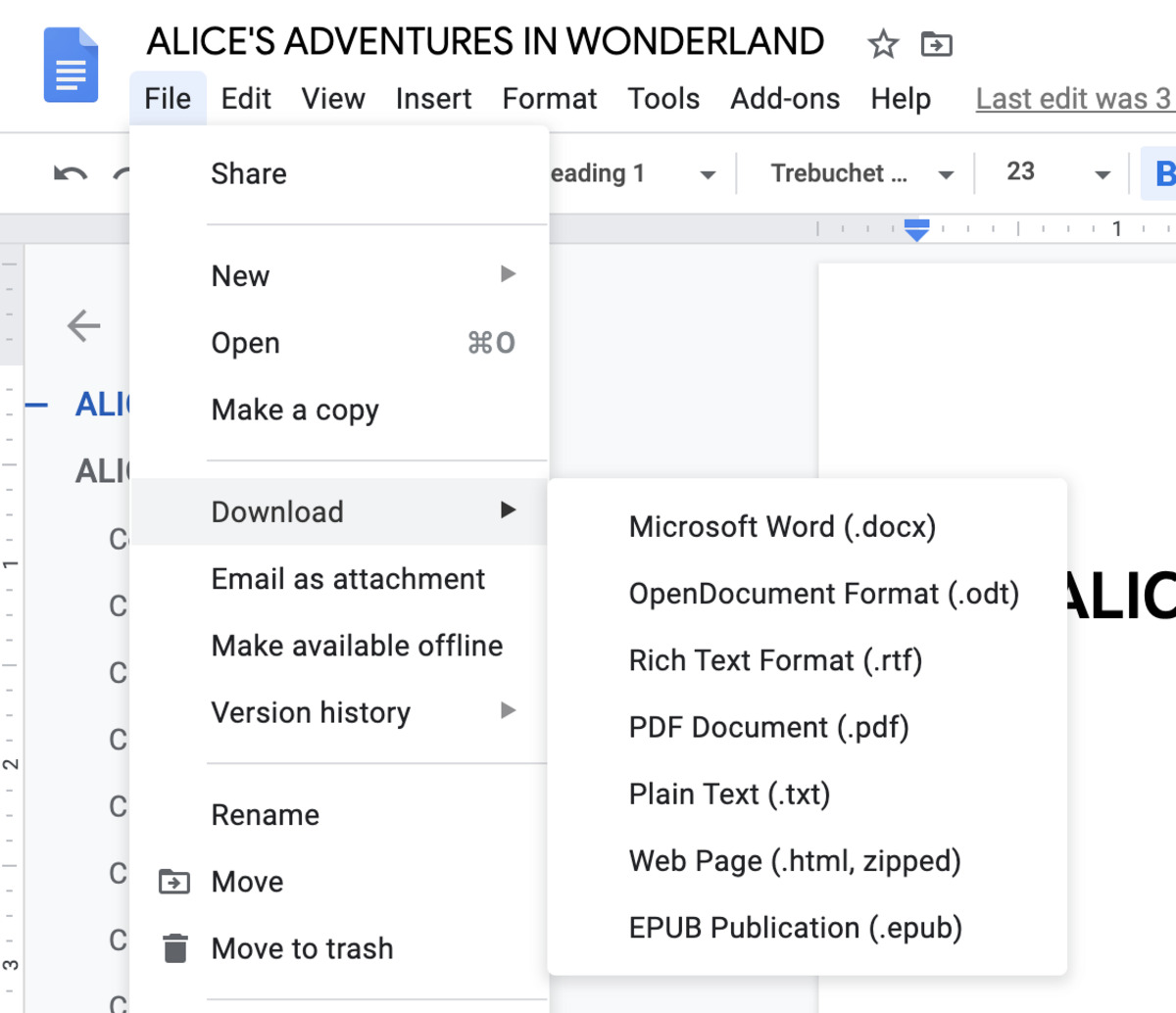
- In Google Slides, click “File” in the top menu.
- Select “Download” from the dropdown.
- Choose “Microsoft PowerPoint (.pptx)” from the format list.
- Wait for the conversion to finish, then save the downloaded file to your computer. After downloading, save the .pptx file in a location you can easily find.
This exported file will contain all your slides, text, images, and transitions, but no audio. That’s expected, you’ll add the sound back in the next step.
Insert the audio manually in PowerPoint
Open the downloaded .pptx file in Microsoft PowerPoint. You’ll now re-attach each audio file to the correct slide.
- Navigate to the slide that needs audio.
- Go to the “Insert” tab on the ribbon.
- Click “Audio” and then choose “Audio on My PC” (or “Audio from File” depending on your PowerPoint version).
- Select the MP3 or WAV file you exported earlier for that specific slide, and click “Insert.”
- Position the audio icon on the slide wherever you want it. Repeat this for every slide that had audio in the original Google Slides presentation.
After inserting, you’ll see a speaker icon on each slide. This is your visual cue that the audio is now embedded in the PowerPoint file.
Adjust audio playback and settings
Once the audio is inserted, you need to configure how it plays so it matches the behavior you had in Google Slides. This is where you control automatic playback, volume, and timing.
- Click the audio icon on a slide to select it. A new “Audio Tools” tab will appear on the ribbon, with a “Playback” section.
- In the “Playback” options, set “Start” to “Automatically” if you want the audio to play when the slide appears, or “On Click” if you want the audience to trigger it manually.
- Adjust the volume slider to match your original levels, or check “Mute” if you prefer silence until a later action.
- If you want the audio to loop, check “Loop Until Stopped.”
- Repeat these settings for every slide with audio.
These adjustments ensure that when you present, the audio plays at the right time and at the right volume, just like it did in Google Slides.
Troubleshoot audio formats and compatibility
If the audio won’t play after insertion, the most common cause is an unsupported file format. PowerPoint supports a specific set of audio formats, including WAV, WMA, MIDI, AIFF, and AU, though some of these have limited support or are deprecated in newer versions. MP3 and WAV are the safest choices because they work across all recent PowerPoint versions.
If your audio file is in a format PowerPoint doesn’t recognize, convert it to MP3 or WAV using a free converter tool. You can also try re-exporting the audio from Google Slides in a different format if the original file was unusual. After converting, delete the old audio from the slide and insert the new file using the same Insert > Audio steps. Test playback by entering Slide Show mode and advancing to the slide with audio.
If the audio plays but cuts off early or doesn’t start at the right point, double-check the trim settings in the Playback tab and make sure the “Start” option is set correctly. Also verify that the audio file itself is not corrupted by playing it outside of PowerPoint. With the right format and settings, your audio will work reliably in PowerPoint.