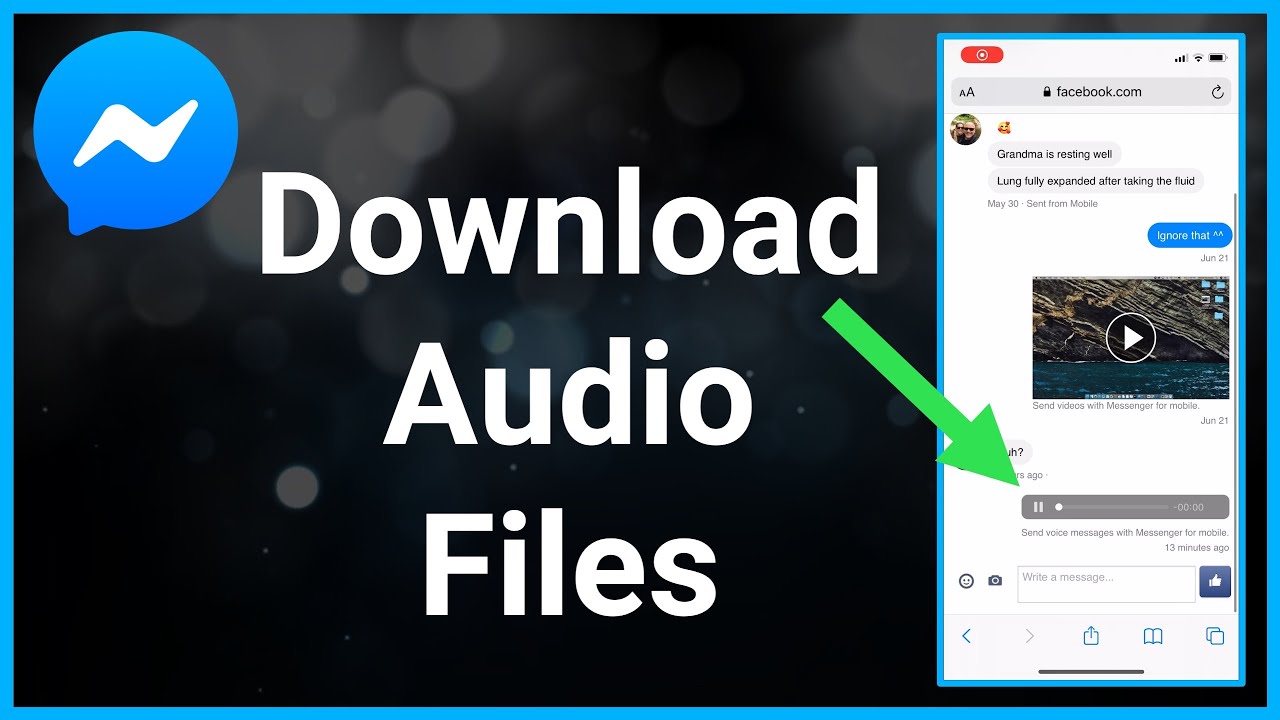
To download a Facebook voice message, you must use Facebook's official data export tool, as Messenger has no direct save button for individual audio clips. This process lets you download fb voice message files to your phone or computer by requesting a copy of your entire message history, including all voice recordings.
Why there is no direct 'download fb voice message' button
Facebook Messenger intentionally omits a per-message save feature for voice notes. Unlike photos or videos, which offer a visible download icon, voice messages exist only within the chat thread and cannot be saved individually through the app's interface. This design choice means you cannot tap, long-press, or right-click a voice message to store it locally. The only official workaround is to export your entire Facebook data, a process that packages all your messages, including every voice clip, into a downloadable file. This method works on both personal accounts and managed organizational accounts, though the exact steps differ slightly depending on your account type.
How to export your Facebook data to save voice messages
This is the central hub for managing your profile information across Meta services. From there, follow these steps:
- Click "Your information and permissions" in the left-hand menu, then select "Export your information."
- Click "Create export" and choose the profile you want to export (your personal profile or a managed account).
- Select "Export to device" as your destination.
- Choose your export preferences: a date range (from the last week to all time), a format (HTML or JSON), and media quality (high, medium, or low).
- Ensure you have sufficient storage space on your device, as the export can be large if you have extensive chat history.
- Click "Start download" to begin the process. Facebook will notify you via email when the export is ready.
For organizational accounts managed through Meta's work tools, the process is nearly identical but accessed via the work Accounts Center. Log in there, click "Your information" in the left menu, then click "Download" next to the information you want. You will still select "Messages" and choose your format, media quality, and date range before starting the download.
How to access and find your voice messages in the export file
After you initiate the export, wait for the confirmation email from Facebook. This email will contain a link to your file, but you can also access it directly in the Accounts Center. Once the email arrives, return to the "Export your information" tool and click the "Available files" tab. Your export will be listed there, and you have a limited window, typically a few days, to download it before it expires. If it expires, simply repeat the export steps to generate a fresh file.
When you click "Download" next to your file, Facebook will prompt you to re-enter your password for security. After confirming, the ZIP file will save to your device. Extract the ZIP to reveal its contents. If you chose HTML format, open the "messages" folder and look for subfolders named after each conversation. Inside each conversation folder, you will find an "audio" subfolder containing all voice messages as .m4a or .mp3 files. If you chose JSON format, the structure is similar but uses .json files for message metadata and a separate "audio" folder for the actual recordings. The voice messages are named with a timestamp and a random string of characters, so you may need to play a few to identify which is which. Open the audio folder, sort files by date modified, and listen to confirm you have the right clips.
Important security and privacy considerations
Your exported file contains far more than just voice messages, it includes your entire message history, photos, videos, friend lists, and other sensitive account data. This is a significant privacy risk if the file falls into the wrong hands. When you download the ZIP, store it in a secure, password-protected folder on your device. Avoid sending the file via unencrypted email, messaging apps, or cloud storage services that lack end-to-end encryption. If you must transfer it, use a secure file-sharing service with encryption. Never upload the export to third-party websites that promise to organize or convert your data, as these are common phishing traps. After you have extracted the voice messages you need, consider deleting the ZIP file and the extracted folder from your device entirely. If you are using a shared or public computer, be especially vigilant, log out of Facebook, clear your browser cache, and delete any downloaded files before leaving the device. Remember that your download may contain private information, so you should keep it safe and take precautions when storing, sending, or uploading it to any other services.
\nRelated reading: How To Download Audio File From Facebook Messenger, How To Download Ancestry Dna, and Download Instagram Photos: A How-To Guide.