To record webcam and gameplay separately in OBS, you need to use the Source Record plugin, which saves each source as its own independent video file on your hard drive. This gives you complete editing freedom, you can reposition, resize, or delete your facecam in post-production without affecting the gameplay footage, and you can even re-record just one element if you make a mistake. A clean split also relies on configuring your headset on OBS to keep your mic audio isolated from game sound. The core setup involves adding a Video Capture Device for your webcam and a Game Capture source for your gameplay, then installing the plugin to split the output into separate files.
Why record webcam and gameplay separately in OBS
Recording your face and game as two distinct video files is a game-changer for content creators who want professional-level flexibility. When you record them separately, you can treat your webcam feed like a movable graphic in your editor, slide it around, scale it up for reaction moments, or hide it entirely during a dramatic gameplay sequence. This separation also means you can apply different color corrections, filters, or overlays to each video independently, so your face looks perfectly lit while your game retains its original vibrancy. Crucially, if you need to cut a mistake from your commentary, you can do so without creating a jarring jump in the gameplay footage, because the two files are not locked together in a single stream.
Beyond editing flexibility, separate files give you a massive advantage when syncing audio and video. Instead of relying on OBS's scene composition, you can manually align your webcam's reaction to the exact gameplay moment in your editor, using audio waveforms or visual cues. This is especially valuable for YouTube videos where precise timing matters, or for creating highlight reels where you want to show a different camera angle than what was originally broadcast. You also reduce system strain during recording, since OBS writes two smaller files instead of one large composite, which can prevent dropped frames on lower-end PCs.
How to set up your sources for separate recording
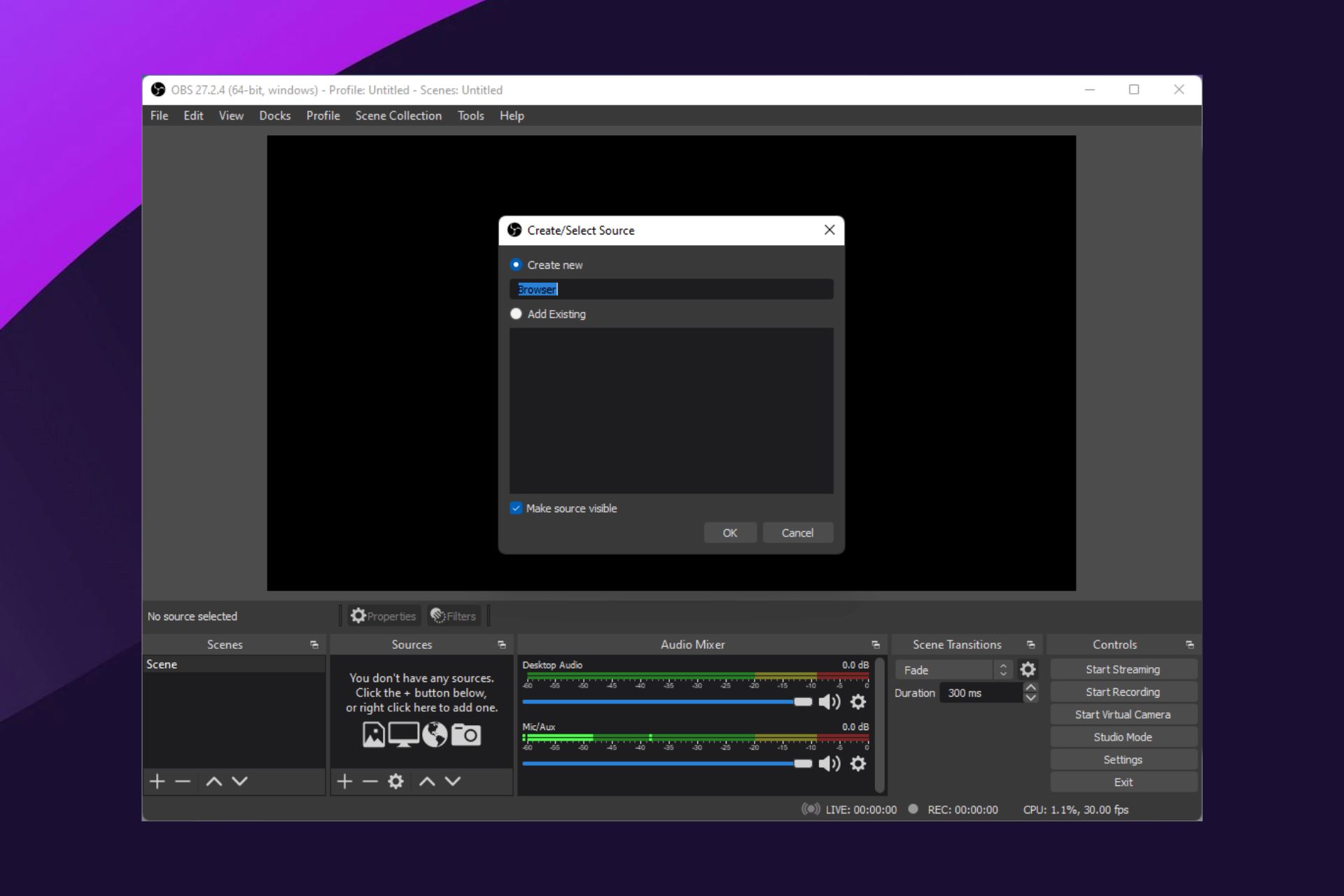
Before you can record webcam and gameplay separately in OBS, you need to properly configure your sources within a single scene. Open OBS and create a new scene by clicking the “+” icon under the Scenes panel, name it something like “Webcam + Gameplay.” Now, click the “+” icon under the Sources panel and select “Video Capture Device.” In the properties window, choose your webcam from the Device dropdown, set the resolution to your preferred size (1080p is standard), and leave the FPS at 30 or 60 depending on your camera's capability. Click OK, and your webcam feed will appear in the preview canvas.
Next, add your gameplay source. Click the “+” icon in Sources again, but this time select “Game Capture.” In the properties, choose “Capture specific window” and select your game from the Window dropdown, or use “Capture any fullscreen application” for broader compatibility. If you're capturing a game that runs in borderless windowed mode, Game Capture is the most efficient method because it hooks directly into the game's graphics pipeline, preserving performance. Once added, you'll see the game footage layered on top of or behind your webcam, depending on the source order. Drag the webcam source above the game capture in the list to ensure it renders on top, then click and drag the webcam preview to your desired corner, typically the top-right or bottom-left. Resize it by dragging the red handles while holding Shift to maintain aspect ratio.
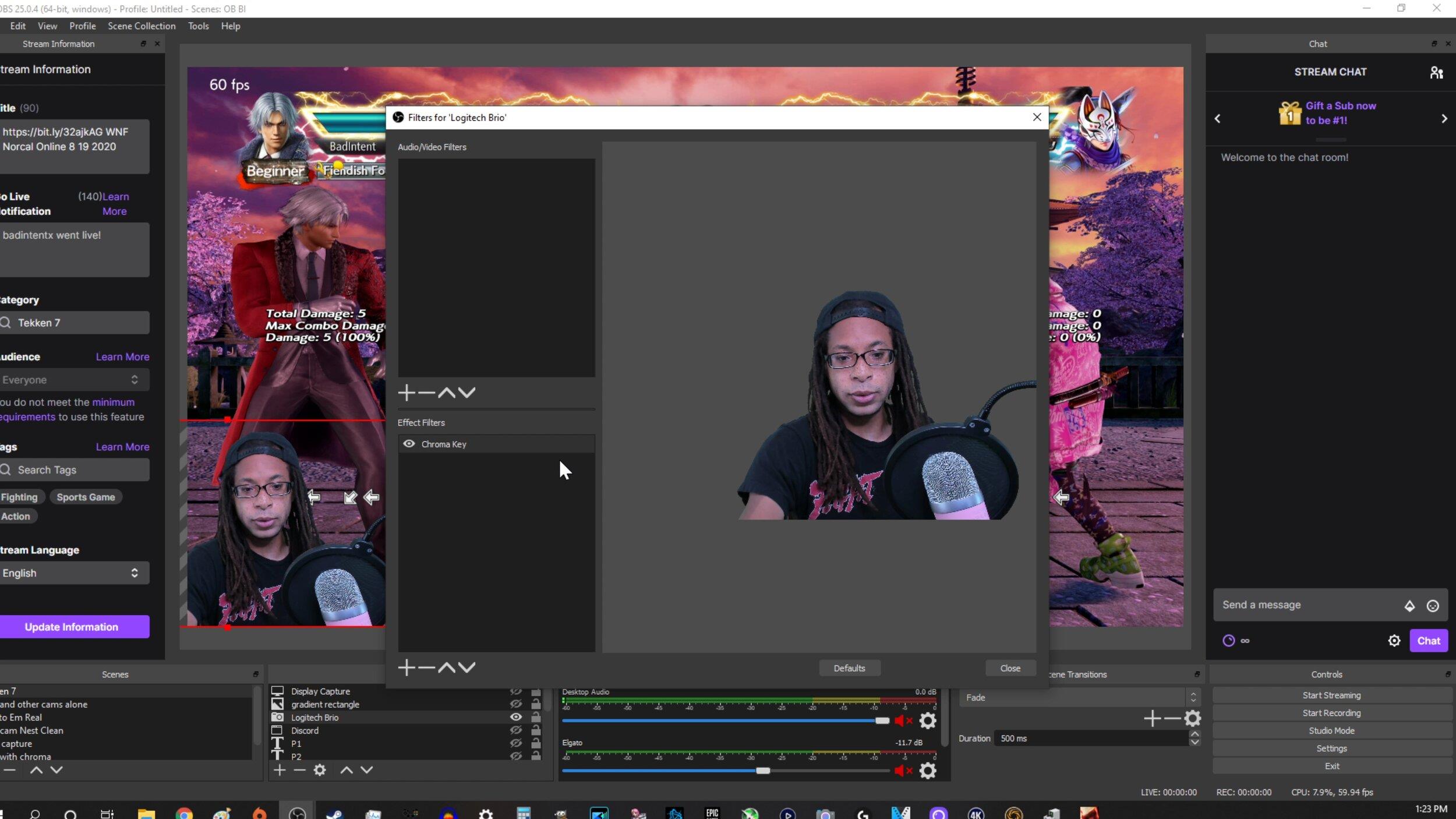
For a clean look, consider adding a small border or shadow to the webcam source by right-clicking it, selecting “Filters,” and adding a “Chroma Key” if you have a green screen, or simply a “Color Correction” filter to match lighting. You can also add a “Crop/Pad” filter to remove excess headroom. The key is to visually arrange both sources so they don't obstruct critical gameplay elements, leaving the center of the screen clear for action. If you plan to record separate files, you don't need to worry about the final composition being perfect, but a good arrangement helps you see what you're capturing in real-time.
How to record webcam and gameplay as separate video files
To actually record webcam and gameplay separately in OBS, you need the Source Record plugin, a community-built tool that saves each source as its own video file. Start by downloading the plugin from the official OBS forums or the GitHub repository (search for “Source Record OBS plugin”). Choose the version that matches your OBS installation (Windows, macOS, or Linux) and extract the files. Copy the `source-record.dll` (or `.so` for Linux) into your OBS plugins directory, typically located at `C:\Program Files\obs-studio\obs-plugins\64bit\` on Windows. Restart OBS, and you'll see a new “Source Record” dock under the Docks menu.
Now, enable the plugin for each source you want to record separately. In the Sources panel, right-click your webcam source and select “Source Record” > “Start recording.” Do the same for your Game Capture source. You can verify this by going to `Settings` > `Output` > `Recording` and checking the “Recording Path.” To stop recording, right-click each source again and select “Source Record” > “Stop recording.” The plugin also allows you to record sources in different scenes simultaneously, which is useful if you switch scenes mid-stream but still want continuous separate files.
One important note: the Source Record plugin records only the video feed from each source, not the audio. If you want separate audio for your webcam and gameplay, you'll need to use OBS's multi-track audio feature (explained in the next section). The plugin is perfect for getting clean, isolated video files that you can later sync with your audio tracks in an editor. For best results, ensure your sources are set to the same resolution and FPS to avoid sync drift.
How to record separate audio tracks for webcam and gameplay
While the Source Record plugin handles video separation, OBS's built-in multi-track audio lets you record your microphone and game audio as distinct audio streams, a feature that pairs perfectly with separate video files. To enable this, go to `Settings` > `Output` > `Recording`, and in the “Audio Track” section, check boxes for at least two tracks (e.g., Track 1 and Track 2). Then, go to `Settings` > `Audio` and set the “Audio Track” for your Microphone to Track 1 and for Desktop Audio to Track 2. This assigns your voice to one track and game sounds to another, so you can later adjust their volumes independently in editing.
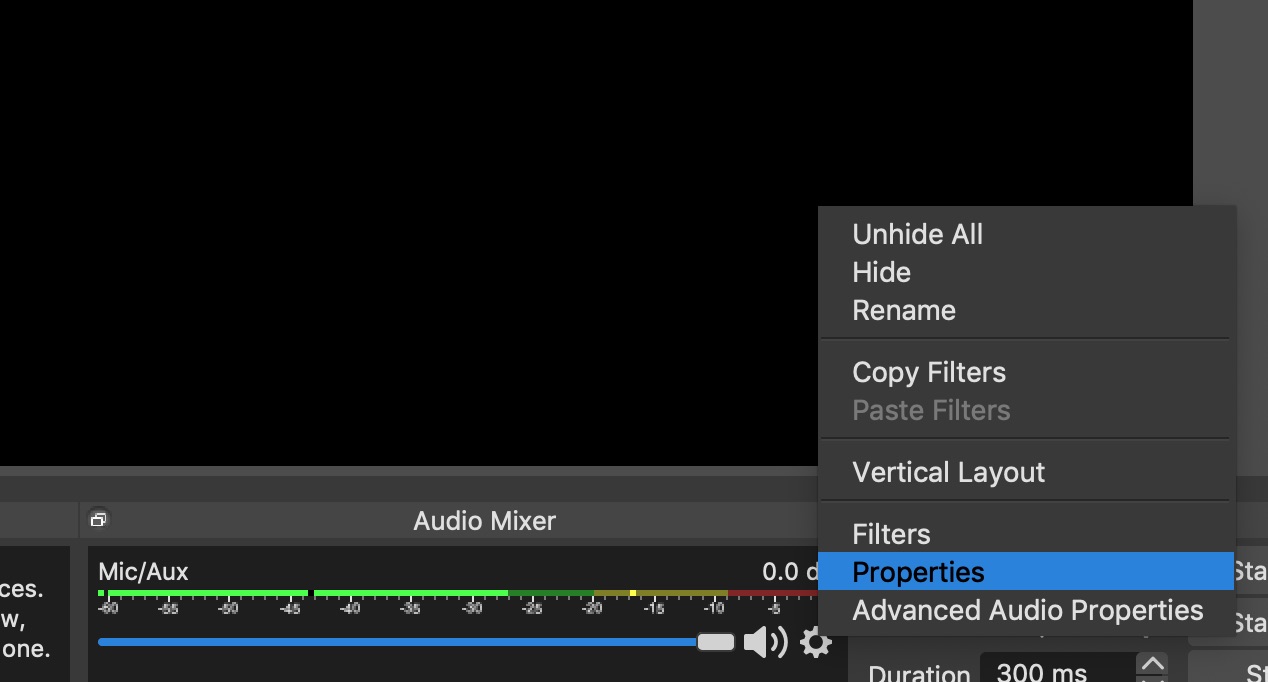
For more granular control, open the “Advanced Audio Properties” window by clicking the gear icon next to any audio source in the mixer or pressing `Ctrl+Alt+S`. Here, you'll see all your audio sources (Microphone, Desktop Audio, etc.) with checkboxes for each track. Ensure your microphone is checked only on Track 1 and Desktop Audio only on Track 2. If you have multiple audio sources like Discord or music, you can assign them to additional tracks (3, 4, 5, or 6) by checking the corresponding boxes. Remember that OBS supports up to six separate audio tracks, which is useful for post-production editing, letting you separate your voice, game sound, Discord chat, and background music into different tracks for ultimate control.
When recording with multiple audio tracks, you must use the MKV recording format (container) because MP4 does not reliably support multiple audio tracks. Go to `Settings` > `Output` > `Recording` and set the “Recording Format” to MKV. This ensures all your audio tracks are preserved without corruption, even if OBS crashes mid-recording. After you finish recording, you'll have an MKV file containing your video and all audio tracks, which you can convert to MP4 using OBS's Remux tool (see next section). Standard video players will only play back one audio track at a time, so you'll need video editing software to access and mix the separate tracks.
How to finalize your recordings for editing
To make these compatible with most editing software, you need to convert the MKV files to MP4 using OBS's built-in Remux Recordings feature. Go to `File` > `Remux Recordings`, click “Add” to select your MKV file(s), choose the output format as MP4, and click “Remux.” OBS will quickly repackage the file without re-encoding, meaning no quality loss, and the resulting MP4 will contain all your separate audio tracks intact. Do this for both your gameplay and webcam files if you recorded them through OBS's main output, or just for the gameplay file if you used the Source Record plugin for video.
After remuxing, import all your files into your video editor. For best results, create separate tracks for your webcam video, gameplay video, microphone audio, and game audio. Use the audio waveforms to sync everything, your voice should align perfectly with your webcam's lip movements, and game sounds should match the gameplay footage. In most editors, you can group the webcam video with its corresponding audio track, and the gameplay video with its audio, so they move together when you make cuts. If you notice any desync, adjust the audio track's timing by a few milliseconds until it matches. The separate files give you the freedom to delete your webcam track entirely if you want to create a no-facecam version of the video, or to blur your face for privacy without affecting the gameplay.
Tips for better webcam and gameplay recording quality
To get the most out of recording webcam and gameplay separately in OBS, focus on your lighting setup. Soft, diffused light from the front (like a ring light) eliminates harsh shadows and makes your face look professional. Avoid sitting with a bright window behind you, as it will cause your webcam to underexpose your face; instead, close blinds or move your desk so the light source is in front of you. For your background, choose a clean, uncluttered area or use a green screen to replace it with a custom image or blur effect. A tidy background reduces visual distractions and makes your webcam footage look more polished, especially if you're recording for YouTube or Twitch.
Your microphone quality matters just as much as video, use a dedicated USB condenser mic (like a Blue Yeti or Audio-Technica AT2020) instead of your webcam's built-in mic. Position the mic about 6-8 inches from your mouth and use a pop filter to reduce plosives. In OBS, add a noise suppression filter to your microphone source to remove background hum, and a compressor filter to even out volume levels. For gameplay, ensure your game capture is set to the same resolution and FPS as your OBS output (e.g., 1080p60) to avoid scaling artifacts. These small steps ensure your separate recordings are clean, professional, and ready for post-production.