Your phone's SIM card slot might be living on borrowed time. That tiny plastic tray you pop open with a paper clip has been a fixture of mobile devices for decades. A new standard is quietly replacing it, and the shift is happening faster than most people realize. If you bought a flagship smartphone in the last few years, there is a reasonable chance you already have an eSIM inside, whether you have used it or not.
What You Need to Know
- An eSIM is a programmable chip built directly into your device, replacing the physical card you slide in and out.
- Carrier switching happens entirely in your phone's settings, no new card and no store visit required.
- Removing the SIM tray improves water resistance, frees up internal space, and gives device designers more flexibility.
- Support varies across brands and models, making it worth verifying compatibility before buying.
- Apple, Samsung, and Google flagship lines already ship with eSIM support, and mid-range devices are catching up fast.
The Physical SIM Card and Its Longstanding Limitations
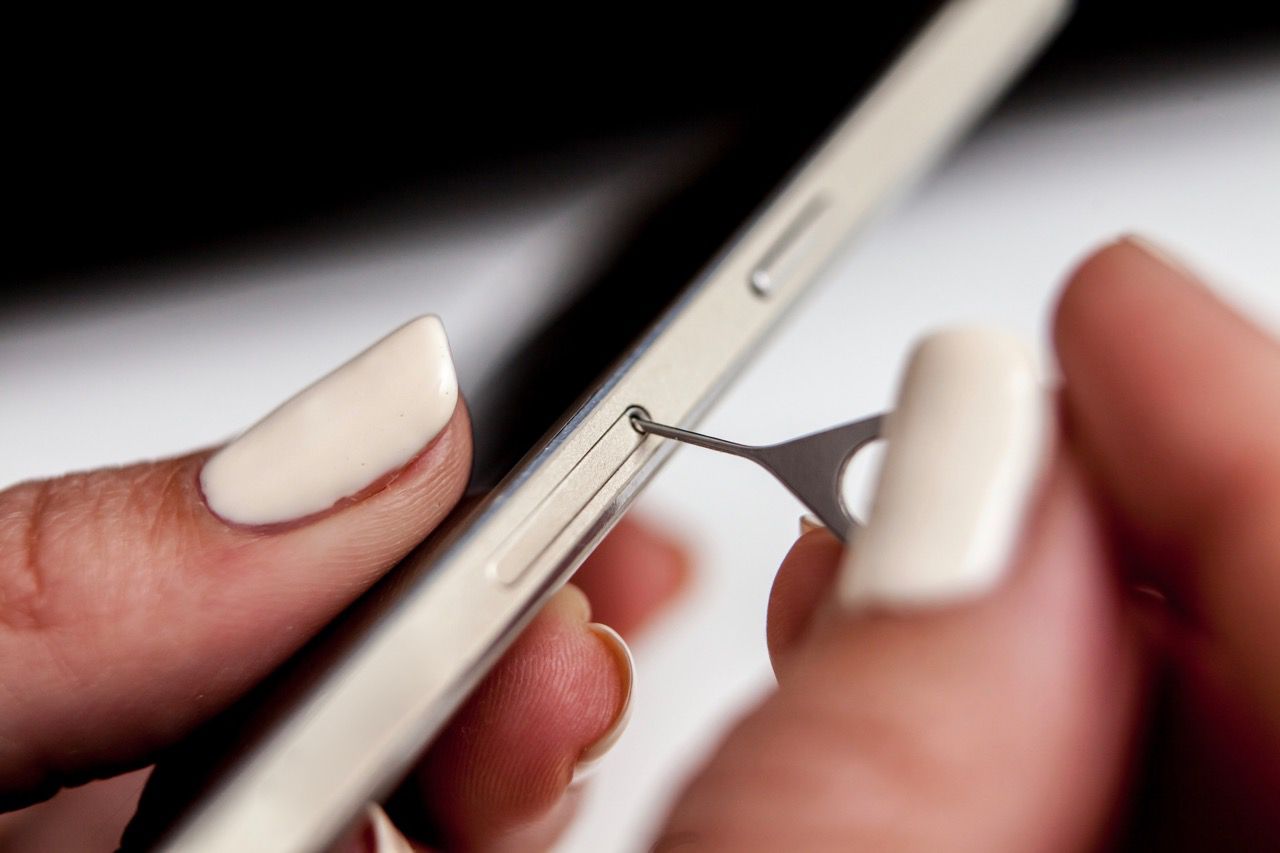
The SIM card, short for Subscriber Identity Module, has existed in some form since the early 1990s. Its job has always been straightforward. It stores your carrier account information and identifies you to the network. Over the years it shrank from a credit-card-sized chip to the nano-SIM format used in most phones today. Even at its smallest, the nano-SIM still requires a physical slot, a tray, and mechanical parts that consume space and create potential points of failure.
Switching carriers with a physical SIM means waiting for a new card in the mail or making a trip to a carrier store. Traveling abroad traditionally involves buying a local SIM at the airport, fumbling with a tiny chip, and hoping you do not misplace your original card in the process. These friction points are precisely what eSIM was designed to eliminate.
What eSIM Actually Is and How It Works Under the Hood
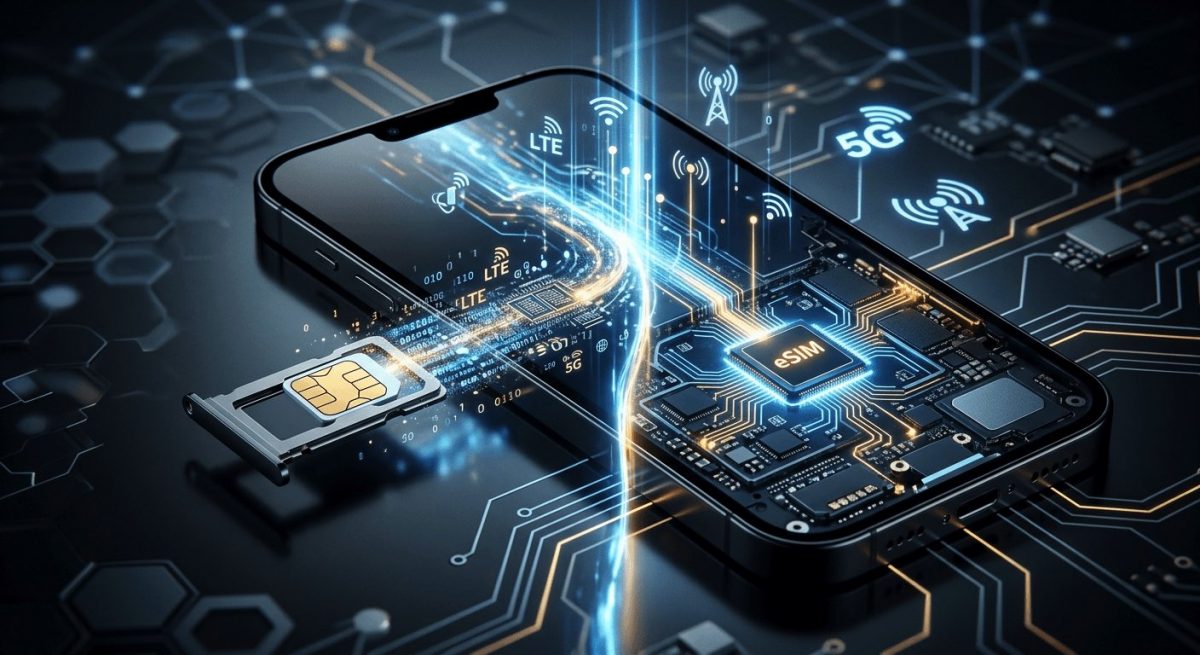
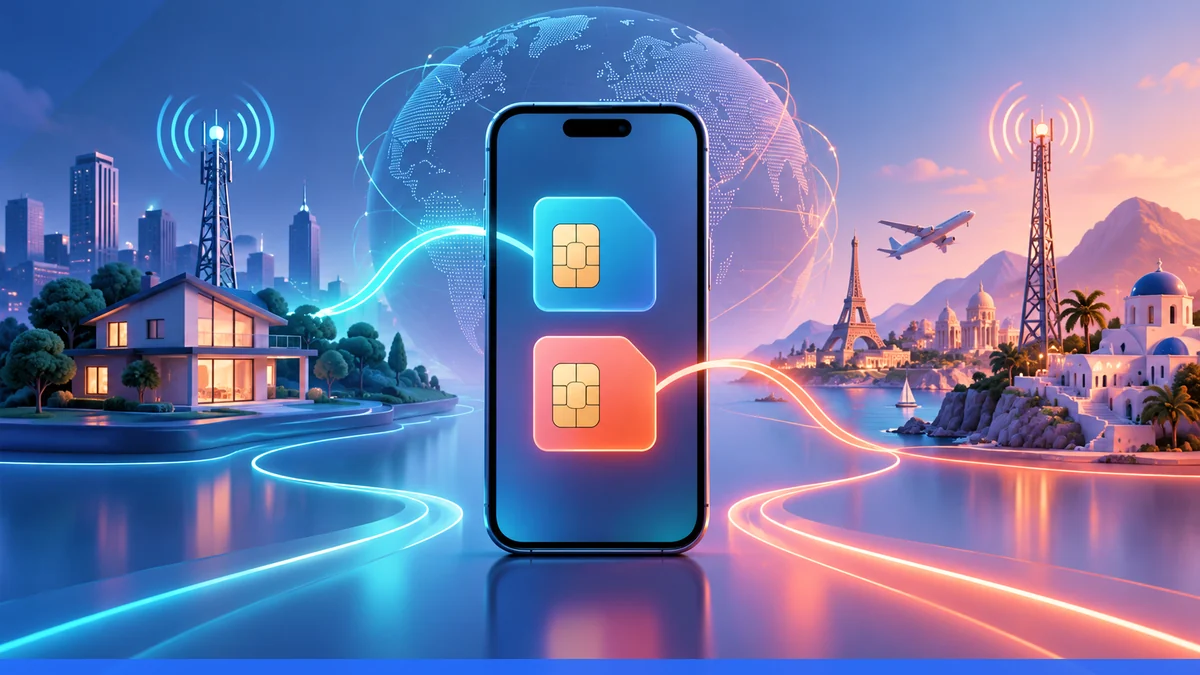
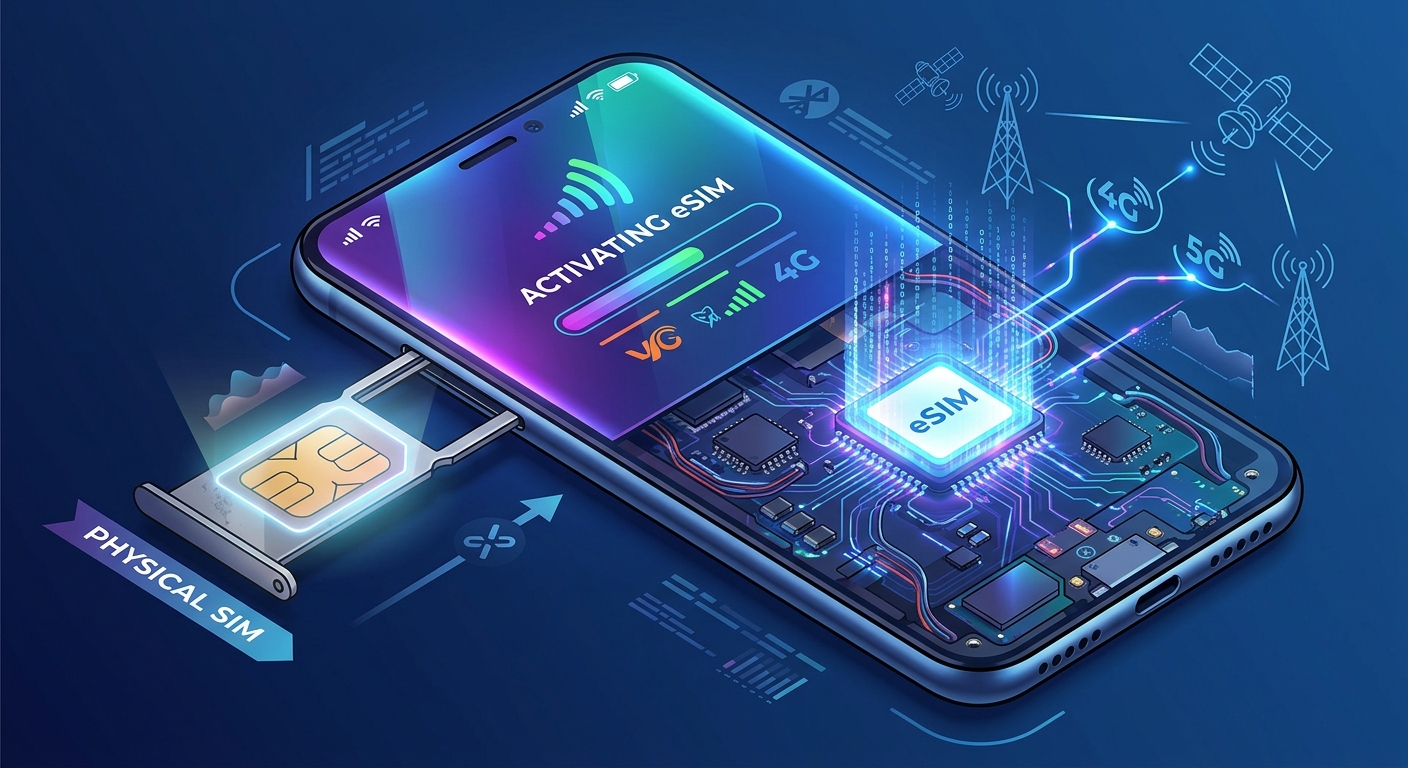
An eSIM is an embedded SIM chip soldered directly to your device's circuit board. It is not a card you insert. Instead, it stores carrier profiles digitally, and you can download, switch, or delete those profiles remotely. The "e" stands for embedded. The underlying technology follows a specification maintained by the GSMA, the international body that defines global mobile network standards. Their published eSIM technical standard covers exactly how carriers and devices exchange and store profile data.
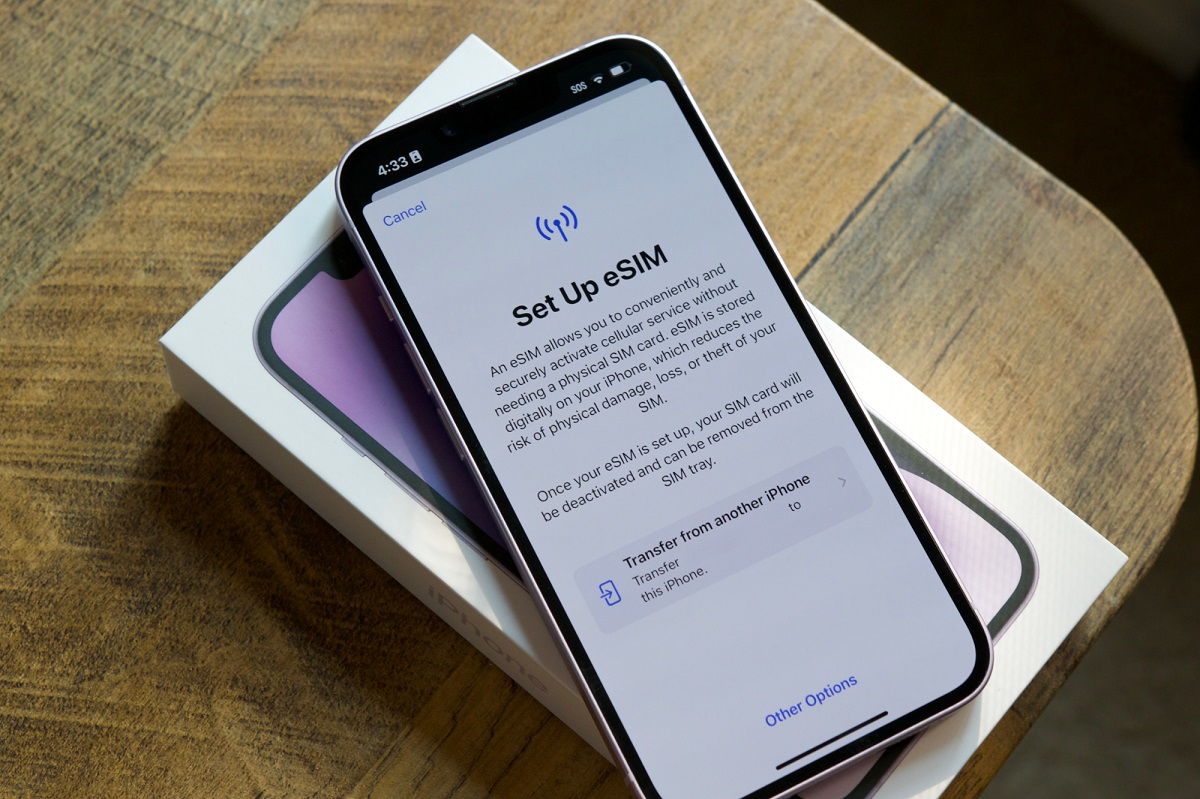
When you sign up with a carrier that supports eSIM, they send you a QR code or push the activation directly to your phone. Your device downloads the carrier profile and, within seconds, you are connected. No card. No tray. No paper clip required.
Most eSIM-capable phones can hold multiple carrier profiles at once, though typically only one or two are active simultaneously. That dual-profile capability is a genuine advantage for people who carry separate work and personal numbers, or who travel internationally with any frequency.
Why Device Makers Are Dropping the SIM Tray
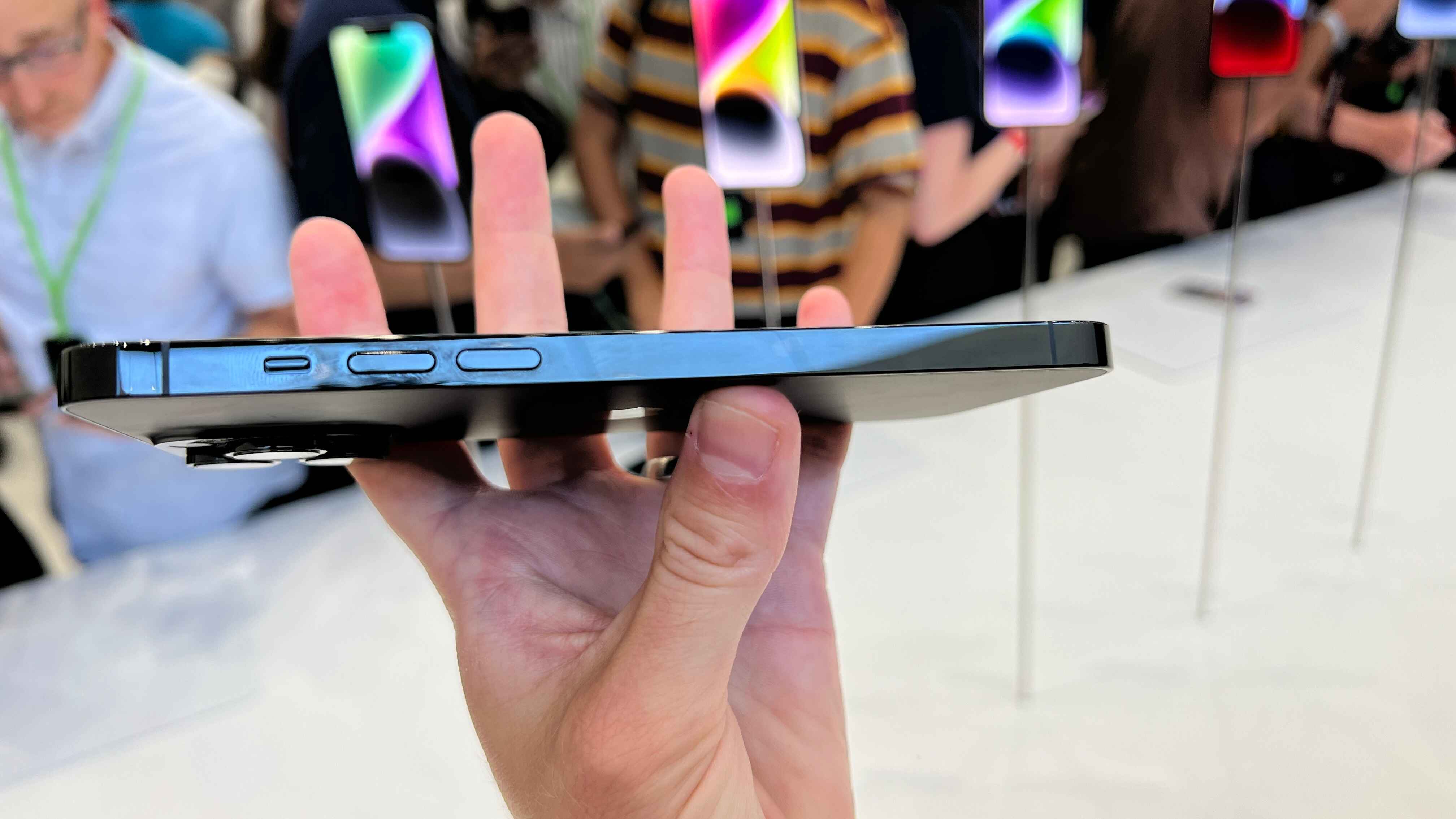
From an engineering standpoint, removing the SIM tray is a meaningful win on multiple fronts. The tray is a mechanical opening in the device's chassis, and any opening is a potential entry point for water, dust, and debris. Sealing a device without a tray is far easier and yields a more reliable water-resistance rating.
Phone internals are packed tighter every year. Every cubic millimeter of reclaimed space matters. Eliminating the tray and its surrounding components gives designers room for a slightly larger battery, an extra antenna, or simply a cleaner internal layout that reduces interference between parts.
Thinner device profiles also become more achievable. Without the need to accommodate a tray's depth at the device edge, industrial designers have more freedom. The aesthetic benefit is real, even if it is secondary to the structural and functional gains the change delivers.
Switching Carriers Has Never Been This Straightforward
One of the most practical benefits of eSIM is how dramatically it simplifies the carrier switching experience. The old process involved waiting days for a card to arrive or spending an afternoon in a store. The new process is almost entirely software-driven. Here is how it typically works on a modern eSIM-capable phone:
- Open your phone's cellular or mobile network settings.
- Select the option to add a new plan or carrier profile.
- Scan the QR code your new carrier provides, or enter an activation code manually if one was issued.
- The carrier profile downloads to your device, usually within 30 to 60 seconds.
- Choose whether the new plan is your primary line or a secondary one, then confirm the activation.
- The switch is complete. Your previous profile remains stored and can be reactivated at any time.
Carriers that have invested in eSIM provisioning infrastructure can have you up and running in under two minutes. That is a fundamentally different experience from the physical SIM era.
Physical SIM vs. eSIM: How the Two Technologies Compare
| Feature | Physical SIM | eSIM |
|---|---|---|
| Carrier switching | Requires a new physical card | Done entirely in device settings |
| Multiple numbers | Needs a second hardware SIM slot | Multiple profiles stored on one chip |
| Water resistance | Tray is a weak point for sealing | No tray means better sealing potential |
| International travel | Buy and physically swap a local SIM | Download a travel plan before you land |
| Activation time | Manual card swap, store visit possible | Under two minutes digitally |
| Risk of loss or damage | Cards can be dropped, lost, or broken | Embedded in device, nothing to lose |
International Travel Gets Considerably Less Painful
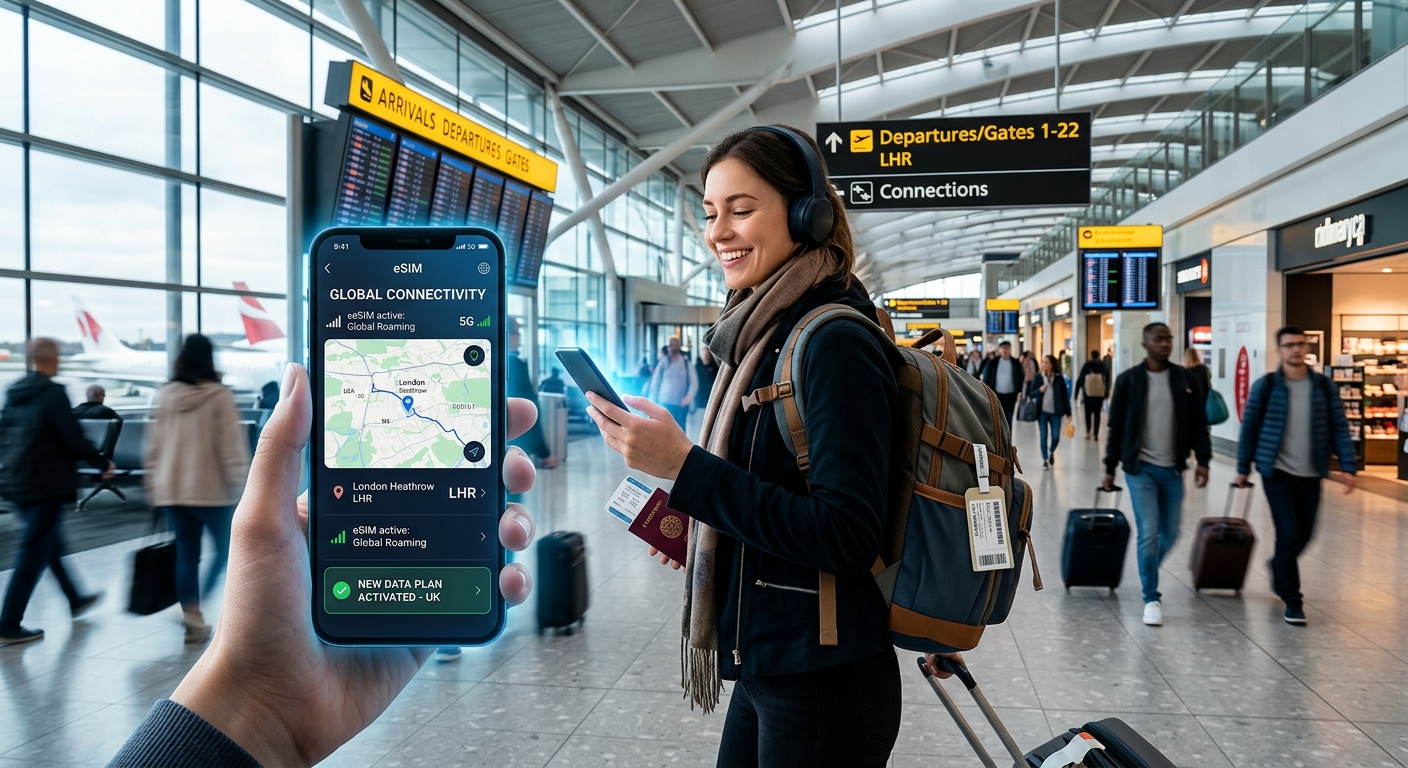
If you travel internationally with any regularity, eSIM might be the single most impactful upgrade a phone can offer you. The old routine involved landing at a foreign airport, hunting for a carrier kiosk, buying a local SIM card, and then either swapping it in (losing your home number in the process) or carrying a second device just to stay reachable on both numbers.
With eSIM, you can purchase a local data plan before your flight even takes off. A growing number of services offer regional or country-specific eSIM plans that activate the moment you land. Your home number stays active on the same device. You simply assign which profile handles data, or run both simultaneously depending on your phone's capabilities.
Coverage varies by country, and not every carrier has rolled out eSIM activation globally. Before relying on it for a trip, confirming that your specific device works with your intended carrier is worth the few minutes it takes. Checking eSIM compatible devices before committing to a purchase or a travel plan can save you real frustration at the airport.
Devices That Already Have eSIM Support Built In
eSIM is no longer confined to premium flagship hardware. Here is a look at the device categories where you are most likely to find it today:
- Flagship smartphones: Apple iPhone XS and later, Google Pixel 3 and later, and Samsung Galaxy S20 and later all include eSIM. iPhones sold in the United States from the iPhone 14 onward dropped the physical SIM slot entirely.
- Mid-range phones: Models from Samsung's A-series, Motorola's Razr line, and select OnePlus devices now include eSIM support at more accessible price points.
- Smartwatches: Apple Watch Series 3 and later, Samsung Galaxy Watch models, and several Garmin fitness devices use eSIM to connect independently without being tethered to a phone.
- Tablets: iPad Pro, iPad Air, and iPad mini with cellular capability all use eSIM. Microsoft Surface Pro models with LTE connectivity support it as well.
- Connected laptops: A growing number of Windows laptops and Chromebooks with built-in cellular radios use eSIM for always-on connectivity without requiring a hotspot or dongle.
The Gap Between Carrier Support and Device Support
Hardware adoption has outpaced carrier infrastructure in many regions. A phone can have eSIM capability built in, but if the carrier has not built out the back-end systems to provision profiles digitally, that capability sits dormant. Major carriers across the United States, United Kingdom, Australia, and much of Western Europe now support eSIM activation. Smaller regional operators and carriers in developing markets are still completing their rollouts.
This gap is narrowing steadily. The commercial pressure from major device manufacturers, particularly Apple's decision to remove the physical SIM slot from US iPhones starting with the iPhone 14, pushed carriers to accelerate their eSIM timelines considerably. When a manufacturer with that level of market influence makes a hardware decision that removes a legacy feature entirely, the broader ecosystem tends to respond fast.
For consumers, the practical implication is simple. Verify carrier support in your specific region before assuming eSIM will work out of the box. Most major carriers have documentation on their websites listing supported devices and activation steps.
A Slot You Will Not Miss Once It Is Gone
The question of whether to actively prioritize eSIM support for your next phone, tablet, or wearable has a fairly clear answer at this stage of the technology's adoption. Buying a current-generation flagship device almost certainly means eSIM is included. At the mid-range level, the picture is patchier but improves with each new product cycle.
For people who travel internationally, eSIM has moved from convenience to near-necessity. The flexibility to manage carrier plans across borders without touching a card slot has obvious practical value. For anyone who switches carriers with any regularity, the friction reduction is immediate and noticeable from the very first switch.
For everyone else, the benefits arrive passively. A better-sealed device. One fewer mechanical component that can fail or let in moisture. A cleaner experience the first time you need to activate service after a move or a network change. None of these gains require you to actively think about eSIM. They just arrive as part of a phone that works a little more reliably than the one it replaced.
The physical SIM card served mobile users well for over thirty years. Its successor does everything the original did, faster and without requiring you to touch anything at all. Most people will not mourn the little paper-clip slot once it is gone. They will just notice that things feel slightly less fiddly, and they will move on.
More eSIM resources: Browse our eSIM guides and troubleshooting resources for compatibility, setup, travel-data and account-safety advice.
\nRelated reading: How eSIM Technology is Changing International Travel for Tech Users, Opening The SIM Card Slot: A Step-by-Step Guide, and The Complete eSIM Guide: Setup, Transfers, Security and Travel Data.