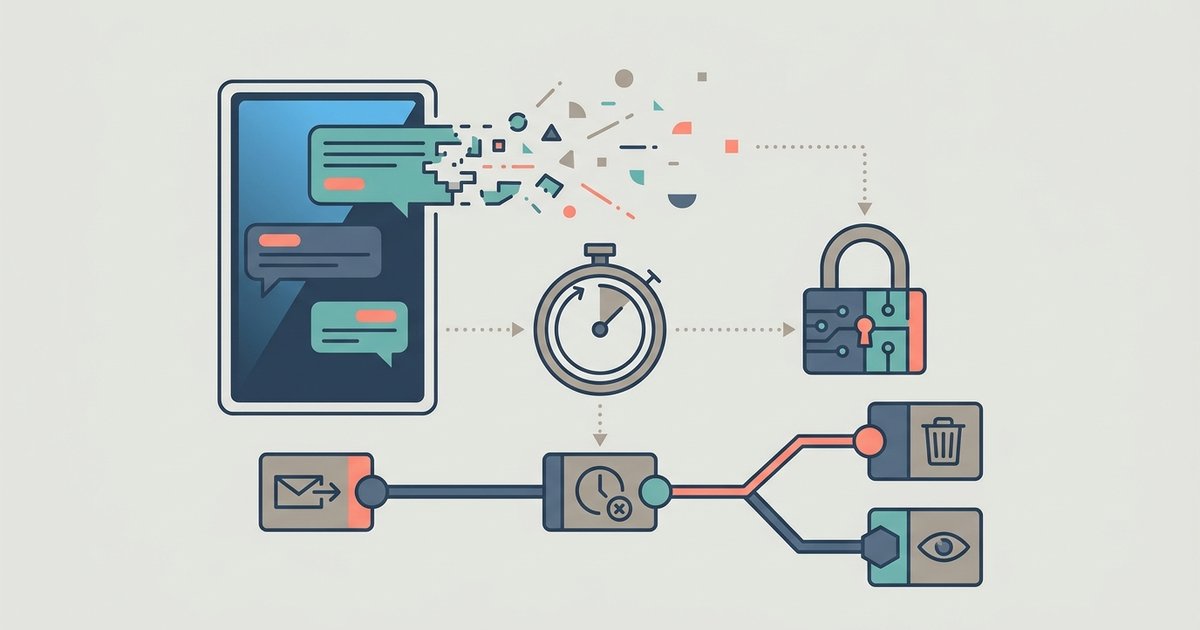
AI chatbots answer almost anything in fluent, confident prose, and that confidence is the problem. The same tone is used for a well-established fact and for a detail the model has simply made up. Before you paste an AI answer into a report, act on its advice or repeat it to someone else, it is worth a few minutes of checking. Here is a practical method that works with any chatbot.
Why chatbots get things wrong
Large language models generate text by predicting what is likely to come next, based on patterns learned from their training data. They are not looking facts up by default. That leads to a few predictable kinds of error:
- Invented details, often called hallucinations: a plausible statistic, quote, court case or book title that does not exist.
- Outdated information. A model's knowledge stops at its training cut-off, so prices, laws, software versions and "latest" anything may be stale unless the tool searches the web.
- Fake or mismatched sources. A citation can look real, and even link to a real site, while not saying what the chatbot claims.
- Answering the wrong question. Ambiguous prompts get a confident answer to whichever reading the model picked.
- Agreeing with you. Leading questions such as "Isn't it true that..." tend to get a yes.
Step 1: Decide how much checking the answer needs
Not every answer deserves the same scrutiny. Brainstorming names for a project needs none. A summary of an article you have in front of you needs a quick comparison. Anything involving health, money, law, safety or a public claim under your name needs to be verified against a primary source every time. Match the effort to the cost of being wrong.
Step 2: Break the answer into checkable claims
A long answer mixes general explanation with specific facts. Pull out the parts that could be true or false: numbers, dates, names, quotes, prices, version numbers, legal or medical statements, and any "studies show" line. These are the claims to verify. The connecting explanation usually does not need checking if the facts underneath it hold up.
Step 3: Ask for sources, then open them
Ask the chatbot where each key claim comes from. Then actually open every source it gives and confirm three things: the page exists, it is a credible publisher for that topic, and it says what the chatbot claimed. A citation you have not opened proves nothing. If the chatbot cannot give a source, or the source does not support the claim, treat that claim as unverified.
Step 4: Verify against primary sources
Go to the organisation that owns the fact rather than another article repeating it:
- Product features, prices and limits: the vendor's own documentation or pricing page.
- Laws, benefits and deadlines: the relevant government website.
- Health information: national health services, medical bodies or your doctor.
- Research findings: the original paper or its abstract, not a summary of a summary.
- Company news: the company's press release or filings.
Also check dates. A source from several years ago may have been correct then and wrong now.
Step 5: Get a second opinion from a different model
Different AI models are trained differently and make different mistakes. If two independent models give the same specific answer, that is not proof, but a disagreement is a strong signal that something needs checking. The easiest way to do this is to ask the same question in a tool that offers several models side by side. AskAI.free's AI chat with ChatGPT, Claude and Gemini puts those models, plus Perplexity and DeepSeek, in one conversation and lets you switch between them mid-chat, and you can ask your first question without creating an account.
Two tips make cross-checking more useful:
- Ask neutrally. Paste the claim and ask "Is this accurate? What would make it wrong?" rather than asking the second model to agree.
- Give it a role. Ask one model to act as a fact-checker and list every claim in the first answer that it cannot confirm. Then verify those claims yourself.
Step 6: Watch for warning signs
Some patterns should make you slow down:
- Very precise numbers with no source, such as "73.4% of users".
- Quotes attributed to named people, especially if they sound suspiciously neat.
- References to specific cases, papers or books you cannot find with a quick search.
- Answers about recent events from a tool that does not browse the web.
- Different answers when you ask the same question twice.
- An answer that changes as soon as you push back, which suggests it was never grounded.
Step 7: Ask better questions in the first place
Prompts shape accuracy. Give context, including where you are, what date it is and what you already know. Ask the model to say when it is unsure. Request that it separate established facts from estimates. When you have the source document, paste it in and ask the chatbot to answer only from that text. Grounding the model in material you supply is one of the most reliable ways to cut down invented details.
Quick fact-check checklist
| Check | How |
|---|---|
| Stakes | Health, money, law, safety or published claims get full verification |
| Claims | List the numbers, names, dates, quotes and prices in the answer |
| Sources | Open every citation and confirm it says what the chatbot claims |
| Primary source | Confirm with the vendor, government body, paper or official record |
| Freshness | Check the date of the source and whether things have changed |
| Second model | Ask another AI model neutrally and investigate any disagreement |
Used this way, a chatbot becomes a fast first draft and a research assistant rather than an authority. The few minutes spent checking are what let you rely on the answer with confidence.