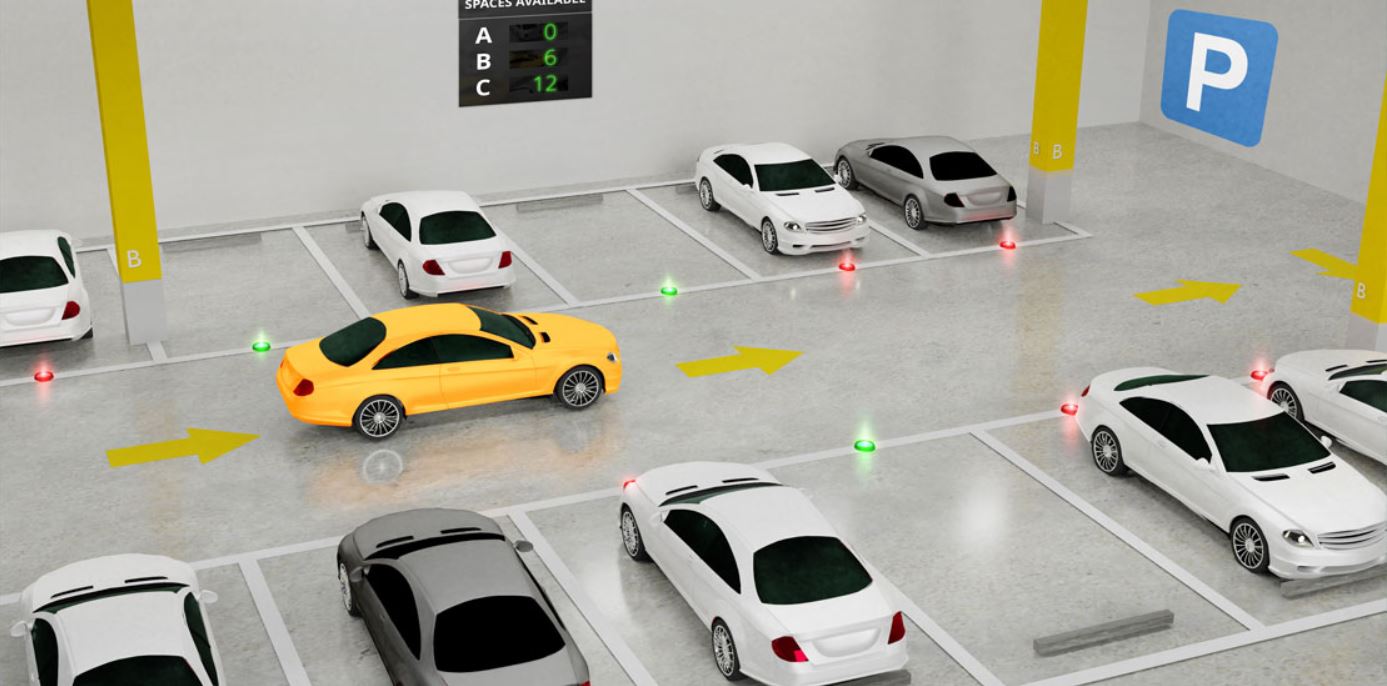
Smart parking in IoT is a system where internet-connected sensors detect the presence or absence of a vehicle in a specific parking space, and that data is transmitted wirelessly to a cloud platform for processing and delivery to drivers via apps or digital signs. It replaces the aimless hunt for a spot with real-time, data-driven guidance, directly addressing the core frustrations of urban driving.
What is smart parking in IoT?
Smart parking in IoT is the application of Internet of Things technology to manage and optimize parking spaces. At its core, it is a network of physical sensors, connectivity modules, and cloud-based software that work together to monitor the occupancy of individual parking spots in real time. Unlike traditional parking systems that rely on static signs or luck, an IoT-based smart parking system provides a live, accurate map of available spaces. This system is built on three essential components: the sensing layer (hardware that detects vehicles), the connectivity layer (wireless networks that transmit data), and the data processing layer (cloud platforms that analyze and distribute information).
How does smart parking work?
The end-to-end data flow in a smart parking system begins when a sensor embedded in the pavement or mounted on a pole detects a change in its magnetic field, indicating a vehicle has occupied the space. This event is immediately encoded into a data packet by the sensor node's microcontroller. The packet is then transmitted via a low-power wide-area network (LPWAN) or other wireless protocol to a central cloud server. Once in the cloud, the data is processed and timestamped, updating the database that tracks the status of every connected parking space. This processed information is then pushed to the user interface, typically a mobile app or electronic signage, where a driver can see which spots are free. The entire process, from physical detection to digital display, happens in seconds, allowing drivers to navigate directly to an open space without circling the block.
Inside a smart parking sensor node
A typical IoT parking sensor node is a compact, self-contained device designed for outdoor durability. The primary components are housed in a protective external enclosure that shields against weather, impact, and tampering. Inside this enclosure, the base unit contains the essential electronics: a printed circuit board (PCB) that integrates the microcontroller and radio module, a battery for power, and an antenna for wireless communication. The internal enclosure provides an additional layer of protection for the sensitive electronics, isolating them from moisture and temperature fluctuations. This rugged design allows the nodes to be embedded directly into the road surface or attached to parking infrastructure, where they must operate reliably for years without physical maintenance.
Power and remote management
One of the key engineering challenges for smart parking sensors is power autonomy, and this is solved by using built-in lithium-thionyl chloride (Li-SOCl2) batteries. These batteries are chosen for their high energy density and extremely low self-discharge rate, giving the nodes an expected operational lifetime of 4 to 10 years depending on the frequency of data transmission and configuration settings. To ensure functionality in diverse climates, the nodes are designed to operate within a wide temperature range of -20ºC to 65ºC, making them suitable for both freezing winters and hot summers. Furthermore, these devices support Over-the-Air (OTA) programming, which allows operators to remotely configure parameters such as sleep time, keep-alive intervals, and night-mode settings via a web-based "Remote Configuration Form." This eliminates the need for physical access to the sensor, significantly reducing maintenance costs and enabling dynamic adjustments to the system's behavior.
Cloud data and connectivity
For a smart parking network to function effectively, every sensor device must be registered and managed within a central system. In many professional deployments, smart parking devices are registered in the Libelium Services Cloud Manager before they leave the factory, ensuring that they are provisioned and authenticated for the network from day one. The platform is designed for interoperability, and it can send data directly to compatible cloud platforms such as Amazon Web Services (AWS) and Microsoft Azure using the Libelium Cloud Bridge. This architecture allows municipalities and parking operators to integrate parking occupancy data with their existing urban management systems, analytics tools, and mobile applications, creating a seamless flow of information from the physical parking spot to the end-user's smartphone.
Benefits of smart parking
The primary benefit of smart parking is the significant time savings for drivers, who no longer need to circle city blocks searching for a spot. This reduction in search time directly translates to less traffic congestion, as fewer vehicles are idling or moving slowly in search of parking. For parking lot owners and municipalities, the real-time data enables optimized space utilization, allowing them to understand peak demand patterns and adjust pricing or layout accordingly. A common misconception is that smart parking systems are prohibitively expensive; however, they can reduce total project costs by using 30-50% less space, requiring less excavation, concrete, and steel, and offering faster construction. This cost-effectiveness, combined with the potential for dynamic pricing and reduced enforcement overhead, makes the business case for smart parking increasingly compelling.
Challenges and real-world examples
Despite its benefits, deploying a smart parking system involves navigating several practical challenges. The initial infrastructure requirements, installing sensors, establishing reliable connectivity, and building the backend software, can be complex and require coordination across multiple city departments. Data accuracy and reliability are also critical, as a sensor that fails to detect a vehicle or reports a false vacancy can erode driver trust in the system. User adoption is another hurdle, as drivers must be educated to use the mobile apps and change their parking habits. However, real-world deployments demonstrate that these obstacles can be overcome. ParkMobile, for example, has built a widely-used app that allows users to find, reserve, and pay for parking, simplifying the user experience. SFPark in San Francisco uses a demand-based pricing model, where sensors detect occupancy and prices adjust in real-time to encourage turnover and reduce congestion, directly addressing the challenge of supply and demand. These examples show that with careful planning and a focus on user experience, smart parking systems can deliver tangible results, transforming the parking landscape in cities around the world.
\nRelated reading: 9 Best Vizio Remote Control For Smart TV, How Do Smart Glasses Work, and Edge Computing: The Future of Big Data Analytics.