If you want to switch tabs on a Mac using a trackpad, the honest answer is that no native gesture does this, the two-finger swipe you already know only moves you back and forward through your browsing history, not between open tabs. To switch tabs mac trackpad users need a third-party tool or a keyboard shortcut, and this article shows you exactly how to set that up.
The truth about switching tabs with your mac trackpad
There is no built-in macOS gesture that switches between browser tabs. Apple’s trackpad is powerful, but tab switching was never assigned a default swipe. In Safari, Chrome, and Firefox, a two-finger swipe left or right triggers the back and forward navigation buttons, it takes you to the previous page you visited, not the adjacent tab. Chrome for macOS has no native support for trackpad tab switching whatsoever, so if you’ve been swiping and seeing your page history change instead of your tabs, that’s expected behavior, not a setting you missed. The good news is that you can fix this with a free or paid utility that maps a custom gesture to the keyboard shortcuts Chrome already uses for tab switching.
What the two-finger swipe actually does in every browser
In Safari, Chrome, and Firefox, a two-finger swipe left or right navigates between pages in your browsing history. Swipe right to go back to the previous page, swipe left to go forward again. This is a page-level action, not a tab-level one. If you have three tabs open and you swipe right, you won’t move from tab 1 to tab 2, you’ll go back to the last website you visited within the current tab. This is consistent across all major Mac browsers because it’s tied to the trackpad’s scroll direction and the browser’s history stack, not to tab management. To get a gesture that actually changes tabs, you need to override this behavior or add a new one.
How to enable real tab switching in Chrome with third-party tools
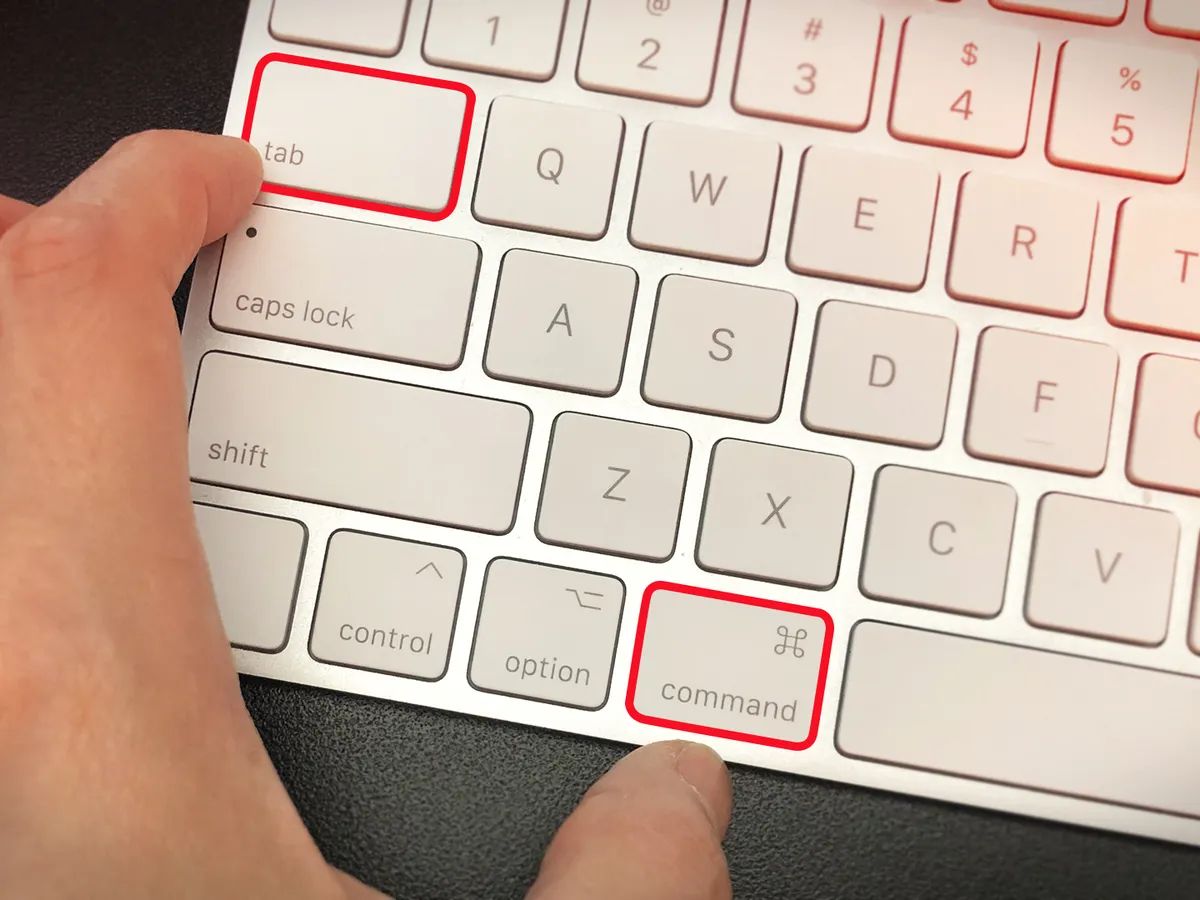
Chrome doesn’t offer a trackpad gesture for tab switching, but you can create one using BetterTouchTool or TabSwipe. Both apps let you assign a custom trackpad gesture, like a three-finger swipe left or right, to Chrome’s built-in tab-switching keyboard shortcuts, which are Cmd+Option+Left Arrow and Cmd+Option+Right Arrow. Here’s how to do it with BetterTouchTool, which is the more flexible option:
- Download and install BetterTouchTool from its official site, then launch it.
- In the app’s main window, select “Gestures” from the left sidebar.
- Choose “Chrome” from the application dropdown so the gesture only applies when Chrome is active.
- Click “Add New Gesture” and perform a three-finger swipe left on your trackpad when prompted.
- In the “Assign Action” field, select “Keyboard Shortcut” and press Cmd+Option+Left Arrow.
- Repeat the process for a three-finger swipe right, assigning Cmd+Option+Right Arrow.
TabSwipe is a simpler, dedicated alternative. It installs as a Safari extension or a standalone app for Chrome, and it lets you enable a two-finger swipe to switch tabs without touching system settings. Once installed, open TabSwipe’s preferences and toggle the tab-switching gesture on. Both tools give you the swipe-based tab switching you wanted from the start, but they work by translating your physical gesture into the keyboard command Chrome already understands.
Why a three-finger swipe is the best choice
Using a three-finger swipe for tab switching is ideal because it doesn’t conflict with the two-finger swipe that controls page history. macOS reserves the two-finger swipe for scrolling and back/forward navigation, so a three-finger gesture is free to be repurposed. BetterTouchTool also lets you choose a four-finger swipe if you prefer, but three fingers is the most natural fit, it’s distinct from your regular scrolling and easy to perform repeatedly without fatigue.
Customize your new gesture in system settings
After you’ve set up the gesture in BetterTouchTool or TabSwipe, you can fine-tune how it feels by adjusting your trackpad’s sensitivity and speed. Go to Apple menu > System Settings > Trackpad. Under the “Point & Click” tab, you’ll find a slider for tracking speed, moving it toward “Fast” makes your swipes register more quickly, which can make tab switching feel snappier. Under the “More Gestures” tab, you’ll see the system-level gestures that might interfere with your new custom one. If you assigned a three-finger swipe, check that “Swipe between pages” or “Swipe between full-screen apps” isn’t also mapped to three fingers, because that would cause a conflict. Change those system gestures to a four-finger swipe or turn them off entirely, so your three-finger swipe is reserved exclusively for tab switching. You can also increase the “Tracking speed” to reduce the distance your fingers need to travel, making the gesture more reliable when you’re in a hurry.
Use keyboard shortcuts as a reliable fallback
Even with a perfect trackpad gesture, keyboard shortcuts remain the most consistent way to switch tabs across all Mac browsers. In Safari and Chrome, Cmd+Option+Left Arrow and Cmd+Option+Right Arrow also work, and they match the shortcuts you mapped in BetterTouchTool. These shortcuts never fail, regardless of which browser you’re using or whether a third-party app is running. If your custom gesture ever stops working, after a macOS update, for example, or when a new app takes over the trackpad, you can fall back on Ctrl+Tab without missing a beat. For heavy multitaskers, memorizing these shortcuts is worth the few minutes it takes, because they’re faster than any swipe once your fingers are on the keyboard. But for those who prefer the tactile feel of a trackpad, the third-party setup above gives you the best of both worlds: a swipe that works exactly the way you expected it to, plus a keyboard shortcut that always has your back.
\nRelated reading: How To Print Google Sheets, How To Add Columns In Google Sheets, and How To Change Ownership Of A Google Calendar.