If you want to add browser source to OBS, you do not need the CLR Browser Source Plugin at all. Modern OBS Studio includes a built-in Browser source that handles everything the old plugin did, so you can skip the extra download and go straight to adding web overlays, alerts, and widgets to your scenes.
Do you need the CLR Browser Source Plugin to add a browser source to OBS?
No. The CLR Browser Source Plugin was a third-party add-on for older versions of OBS, but it has been obsolete for years. OBS Studio now ships with a native Browser source that performs the same function and more. If you searched for the plugin because you want to display a web page, Twitch chat, donation alerts, or a streaming widget, you already have the tool you need installed. The built-in source is the correct and supported way to add browser content to your stream, and it works across Windows, macOS, and Linux versions of OBS Studio that meet the current system requirements.
How the built-in OBS Browser Source works
The native Browser source relies on the Chromium Embedded Framework (CEF) to render HTML, CSS, and JavaScript inside your OBS scene. This means it can display full websites, animated overlays, real-time alerts, and interactive widgets exactly as they would appear in a standard web browser. Because it uses the same rendering engine as Chrome, you get smooth video playback, CSS animations, and JavaScript-driven updates without needing to run a separate program or capture a window. The Browser source is also transparent-capable, so you can overlay a widget with a clear background directly on top of your gameplay or camera feed.
Step 1: Open OBS and add a new Browser Source to your scene
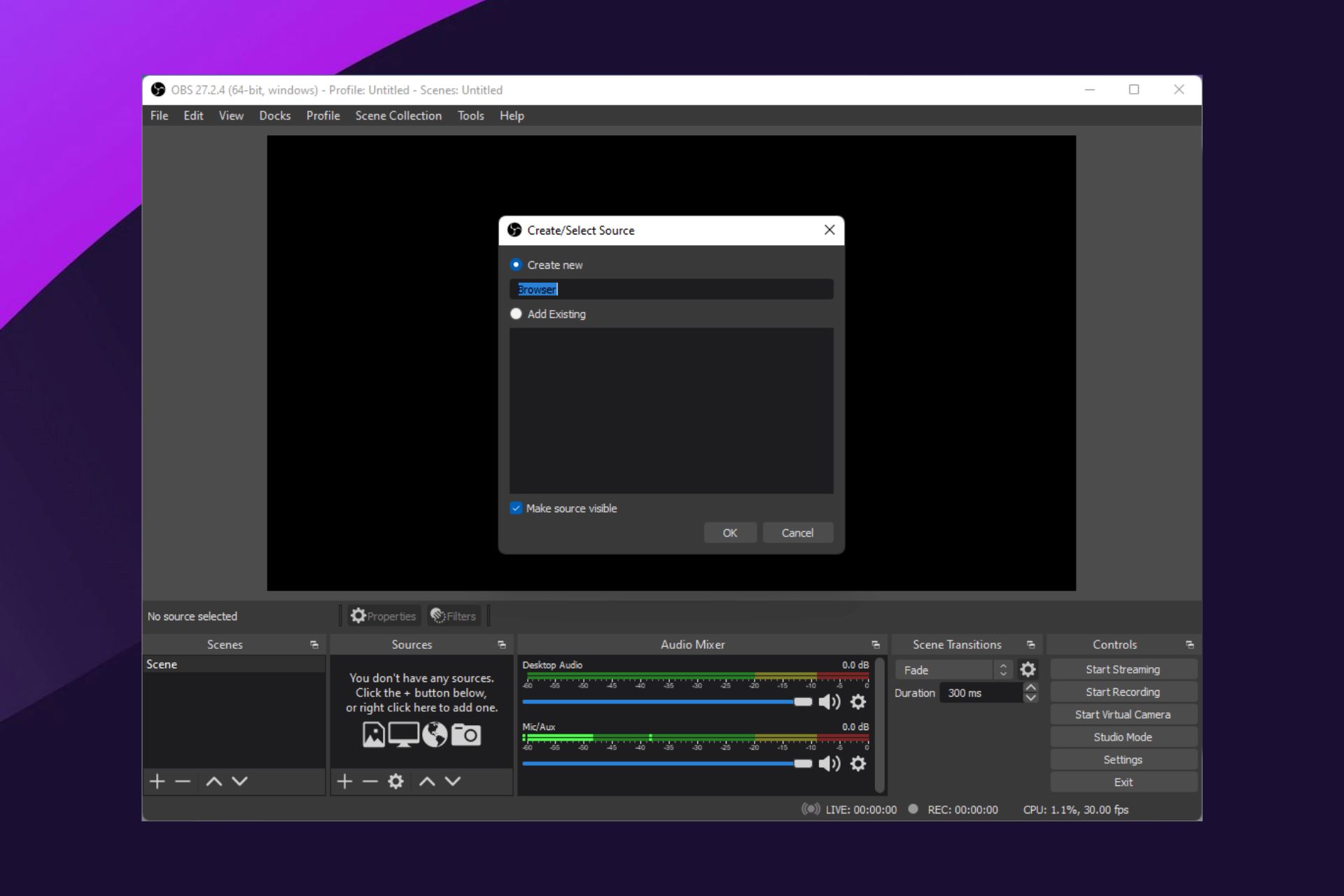
Launch OBS Studio and make sure the scene where you want the web content is selected. In the Sources box, click the "+" button to open the dropdown menu. From that list, select "Browser." This is the built-in option that replaces the old CLR plugin, and it is the only one you need to use.
Step 2: Name your browser source and open its properties
After clicking Browser, a dialog box will appear asking you to name the new source. Choose a descriptive name like "Chat Overlay" or "Alert Widget" so you can easily identify it later. Click OK, and the properties window for the Browser source will open automatically. This is where you configure what the source displays and how it behaves.
Step 3: Enter the URL for your web overlay or alert widget
In the properties window, you will see a field labeled "URL." Type or paste the full web address of the page you want to display. This could be a link to your streaming service's chat, a third-party alert service, a donation tracker, or any other web-based overlay. Below the URL field, you can adjust the width and height of the source to match your desired display size. Most overlay services provide recommended dimensions, but you can change these later if needed. Leave the other settings at their defaults unless you have a specific reason to modify them.
Step 4: Finalize, position, and test your new overlay
Click OK to add the Browser source to your scene. The web content will now appear in the OBS preview window. Use your mouse to click and drag the source to the position where you want it, and drag the edges to resize it. Once it is placed correctly, test your stream in preview mode to confirm the overlay renders properly. If the content does not appear, double-check the URL and make sure you have an internet connection. The Browser source will refresh automatically when the page updates, so your alerts and widgets stay live during the broadcast.
To get the most out of your setup, remember that the Browser source is just one part of a complete streaming configuration. For example, you might want to record webcam and gameplay separately using OBS to edit your video later, or you might need help configuring your headset on OBS to ensure your audio sounds clear. The Browser source works alongside these features, so you can build a fully customized stream that combines live web content, your camera, your game, and your microphone all in one scene.
Using the built-in Browser source means you never have to hunt for a legacy plugin or worry about compatibility issues. Whether you are adding a simple chat box or a complex interactive widget, the process is the same: click the "+" button, select Browser, enter the URL, and position the source. This is the fastest and most reliable way to add browser source to OBS, and it gives you access to every web-based tool available for streamers today.
\nRelated reading: How To Install Facebook On Smart TV.