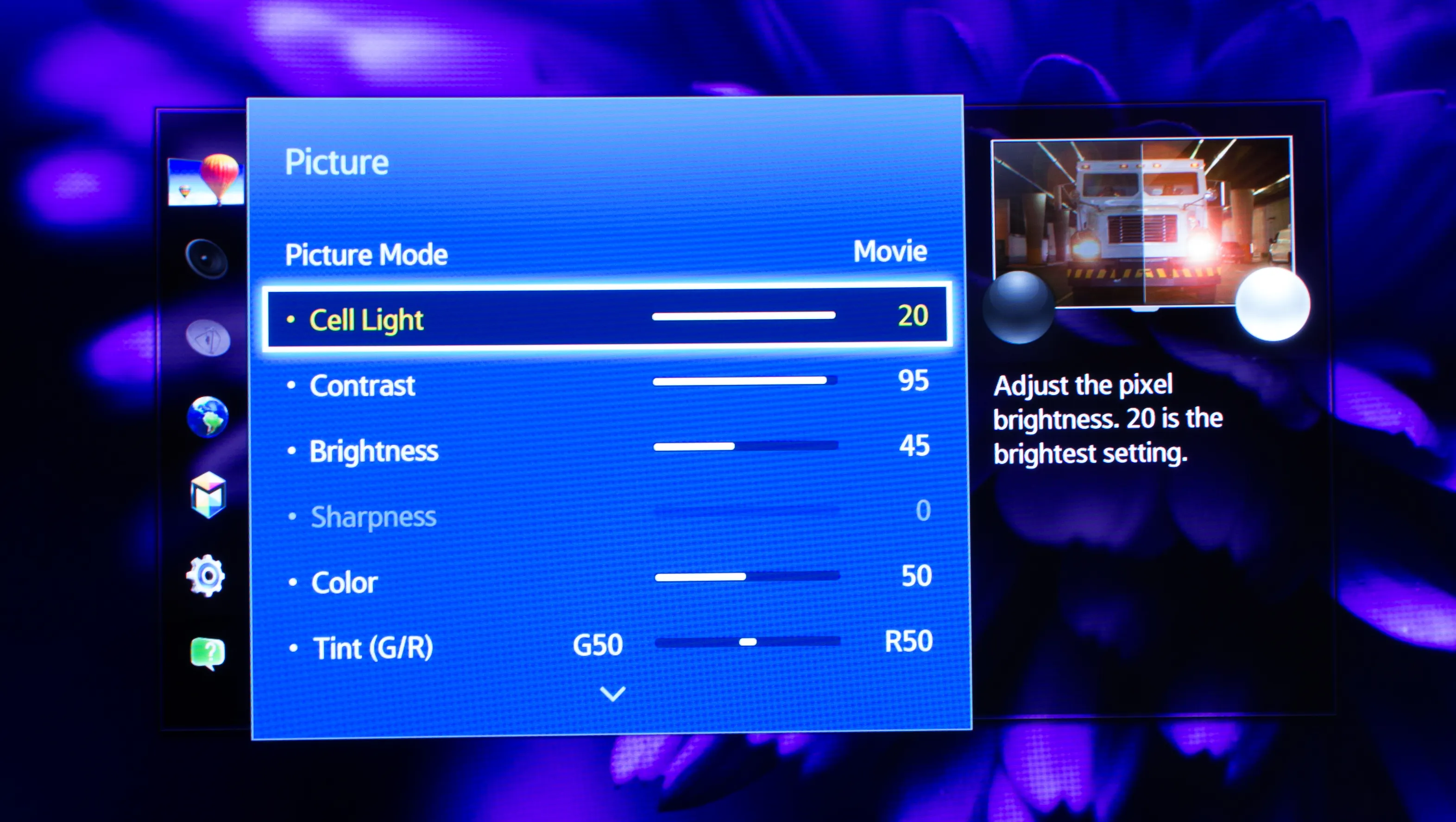
To adjust color on your Samsung smart TV, start by selecting the Movie picture mode for the most accurate colors, then fine-tune the Color and Color Tone settings in the Expert Settings menu. This quick-start approach gives you direct control over saturation and temperature, letting you move from a washed-out or overly vivid image to one that looks natural and pleasing.
Before you start: disable power-saving features
Power-saving settings can override your picture adjustments, making colors look dull or shifting the brightness unexpectedly. Navigate to Settings, then All Settings, then General & Privacy, and select Power and Energy Saving. From there, turn off Brightness Optimization and Energy Saving Solution. Disabling these ensures that the changes you make to color and picture quality are not being altered automatically by the TV.
Navigate to the picture settings
Press the Home button on your remote to open the Smart Hub. On the left side of the screen, select Settings (the gear icon), then choose All Settings. From the Settings menu, select Picture. This is the central menu where you will change picture modes and access finer color controls.
Choose the right picture mode for accurate color
Your Samsung TV offers several picture presets, each designed for different content and environments. Selecting the right one is the most important step in adjusting smart TV picture settings because it sets the baseline for all other adjustments.
- Dynamic: Makes pictures brighter and clearer, suitable for bright viewing environments. Colors can appear oversaturated, and this mode is not recommended for accurate color reproduction.
- Standard: The default mode, suitable for most viewing environments. It provides a balanced image but may still push colors slightly for a more vivid look.
- Eco: Reduces power consumption by dimming the backlight and adjusting contrast. This mode often makes the picture look less vibrant.
- Movie: Recommended for most content as it offers accurate colors and preserves the director's original intent. It is ideal for dark rooms and high-quality content, making it the best starting point for color adjustment.
- Game: Optimizes for speed when playing video games, though there may be a slight decline in graphics quality. It can be set to Off, Auto, or On, and is only available on select models.
For the most accurate color, select Movie Mode. If you prefer a brighter image during the day, Standard is a reasonable alternative, but Movie Mode gives you the most neutral canvas for fine-tuning.
Fine-tune color in expert settings
Once you have selected a picture mode, navigate back to the Picture settings menu and select Expert Settings. This is where you will make precise adjustments to color saturation and temperature.
Adjust Color (saturation)
The Color setting adjusts the color saturation. The higher the setting, the more intense the color; low settings remove color, making the picture black, white, and gray. A common post-calibration accurate setting is around 25-50. For SD/SDR content, set it moderately around 25-30 to avoid oversaturated skin tones. For HDR content, a setting of 30-35 helps maintain natural skin tones while preserving the wider color gamut.
Adjust Color Tone (temperature)
The Color Tone setting adjusts the overall color temperature. The options available depend on your selected picture mode.
- Cool: Adds a cool blue hue to colors. This option is only available in Dynamic Picture Mode.
- Standard: Adds no hue to colors.
- Warm1: Adds a warm pink hue to colors.
- Warm2: Adds a stronger pink hue to colors. This is often closest to the calibration target of 6500K, which is the industry standard for accurate color reproduction.
For the most accurate image, select Warm2. If the image looks too red or pink for your taste, try Warm1. Avoid Cool and Standard unless you are using Dynamic Mode, as they will push the image toward an unnatural blue tint.
Use smart calibration for automatic adjustment
If you prefer an automated solution, Smart Calibration adjusts your Samsung TV's picture settings to match the creator's intended quality, especially in Movie Mode. This feature works through the SmartThings app and requires both your TV and smartphone to be connected to the same Wi-Fi network.
To access Smart Calibration, press the Home button, navigate to Settings, select All Settings, then Picture, Expert Settings, and finally Smart Calibration. The app will guide you through the process. Compatible Samsung TVs for Professional Mode include Neo QLED 8K and 4K models (QN90B and higher for 2022; QN90C and higher for 2023) and Monitor S90PC. Basic Mode is available on 2022 models such as S95B, Q60B, LS01B, and LS02B. Supported smartphones include Samsung Galaxy S series (S10 and later), Galaxy Note series (Note10 and later), Galaxy Fold, and Galaxy Z Flip, as well as iPhones with Face ID support (2019 models and later).
How to reset your picture settings to default
If you want to start fresh, you can reset picture settings to their default factory settings. Navigate to Settings, then All Settings, then Picture, then Expert Settings, and select Reset Picture. Confirm by selecting Yes or Reset. This will undo all your color, brightness, contrast, and other picture adjustments, returning the TV to its out-of-box state. This is useful if your adjustments have become too complex or if you want to begin a new calibration from scratch.
\nRelated reading: Where Are The Buttons On A Samsung Smart TV and Which Roku Is Best For Samsung Smart TV.