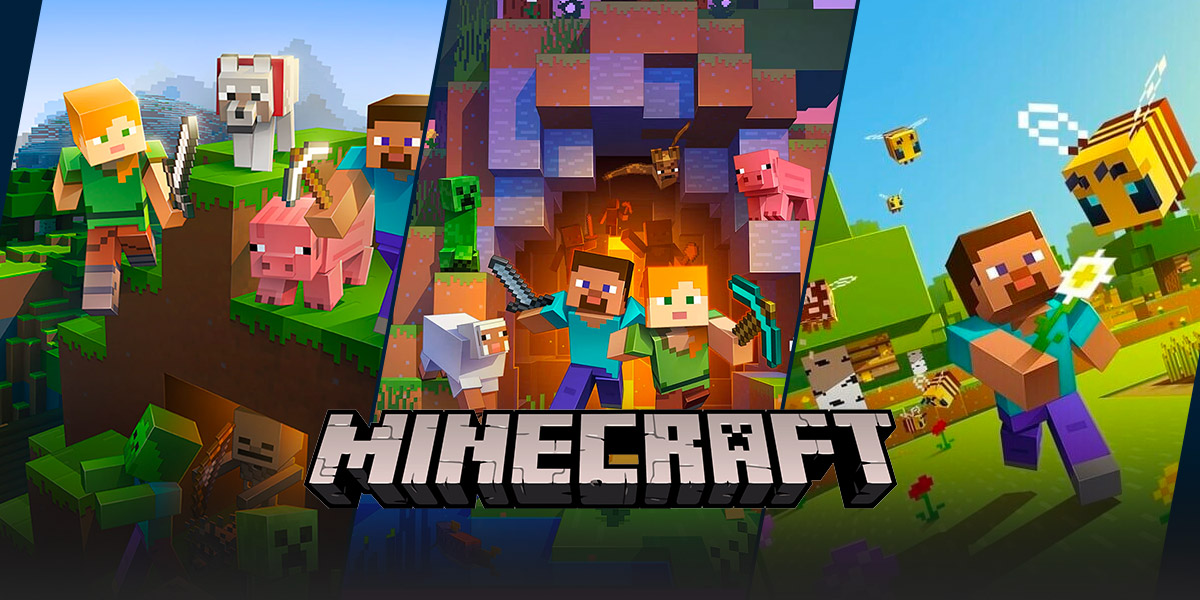
Ray tracing in Minecraft is officially available in Minecraft: Bedrock Edition on Windows 64-bit, but only if you have a DirectX hardware ray tracing capable GPU and download a ray tracing-enabled texture pack from the Minecraft Marketplace. To get it working, you’ll need to update the game to version 1.16.200 or higher, install a compatible resource pack, and then activate ray tracing in your world’s settings.
What you need for ray tracing in Minecraft
Before you can enable ray tracing in Minecraft, you need to confirm your setup matches the official requirements. Ray tracing is only supported in Minecraft: Bedrock Edition on Windows 64-bit, it is not available in Java Edition or on consoles. Your PC must have a DirectX hardware ray tracing capable GPU, such as an NVIDIA GeForce RTX 20 Series or higher (for example, an RTX 2060 or better) or an AMD Radeon RX 6000 Series or higher. You’ll also need an Intel Core i5 or equivalent CPU and at least 8 GB of RAM. Additionally, virtual reality (VR) and mixed reality (MR) headsets are not supported for ray tracing in Minecraft, so stick to a standard monitor.
Update Minecraft Bedrock Edition
To access ray tracing, your game must be updated to Minecraft: Bedrock Edition version 1.16.200 or higher. Here’s how to ensure you have the latest version:
- Open the Microsoft Store on your Windows PC.
- Look for Minecraft Bedrock Edition in your app list and check if an “Update” button appears next to it.
- If an update is available, click “Update” to download and install it. If not, your game is already up to date.
- Alternatively, if you use the official Minecraft Launcher, open it and select Bedrock Edition from the left sidebar. The launcher will automatically check for updates and prompt you to install any available patches.
Once the update finishes, you can move on to downloading a ray tracing resource pack.
Download a ray tracing resource pack from the Marketplace
Ray tracing in Minecraft cannot be enabled without a ray tracing-enabled texture pack. These packs are available in the Minecraft Marketplace, and many of them are free. To find one:
- Launch Minecraft Bedrock Edition on your Windows PC.
- From the main menu, select “Marketplace.”
- Use the search bar to type “ray tracing” or “RTX.”
- Browse the results, you’ll see both free and paid packs. Look for packs labeled as “ray tracing-enabled” or “RTX.”
- If it’s a paid pack, you’ll need to complete the purchase using Minecraft coins or a linked payment method.
- Once downloaded, the pack will appear in your global resource packs list.
Note that this step is mandatory, downloading a ray tracing-enabled texture pack is not optional; it’s the only way to unlock the feature in the game.
Enable ray tracing in your world
After installing a ray tracing resource pack, you need to activate it in your world’s settings. Here’s how:
- Before entering the world, click “Settings” (the pencil icon) on the world selection screen.
- Toggle the “Ray Tracing” option to “On.” If the option is grayed out, double-check that your GPU supports DirectX hardware ray tracing and that your game is updated to version 1.16.200 or higher.
- Start the world. The game will load with ray tracing effects applied.
Once inside, you’ll see realistic lighting, dynamic shadows, and reflections that transform the look of your world. You can adjust the ray tracing intensity in the video settings if you want to fine-tune performance versus visual quality.
What ray tracing adds to Minecraft
Ray tracing in Minecraft delivers a dramatic visual upgrade by simulating how light behaves in the real world. With ray tracing enabled, you get global illumination, which means light bounces off blocks and naturally fills spaces with realistic brightness and color. Emissive textures, like glowing lava or sea lanterns, appear to emit their own light, casting proper glows on surrounding surfaces. Water becomes naturally reflective, showing accurate mirror-like reflections of the sky and nearby structures. The system also uses physically-based rendering (PBR), which gives materials like metal, stone, and wood realistic properties, such as how they absorb or reflect light. Together, these effects create a level of immersion that standard Minecraft lacks, making every cave, forest, and village feel more alive.
Ray tracing and future Minecraft updates
If you’re worried about whether ray tracing will remain supported as Minecraft evolves, you can rest easy. Mojang has confirmed that there are no planned changes to ray tracing for Windows with the announcement of Vibrant Visuals. This means ray tracing will continue to work on supported devices, and you won’t lose access to the feature in future updates. So whether you’re exploring a custom-built city or just admiring the sunset over a mountain range, ray tracing in Minecraft is here to stay, and it pairs perfectly with the visual upgrades that Vibrant Visuals brings. For those who prefer alternative methods, note that java edition mods on PC can offer similar effects, but they require a different setup process and don’t use the official ray tracing pipeline. Stick with the Bedrock Edition method above for the most reliable, officially supported experience.
\nRelated reading: How To Tp To Coordinates In Minecraft Bedrock and Minecraft How To Train Your Dragon Mod.