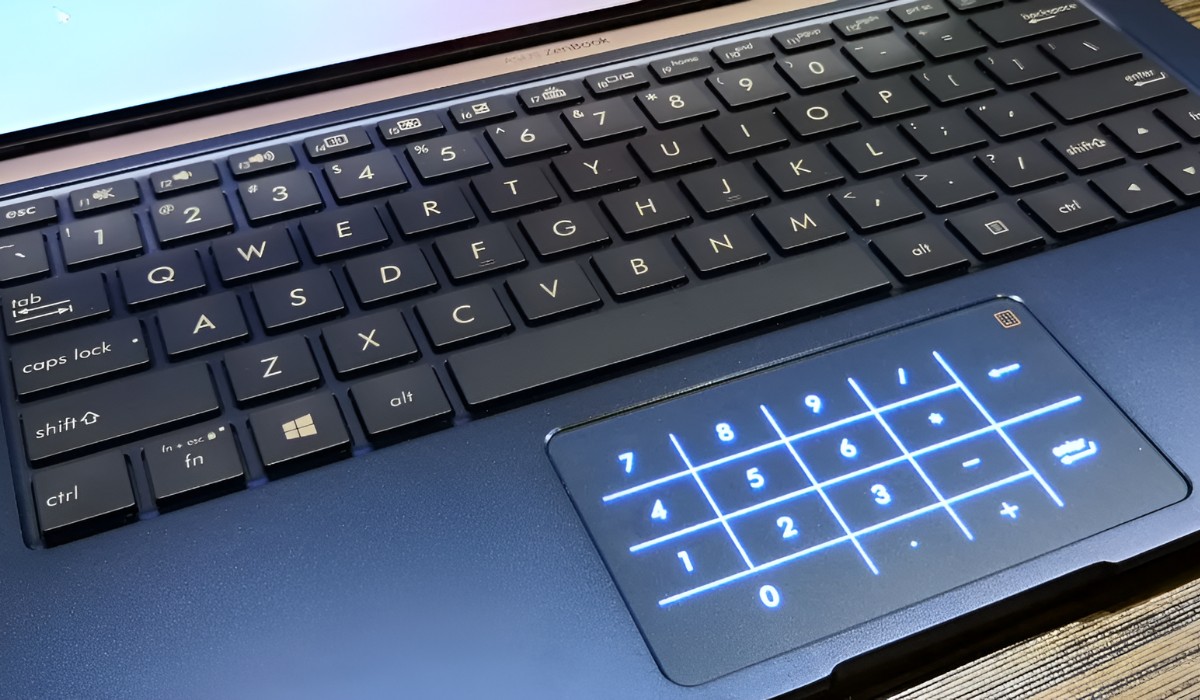
To set up touchpad Lenovo laptop controls, you can either use a dedicated keyboard shortcut or navigate to the Windows Touchpad settings menu. The quickest way to re-enable a disabled touchpad is to press the Fn key in combination with the function key that shows a touchpad icon (often F6 or F8), or on some models, Fn+Delete.
Enable or disable the touchpad with a keyboard shortcut
Most Lenovo laptops have a physical toggle for the touchpad built into the keyboard. Look for a key on the top row (F1, F12) that displays a small rectangle with two lines beneath it, representing the touchpad. To switch the touchpad on or off, hold down the Fn key and press that specific function key. On many models this is F6 or F8, but on others it might be Fn+Delete. If the shortcut doesn't work, the touchpad may be disabled in Windows settings or the driver may need updating.
Configure touchpad settings in Windows 10 and 11
If the keyboard shortcut doesn't work, or you want more control, use Windows settings. In Windows 10, go to Start > Settings > Devices > Touchpad. In Windows 11, the path is Start > Settings > System > Bluetooth & devices > Touchpad. At the top of this screen, you'll find a toggle switch labeled "Touchpad." Flip it to turn the touchpad on or off. This is also where you can set the touchpad to automatically disable when an external mouse is connected, look for a checkbox or toggle that says "Leave touchpad on when a mouse is connected" and uncheck it to disable this behavior.
Set the touchpad to disable when a mouse is connected
Within the same Touchpad settings screen, locate the option that controls whether the touchpad stays active when a USB or Bluetooth mouse is plugged in. To prevent accidental cursor jumps while typing, turn off this option so the touchpad shuts off automatically when an external mouse is detected.
Check for a Precision Touchpad and customize gestures
To see if your Lenovo laptop has a Precision Touchpad, go to the Touchpad settings screen (Start > Settings > Devices > Touchpad on Windows 10, or Start > Settings > System > Bluetooth & devices > Touchpad on Windows 11). Look for the message "Your PC has a precision touchpad." If you see this, you can customize a full range of gestures. Under the "Scroll and zoom" section, you can enable or disable pinch-to-zoom and two-finger scrolling. Under "Gestures," you can set three-finger and four-finger actions, such as swiping to switch between tasks, tapping to show Task View, or swiping down to show the desktop. Each gesture can be assigned a different action from the dropdown menus.
Customize three-finger and four-finger gestures
For a Precision Touchpad, the three-finger and four-finger gesture settings let you assign actions like switching between open apps, launching Cortana, or minimizing all windows. Adjust these to match your workflow, for example, set a three-finger swipe up to open Task View and a four-finger tap to play/pause media.
Adjust sensitivity and other advanced settings
Pointer speed and touchpad sensitivity are adjustable in the same Touchpad settings menu. Use the "Pointer speed" slider to make the cursor move faster or slower. For non-Precision touchpads (those using Synaptics or Elan drivers), additional options live in the Mouse Properties window. Search for "Mouse" in Windows, open the Mouse Properties dialog, and look for a tab named "Device Settings" or the brand name (Synaptics or Elan). There you'll find advanced settings like Palm Tracking, Sensitivity, and Edge Motion, which let you fine-tune how the touchpad ignores accidental contact.
Access advanced settings for non-Precision touchpads
If your Lenovo laptop doesn't have a Precision Touchpad, open the Mouse Properties window and click the "Device Settings" or brand-specific tab. From there, you can enable or disable the touchpad entirely, adjust palm rejection, and tweak edge motion to make the cursor continue moving when your finger reaches the edge of the touchpad.
Update drivers and troubleshoot a non-working touchpad
If the touchpad isn't working at all, the first step is to check if it's disabled in Windows settings or via the keyboard shortcut. If it's enabled but still unresponsive, update the driver. Go to the official Lenovo Support website (support.lenovo.com), search for your specific laptop model, then navigate to "Drivers & software" and select "Mouse and Keyboard" components. Download the latest touchpad driver and run the installer. After installation, restart your laptop. If the touchpad still doesn't work, check the BIOS setting, on some Lenovo models, the touchpad can be disabled directly in the BIOS under the "Config" menu.
If you've updated the driver and checked the BIOS, also try increasing the touchpad sensitivity in Windows settings, a low sensitivity setting can make the touchpad feel unresponsive. For non-Precision touchpads, open the Mouse Properties and look for a "Sensitivity" slider under the device's advanced settings. If none of these steps resolve the issue, the touchpad hardware may need service, but this is rare after a driver or settings fix.
\nRelated reading: How To Turn On The Mouse Pad On An ASUS Laptop, How To Write A Signature On My Laptop With Mouse Pad, and How to Set Up a Game Controller on Windows.