Human augmentation is the use of technology to enhance human capabilities, performance, health, or quality of life by integrating tools into our bodies or cognitive processes. It spans from non-invasive wearables like smart glasses to invasive implants like brain-computer interfaces, and it is distinct from assistive technology because it can be used by anyone to extend abilities, not just to restore lost function.
What is Human Augmentation?
At its core, human augmentation is about filling the gaps left by our biological limits. It is a broad field that includes everything from simple spectacles that improve eyesight to advanced neural implants that aim to connect the human brain directly to computers. The key distinction lies in the method: invasive augmentation involves surgical implants or chemical substances, while non-invasive augmentation uses external devices like exoskeletons, smartwatches, or AR headsets. Unlike assistive technology, which typically replaces or recovers capabilities for individuals with disabilities, human augmentation is designed to extend or integrate abilities for anyone, whether that means helping a factory worker lift heavy loads or enabling a paralyzed person to walk again.
The 3 Main Types of Human Augmentation
Human augmentation research has advanced to the point of having three distinct branches, each targeting a different aspect of human capability. These categories are sensory augmentation, which enhances our perception; action or physical augmentation, which boosts our bodily strength and endurance; and cognitive augmentation, which expands our mental processing and decision-making. Each type uses different technologies and serves different purposes, but together they represent the full spectrum of how we can enhance the human experience.
Sensory Augmentation: Enhancing Human Senses
Sensory augmentation focuses on improving how we interpret the world around us by enhancing our natural senses. The most well-known examples are cochlear implants, which provide a sense of sound to people with severe hearing loss, and bionic eyes, which are being developed to restore vision to the blind. These technologies work by interpreting multi-sensory information and translating it into signals the brain can understand. For instance, a cochlear implant converts sound waves into electrical signals that stimulate the auditory nerve, while bionic eyes use a camera to capture visual data and send it directly to the retina or brain. This type of augmentation is not limited to restoring lost senses; it can also extend our natural range, such as allowing us to see ultraviolet rays or hear frequencies beyond normal human capacity.
Action and Physical Augmentation: Boosting the Body
Action or physical augmentation is designed to improve our physical abilities, whether that means increasing strength, endurance, or mobility. This category includes robotic limbs, prosthetics, and exoskeletons. A prime example is the Ekso EVO, an upper-body exoskeleton made by Ekso Bionics that is used in industrial and rehabilitation settings. Studies show that exoskeletons like the Ekso EVO can reduce perceived discomfort in all body areas, increase productivity from two to 27 times, and allow operators to work 30 minutes or longer without rest breaks. The Ekso EVO is built from rigid materials like carbon fiber or metal, but it can also be made from soft, elastic parts, and it can be powered with electronics and sensors or remain entirely mechanical and passive.
Another major player in physical augmentation is Ottobock, which produces advanced prosthetics like the Genium leg and the C-Leg. These prosthetics are designed for different activity levels, from professional sprinters to everyday users, and they are engineered to mimic natural movement. However, they come at a significant cost, the C-Leg reportedly costs between $40,000 and $60,000. While these devices are primarily used to help amputees regain mobility, they also have applications for able-bodied individuals. For example, exoskeletons can help workers in manufacturing or construction lift heavy objects without injury, and they can enable first responders to navigate dangerous environments with greater safety and endurance.
Cognitive Augmentation: Expanding the Mind
Cognitive augmentation aims to enhance our mental processes, including decision-making, memory, attention, and focus. This is achieved through technologies like Brain-Computer Interfaces (BCIs), neurostimulation, and AI-driven virtual assistants. One of the most prominent examples is Neuralink, which develops implantable brain devices designed to help humans expand their functionality and enhance cognitive abilities. The Neuralink chip is a small, coin-sized device equipped with ultra-thin electrodes that are implanted into specific regions of the brain through a minimally invasive surgical procedure. The company received FDA approval for its first human trials in 2023, and a device was successfully implanted in a human patient in early 2024. The PRIME study, which is Neuralink's first-in-human clinical trial, aims to evaluate the safety of the implant and surgical robot, as well as assess the initial functionality of the BCI to enable people with paralysis to control external devices with their minds.
Beyond Neuralink, other companies are working on neuroprosthetics to enhance human memory, treat mental illness, or even cure Parkinson's disease. For example, Synchron is developing the Strentrode, a device implanted into the brain to control mobility devices, helping paralyzed individuals regain movement by operating external prosthetics with their thoughts. Cognitive augmentation also includes less invasive tools like nootropics, substances such as Adderall that people take to increase focus. While these are less controversial and less effective than neural implants, they are still a form of human augmentation that alters cognitive function. Additionally, AI-driven assistants like Microsoft's Azure and HoloLens are being integrated into everyday products to augment human performance and transform productivity, blurring the line between human and machine intelligence.
Everyday Applications of Human Augmentation
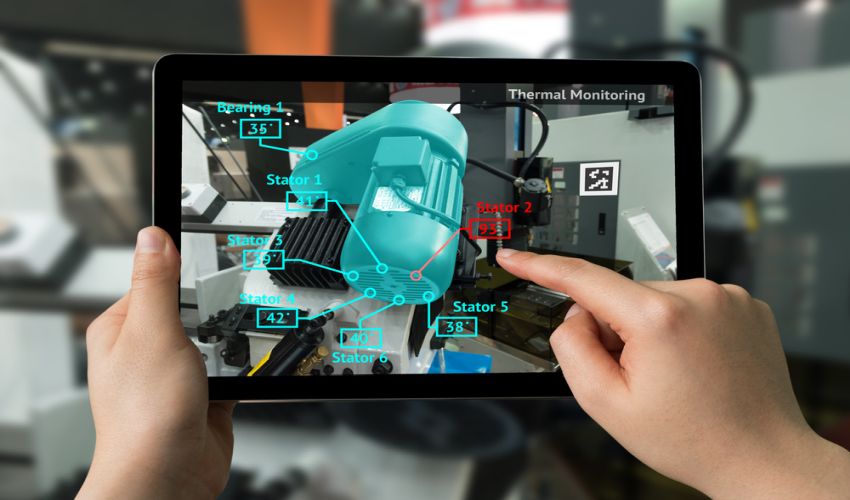
Human augmentation is not a futuristic concept; it is already common in our daily lives. Wearable technology is the most accessible and viable form of augmentation, and it includes devices like smartwatches, smartphones, and AR/VR headsets. For instance, Microsoft's HoloLens 2 is used in construction and lab work, providing workers with real-time data overlays that enhance their efficiency and accuracy. Google Glass and the rumored Apple Glasses are also pushing toward making smart glasses a mainstream consumer product that could eventually replace smartphones. Even more advanced concepts, like Mojo Vision's AR contact lenses, aim to bring augmented reality directly to the retina, with applications in health data recording and navigation.
Human augmentation is also being used across various industries. In healthcare, it is used for surgical assistance and patient monitoring, with exoskeletons helping rehabilitation patients regain mobility. In manufacturing, exoskeletons improve worker safety and efficiency by reducing injury risk and fatigue. In finance, AI-driven systems are used for fraud detection, augmenting human analysts' ability to spot anomalies in large datasets. Even something as simple as spectacles is a form of human augmentation that has become integral to society, helping millions of people with visual impairments see clearly. These everyday applications demonstrate that human augmentation is not just about science fiction, it is about practical tools that enhance our lives right now.
The Future and Challenges of Human Augmentation
Despite its many benefits, human augmentation faces significant obstacles. On the technical side, neurotechnology is still in its infancy. While we understand how the brain sends signals, we do not yet have a full understanding of how to connect it to computers reliably. Even wearable augmentation is challenging to develop; implementing AR in spectacles or contacts is still difficult due to issues with display technology, power consumption, and miniaturization. For example, bionic prosthetics consume tremendous amounts of power, and transmitting sensory data, like touch, from a prosthetic to the brain requires advanced technology that is still being developed.
There are also critical ethical issues to consider. Invasive augmentation raises questions about what it means to be human and where we draw the line between enhancing and altering our natural state. While extending human capacity through wearables like hearing aids is widely accepted, more controversial topics like human gene editing or cognitive enhancement through implants spark debate. There is also the risk of creating societal inequality, where only those who can afford augmentation gain access to enhanced abilities, leaving others behind. Additionally, security concerns are significant, implanted technology could be hacked, and devices that humans depend on could fail, posing serious risks to individuals and society.
Finally, there is the question of over-reliance on technology. While augmentation tools can enhance our capabilities, they can also make us overly dependent on them, reducing our engagement in critical thinking and natural problem-solving. Despite these challenges, human augmentation has the potential to make a profound difference in people's lives. It can extend the capacities of aging citizens, empower amputees and people with special needs, and enhance our overall capabilities. The tools we have today are just the beginning, and only time will tell how far we can truly extend beyond our limits.
\nRelated reading: 10 Cool Augmented Reality Examples To Know About, Pokemon Go Pokestops: Why Are They Important?, and How To Include SaaS Experience In Your Resume.